
The Product Data Challenges of Scaling WooCommerce
WooCommerce provides businesses with the flexibility to build rich digital storefronts. But as product catalogs grow across SKUs, variants, brands, markets, and suppliers, managing product information directly within WooCommerce becomes increasingly difficult.
Disconnected systems, manual product updates, inconsistent attributes, and complex product variations can slow launches and create unreliable customer experiences.
Manual Product Updates
Product information may be maintained across ERP, spreadsheets, supplier files, PIM, DAM, and WooCommerce. Manually transferring titles, specifications, categories, images, descriptions, and other information between these systems increase operational effort and the risk of inconsistent product records.
Complex Product Variations
Products may have multiple combinations of size, color, material, capacity, pack size, configuration, or other characteristics. Maintaining parent products and every associated WooCommerce variation manually becomes difficult as catalog complexity increases.
Inconsistent Attributes and Categories
Different suppliers, systems, and teams may use different attribute names, values, category structures, and terminology. Without standardized product data, storefront search, filtering, navigation, and product comparison can become inconsistent.
Fragmented Images and Product Content
Product descriptions, technical specifications, lifestyle images, product photography, manuals, videos, and other assets may exist across several systems. Keeping those assets connected to the correct product or variation requires significant manual coordination.
Slow Product Launches
Repeated enrichment, approvals, exports, imports, image assignments, and WooCommerce updates can delay new product and collection launches. As catalogs grow, these manual processes become harder to scale.

How Much is Your Product Data Costing You?
Get Your Score + 90-day action plan in 3 minutes.
Check Your ScoreWhat WooCommerce PIM Integration Enables
WooCommerce PIM integration creates a governed product-data layer between upstream business systems and your WooCommerce storefront. Product information can be collected and enriched in PIM, validated against business rules, and automatically synchronized with WooCommerce when it becomes commerce-ready.
This enables businesses to manage larger catalogs, complex variants, rich product experiences, and multiple storefronts without multiplying manual product-data work.
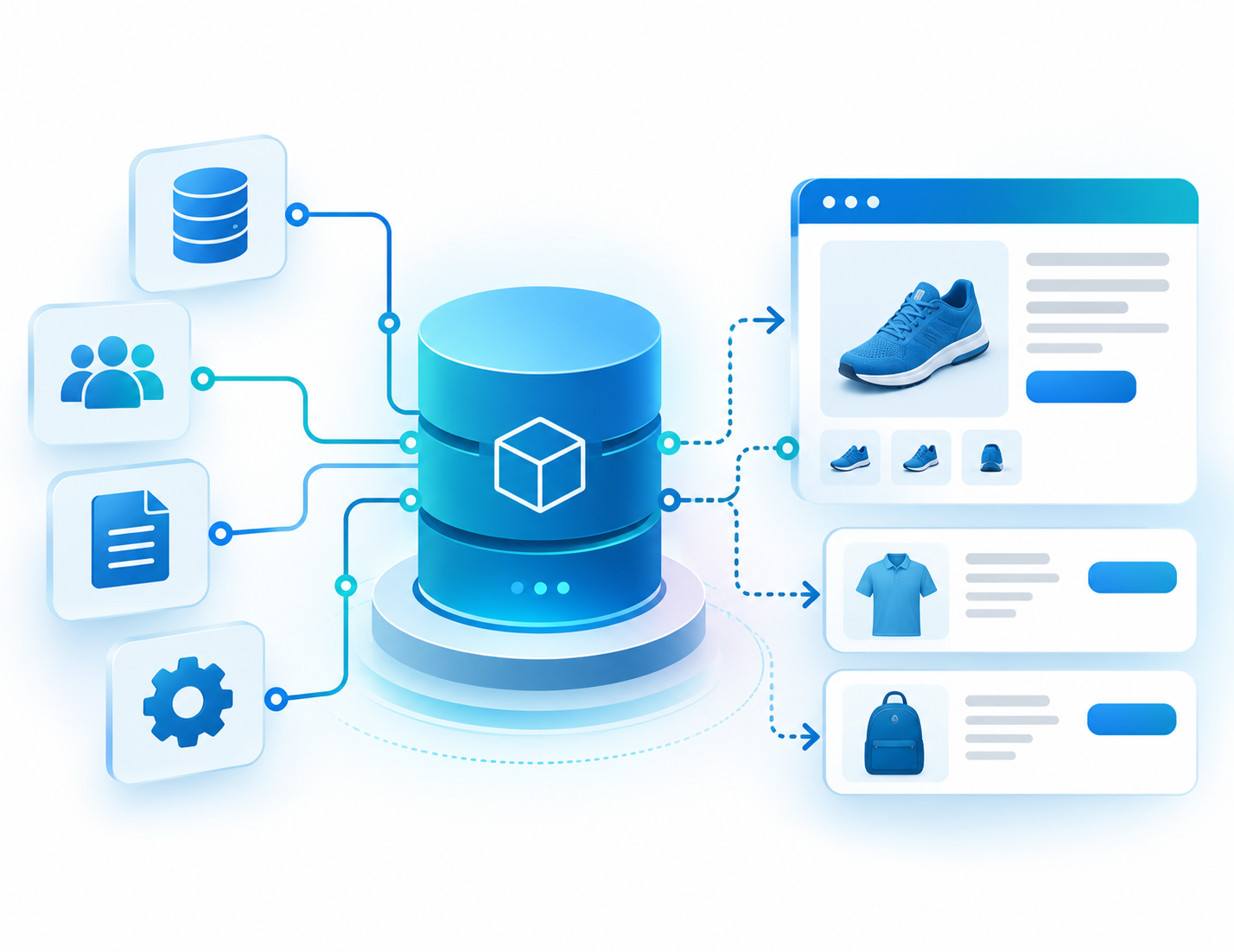
Centralized Product Data Management
Create one governed source for product descriptions, specifications, attributes, categories, relationships, images, documents, and other commerce content.
- Consolidate information from ERP, suppliers, spreadsheets, DAM, PLM, and legacy systems
- Reduce duplicate and conflicting product records
- Establish product-data ownership and approval workflows
- Publish only validated information to WooCommerce
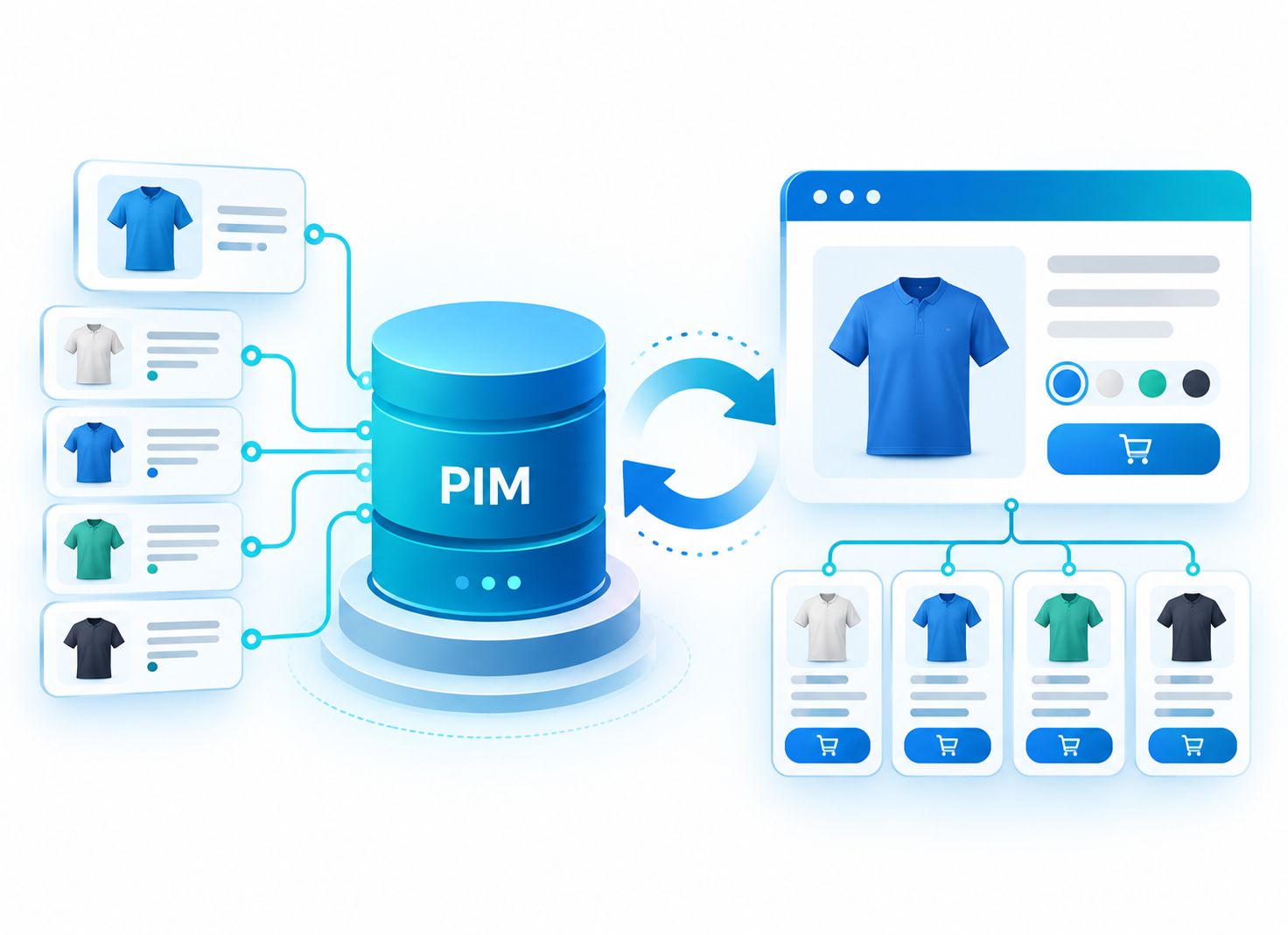
Automated Product & Variant Synchronization
Manage product families and variants centrally in PIM and synchronize approved data with WooCommerce.
- Create and update WooCommerce products automatically
- Maintain parent-child relationships
- Synchronize variation attributes and variant-specific information
- Reduce manual SKU and product maintenance
- Manage shared and variant-specific content efficiently
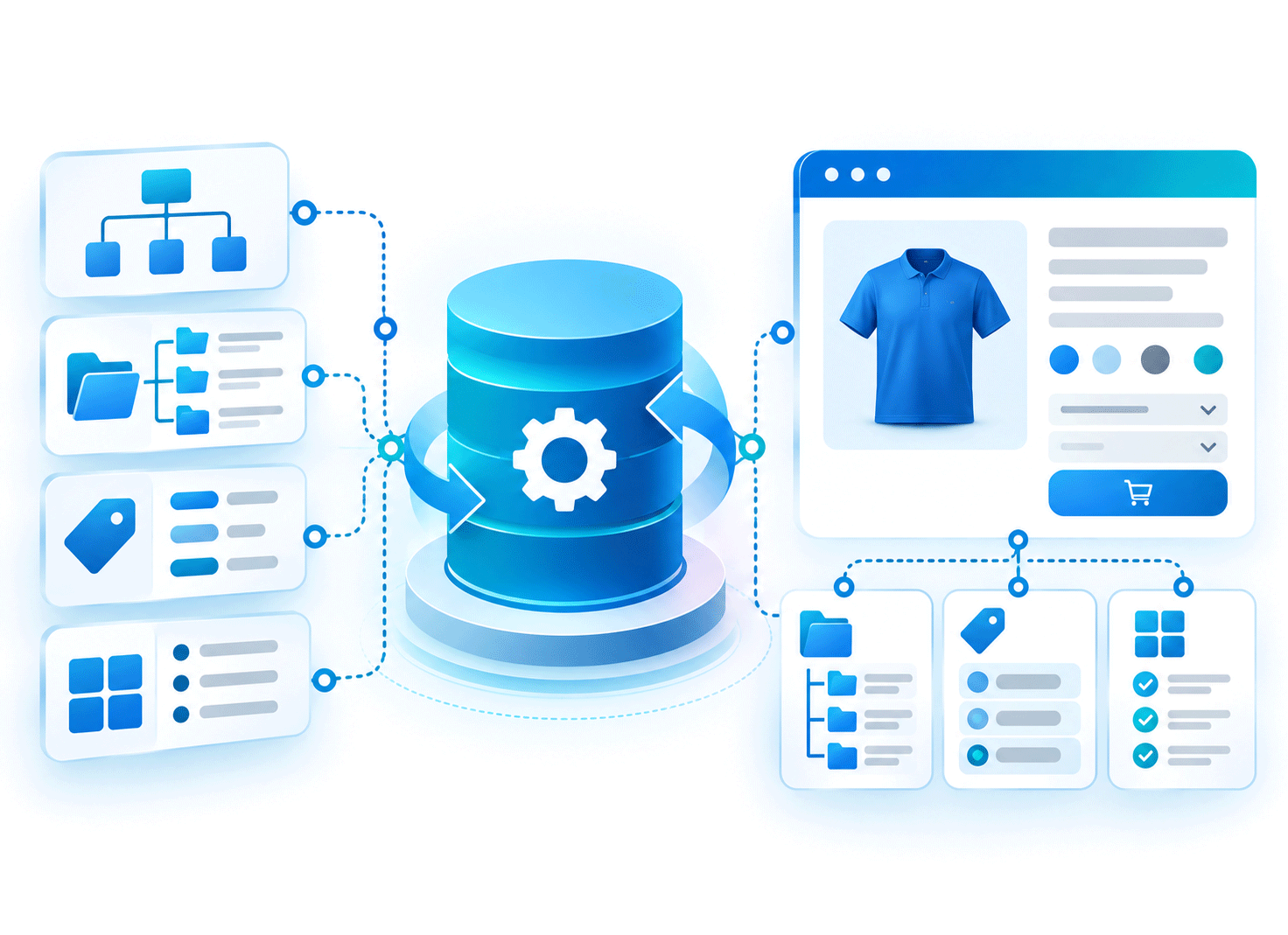
Attribute & Taxonomy Synchronization
Standardize product attributes and taxonomy before they reach the storefront.
- Map PIM categories to WooCommerce categories
- Standardize controlled attribute values
- Synchronize global product attributes
- Support attributes used for variations and storefront filtering
- Maintain consistent terminology across catalog categories
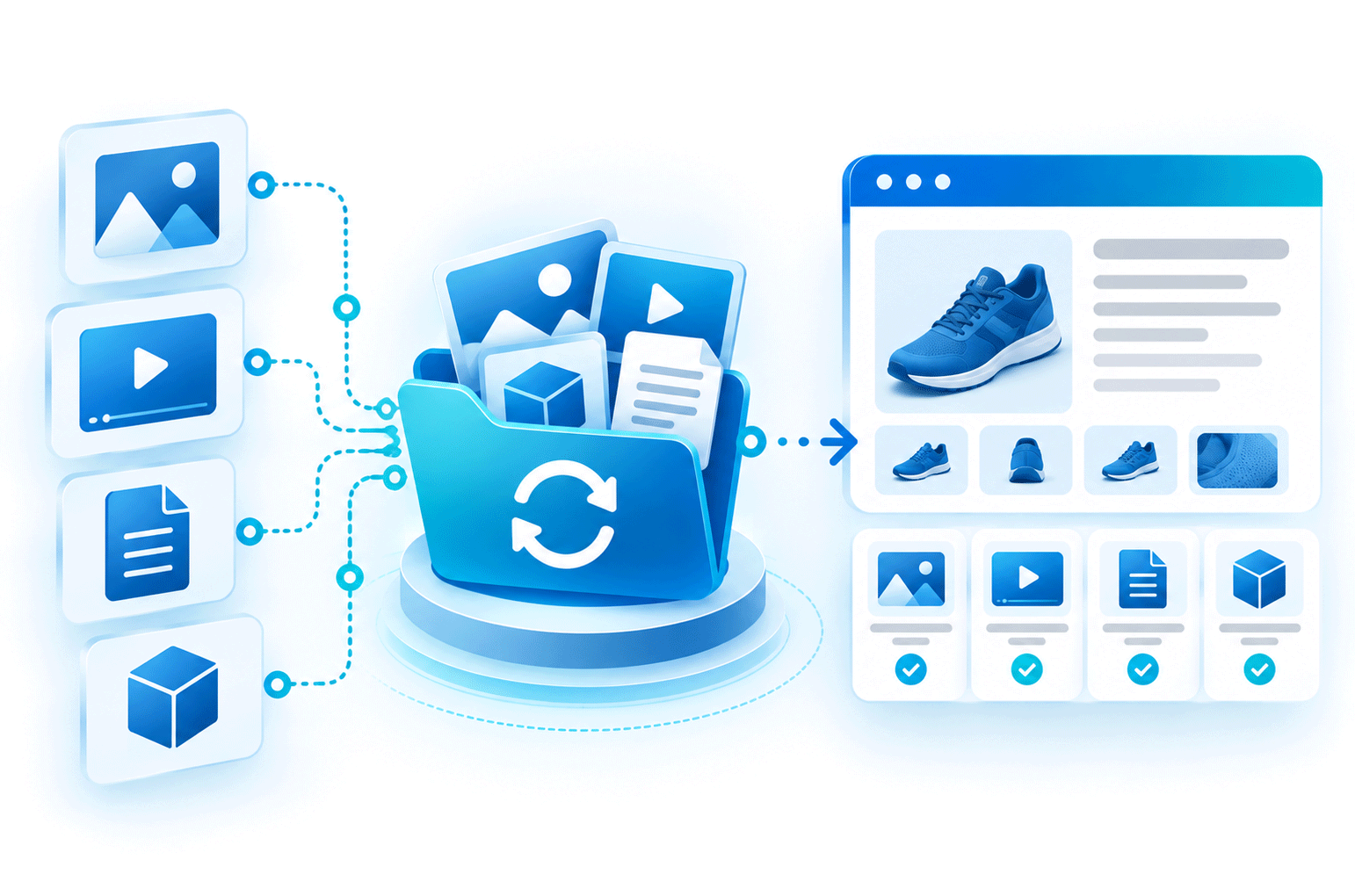
Digital Asset Synchronization
Connect enriched product information with approved digital assets.
- Synchronize main product images
- Associate product galleries with the correct SKU
- Maintain variant-specific imagery
- Connect manuals, guides, videos, and supporting documents
- Keep product content and media aligned
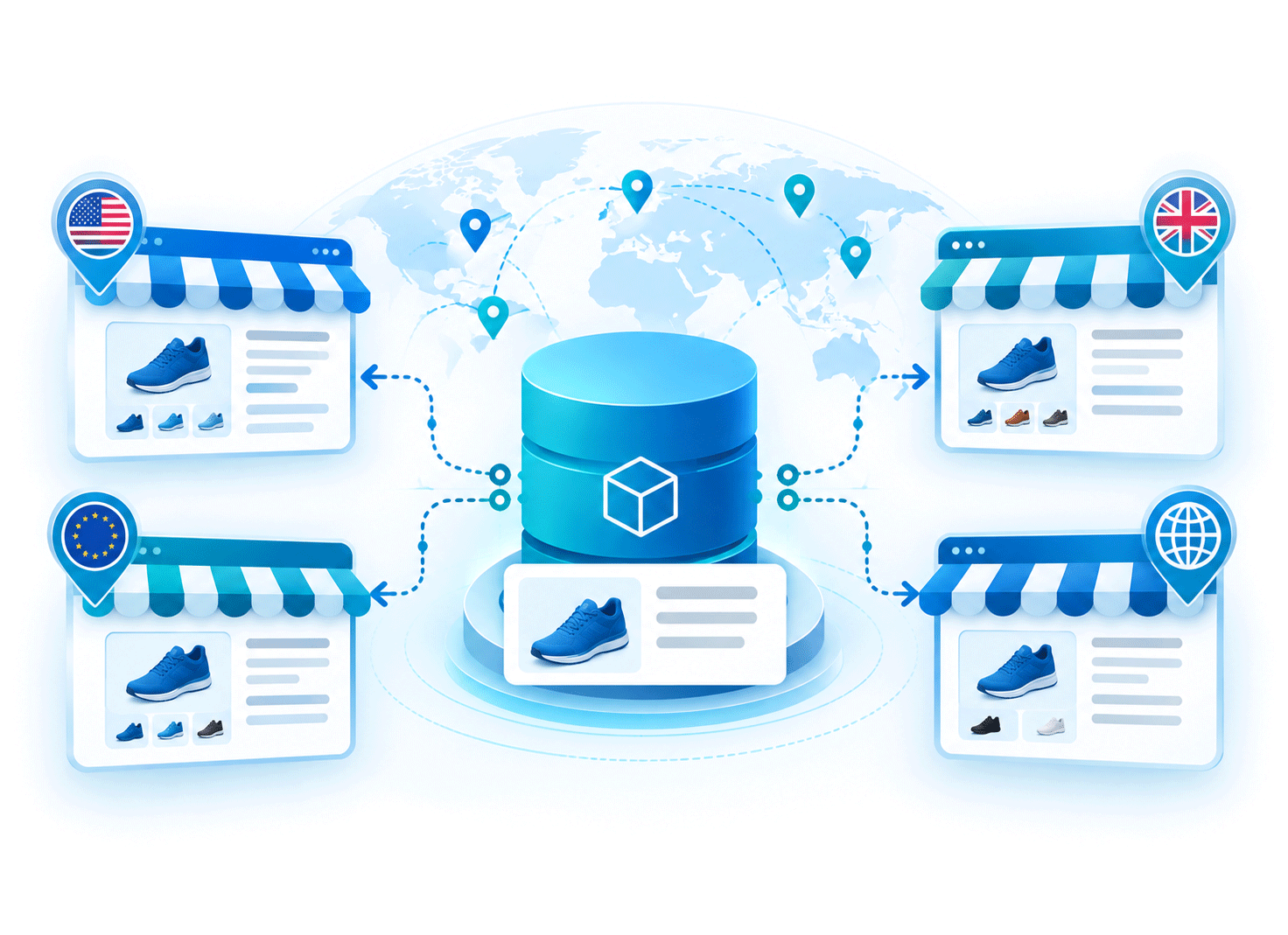
Multi-Store & Multi-Market Product Management
Use a centralized product-data foundation to support multiple WooCommerce stores, markets, brands, or business units.
- Reuse global product information
- Maintain localized product content
- Support different regional assortments
- Manage market-specific attributes and assets
- Reduce duplicated catalog-management effort
What Product Data Can Be Synchronized Between PIM and WooCommerce?
WooCommerce PIM integration can synchronize a wide range of relatively stable product information while allowing transactional systems to continue managing dynamic commerce data.

Product Core Data
- SKU
- Product name
- Long description
- Short description
- Brand
- Product status
- Product identifiers

Catalog Structure
- Categories
- Subcategories
- Tags
- Product types
- Product families

Product Attributes
- Color
- Size
- Material
- Dimensions
- Capacity
- Weight
- Technical specifications
- Custom attributes

Product Variations
- Variant SKU
- Variant attributes
- Variant descriptions
- Variant images
- Dimensions
- Weight
- Other variation-specific information

Digital Assets
- Main product images
- Gallery images
- Lifestyle images
- Videos
- Manuals
- Datasheets
- Care instructions
- Technical document

Product Relationships
- Related products
- Accessories
- Upsells
- Cross-sells
- Replacement products
- Compatible products
- Product bundles
WooCommerce PIM Integration Architecture
A scalable WooCommerce PIM architecture separates product-data enrichment from transactional commerce operations.
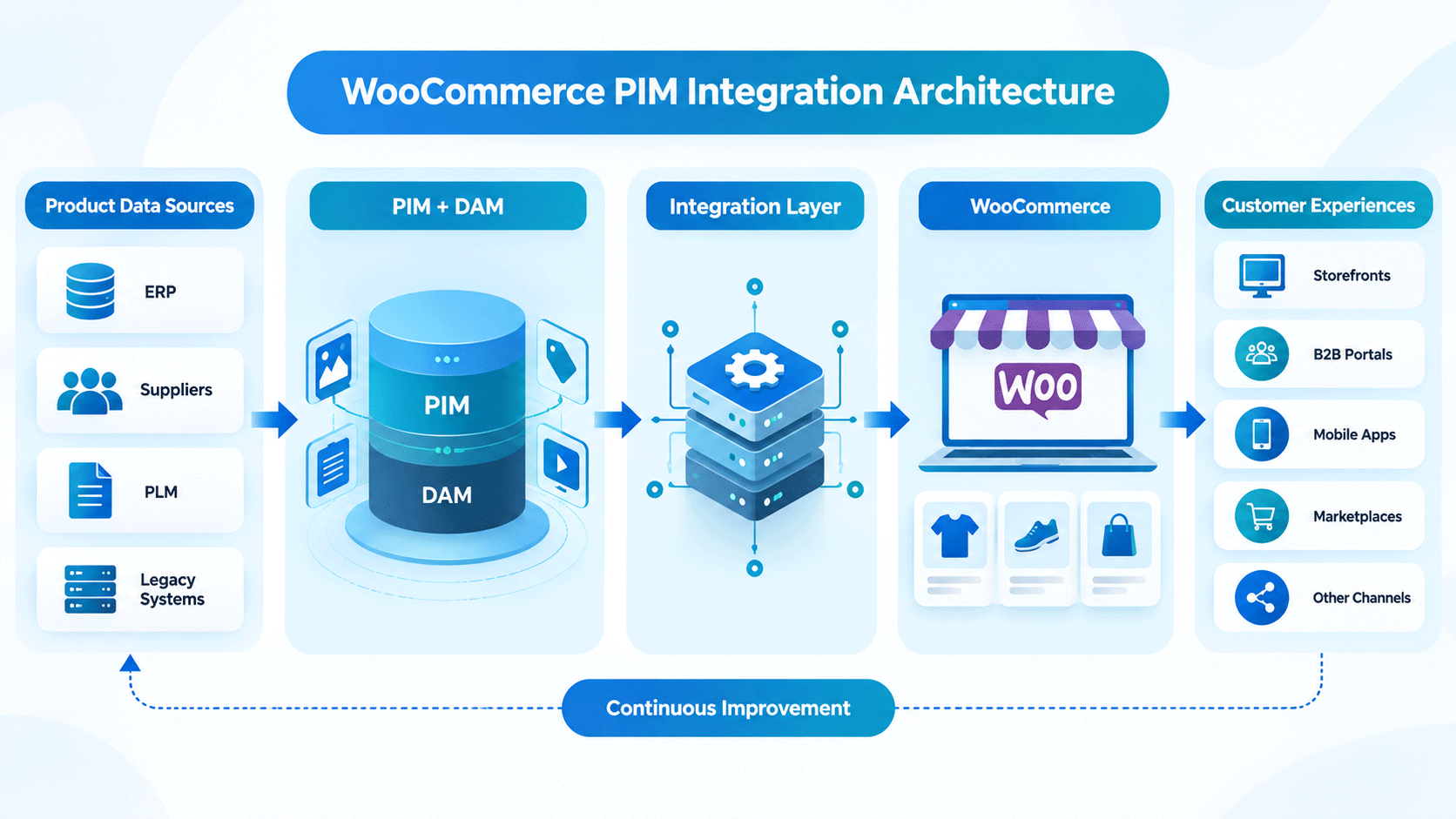
This architecture creates clear system ownership while enabling WooCommerce to receive accurate and commerce-ready product information automatically.
Our WooCommerce PIM Integration Services
Credencys helps enterprises design and implement WooCommerce PIM integrations around their catalog complexity, technology ecosystem, product-data workflows, and business objectives.
We map:
- Product families
- Categories
- Attributes
- Variants
- Controlled values
- Product relationships
- Digital assets
- Channel-specific fields
so, information flows reliably between systems.
Support multiple:
- Brands
- Regions
- Languages
- Business units
- Product catalogs
- Customer experiences
without maintaining entirely separate master product records.
We implement:
- Validation rules
- Error handling
- Logging
- Synchronization monitoring
- Retry mechanisms
- Failed-record management
- Integration health monitoring
- Ongoing support
to keep product information flowing reliably.
WooCommerce PIM Integration Use Cases
WooCommerce PIM integration is particularly valuable when catalog size, product complexity, or channel requirements begin to exceed what teams can efficiently manage directly in the commerce platform.
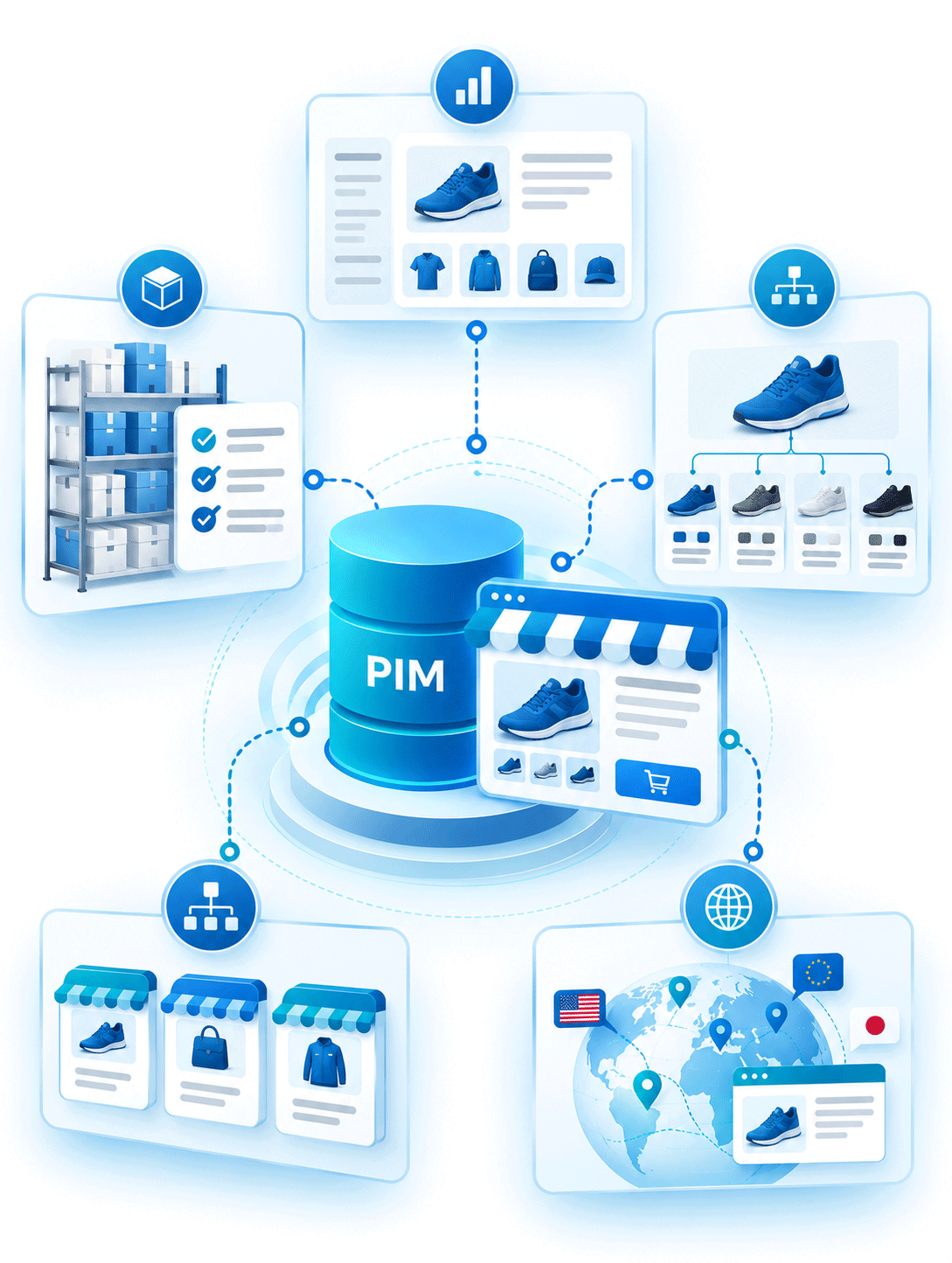
Large WooCommerce Product Catalogs
Centralize and automate product management for businesses handling thousands or hundreds of thousands of SKUs across multiple categories.
Variant-Heavy Products
Simplify the management of products with combinations such as:
- Size
- Color
- Material
- Finish
- Capacity
- Configuration
- Pack quantity
- Model
while preserving correct relationships between parent products and individual variations.
Multi-Brand Commerce
Maintain shared product information centrally while supporting brand-specific catalogs, descriptions, imagery, and storefront experiences.
B2B WooCommerce
Deliver detailed B2B product information including:
- Technical specifications
- Manufacturer part numbers
- Documents
- Pack quantities
- Units of measure
- Compatibility
- Product relationships
while ERP or B2B commerce systems continue managing accounts, pricing, credit, and orders.
Global Commerce
Maintain a global product-data foundation while controlling localized:
- Product names
- Descriptions
- Languages
- Images
- Attributes
- Units of measure
- Assortments
- Market requirements
for individual WooCommerce storefronts
Business Impact of WooCommerce PIM Integration
Connecting PIM with WooCommerce reduces product-data operations while creating richer and more reliable customer experiences.

Our Approach to WooCommerce PIM Integration
From initial assessment to production rollout, Credencys follows a structured approach to building scalable WooCommerce PIM integrations.
01 Assessment & Architecture
Analyze your:
- WooCommerce environment
- PIM platform
- Product catalog
- Variants
- ERP
- DAM
- Existing integrations
- Product-data workflows
- Storefront architecture
to define system responsibilities and the target integration architecture.
02 Data Modeling & Mapping
Map PIM product models to WooCommerce product structures. Define:
- Category mappings
- Attribute mappings
- Product-type mappings
- Parent-child relationships
- Asset mappings
- Channel fields
- Transformation rules
- Data ownership
before synchronization begins.
03 Integration & Validation
Develop APIs, middleware, connectors, or custom services and configure the required data flows. Test:
- Product creation
- Product updates
- Variants
- Categories
- Attributes
- Assets
- Relationships
- Validation rules
- Error scenarios
before production deployment.
04 Deployment & Optimization
Launch the integration in phases, synchronize priority catalogs, monitor integration health, train internal teams, and continuously optimize performance and product-data workflows.
PIM Platforms We Integrate with WooCommerce
Credencys designs WooCommerce integrations around the existing product-data architecture rather than forcing businesses into a predefined technology stack.

Real Business Impact: PIM & Commerce Success Stories
Leading Automotive Aftermarket Retailer
50%
Improvement in Industry Data Compliance
Credencys implemented a centralized PIM solution to standardize complex automotive product information, improve product-data governance, and automate the validation and distribution of catalog data. The solution helped the organization manage large product catalogs more efficiently while improving downstream data quality.
Read MoreLuxury Watches & Jewelry Retailer
45%
Increase in Product Data Accuracy
Credencys implemented an integrated PIM, DAM, MDM, and CMS environment to centralize complex product information and digital assets while improving eCommerce and multichannel product operations. The solution reduced manual product-data processes and enabled more consistent product experiences across digital channels.
Read MoreReady to Connect Your PIM with WooCommerce?
Integrate PIM with WooCommerce to automate product-data synchronization, simplify complex catalogs, improve product quality, and launch richer commerce experiences faster.
Talk to a WooCommerce PIM ExpertWhy Leading Enterprises Choose Credencys?

End-to-End Data Expertise
From product-data strategy and modeling to integration, migration, governance, syndication, and commerce enablement, Credencys helps enterprises solve product-data challenges across the complete lifecycle.

Domain-Focused Solutions
We design PIM solutions around the complexity of your products, industry requirements, channels, supplier ecosystem, and customer experiences.

Enterprise-Grade Partnerships
Our PIM and data expertise enables organizations to build scalable architectures around enterprise platforms and complex system landscapes.

AI-First
We help businesses establish structured, governed, and machine-readable product information that can support search, recommendations, automation, and AI-enabled commerce.
50+
Enterprise Clients
100%
Certified Consultants
15+
Years Experience
4.9/5
Client Satisfaction
Frequently Asked Questions
WooCommerce PIM integration connects a Product Information Management system with WooCommerce so product information can be managed centrally and automatically synchronized with the WooCommerce catalog. Instead of maintaining product descriptions, attributes, categories, variants, images, and related content directly in WooCommerce, teams enrich and govern information in PIM before publishing approved data to the storefront.
PIM integration becomes valuable when WooCommerce catalogs contain large numbers of products, variants, attributes, suppliers, languages, or storefronts. It reduces repetitive product maintenance, improves data quality, standardizes product attributes, accelerates product launches, and creates a scalable product-data foundation for commerce growth.
WooCommerce provides functionality for creating and managing products, categories, attributes, variations, images, pricing, and commerce operations. For smaller catalogs, this may be sufficient.
Dedicated PIM becomes more valuable when product information originates from multiple systems, requires complex enrichment and governance, contains large variant structures, or needs to be published across WooCommerce and additional channels. PIM complements WooCommerce rather than replacing it.
Depending on the architecture, PIM can synchronize information such as:
- Product names
- SKUs
- Descriptions
- Categories
- Attributes
- Specifications
- Variants
- Images
- Documents
- Product relationships
- Dimensions
- Materials
- Localized content
- Channel-specific content
The exact synchronization model depends on system ownership and business requirements.
Yes. PIM can manage parent-child product structures and attributes such as size, color, material, capacity, configuration, or other characteristics used to create WooCommerce variations.
Shared information can be maintained at the parent-product level while variation-specific information remains associated with the correct SKU.
A focused first release typically takes 3 to 6 months; larger programmes run in phases over 6 to 12 months or more. See also PIM integration services, Shopify and BigCommerce integrations.
Trusted by Best
Choosing Credencys means partnering with a team that’s deeply committed to unlocking the true value of your data. Here’s why industry leaders trust us:
Our Valued Clientele


Send us a Message
