

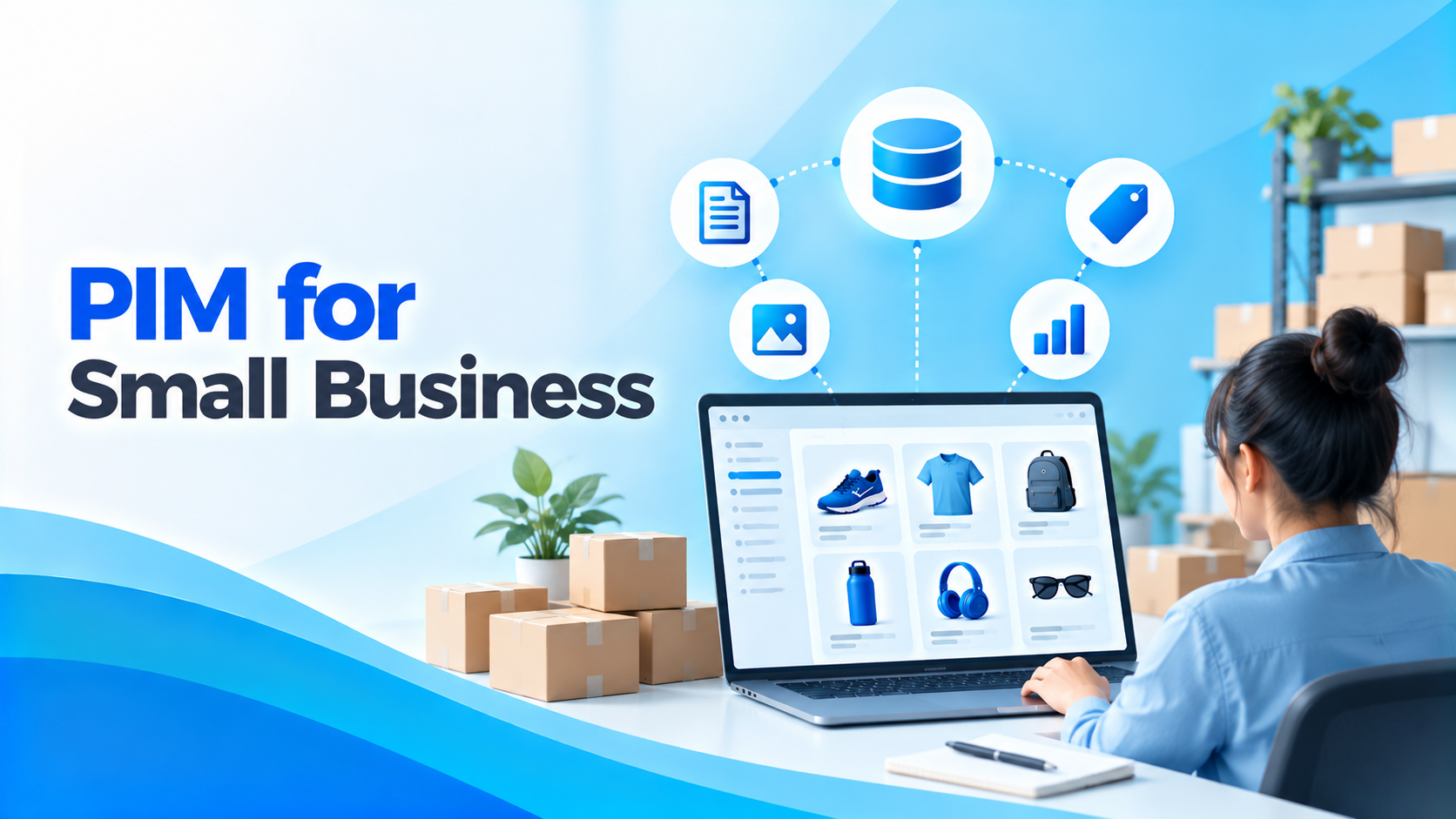
PIM for Small Business: When You Need One and How to Start
Published October 2026
Short answer: A PIM for small business is worth it once spreadsheets and your eCommerce platform can no longer keep product data complete and consistent: typically when you sell on more than one channel, add suppliers or languages, or manage hundreds of products with many attributes. Affordable options include SaaS PIMs priced by product volume, such as Plytix, and open-source editions of Pimcore and Akeneo.
PIM for small business used to sound like a contradiction: product information management systems were built for large brands with big IT teams. That has changed. Today there are affordable SaaS PIMs and free open-source editions, and many small brands, distributors and online retailers outgrow spreadsheets long before they become large companies. This guide explains when a small business needs a PIM, the affordable options, how they are priced, and how to start without a big project.
PIM for Small Businesses: Quick Summary
| Question | Short answer |
|---|---|
| Do small businesses need a PIM? | Not always. It pays off when you have several channels, suppliers, languages or many attributes per product |
| What can you use before a PIM? | Your eCommerce platform’s product catalog plus well-structured spreadsheets |
| Affordable PIM options | SaaS PIMs priced by SKU volume (for example Plytix) and open-source editions (Pimcore, Akeneo) |
| What drives the cost? | Number of products, channels and add-ons for SaaS; hosting and implementation for open source |
| How to start | One channel, a clean data model and your top products first |
Signs Your Small Business Needs a PIM
- You sell on more than one channel, such as your own store plus Amazon, eBay, Etsy, wholesale partners or a B2B portal, and keep copying data between them.
- Product data lives in several spreadsheets and nobody is sure which one is right.
- Suppliers send data in different formats and cleaning it takes days.
- Launches wait for content: descriptions, images or specifications are always the last thing ready.
- You are adding languages or markets and translations are getting out of hand.
- Listings get rejected by marketplaces for missing or wrong attributes.
Not sure yet? The free Do I need a PIM? check takes about 2 minutes and tells you whether you need a PIM now, later or not at all.
Spreadsheets vs eCommerce Platform vs PIM
| Spreadsheets | eCommerce platform catalog | PIM | |
|---|---|---|---|
| Best for | Very small catalogs, one person | One store, modest attributes | Several channels, suppliers, languages or many attributes |
| Data quality checks | Manual | Basic required fields | Validation rules and completeness per channel |
| Multiple channels | Copy and paste | Mainly that one store | One record published to every channel in its format |
| Images and documents | Separate folders | Per store | Linked to products and variants, reused everywhere |
| Collaboration | Version conflicts | Store admins | Roles, workflows and approvals |
Affordable PIM Options for Small Businesses
SaaS PIM priced by product volume
Plytix is a SaaS PIM aimed at growing brands. Its plans are priced mainly by the number of SKUs, with unlimited users, and optional modules for channels such as Shopify, BigCommerce, Wayfair and feed management. This model suits small teams that want a hosted system they can set up quickly, without servers or developers.
Open-source PIM
Pimcore and Akeneo offer free Community Editions that you host yourself. Pimcore’s Community Edition is free under its licence conditions for organisations below Pimcore’s revenue threshold; larger organisations need a commercial edition. Open source removes the licence fee, but you still need hosting, setup and someone to maintain it. Read our comparison of open-source PIM.
Your eCommerce platform, extended
For a single store, extending your platform’s product model (for example with custom fields) and keeping a disciplined spreadsheet process can be enough for a while. Move to a PIM when you add the second or third channel.
Mid-market PIMs to grow into
If you expect fast growth, look at platforms that scale with you: Akeneo’s SaaS plans, Pimcore’s commercial editions, or Pimberly, which publishes tiers by SKUs, users and storage. Compare them in best PIM software.
PIM Features a Small Business Actually Needs
| Feature | Why it matters for a small team |
|---|---|
| Simple, flexible data model | Add attributes and variants yourself, without a developer |
| Spreadsheet import and export | Bring in existing data and supplier files quickly |
| Completeness per channel | See at a glance which products are ready to publish |
| Bulk editing | Update hundreds of products in minutes |
| Image and document management | Keep product images linked to the right products and variants |
| Ready connectors | Publish to your store and main marketplaces without custom integration |
| Unlimited or affordable users | Let suppliers, freelancers or agencies help without high seat costs |
Features such as complex workflows, print catalogs or multi-domain master data can wait until you need them.
PIM for Small Business: Three Examples
A direct-to-consumer brand moving onto marketplaces
The brand sells 400 products on its own store and wants to add Amazon and a European marketplace. A SaaS PIM with marketplace connectors lets it keep one record per product and publish channel-specific titles and attributes, instead of maintaining three spreadsheets.
A small distributor onboarding supplier data
A distributor with 5,000 products receives files from 40 suppliers. Import templates and validation rules in a PIM turn days of cleaning into an hour of checking, and its B2B webshop finally shows complete specifications.
A growing manufacturer with distributors
A manufacturer with technical products needs data sheets and specifications for distributors in three languages. An open-source PIM gives it a flexible data model and translations without a licence fee, with a partner handling setup and hosting.
How Much Does a PIM Cost for a Small Business?
It depends on the pricing model more than on one price tag:
- SaaS: a monthly or annual subscription, usually driven by the number of products, plus add-ons for channels or AI.
- Open source: no licence fee for the community edition, but hosting, setup and maintenance cost time or money.
- Implementation: data clean-up, the data model and channel connections. For small catalogs this can be a few weeks of work rather than a large project.
For a quick estimate based on your catalog and channels, use the PIM cost calculator.
How to Start Without a Big Project
- Clean up your best data first. Pick your top-selling products and make their data complete and consistent in one spreadsheet.
- Design a simple data model. Product families, attributes and variants that match how customers shop.
- Start with one channel. Usually your own store; connect marketplaces once the basics work.
- Bring in images and documents. Link them to products, with clear naming.
- Add suppliers and channels step by step, with validation rules so quality stays high as you grow.
Common Mistakes Small Businesses Make with PIM
- Buying for features you will not use. Start with data model, imports, completeness and channel exports.
- Importing messy spreadsheets as they are. Clean and structure first, or the PIM inherits the mess.
- No owner. Even in a small team, one person should own product data quality.
- Waiting too long. Moving 300 products is easy; moving 30,000 after years of spreadsheets is not.
How Credencys Helps Small and Growing Businesses with PIM
We help growing brands, distributors and retailers decide whether they need a PIM yet, choose a platform that fits their size and budget, and set it up so it scales. That includes independent platform selection, a clean data model, data migration and channel connections. Our free PIM buyer’s guide is a good place to start.
Frequently Asked Questions
Is PIM worth it for a small business?
Yes, once product data is holding you back: several channels, many attributes, suppliers or languages, or launches waiting for content. For a small catalog sold in one store, your eCommerce platform and a disciplined spreadsheet process may be enough for now.
What is the cheapest PIM?
Open-source community editions such as Pimcore and Akeneo have no licence fee, but you pay for hosting and setup. SaaS PIMs such as Plytix charge a subscription based mainly on product volume, which can be simpler for small teams without developers.
Can I use Shopify as a PIM?
For a single Shopify store with modest attributes, Shopify’s product catalog and custom fields can be enough. Once you sell on several channels or need richer data, validation and workflows, a PIM connected to Shopify is the better setup.
How long does it take to set up a PIM for a small business?
A small catalog with one or two channels can often be set up in weeks rather than months, especially on a SaaS PIM. Larger or more complex projects take longer; plan a first release, then add channels step by step.


Tags: