Top 10 programming languages will Boom in 2023

In today’s time where almost everything is working on coding based technology, we surely have a great scope to make a career in the dame. There is no doubt that today’s world has got coding in more than 330 programming languages. There is so much software that is built every year promising the customers with better services. Looking for the best programming language for sharpening your programming skills in 2023, then you are in the right place.

Here we have listed the top 10 programming languages which show promising growth in this 2023 and also for the next few years. So, pick any one or two from the list and improve your programming skills in that platform to have a bright career in the IT industry.

List of Top 10 Programming Languages To Learn in 2023

Listed are some of the best programming languages that are quite in demand and surely in 2023 as well their place on the top position will remain the same in the technical industry.

1. JavaScript

It is one of the most common and popular programming languages by the developers in 2023 that has been rated high. This language has increased its demand more into the gaming industry and the internet of things. It is said to be one of that core existing technology along with CSS and HTML that will always stay on the top in the position. This is a lightweight programming language and has some object-oriented results. It’s common purpose is to create three effects that are more interactive and within the internet browser itself. It is speed driven and simple to use but security issues from the client side can occur.

Advantages:

  • Simple to use
  • Extended functions
  • Open Source

2. Go programming language

Golang which is popular by Go programming language is widely used by Google. And the way Google is in demand every year, there is no denial of the fact the demand for this language will also keep on increasing. Even this language is best for those who want to have startups in Silicon Valley. Many companies rely on this language because of the multithreading excellent support. Certainly, this language offers mart documentation and is backed by Google. It has a cleaner syntax which makes it easier in learning. This is one statically-typed language that offers maximum security.

Advantages:

  • Simple to use and read
  • Allows to do multiple operations effectively
  • Compilation can be done quickly

3. Python

Python is the talk of the town in the year 2023 too. This is said to be a trending programming language by many other popular websites like Pinterest and Quora too. As per some for the reports, some statistics show that this language has been outranking even Java and has now reached out to be the second popular language after JavaScript. It is used by many mobile apps, desktop, and medial tools for network server and webs application sources too. It is said to be the root reason for creating some of the popular video games like Toontown and Vegas Trike. For beginners, it is an easy language with integration with web services.

Advantages:

  • Easy to read
  • Comes with pre-defined Tutorials
  • Easy integration.

4. R Programming Language

R Programming Language is another commonly used programming language that is used for machine learning and data analysis too. It offers the most incredible framework and has built-in libraries. It offers algorithms that are quite popular when it comes to machine learning. It is also used for graphics and statistical computing. The best part of learning this language is that you can work on different operations. It has an open-source solution which is why; you can make the changes as per the needs. Thanks to the wide statistical analysis, this language is quite trending.

Advantages:

  • Effective for creating statistical software

5. Java

We all know how popular Java is and there is no denying the fact that despite other new languages have come this is still on the top. It is a programming language that is generally based. This being an object-oriented structure is said to have become the standard of applications which you can use no matter whether the platform is iOS, Windows or Android. Besides, it has a feature that promises better portability and can be used all across the platforms that may range from the centers of the main data frame to even the Smartphone too.

Advantages:

  • Easy to learn
  • Platform independent

6. C/C++Programming

C/C++Programming is very old but still the most important programming language. They were the starter of the future programming and have helped in much festive knowledge too. The language is basically from a computer science background and even those who have no technical background can learn this programming language. You might have heard about programming languages like Golang and swift. Well, they are ideally written in C/C++ itself. There are very few skills that a programmer needs to acquire to know this language. It is also said to be the foundation for better support and growth for many other languages.

Advantages:

  • Offers more control
  • It is an Object-Oriented Programming Language

7. Ruby

This is also a popular language and is quite easy to learn and implement too. This language was developed in the year 1950s and has more human-friendly syntax. It is also popular for the web application framework called the Ruby on Rails (“RoR”). This programming language is one straightforward yet easy learning option. It is sturdy and can have the ability for creating web applications swiftly. However, the run time speed can affect the performance too.

Advantages:

  • Easy to create web applications

8. Swift

Swift may be a new programming language that is used in iOS applications but it has gained a lot of popularity. It has grabbed the attention of the market share for over a few years, for android it has only been the tough competition. This has been backed up by apply and is known to have extra protection and security against any kind of memory leaks. You can easily add many exciting features and functionalities in the product and thus make it more demanding than the previous one.

Advantages:

  • Safe and Secure
  • Inherits modern programming conventions

9. PHP

This programming language can help in building web development in a better way. It is said to be the demand programming languages of the year and web developers cannot even write those bulky things on the site and web applications if there is no PH coding rightly executed.

It offers the web application development brisk transition and can help in adding functions and features to web applications too. It paces up the development of the app and to maintain this language coding is simple too.

Advantages:

  • Open-source Language
  • Easy to develop websites

10. Scala Programming

Last but not least Scala Programming has been supporting the functions and object-oriented coding. It is quite popular and has been proved productive for developers too. Java has a strong influence on this language and is said to be rich in APIs. Meetup, Gilt, New York Times, SoundCloud are some of the companies that have Scala as their programming language. For those people who have an interest in data science, many find this language as a great opening door.

Advantages:

  • Object-oriented programming language
  • Rich in APIs

In addition to those above mentioned 10 lists, you cannot ignore the importance of learning C# Programming language. C# Programming paces up the development of the app and to maintain this language coding is simple too. The swift programming is quite easy to learn provided you have a clear base of C or C++ language too. Currently, more than 3 billion devices have applications that have built-in C# Programming. However, it has a low boosting speed which may hamper the stability.

Conclusion

The importance of Programming language entirely depends on the purpose for which you are using it. Once you choose the technology, it will be easy for you to select the language too. Also, make sure you are in the same field to have a bright career.

General FAQs about Programming Language

1. How many programming languages are there in this world?

Currently, there are more than 700 programming languages that exist under 4 types procedural, functional, object-oriented, scripting and logic programming language.

2. I am not a Programmer. How do I start learning Programming Language?

Well, just like learning subjects like maths and science in your academic studies, you can learn a computer programming language by starting with basics.

3. Is it necessary to be a computer science graduate to learn a programming language?

No! Your CS degree won’t play anything when it comes to software development. Yes! You can learn some basics on your CS degree but any graduate students can learn that privately. All you need is proper dedication and hard work.

4. Which programming language is mostly preferred for developing games?

As far as developers are concerned they prefer language which runs directly on computer hardware owing to that they prefer C and C++. Most PC games are written in C++.

Develop an App like Hulu – 4 Must-have Features that Make Mobile Video Streaming App Successful

You might have observed this transition or if not, then you will know about it clearly at the end of this discussion. Most of us have switched from our traditional cable TVs to live video streaming apps and it has eventually become a very hot topic around the globe. It has opened the doors for fascinating people to watch TV shows and series in a different way.

You can pick up several examples for the video streaming apps that have taken the world by storm- be it Netflix, HBO NOW, Youtube. This list includes Hulu as well because Hulu is very successful nowadays. Several reasons are instrumental for the majority of us quitting their satellite TVs and shifting to apps like Hulu. Must be thinking why we are talking about Hulu so much, right?

Reports and Analytics on Hulu App

Well, the reports from analytics say it all. A report from TechCrunch says that Hulu has estimated subscribers of almost 24 million by the beginning of 2019. Even the growth of this app in terms of gross revenue has proliferated by 71% and is continuing to rise every year and summed up to $132 million in 2017.

Another report from AppAnnie says that the total time spent by the TV show lovers on the top 10 video streaming apps has crossed the 12 billion hour threshold very easily. As per the news from Tech Crunch, this app has continued to seek attraction of such a big population and has reached most of the people in the US.

What makes Hulu Special?

Well, recent upgradations of the Hulu App make it so simple to use. Also, it brings sophistication to watch the related content as per the need of a single individual. The tantalizing experience created by Hulu has resulted in bringing it to one of the top-grossing apps in the US.

Now, this exquisite piece of a new experience can inculcate a desire to develop an app like this on your own. If you’re interested too, then you need to consider several requisites before diving into its developmental strategy. Have the necessary competence to figure out the answer to the several doubts occurring in your mind. What can make your platform better than others? How can you reach out to more people on each augmenting day?

Today, we’d like to throw light on the 4 must-have features to consider while developing an online video streaming app and a rough estimation of the expenditure as well. So, let’s talk about these remarkable aspects which can be disintegrated into several factors.

4 Must-Have Features to Make Your Platform Unique Like Hulu

1. Registration, Onboarding Experience and Availability in Multiple Languages

The first and foremost step to create a great app like Hulu is to make the registration process easy for the users. Because people consider the registration process enervating, providing a way to register in one go will give you an upper hand.

Now, let’s talk about onboarding. It is a necessity while creating almost any app in the modern era. The onboarding experience ushers you through a brief path showing the features of the application and accommodates you to adjust all your preferred choices according to your needs.

If you want your streaming app to make good progress, then the best you can do is to make it available in various languages. This will ensure that people from different parts of the world can access it properly.

2. Search and Exploration

The search option can be seen in any streaming app you come across because it makes it convenient for the user to find out the shows and movies. This facility directly provides the user their choice, if available on the platform. It also depicts all the trending searches among the users of the app.

The exploration task needs to be easy. If it is so, it will continue to engage the audience to use your service for long. It saves time by avoiding the duration to search for something good.

3. User Profile and Watchlist

The user’s profile helps the user to make any modifications in their personal information such as their generic profile, emails, and passwords. This will make the way of managing their data easier.

Now, most of the users wish to create more than one profile in a single account. If these profiles belong to different people, then it is important to trace the interests of every member and provide them with the relevant suggestions when they wish to watch something new. It keeps track of their favorite genres and apps like Hulu have also fixed a certain threshold for the addition of multiple user profiles.

4. Use of Real-time Analytics and Social Features

While talking about other important features, it becomes compulsory to know the work of real-time analytics. Apps like Hulu have integrated this feature to monitor the presentation of each of the videos in real-time.

People often love to share their interests with their friends and family members. It will increase the popularity of a particular movie or show being shared along with your platform.

If users can rate and comment on the quality of the video’s content, then other users can easily find out a better choice.

The Cost Estimation For Developing App Like Hulu

To create a good video streaming app like Hulu, it is very important to keep the approximation in your mind. The cost is dependent on several factors. From the features and functions of the app to making it available on different platforms such as Android and iOS, everything needs to be well-integrated. You need to hire an app development company that will do the work for you. Their charges can vary depending on the time they have to put in.

Conclusion

So, if you have grasped these highlighted points before developing an online video streaming app like Hulu, devise a plan to initiate. Above all, the upshot of app development is to bring sophistication to its users.

Frequently Answered Question on Developing App like Hulu

1. Is it true that HULU is the only app offering more TV content?

Yes! When compared with all other existing online video streaming apps, HULU streaming more TV content. Besides, the streaming quality of HULU service is far better than other streaming service providers. As per the recent survey report in the mid of the last year 2019, the Hulu app consists of more than 2 million subscribers and it is positioned at 6th place in terms of top-grossing apps in the United States of America.

2. What are all the important features users can receive from the online streaming app HULU?

Well, when compared with other online streaming apps, HULU offers incredible user experience both on the web and as well as in the mobile version. Here are the lists of few vital features that users can enjoy by using HULU app on their Smartphone

  • On-boarding Experience – Specifically designed to tell more about the app’s functionality to the users.
  • Registration – Hulu Application allows 2 ways of registration via email or via social media.
  • Easy Payment – Hulu Application offers a variety of subscription plans and flexible payment options. Users can pay by using any of the following options by credit/debit card or via PayPal, Venmo, or Amex Express Checkout. In fact, users are allowed to utilize Hulu gift cards for payments.
  • Video Library – Hulu Application consists of wide collections of videos where users are allowed to sort it out based on the categories and easy customizations.
  • Watchlist and MyStuff – Hulu offers everything for all range of users. Users can collect their favorite things and add those on their watch list. Besides they can organize their favorite stuff in the Hulu application.
  • Cloud-based DVR – Easy recording option is available in Hulu application by through personal cloud-based digital video recorder (DVR)

3. Who provides content for HULU?

Just like other streaming apps, Hulu partners with various networks and media partners who create original series. In addition, Hulu partners with popular channels like NBC, ABC, Fox, Big Ten Network, Fox Sports and so on. With these partnerships, Hulu streams high-quality content and movies to its audience. As per the records, Hulu invested more than $2.5 billion every year on content to entertain its audience. In fact, Hulu’s decision on investing in original content is the entry point of the on-demand TV application that starts attracting users worldwide.

4. What are all the devices supported by HULU?

Well, on the official website of the HULU you can find the entire list of devices on which you can avail the HULU services without hassle. To be frank, you can find a wide range of streaming devices running in Android and iOS platforms like Roku, Amazon Fire TV, Apple TV where you can use and avail all the services offered by HULU. Also, you can also use PC browsers, Xbox One, Xbox 360, and a few more gaming consoles for availing Hulu services.


React Native Apps: 7 Successful Apps Built Using React Native

Creating apps using only one single base for all platforms may not sound real, but React Native gives the hope of making it possible. React Native speeds up the building of multiple apps across various platforms, and the best part is it reuses the code from other apps saving time and additional money to be invested in React Native app development services.

Although there are both benefits and disadvantages of using React Native apps, with benefits taking over the cons, no wonder that companies prefer to React Native for developing mobile applications. There is quite a good React Native example of apps that we use day and out in our daily life. Moreover, there are many app development companies that can create Reactive Native apps according to your preferences.

Both companies and users have shown great interest in developing and using apps built on React Native, respectively when compared to Nativescript and Appcelerator. Similarly, when you compare Xamarin with React Native, as per Google trends, developers have increased love for React Native due to its easy-to-use coding transformation between Android and iOS platforms. As it is built exclusively for mobile users, a statistical report of recent research states that React Native consumes less battery power when compared to Ionic, which makes developers develop more apps using React Native as a primary platform.

Also, compared to native Android and iOS developers, companies have adopted building React Native apps for a better acceleration of app usage.

List of 7 Applications Created Using React Native Apps

#1: Facebook with React Native

Facebook wanted to bring its web version as a light feature to its users on mobile thus allowing users to experience a great interface of using their app on mobile phones. Facebook planned to build their mobile app products with one single team, and thus React Native was brought into limelight and leveraged for both Android and iOS users on Facebook’s mobile app development.

The development team to check and validate the test performance of the change converted a feature such as a startup time in the Events Dashboard of the Facebook mobile app. This change is a crucial one that determines whether the user will stay on or leave the app. This is just one instance of change that has been implemented with React Native, but there are other features which were fine-tuned and well-used by users.

#2: Skype with React Native

The Skype application was encountering several issues at the beginning and that is when it was announced that they are introducing a new app with React Native technology. Skype was completely revamped right from icons until all the available features previously and added new features for user benefits that gave a new look to the app. Microsoft, with observing the efficacy of React Native, announced that React Native will not be considered as a platform for mobile app development but also the desktop version of Windows. Thus it was realized that React Native has gone a level beyond mobile app development. Moreover, with amazing benefits from React Native, Microsoft gained React Native from GitHub repo, which shows a success sign of React Native users.

#3: Facebook Ads with React Native

Before React Native started supporting social networking platforms such as Facebook, it first began with Facebook ads as React Native app for Android users under Facebook’s roof. It was able to fix issues with a lot of business logic required to handle variations in ad formats, time zones, currencies, date formats, currency conventions, etc., particularly if coding for the same is written using JavaScript.

Also, you can execute user interface surfaces that contain multiple or loads of data easily with React Native. Features that were newly introduced or integrated into Facebook ads helped other developers to try and implement the same in their apps.

#4: Instagram with React Native

Instagram has its native app on which many features were developed. It took the challenge of integrating React Native into their existing native app right from changing the simplest view to an extraordinary user interface, especially, converting the push notifications from web view to mobile view. Due to the classy user interface, it did not require a separate navigation infrastructure. Though the development team experienced many toughest tasks while implementing React Native app features into Instagram, they were able to improve the velocity of an app, gradually. 80% to 90% of code was transformed between Android and iOS that saved a lot of time for an app development team.

#5: Tesla with React Native

Tesla is the world’s popular electric car producer and recently joined the React Native community. They followed references from Facebook’s trending framework for developing an application for the electric car and Powerwall battery. The app is capable of diagnosing a vehicle and identifying its accurate location, as well as controlling it with the help of a smartphone for a few limited features. Though it has not been completely known about their application development, still it has got good feedback from customers on the idea.

#6: Shine with React Native

Shine is a mind-relaxing app for users, who feel stressed and less-motivated or lack of motivation that offer motivational quotes, mottos, and articles and help them relax. When they sign-in for the day, the app offers inspirational/spiritual recordings created by experts that help deal with their everyday stress. First, this app was introduced for iOS users targeting the USA audience because Apple phones held major share value. But very soon they implemented the app in Android and that is why they brought in React native, as the platform is capable of integrating coding easily from iOS to Android.

#7: Uber eats with React Native

Uber has recently announced the integration of React Native by leveraging its features for the Uber eats app. The originally-built Uber app was having a crucial problem of sending push notification sounds, for users. The app involves three parties such as restaurants, delivery-partners and app users and was displaying a dashboard in the web view, which was rectified with bringing in React Native. With limited access to functionalities, instead of changing the existing view, the development team had to rebuild the entire dashboard with React Native.

Some more apps that have integrated with React Native are Walmart, Airbnb, SoundCloud Pulse, Yeti Smart Home, Whym, ChaperHome and more. React Native not only provides betterment to the existing features of your app but also builds wonderful new features that even sometimes, native developers of Android or iOS cannot even perform.

Conclusion:

Integrating React Native into new /existing mobile app development is always on the positive side of the market. The aforementioned applications are quite a popular one so that you can understand how React Native helped in the betterment of apps. But there are many customized applications developed using React Native, and it turns out to be a viable alternative for native app development.

Although we understand that every app has its own flaws, still when it comes to offering a wide range of technical possibilities, React Native tops from others. Hence the reason it has become an on-demand technology for every other mobile app development company across the world, and similarly, the opportunity for such skilled developers is also more.

Frequently asked questions on React Native Apps

1. What is the difference between React and React Native?

React Active is no different from React; in fact, React Native uses React for customization of features in the app such as how ReactDOM is used for Web, similarly, React Native is used for easy code transformation between Android and iOS applications. It offers similar access to features how React offers, providing an enhanced UI.

2. Will my React app and React Native app work on both mobile and web?

Unfortunately, it does not work in that manner. React code is flexible and compatible only for applications developed for the web. Similarly, apps developed using the React Native app will work only on mobile devices that it was coded for. Also, some features, you may not be able to bring it in the mobile app as it was written for the web.

3. Will React Native app offers the same interface for my app on both Android and iOS?

Both platforms have separate guidelines to follow. Though sometimes, there are few factors with which we can make it possible, still it should not be performed to leave the appearance of the app’s interface just like that. React Native does not offer the same interface between Android and iOS; it only uses the native components from both interfaces.

4. Do not we require native developers if we integrate React Native into an application?

No, you definitely require native developers because they possess immense experience when it comes to configuring mobile integration services and internal app distribution, by configuring certificates in XCode and other related ones. Only native developers can create customization modules for features that cannot be integrated by React Native, be it Android- or iOS-based apps, and it is also easy for native developers to expose the developed custom module to JavaScript and make it function with React Native.


Single Page Application Development: How is the impact of growing SPA trend in 2023?

Single page application development (SPA development) is one of the latest trends in mobile app development and turns out to be a unique technique for website design that helps in faster load time of a webpage. It especially works perfectly on a smart device and gives a convincing user experience by displaying the webpage parallel to how it appears on the desktop version of the website. It supports in, overcoming slow page loading problems with websites and preventing revenue loss due to the same cause.

Even a second delay can vary you from your competitor among your target customers. In that manner, a single page application ensures active and immediate webpage responses and improves customer experience.

How do you if your website is fast and how it is measured?

In a survey conducted by BankMyCell, it has been stated that out of 43% of the world’s population that owns a smartphone, do not even wait for more than a minute for your webpage to load and open. If your website is not opening fast, then it gives an opportunity for your competitors to occupy your place.

Later it does not matter even if you rank first on Google but your website is receiving a huge bounce rate. Google recommends the download time of an app should be fewer than two seconds and the webpage responsive time should be less than 100 milliseconds.

You have seen the positive part of the SPA and how it helps in speeding up the webpage loading speed. But there are cases where developers do not prefer developing apps based on single page applications due to its own reasons. Your website may be exposed to potential threats that hit not only the developer-end but also the client-end. Also, sometimes, changing a website built on a single page application from scratch is quite difficult, even though you are allowed to use front-end microservices that could help avoid such issues.

What is Single Page Application and what are its benefits?

If you know what a one-page website is, then SPA also works in the same manner, where a one-page website is for desktop websites and SPA development is for mobile devices, such as Android and iOS.

Single page application quickly narrows down your website in one single page by optimizing web pages. It is called a website format that contains the entire website in a single HTML file with appealing web appearance and functionality while viewing in a browser and is encoded using JavaScript. Gmail, GitHub, Google Drive, Facebook, etc. are some SPA, to name a few. Rendition and web management are two processes performed on the client-side after which the application code is loaded into it.

Multiple page applications (MPAs) follow the traditional website design that comprises multiple HTML files integrated with a hierarchical structure and are then transferred/communicated from an internal server, whereas SPAs contrast with MPAs in terms of their functionality and efficiency.

Moreover, MPAs occupy space of 1.3MB to 2.5MB content on average, and thus the time required to download files on a mobile app is elongated by mobile phone CPUs, and sometimes slower than browsers used on desktops. Also, if there are any graphics feed data in the mobile app, then again it may consume time to load or can perform well when connected to Wi-Fi.

Benefits of Single Page Application Development

  • A mobile app, built using a single page application, provides user seamless experience to the webpage with simple layouts, compatible and readable format according to mobile screen sizes and resolutions, easy navigation, by keeping data transfer between browser and server to the least minimum case.
  • By using one HTML file for the entire website, the content part also stays in one single file at the client-side. This fosters quick webpage load times, eases the webpage navigation and avoids page hopping that may consume time.
  • SPA-based websites generate more traffic on social media because of carrying a small number of files to load. Also, debugging and upgrading becomes easy with nimble load times, particularly if you are using Chrome’s Inspection function.
  • Developers find working on single page application websites interesting and innovative, as the SPA format allows them to improve the website’s application programming interface. Due to the involvement of JavaScript frameworks in the SPA-formatted websites, data can access and protected on multiple devices when you are offline, without interrupting work production wherever and whenever as per the user convenience. For example, Google Drive and Gmail work using the same technique.

When and where SPAs can go wrong?

  • Single-page applications cannot run without JavaScript both enabled and installed. Though it is well-known for delivering appealing websites, if something goes wrong with JavaScript, then there is no other crippled website than yours.
  • SPA-formatted websites may not allow you to operate features such as search functions, user input, and data retention.
  • Because of its generation method the search engines may not count your website, and the server does not refresh when the website is updated automatically.
  • Sometimes, when script programs fail to delete the unwanted information from the database, it leads to memory leaks and by default, the device slows down within. SPA cannot handle both memory leaks and cross-site scripting attacks (a suspicious code that hacks the SPA’s standard coding on the client-side). The severity of these two problems is huge and sometimes, it may end up revamping the website from scratch.

Best frameworks for developing single-page applications

As single page applications work only on JavaScript, you can make use of the following frameworks for successful implementation and development of a SPA-based website.

  • Single page application React
  • AngularJS
  • BackboneJS
  • Ember
  • Meteor
  • Polymer
  • Dojo
  • Knockout

Conclusion:

Although there are certain flaws in using single page application, still the trend of single page application development has been showing a great impact on optimizing websites for user convenience and real-time experience. Despite factors such as anti-virus protection and visibility to search engines, the SPA is a good technology to implement that attracts users explicitly.

Frequently asked questions on Single Page Application Development

1. Can I have only one version of frameworks such as React, Angular, etc?

Yes, it is suggested to stick on to one version of any framework that you have chosen. First, you should have a recommended setup according to the website development requirement and then you have to configure the import map so that your library is defined only one time. So set your SPA environment as to how you define your libraries but be careful and preventive about the effect that falls on user’s bundle sizes and application speed.

2. What is the best way to share the application state between applications?

Usually, sharing application state among applications is not suggested because there are high chances that all apps are coupled together. With effective designing and setting up boundaries at the beginning of your application development, the possibility of sharing the application state becomes less. Anyhow, there are a few ways where you can make it possible as well.

  • a) Generate a shared API request library that can pile requests and related responses. If someone hits the API request, then the API which is hit is hit again by another app, it uses only the cache files and responses.
  • b) Set the shared state as an export so that other libraries can import it. This lets libraries stream new values to their subscribers.
  • c) Always communicate using custom browser events.
  • d) Read or store the state by using cookies, local/session storage for items that do not keep changing often such as login credentials.

3. Can I use more than one framework?

Yes, you can use more than one framework, but keep in mind that it may split your front-end organization into specialties, which may not be compatible and pushes more codes to your users, which makes them feel uncomfortable when using your webpage. However, using multiple frameworks keeps unwanted or older libraries away by increasing upload speed by removing old library codes in the application.

4. Which is better to use – Single page applications or Multiple page applications?

If you are trying to build a desktop-based with multiple pages created and transform the digital view of the same into mobile technology, then multiple page application is useful. But you also need to remember that multiple page applications may not help you in the speed of webpage loading in both web format and on the mobile format because it carries multiple HTML files for even a single page. Whereas in case of single page application, you will have only one HTML file for the complete website and it increases the webpage upload and download speed compared to multiple page applications.

But every application has its own benefits and disadvantages as mentioned in this blog previously. If your requirement is huge and you look at the website protection point of view, then a single page application may not be a wise choice. Maybe, you can develop a site with a single page application and later can change it according to user experiences and preferences.


Microservices development: How it impacts in developing Mobile apps?

We are in the world of rising technology where mobile phones rule us more than our minds. The increase in the usage of mobile devices has increased with the rapid growth in the innovation of unique mobile applications. Mobile app development caught the technology market to a huge extent.

Although acceleration in mobile apps seems to be growing, user demands on the app interface are still increasing. Hence considering mobile-only strategy will not help all the time. A mobile app not only should have excellent design and subsequent development but also should concentrate on simplifying complex problems in a manner it satisfies the user’s expectations towards how a mobile application should be.

To fasten delivery changes and app advantages to meet the user experience, the mobile app development team requires an agile procedure that is when microservices app development comes into place. This will let you choose a DevOps and generate an effective changeover to the microservices model that enables you to build a cloud-based app for your business benefit.

In simple terms, inculcating microservices into mobile app development empowers developers to achieve a clear idea of the entire project development cycle and provides them the required adaptability to carry out in mobile app development services. The DevOps system used in the microservices development model ensures that any changes executed during the mobile application development, appear powerful, and users see your app with newly introduced features.

What are microservices?

Microservices is a unique and significant architectural development structure that serves the purpose of developing software applications with complex features. It has the capability of fragmenting more complicated large apps into coupled smaller services. Each microservice implemented in the application development serves all business functionalities individually, and these microservices can be deployed and redeployed without compromising the application’s integrity. Microservice highlights are built based on the client’s feedback to reach the user expectations speedily.

Advantages of Microservices Development In developing futuristic Mobile Apps

Benefits of microservices in mobile app development are vast; hence, developers prefer incorporating the technology in the development stage for attaining perfect app finishing before it is delivered to the client.

  • Accelerated speed and scalability: With microservices, you can develop a mobile app that is more responsive to the present market conditions. Also, it considers user feedback and stimulates the speed of mobile app guided with the on-demand scalability of users. Effective resource allocation takes place when the scaling of various microservices elements during execution occurs explicitly. You can shift the workload of a component to a suitable infrastructure that best suits the task, effortlessly. Using microservices leverage the adaptability of the cloud environment with producing effective output.
  • Improved efficacy and dexterity: Microservices allow developers to handle the software framework flexibly and achieve inclined productivity by decreasing the number of codes written previously. Moreover, they can be built, deployed and tested independently when compared to other functionalities in the system that result in enhanced team agility and repeated coding sequences rapidly.
  • Extended deployment: Microservices is an easy-to-use platform where it is equally distributed among all functionalities of software development. It is easily understandable that anybody from cross-functional teams can handle it effectively and without interruption. It works well on a team involving testers, developers and operation units functioning together on software development and testing, debugging and individual service on determined repetitions.
  • Flexibility in using technologies: Each microservice is written and built utilizing different technology and hence provides the flexibility of choosing any technology stack that best suits the specific service opted by you. The flexibility of using microservices allows you to access an in-depth talent pool with which you can generate any number of simplified codes. You can focus greatly on decoupled services of each business model or framework using different programming languages and can efficiently execute scaling, synchronize and affix distinct elements at independent framework levels.
  • Enhanced team spirit: Microservices not only provides the opportunity for developers to work with a freedom that supports them in quick and accountable decision-making but also to the cross-functional teams who are capable of taking up more rapid decisions. If you operate in a small or close-knit group, it provides more work freedom to every individual member and more responsive technical outputs.

Difference between microservices and conventional deployment practices

Conventional unified app architecture allows generating all the coding structures as a single cohesive unit and the constituents are independent and interrelated within the particular architectural framework specified.

If the developer wants to make any update to the mobile application, the output obtained through changes, are carried out intact to the stack. Like how you can shift from one technology to another technology easily in microservices, in conventional deployment practice, it is not possible without moving the entire architectural coding structure, which is literally a rework.

Microservices employ APIs, which helps split business functionalities into different services that can work as autonomous processes as well. Microservices support in accessing the current framework integrated easy for maintenance and also, any updates or changes can be shared without affecting the structure from scratch.

Conclusion:

Microservice implementation should be performed very carefully and sensibly as it involves a complete transformation of the business from one platform to another, which may have painful areas as well, and handled with confidence and great knowledge. But if you are able to execute the DevOps system practice without causing any trouble in the futuristic approach, while shifting to a microservices architecture, then your transformation becomes successful, after which you enjoy mobile app development and meeting user expectations as an interesting part.

Frequently asked questions

How to apply microservices architecture to Android and iOS?

Before you intend to shift to microservices, there are few things that you need to analyze within such as the compatibility of your existing infrastructure with a microservices architecture, team’s adaptability to the technology and knowledge of admin on the awareness of microservices for ensuring no problems after delivery.

Instead of keeping a long footstep, follow these things to understand better how microservices help in your case.

  • Develop and keep base architectures ready such as services, virtual machine templates, and containers
  • Include API gateways and a system to monitor, along with automation embedded

Prep your team for facing consequences or challenges that you may experience while making the aforementioned changes on your transformation.

How Microservice architecture is the future of application development?

Microservice architecture is one of the best technologies that is expected to evolve in recent years. It has been showing such great growth because of delivering excellence in application speed and scalability. An investor can take any type of risk to be implemented through microservice architecture, focusing on particular concern without affecting entire architectures. Developers who have expertise in microservice architecture are in high demand and are paid a decent package according to the market standard.

How to opt for microservices?

It is not an easy task to integrate microservice architecture into your software model as you purchase a shirt from an apparel store. Think of the following factors before you transform into microservices.

#1 Level of independence

Decide on how you want your features and services to be so that you can choose them as per the required independence level. Three types of independence level can help you decide about features before transformation:

  • Extreme microservice architecture – it has its own user interface and database and the functions are fully decoupled and do not have anything to do with other constituents due to being independent in functioning.
  • Semi microservice architecture – it shares few components among the database and not all services are decoupled, and so changes made if any affect the entire architecture.
  • Normal microservice architecture – here, when main services are decoupled, all the other branch services are tightly coupled and bound together.

#2 Organization code

Microservices allow access to numerous applications or tools for easy development. It all depends on how you choose the best tools for your architecture. Select the right tools and ensure they are compatible with your service. You also have to consider factors such as organizational complexities, continuous delivery, team organization, and the right strategy.

Is the microservice approach the best solution for mobile app development?

Yes, of course, you can very well consider microservice architecture as the best solution for mobile app development. But before which you need to understand the differences between two primary app development patterns – monolith and microservice.

  • Monolith architecture: It is a unified design that is capable of developing an application and a single container executes all service actions. The components inside the application are independent and interrelated to each other and hence, handling complex features can be a little tough. It works best on small applications, but if there is consistent customer feedback, then it may not handle complexities.
  • Microservice architecture: Microservice takes a modular approach for designing software solutions and allows developers to generate a small set of separate components, which are capable of running independently and interdependently as well. Developers with this technology knowledge are easily available but very valuable as well.


A Complete Guide of On-demand Service App Development: Features, Use Cases & Estimated Cost

The concept of on-demand services is adopted by many industries and it is still expanding its reach. In fact, due to the immense popularity, there is a rise of a new industry called “on-demand services”.

The global economy has been experiencing a remarkable boost due to the increasing usage of on-demand apps. It has started empowering the economy by surpassing a conventional business model of the organizations where customers need to approach companies to consume the services.

With the emergence of on-demand sector, the services reach to the consumers. Consumers have instant access to the services whatever they want and whenever they require.

On-demand service apps help customers to get their expected services on their doorstep just with a few clicks. The market of on-demand apps is expected to boom in the years to come and become a vital part of our daily life.

This post will give you a profound understanding of the on-demand industry along with important features popular apps of the domain and approximate app development cost.

Are you ready for the ride? Let’s get into it.

Get a proper understanding of what are the on-demand service apps

The basic idea of any on-demand apps is to enable the customers with the flexibility and convenience to get the services at their doorstep. Be rendering consumers with immediate products or services, it saves a lot of time for the customers.

On-demand service delivery becomes the hottest trend of these days and is constantly reshaping the habits of urban people. Users have stared proffering to get the product or services delivered at their demanded location rather than going out to consume it.

Many on-demand apps are available out there that serve different purposes including food delivery, transportation services, hiring plumbers, washing and laundry pick-up, and more.

Why you should consider an on-demand service app for your businesses?

With the rise of the digital era, marketing is getting competitive with each passing day. All the advanced technologies help companies to enable users with better and better customer experience. And, on-demand app development is just a baby step to enable the customers with comfort.

It is quite tough to please today’s demanding customers as they cannot be happy just by buying products or services. They expect to receive orders in no time. They always look for token elements such as quickest delivery, gratification, and best shopping experience.
On-demand service apps provide them the gratification by allowing them to ask for services through the app and get it to their preferred place.

How to build a successful on-demand service app?

Identify the service delivery gaps in the industry and build a solution around it to fill the gap. It helps you to connect with a large customer base by offering them reliable and quality services with no waiting time.

Before moving ahead to build an on-demand app, you should ask the below-listed questions to yourself. If you have answers to these questions, then you are ready for your app development. If you don’t have clarity about the answers, then first get the answers, then start building the app.

  • Does my app idea to solve the problem of users?
  • Does my app idea potential enough to convince the investor to invest in?
  • Which tasks will be simplified using my on-demand service app?
  • Which niche do I want to target?
  • Who are my competitors?
  • How will my app generate revenue?
  • Will my app stay relevant in the years to come?

On-demand mobile apps are actually 3 in 1 app

User app

It’s a consumer app that allows customers to address their respective needs. It consists of varied features such as

  • Search for products/services
  • Post product/service reviews
  • Check the pricing details
  • View the order history
  • Make payment through the cart
  • Map navigation to track the real-time location of the service delivery person
  • Post product recommendations
  • Track orders, and more

If you want to build a simple consumer-facing app with basic features, then approx development cost will be between $10,000 to $15,000

Service provider app

Through the service provider app, you can allow the service providers to manage their operations. The app allows service providers to

  • Create their profile by registering in the app
  • Add or remove the products
  • Manage prices
  • Track the active orders and order history
  • Have realtime chat with the customers
  • Map navigation to track the real-time location of the service delivery person, and more

The estimated cost for an on-demand app for service providers will cost you around $7000 to $9000.

Admin panel

This is an app for you where you can manage details of both customers and service providers. o enable the consumer and service providers with a seamless experience, you have to address all the abuse reports and queries instantly. It involves features like

  • Admin dashboard
  • Manage customers
  • Manage service providers
  • Manage pricing and commissions
  • Service tracking
  • Analytics and reporting and more

If you are interested to know the approx cost of the admin panel development, then it would be $7000 to $10,000.

* The cost of all apps is an approximate figure. The final pricing will vary as per your specific business requirements.

Must Have Features of On-demand Service App

Though there are several features for each user of the on-demand service app, there a few most important features. Without these features, we cannot think about an on-demand app. Let explore them.

User registration and profile

To use the app, the user has to register with the app and create his/her profile. They need to insert required details such as name, address, age, phone number, email address, etc.

Vendor profiles

Allow vendors to create their profile, where they can add the details that help customers in making buying decisions. Vendors can add the name of the business, list down products & services, images of the products, pictures of the location from where they operate, prices of the products, and more.

Filters

Integrate the feature of the Filter in the app to allow customers to find the products or services of their preferences.

Map integration

Customers want to get the order delivered at their preferred location fast. It is only possible when they ordered the food from the nearest areas. Map integration helps customers to find nearby service providers.

Moreover, using the map both customers and service providers can check the location of each other. It simplifies service delivery immensely.

Real-time location tracking

Customers can track the location of the delivery person in real-time through the app. It helps them to get clarity about how much time it will take to get the product delivered.

Cart & payment gateway integration

Cart integration is the best option as it allows customers to select multiple products without leaving the page. It enriched the customer experience and improve efficiency of the app as well.

To allow customers to buy the product, the payment feature has to be in the app. You can allow them to pay through a payment gateway or offer them multiple payment options such as credit card, debit card, net baking, mobile payment & wallet apps, and more.

Reviews & ratings

Before buying products and services, customers prefer to check the reviews and ratings of them. It gives them confidence about the quality of the product/service and value for money. Eventually, good ratings and positive reviews encourage customers to buy your services.

Push notifications

Customers love to receive notifications from their favorite brands. Keep the customer updated about the new product arrivals and the latest recommendations by sending them push notifications.

Through push notifications, you can inform the customers about the discount, offers, sale, promotion packages, and so on. Also, advanced push notification tools allow you to inform about the reordering or restocking products.

Top 3 Use Cases of On-demand Service Apps

1. Food delivery

Many times, it happens that we are too hungry but don’t have time to go out for lunch and dinner. The on-demand food delivery app connects customers with all the restaurants available at their nearest location as well as across the city or town.
The app allows customers to place the food order by sitting in their home or office premises. Customers can browse the menu of different restaurants, add food items in cart, make payment and place the order. They will get the food items delivered at their preferred location.

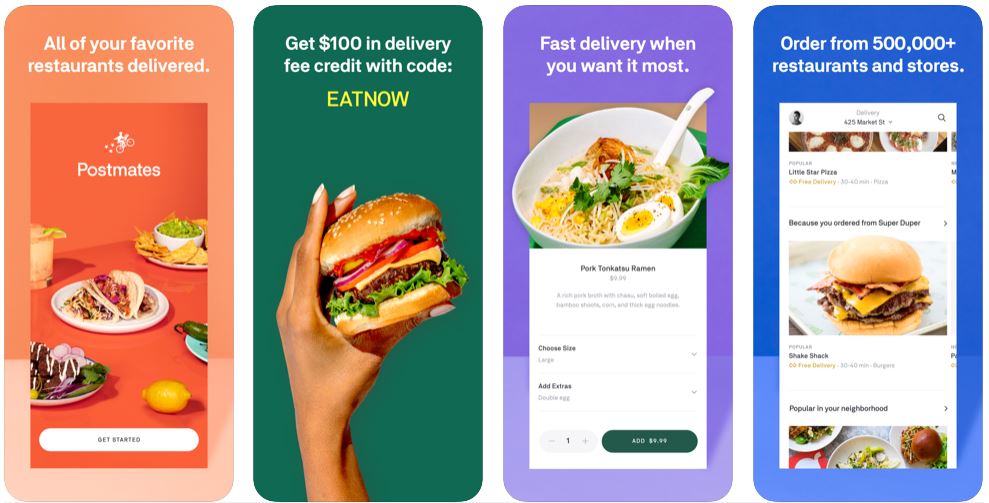
Postmates

Postmates

Postmates is the best example of an on-demand food delivery app. It allows customers to place orders not only in restaurants but also to small food outlets. It delivers food to the customers at highly affordable rates.

2. Cab Booking

Using an on-demand transportation app, customers can travel one place to another. The app allows users to book the ride at any time, see the details of the car and driver, view the payment details, give reviews and ratings to the driver, and more.
It delivers seamless experiences to the users by enabling them with essential features such as in-app messaging, real-time tracking, quick payment features, and transparent pricing.

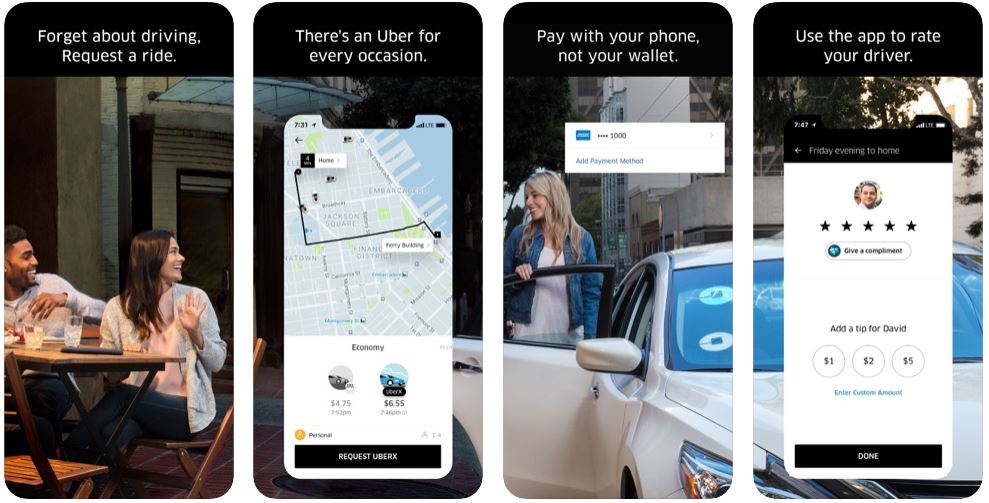
Uber

Uber

Uber allows customers to have the cheapest ride with the best services. It helps users to find rides from the nearest locations, book the ride, and the driver will approach the user. The app allows users to make payments using the app only.

3. Grocery Delivery

As people don’t have time to go for grocery shopping due to their busy schedules, the need for on-demand grocery delivery apps emerged. You will be free from visiting the supermarket again and again.

Now, the supermarket will come to you and deliver the grocery items at your doorstep through an on-demand grocery delivery app.

The app allows users to browse the grocery items, select the quantity, and place the order. Different types of grocery delivery apps are available in the market such as independent stores, aggregators apps, in-store grocery apps, e-commerce apps, and grocery chain apps.

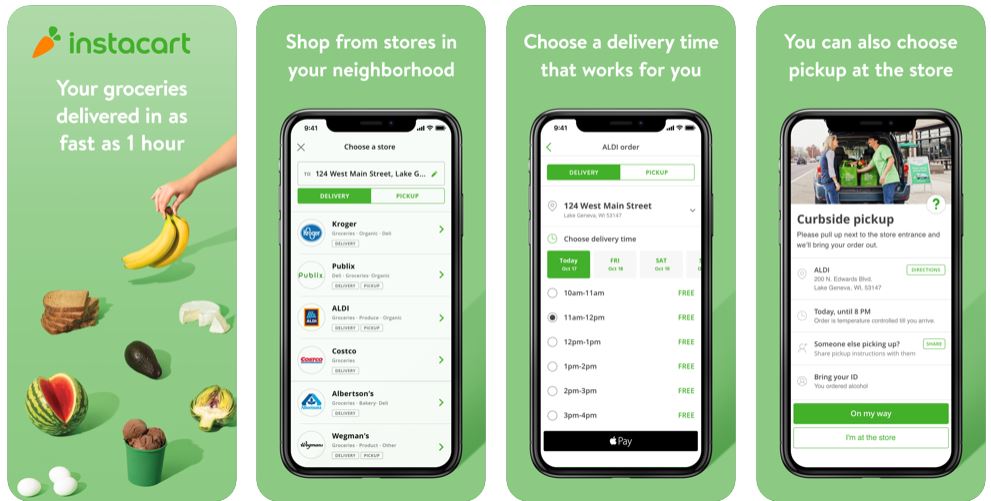
Instacart

Instacart

Instacart allows users to shop the groceries online and get the order items on their doorstep from the grocery store as fast as 1 hour. Users can also choose the option to pick the items from the grocery shop.

How much does it cost to develop a successful on-demand mobile app? (hourly rates & features)

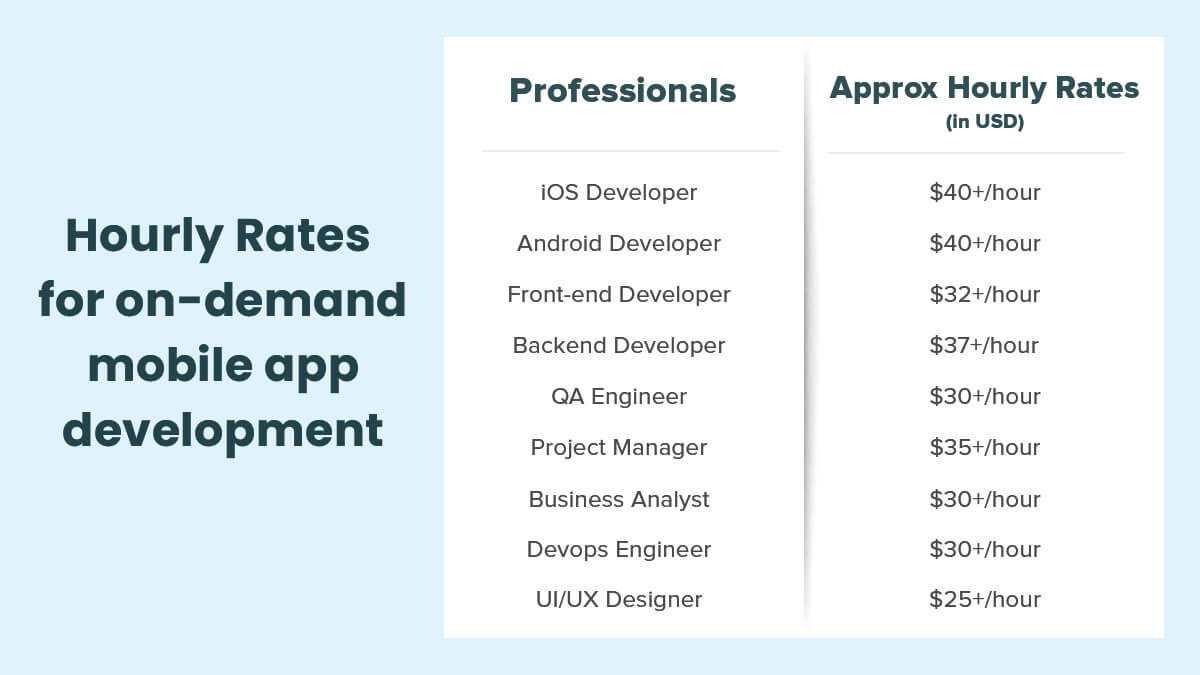
Hourly rates for on-demand mobile app development in the USA

Hourly rates for on-demand mobile app

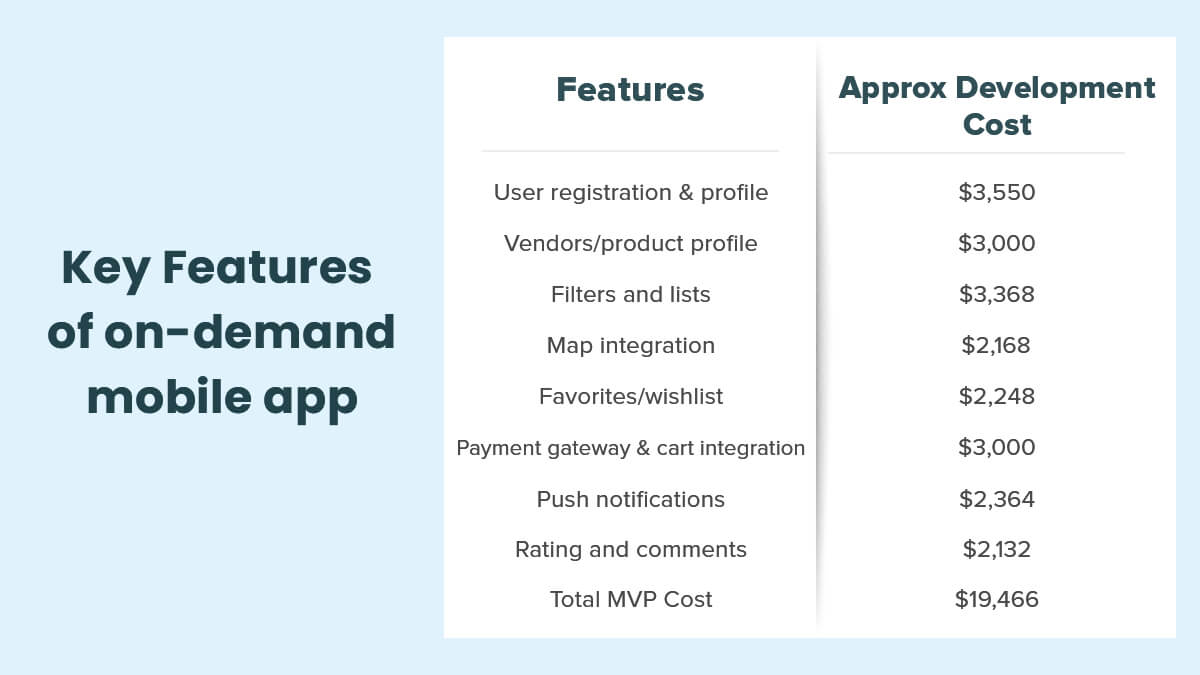
Must-have features of an on-demand mobile app (with approx. cost)

features of an on-demand mobile app

Verdict

Well, are you ready to rock by developing a robust and feature-rich on-demand service app for your business?

If you are looking for a reliable and experienced mobile app development service provider, then Credencys can help you in developing a flawless on-demand service app for your business. We have proven experience in developing on-demand apps for different domains such as transportation & logistic, cab booking, and more.

Let’s connect to explore your on-demand app idea in more detail and to unleash our skills and exposure in the on-demand service domain.

Frequently asked questions about on-demand mobile app

What are the popular on-demand app ideas?

On-demand mobile apps are available for different domains such as food delivery, transportation & logistics, beauty services, cab booking, healthcare, home services, courier services, etc.

What are the important factors that impact the cost of an on-demand service app?

If you have a tight budget to spend on-demand service app development, then you need to make strategic decisions about the various essential aspects that impact the cost.

A few most important are choosing the platform(s) (iOS or Android or both), selecting the development approach from native or cross-platform, opting for the highly skilled resources, picking an appropriate engagement model, etc.

What is the process to develop an on-demand service app?

The process of on-demand app development consists of different places such as consultation, prototype, design, developing, testing, deployment, and launch.

How much time it will take to develop an on-demand service app?

The on-demand app development time depends on the features and functionality you want to integrate into the app. More features with technical complexity take time to be developed. Also, the level of customization and integration affect the development and deployment that eventually increase the time of app launch.


On-demand Service App Budget: 10 factors to Consider to Plan It Smartly

On-demand service has started impacting the varied industries profoundly. It has changed the conventional way of doing business where customers were approaching the service providers.

Now, the time changes. To enable customers with the luxury and comfort, business or service provider have started approaching customers in order to deliver their desired products or services at their doorstep.

Almost every business focuses on adopting on-demand service apps such as grocery, courier, transportation, cab booking, just to name a few.

Well, it’s easier to say than done.

If you want to build an on-demand service app, then you cannot directly jump into the coding and launch the app within three to four months.

It requires to pre-plan the app development before really getting started with it. You have to make smart decisions during the pre-planning of the app as your decision directly impacts the cost of your on-demand app.

So, if you have a tight budget, then make sure you invest it in the right way and only in must-have elements. Understand the on-demand service apps with its most important aspects of cost.

10 Essential elements to consider while planning a budget for your on-demand service app

1. Identify your niche market & target audience

Several on-demand service apps are available these days, which customers are using to enjoy product delivery at home. The widely popular on-demand apps for food delivery, logistics & transportation, grocery delivery, courier delivery, home care delivery, and cab booking.

Are you planning to build an app in these areas? Then, the market will be tough as you have strong competitors out there. However, if you are picking a less competitive market, then you can easily engage with customers and service providers.

Take time and do detailed research to analyze the potential. Once your target markets and user base are decided, you can intensively work in a specific direction.

2. App validation

Having an app idea is not enough to achieve success. You have to check the market potential of your app. Thus, you need to validate your app idea.

An experienced mobile app company, create a prototype to validate the concept and market demand. Instead of developing a complete app, it helps you to launch the features and functionality step by step by validating market demand.

During the app validation phase, you can get better clarity about the ideation and purpose of the app. It allows you to get more user engagement with less development. Eventually, it makes a huge impact on your budget planning.

3. Create detailed documentation of technical requirements

You have to create documentation of your technical requirements and list down all of the features and functions in it. It is also known as the Product Requirements Document (PRD) and very crucial to create the project estimation.

The technical requirements document covers the complete process of on-demand app development along with all details of each step and expected outcome.

Based on the documentation the mobile app developers can estimate the cost involved in app development such as front-end development, back-end development, architecture, technologies need to use, and more. Eventually, it helps you plan your budget with better clarity.

4. Hire skilled engineers (in-house or outsource or freelancers)

Well, you can go for any option you want as all these three options have their pros and cons. To make the right choice, first, you need to learn about the advantages and disadvantages of in-house or outsource or freelancers.

In-house Team

  • You can hire the team by yourself
  • Coordinate with them throughout the app development
  • You need to set up required IT infrastructure
  • Leverage the freedom to explore new functionality and features

Best suited to: Large scale organizations

Outsourcing Team

  • Surety of skilled developers
  • Take benefit of industry long experience and exposure
  • Get the developers who constantly explore the latest technologies
  • Guarantee of quality app development
  • Save the cost of IT infrastructure set up
  • Cut down the investment in office premises
  • Quite economical coned to in-house team setup

Best suited to: Startups to SMEs (Small and Medium Enterprises)

Freelancers

  • Most of the time it is the highly economical option
  • Selection of right skillset makes your app else they can destroy your project
  • Lack of accountancy
  • Work as an individual
  • You need to coordinate with each freelancer, you hire as they won’t be connected with each other

Best suited to: All businesses that want to have just an on-demand service app with no guarantee of quality

5. Choose the most suitable engagement model

If you choose to outsource your app development, then you need to select the right engagement model to build your mobile app. It impacts your overall budget. Most of the mobile app development companies will offer you three engagement models (Fixed Cost, Time & Material and Offshore Dedicated Center) to choose from.

Fixed Cost

The engagement model is the right choice for the projects that have specific development scopes and requirements.

Time & Material

The model allows you to pay only for the time and resources you use for the project.

Offshore Dedicated Center

The mobile app development company will set up an offshore development center and IT infrastructure for your long-term ongoing project.

To get a detailed understanding of these three engagement models, you can visit Fixed vs. Time & Material vs. Offshore Dedicated Center – Which to Choose For Your Next Mobile App Development Project?

6. Choose from native or cross-platform

This is one of the factors that creates a major impact on your budget.

If you want to consider the native app development, then you need to develop separate apps for both iOS and Android platforms.
The native app ensures robust app performance as the app is specifically designed and developed for a specific platform. But it takes more time and investment to build and launch the app on both the platforms.

On the other hand, if you go for cross-platform app development, then you need to develop a single app. In the cross-platform development, mobile app developers can reuse the large portion of the code for another platform. It requires only a few customizations to make the app compatible with another platform.

The only drawback is the app performance won’t be as smooth as the native app. But, it is a highly economical option for you to choose from.

So, get clarity about your priorities and decide the right and the best approach to build your on-demand service app.

7. Determine the mobile platform (Android or iOS)

Make a decision whether you want to develop and launch the on-demand app for the one platform first and then pursue another one or you want to build the app for both the platforms simultaneously.

If you select to go for one platform first, then you can go ahead with the limited budget. You can create MVP (Minimum Viable Product) and launch it first. Keep adding the features and functionality as well as enhancing the app as per the feedback of customers.

Once you feel that the app performs effectively on the respective platforms and stable, then start working on other platforms. Of course, if your budget allows.

You can also consider both the platforms at a time. But, then make sure you have enough budget.

8. Define a right set of features & functionality

Development and integration of the number of features and functionality definitely increase your cost of on-demand service app development.

Moreover, the complexity of features matters as well. The more complex the feature, the more time it will take and the cost per hour will also get affected by it.

So, be very specific about the features and functionality you want to cover the app. It is suggested to create a list and then starts developing the app by sticking to the list. If you keep adding the features and functionality, then the cost of app development will be very high.

9. Consider the app maintenance and enhancement cost

It’s not over just by launching an app on the App Store or Play Store. To stay competitive, it is very essential to keep enhancing the app as per the changing market trends and customer requirements.

App performance is another challenge. Leverage the mobile app maintenance and support services offered by a reliable iOS and Android app development company.

10. Matching algorithm

This is the heart of any on-demand service app. Once the app receives the order from the customers, it allocates a service provider to deliver the product or services to the customers. The matching algorithm searches service providers for the customers.

Every on-demand app uses different types of matching algorithms. All these algorithms fall under two major categories: Automated Matching and Manual Matching.

Automated Matching

If the logic assigns a service provider to the customer request, then it is automated matching.

Manual Matching

If the app administrator needs to assign a service provider to the customer, then it is manual matching.

Choose the best one that helps you to serve your users with instant and convenient support so that the users love to use your app.

In the nutshell

Credencys has proven experience in developing an on-demand service app for the different domains whether it is cab booking, transportation, courier delivery, and more. We have helped our clients by developing a feature-rich on-demand app by offering end-to-end mobile app development services.

We help our clients to stay ahead in the competitive market of on-demand apps by suggesting, developing and integrating the unique and appealing to the customers.

Get in touch with our professionals to share your on-demand service app idea!

Frequently asked questions about on-demand mobile app

What is an on-demand service app?

The on-demand service app connects customers with the service providers of different domains such as cab booking, food delivery, grocery delivery, etc. Using the on-demand app customers can order the product and services they wanted to get delivered at their doorstep in a few minutes.

What are the important features of an on-demand service app?

The on-demand service app consists of three different apps: consumer app, service provider app and admin panel. All the apps require a different set of features. Moreover, you can customize the app development by considering some specific features you want to add.

How much does it cost to develop an on-demand service app?

The cost of on-demand service app development depends on the features and functionality you want to add in the app to address your specific business needs. The complexity of features and functionality also impacts the cost factor. It also depends on the engagement model you are selecting for your project.

Why should businesses develop an on-demand service app?

The on-demand service app enables businesses with immense benefits such as reach out to a large customer base, explore unlimited business opportunities, gain a competitive edge, attracting the investors, and more.


How to develop Mobile Wallet App? Key Features, Benefits & Impact to Economy

About trillions of people have mobile phones as their everyday usage. Almost more than 8 hours, people are spending time on mobile phones watching social media trends and interested in purchasing whatever needs online. Understanding the growing demand for online payment facilities, digital banking was incorporated by most of the banks across the world. With the introduction and adaptation of digital banking, the increase in the number of online payments has started showing a great trend.

To make digital banking easier, now licensing has been issued to several other start-ups and established companies in the form of a mobile wallet app. The mobile wallet app development companies have caught the customer pulse right, and now there are e-wallet apps for purchasing food, travel, recharge, clothing, books, taxis, and more.

Growth of the mobile app industry

Research shows that a person in the United States spends 3 hours 43 minutes a day on a mobile device and checks their mobile at least 80 times a day. Wonder is they spend time on several mobile apps that may vary upon their necessity and usage. The impact of using mobile devices has grown high when compared to Television since 2014. So you should be realizing the usage of mobile apps and the revenue it would have generated in the recent five to six years.

What is a mobile wallet app and how it benefits users?

The mobile wallet app is an e-wallet payment facility where your bank account is linked with the merchant who lets you pay for your online purchase. It is a single-click process where when you register with a trusted e-wallet app development company, your bank credentials are automatically saved, prompting you for a security code from your end before processing the payment.

Benefits of using a mobile wallet app

Reduced payment time: If you are using the mobile wallet app for the first time, then you should enter your account credentials in the respective slot. From next time, depending on the banking options, it will directly take you through the final payment procedure and your purchase happens within a jiffy.

Simple payment process: You need not worry that if you may or may not have cash during the product delivery of your online purchase. It lets you pay instantly, and so you can relax from levying off the payment stress even if it is little.

Multiple banking options: The mobile wallet app development company provides you different payment options such as payment through your debit card, credit card, Internet Banking or any other third-party e-wallet app that your bank account is already associated with for easy-to-use interface.

Offers and discounts: Not only you will receive some offers and discounts from the affiliate mobile app development company but also the e-wallet app development company. This will let you purchase your favorite product or service at a discounted price benefitting you in terms of cost-saving.

Wide range of collections: Purchasing online through mobile wallet app gives you the privilege of exploring a plethora of collections at a cheaper price and saves your time and cost of spending at shops physically. You do not have limitations to purchase online, nor is your energy not wasted.

Types of e-wallet in the market

Mobile wallet apps vary based on the concept or purpose that they have been used for. Although you might find some difference between one app and the other, the concept that it has been developed upon is of three types of payment options allowed.

  • Mobile wallet used by mobile service providers: It could be payments of your postpaid bill, prepaid recharge, and other payment mobile apps associated with your mobile service provider, for transactions.
  • One-time password (OTP) with SMS: This is another mode of payment where the e-wallet app uses the one-time password generated by your bank on your registered mobile number as an SMS. Few apps may ask for your approval before entering SMS; if not you will have to cancel the transaction, in case you do not need it, by pressing the cancel button immediately if the OTP is considered automatically.
  • E-wallet used for web payment on web apps: A good example for this one is paying for online purchases through Amazon, Flipkart, and other eCommerce websites when used on desktops and instead of opening the Amazon app on mobile, you open it on your PC.

How mobile wallet app development impacts the economy?

Mobile wallet app has been showing a great impact on startups, small and medium enterprises and fortune 100 companies as it promotes the growth of FinTech companies of all the previous company categories.

The following sectors are definitely impacted by the development of mobile wallet app:

1. Crypto Industry

With the availability of a mobile wallet app, the purchase of bitcoins has become pretty easy for performing other transactions for countries that have provided approval for the same to use.

2. Telecommunication industry

Telecom companies have integrated mobile wallet technology in their apps so that users can purchase data packs, Talktime and other services offered by them within no time. But the airtime company has to ensure that the e-wallet tab is available on the payment tab.

3. Logistics industry

Several eCommerce companies have their own logistics or have tie-ups with a logistics company and enable the mobile wallet payment tab on their apps so that the customer either pays while ordering itself or to the product delivery person of the logistics during delivery.

Conclusion:

Although the economy is developing according to the trend in technology and customer demand, you should always have an eye on the updates provided by mobile wallet app development companies for their apps. This allows you to make use of new features or bug fixes introduced by the e-wallet app development company and avail benefits accordingly.

Frequently asked questions for Mobile App Development

1. Is the mobile wallet app secure to use?

As long as you do not reveal your bank account credentials to any known / unknown person even by default, it is always secure. Although you think that your mobile is secure, it is always advisable to keep your credentials safe and keep changing your mobile wallet app and banking passwords frequently. Otherwise, it is safe using a mobile wallet app because you can instantly know what is happening with your account if online purchase is made.

Ensure that you register your mobile number for banking purposes with the bank so that when you use a mobile wallet app, it will not trouble you much. Also, due to the generation of a one-time password every time you make a purchase, your bank keeps you always in the alert about the financial transactions happening with your account.

2. How do mobile wallets work?

Mobile wallet apps work on a simple methodology. After you install the respective e-wallet app on your phone, the home screen prompts you to create a user account. The device detects automatically for the associated mobile number and email id that you have entered and validates your user account. Now you have to add your bank account details to the app, which will be validated through a one-time password that you will receive on the registered mobile number with your bank.

Now your bank account successfully gets registered with the app and every time you make a purchase, the payment is debited from your account with approving the OTP generated by your bank. Immediately after the amount is debited, you will receive a message from your bank stating that XXXX amount has been debited from your account towards YYYY, and this will help you confirm the exact amount of transactions done.

3. How do I know that I can use my mobile wallet app at a specific merchant?

Your merchant app, after you confirm your order, when initiated for payment, displays the mode of payment available for that particular product. For example, if you have installed Google Pay, Phone Pe, Samsung Pay, Apple Pay, etc. while making payment, logos of these mobile wallet apps display on the payment page. You can then figure out your method of payment and proceed to complete the transaction. In case your merchant app does not display the e-wallet app that you have, then you can choose to pay with debit or credit card and wait until it gets integrated with the merchant app.

4. What happens when I buy a new phone or replace my old device?

It is a very important question and good to know as well. In case you are exchanging your old phone with a new one, and you have already registered with several e-wallet apps; it is mandatory that you delete all your card details from the apps and then exchange the device. Later when you install the new device, you can get the e-wallet app(s) from Google Play Store or Apple Store and re-add your debit cards again to the app. You can follow the aforementioned procedure to add your bank details back to the app.


Gym Workout App Development for Personal Brand: Types and Must-have Features

Staying fit and healthy is a part of our daily life. Unless you keep your body in good condition, its inner mechanism may not function properly. Moreover, due to the increase in the number of jobholders, it becomes hectic for an individual to keep his/her health intact. This is how gyms and yoga centers came into tradition. Yet, in this busy scheduled life, it is not possible for everyone to go to the gym or yoga to maintain perfect health. Hence, gym trainers brought the idea of a gym workout app into the limelight.

Not many can have fitness centers, and for few, it may not be affordable as well. In a way of reducing the risk of such situations, fitness app development companies took it as an initiative to develop personal trainer apps for the benefit of customers.

A recent study states that by 2025, the US market is expected to achieve around $3.5 billion in revenue in the fitness app development market. Several startups have been emerging with the best fitness app ideas that contain multiple features, which definitely thrill the customers. By 2020, the research report of the Global Fitness App market states that the overall growth of fitness app usage seemed to be increased by 12% CAGR between 2020 and 2024, and at the end of 2024, it is estimated to show individual growth of 9.34%.

Why does a fitness center need a gym workout app?

A fitness app serves several purposes of both users and gym trainers/owners to a great extent. Nothing is impossible in this technology-updated mobile usage world. You can get whatever you want from the place you are. When considering such scenarios, to make it more improved and clear, the following are the factors why a gym needs a mobile app.

  • Instant update: Having a fitness workout app for your customers is always on the positive side. Customers, who regularly visit your fitness center for a workout, get instant updates on changes in gym timings or diet schedule if any. If your gym has quite a good number of customers, then it becomes difficult for you to update each and every trainee. So with a health and fitness development app, you can communicate instantly to them on any health-related things. It gives them a feeling that your fitness center is available 24/7, and you can even pay special attention to those customers who need close observation on their health maintenance.
  • Generate more business: Your customers may have friends in other fitness centers, where they might be using a workout app sponsored by their gym, which may have useful information to keep customers always engaged in the app. So if you do not have a workout app, then there are chances that your existing customers might make a move to your competitors. Moreover, most of the people somehow or the other way, are on mobile phones and introducing a gym workout app definitely helps you create more fitness freaks to your center.
  • Track customer’s progress: With the facility that you provide in your workout app not only allows its users to monitor and track their health but also lets you track their progress from day 1 of their joining in your gym. This report helps you in an explicit manner to talk to your customers individually about where they stand in terms of health and what are the dos and don’ts they have to follow for betterment. This will create a positive impression on your approach and stay focused on health.
  • Stay tuned with wearable devices: People entrust technology and its advantages in their livelihood and so prefer staying in tune with the trend. So look for some good wrist wearable devices that can help them monitor their workout level through the device. This will create some positive energy among your customers and motivates them for maintaining consistency in their workouts.
  • Enriched customer interface: No customer would like following a manual entry or carry a gym membership card while entering the fitness center. You can incorporate the barcode scanner system where they can access the gym whenever they want, and in some manner, your customers would love to use the gym for such reasons as well.
  • Easy payment methods: Now everything is digitized. Only people who do not have proper knowledge of using online payment apps might carry some cash with them; otherwise, it has all become cashless. To enable multiple payment options on your gym workout app and give them the experience of making effortless payment.
  • Include push notifications: Add push notification option in your app so that in case you wish to send any notification about discounts, offers, new course, promotions, again information about gym timings, and more, these notifications display instantly on the app and you may get good business out of them as well.
  • Preview of exercises: Any customer before joining a fitness center definitely looks at the website. More than a website, if you have it integrated as an app, customers will glance through the preview videos of exercises and decides if it works for them.
  • One-stop solution: A fitness app provides all details required by your customers at one shot in the app itself. This will save their time in browsing for your gym timings, diet plans or any sort of inquiry for that matter.
  • Best marketing channel: Though you require strong promotional channels for developing your business, still a gym workout app yields you good business through referrals as first and then through viewers. As you will post some exercise videos on the app similar to a 7-minute workout, you can try and pull free users to premium users as well. So the fitness app acts as one of the best marketing channels.

Must-have features of a fitness app

You should include three types of features such as user app, dietician app, and admin app otherwise, your app may not provide clarification either to its users or yourselves too.

  • User app: Under user app, include the following features: Login for user registration, exercise videos, chatbot for a chat with fitness experts, fitness plans, workout plans, daily progress tracking, steps counter, push notifications, feedback, and reminders.
  • Dietician app: This app should include features such as fitness chart, BMI (body mass index) calculator, subscription packages, coupon code, diet chart, water intake, customized plan details, and calorie counter.
  • Admin app: Under the admin app feature, include features such as dashboard, user session management, food plans management, payment methods, nutrition management, and trainer management.

Conclusion:

Fitness app development these days is always going to be a benefit of boon but definitely not a waste of time and investment. Do a lot of analysis on your competitor apps and think about what uniqueness you can bring into your app, which helps you rather than any other approach.

Frequently Asked Questions for Mobile Application for GYM Customers

1. How is a mobile app useful in improving a user’s fitness?

Mobile fitness apps help users to know the standard of their every minute health and retune it then and there in case they tend to face any problems. It observes their diet, water intake, exercise timing, and many other health factors and keeps them posted through notifications. Also, the wearable device they wear helps them to monitor their heartbeat and pulse rate so that they are made alert of heart diseases if any.

2. How should I choose the best gym workout app development company?

It is not possible to decide which could be the best app development company for a fitness app, yet you can check these factors for certain help.

  • Look for the company’s experience and the experience of their developers
  • Testimonials of previous clients or any feedback for that case
  • Portfolio of the company and history of developing such apps previously
  • Cost estimation of the app and post-launch support

Do not just go with one or two companies and decide upon. Refer to more than 5 or 6 and shortlist the best.

3. How does revenue generation happen with a fitness app?

The mobile app by nature itself is a stepping stone to generating good revenue. Keep the features unlocked to your users so that in the beginning even if you offer discounts to many users, once you have a good pick of customers, you can always gain it back. If you are ready to pay for promotion, invite a few affiliate marketers and pay them for generating leads. This also helps you to an extent.

4. What is the future of the mobile app in the fitness industry?

The usage rate of mobile apps has been immensely growing in the last 2 to 3 years. Throughout the world, the consciousness of staying fit and healthy has been enduring among fitness freaks. The more you add interesting features to excite your customers, the more your app is going to help you with gaining the return on investment.

If you want to attract users and overcome competition, you definitely require a mobile app owned by your fitness center with factors making users stay on the app for a long time.


On-demand service app development | How it drives economy in 2023?

The on-demand services app is picking up a huge increasing slot in the current market trend. On-demand apps are needed for businesses that can deliver quick service to customers being in line with their delivery expectations. Right from the selection of goods or services, the on-demand app benefits customers in an explicit manner.

In the latest report released by Price-water-Cooperhouse (PwC), on-demand services apps and websites is expected to reach a significant value of $335 billion by 2025, and the number of users prompted by the on-demand mobile app economy is more than 22.4 million users with an annual turnaround of $57.6 billion for availing door-step services with great trust.

List of industries incorporated on-demand service apps

Around five to six industrial sectors have opted for on-demand apps to push their business limit to the next level, which, in turn, helps them overcome existing and successive competitive markets.

1. Online food ordering and delivery:

This industry has given hope to emerging and newly-started restaurants by offering competitive pricing and tying up with a food delivery partner. Customers are benefited not only with offers or discounts provided by the restaurant but sometimes, also the delivery partner.

Such on-demand apps allow customers to give immediate or later feedback on food quality offered by the restaurant and the service quality offered by the on-demand app development company. To name a few on-demand service apps such as Swiggy, Zomato, Uber eats, etc. have seen success in the past 3 to 4 years.

2. Entertainment and media industry:

With the introduction of the on-demand mobile apps such as Netflix, Amazon Prime, etc., the entertainment industry has improved the number of audiences to engage by watching TV shows, serials, web series, movies, etc. anytime, anywhere through online streaming or offline. Similarly, several news channels have initiated live news watch on emergency or important situations when occurred in the city. Moreover, online movie tickets booking apps have been used by the public since it came into a boom.

3. Travel industry:

The best example for the travel industry seeing great success in the past 4 or 5 years is on-demand apps for booking taxis or cabs anytime from anywhere. Although the service was offered only to limited areas of the city initially, now these on-demand mobile app development companies are offering an extended service irrespective of any distance. Previously, there were no mid-night taxis available, but with the introduction of on-demand cab apps, you can take a cab anytime and track your ride that ensures your safety. To name a few on-demand taxi booking apps such as Ola cabs, Uber, etc. are still successful with high demand for cab booking.

4. Healthcare industry:

This particular industry has shown tremendous growth in the past 5 years. The on-demand doctor or patient appointment-based apps are designed and developed in such a way that even a layman can use it with one-time learning. On-demand apps for healthcare benefits both doctors and patients to plan and manage their appointments and revisits appropriately, along with providing facilities such as online medication, prescriptions, medical advice and more.

5. Fitness industry:

Depending on several surveys conducted at various medical research institutes, obesity has been traced as a major problem affecting the majority of people’s health. Fitness-based on-demand apps are introduced to perform work-outs from home and measure how much calories that a person has burnt for the day with an in-built tool developed by the on-demand app development company. These on-demand fitness apps help people to monitor their health and control it with live tracking feedback that the app provides.

6. Beauty industry:

This specific industry is slowly picking up the pace because of its cost by nature. Home beauty services are offered by many beauty salons with vast discounts only if availed online. Though this on-demand beauty app service is availed by the premium economy, it is slowly showing improvement on the upper-middle and middle economy groups as well.

Five best benefits of developing on-demand service app

  • Retention of customers: Having an on-demand service app impresses your existing customers, as you will be able to provide them a personalized touch of services with which you definitely get business from them regularly. For new customers, the on-demand service app adds value to their expectations and in the raging competition, it provides them clear and quick decision-making with whom to avail service from.
  • Increased conversion rates: Due to on-demand service apps allowing secure online payment and pay later option, depending on customers’ convenience, they will be able to make a payment or purchase order for sure. In this way, you can see good growth on your conversion rates if you compare your monthly, quarterly and half-yearly reports.
  • Provides security: Your app data remains secure because anyhow after building the app and launching it, your app developer would have installed all the required security and safety features to protect your app from potential threats and similarly, safeguarding your customers’ data as well.
  • Extended business opportunities: Having an on-demand service app creates numerous potential and in the pipeline users through an effective reference from users to their neighbors, relatives, and friends, provided if they are perfectly happy with your on-demand service app interface and the way you treat them.
  • Enhanced business–customer relationship: On-demand service app lets you observe your customers’ transaction style closely so that you can offer them personalized discounts upon their demand of preferring the particular service again or on repeated purchase.

What features should a successful on-demand service app contain?

  • App features for customers: The features that you create for customers should comprise notifications, review and rating options, multiple payment modes, order history, activity list, order or booking cancellation, wish list, order tracking facility, etc.
  • App features for admin: This area should contain admin dashboard, analytics, and reporting, managing service providers, managing customers, service tracking, delivery tracking, manage pricing and commissions, etc.

Main challenges of on-demand service app

  • Customer support: Several on-demand apps do not provide a clear interface for customers to approach or contact their support team in case of any queries with respect to their order or cancellation or any query. Representatives who handle chatbots should have extreme patience to answer all the queries posted by the customer. So the app that you develop should provide them such a facility.
  • Managing competition: Today’s world is filled with competition and the more the increase in the number of customers purchasing online, the more the emerging of on-demand service apps. Hence, based on customers’ browsing preferences, add more new categories on your app before your competitor keeps one-step ahead of you.
  • Complete knowledge: Certain hard core fields may not have the necessity to get into online selling, still without knowledge, they get in and may not find the scope of increase in business value. Online listing can help anybody but not online selling. So before you dive into an on-demand service app, have the proper knowledge and then step in.
  • Long-term investment: On-demand service app is a long-term success plan where you cannot attain success within months of launching it. Always have a primary plan to generate leads for your business or direct promotional ideas initially, before you start tasting success with your on-demand service app. Otherwise, you might face ups and downs or sometimes lose, in your business.

Conclusion:

The on-demand service app is always a boon to businesses that have high demand among customers. Apart from the aforementioned industries, several other on-demand service app companies are meeting the common needs of customers such as electrical, plumbing, carpentry, painting, etc. emerged in the last 2 years. So decide your type of service and then take a firm decision which yields your success.

Frequently asked questions

1. Which on-demand app is best to kick-start?

Not every service will have a demand for providing online service. You should know where you are strong and what can you sell online so that it kick-starts well. First, question yourself what is making you start an on-demand app service and then do a SWOT analysis, which should help you figure out what you need.

2. How much should I have to invest to develop an on-demand service app?

It all depends on your app complexity and the number of features you are planning to add on to the app. There cannot be a minimum budget because it costs you high time for development and thus the cost can be. You can talk to your friends or friends of friends or who have already developed such an app of different categories and get an idea. You can also contact us to discuss your idea and our experts will tell you how to implement it successfully.

3. Will there be an issue with copyrights if I develop on-demand app like any other popular apps?

There won’t be any copyright issues, as our mobile app developers are not using the same code, layout or any other elements of famous apps.

4. How to be successful in the on-demand service app?

You should have your own business strategy on how you going to progress at least for the next three years if not a five-year plan. Competitor analysis and staying in tune with customers’ pulse make you understand what and when you should implement a strategy. Always be open and ready for offering frequent discounts to attract them but not losing your breakeven point.