14 Reasons to Choose Unity 3D Development to Build Cross-Platform Apps

Cross-platform tools are getting ultra-popular amongst the developer zone.

The reason behind – fewer efforts and higher productivity!

While engineering native apps for different platforms, developers are required to develop, test, and a lot more for the app with the same features and UI for every platform.

It implies a waste of time and resources.

According to research2guidance report, “30% of developers have realized 50%+ time savings because of Cross-Platform Tools.”

Today, over 150 cross-platform tools are available in the market that is used for varied purposes like- gaming, business, etc.

Tools like Unity 3D, unreal engine, Corona, etc. have made app development quite simpler. The availability of plenty of cross-platform tools often confuses developers as to which one to choose.

Out of all the tools, the Unity 3D development tool stands out for various reasons. Before we jump directly into “why one must choose Unity 3D development to build games and apps?”, let’s first know what Unity 3D is?

What the Heck is Unity 3D Engine?

Developed by Unity Technologies, Unity 3D is a game creation environment.

It comes with an integrated development environment for developing 2D & 3D games with consistent graphics, fantastic layout, intuitive design, and engaging gameplay.

It is widely used for developing video games for desktops, consoles, mobile devices, and even websites. The Unity Free version comes for free, whereas the Unity Pro can be bought for a fee.

14 Reasons Why Developers Love Unity 3D Development to Build Cross-Platform Apps

#1 Supports Social Media Integration

With the integration of different social media platform SDKs, Unity supports all the relevant features of the websites with consistency.

#2 Lesser Development Time

The unity graphical editor makes it easy to design, layout unity scenes, insert objects, scripts, light effects, etc. It reduces development time significantly.

#3 Multi-lingual Support

Using C#, BOO, or Javascript, actions, and algorithms can be programmed with less difficulty. Unity 3D lets you use these three efficient languages to engineer an app.

#4 Easy to Learn

Unity has a very low learning curve and can be adopted by the developers seamlessly due to the abundant Unity documentation. Multi-lingual texts and video tutorials are available that make it a great experience.

#5 Faster Code Execution

Unity scripting is uncluttered and straightforward that brings fast iteration and execution of the programming environment. It’s easy to use, debug, and design simple co-routines.

#6 Fantastic Graphics Support

With OpenGL graphics API, Unity offers incredible graphics across all platforms it supports.

#7 Rapid App Development

You can easily and rapidly publish games on any platform. Developers only need to select a platform, press a ‘Build’ button, save the game, and Unity 3D builds it.

#8 Easy to Test a Unity 3D App

With Unity 3D development, it becomes handy to track and deal with bugs. Otherwise, developers have to do QA & testing separately for apps published on different platforms.

#9 Multi-Platform Support

With Unity 3D, you can export a game to 17 different platforms, including- iOS, Android, Windows, Web, Playstation, Xbox, Wii, and Linux.

#10 Easy to Distribute Unity 3D Apps

Unity cross-platform game engine also helps to distribute the apps to the appropriate stores and track user analytics.

#11 Unity Asset Store

Development can be accelerated with the asset store. One can easily peruse a wealth of ready-made artworks, scripts, visual programming solutions, editor extensions, and much more.

#12 Supports LAN Gaming

Unity 3D development facilitates the smooth deployment of multiplayer games online with real-time interaction, chat, sharing scores, etc.

#13 Easy to Change from Single Player to Multi-Player

The single-player game can be turned to a multiplayer game with few changes in the existing code, and complexities of real-time networking are easy to negotiate.

#14 Thriving Community of Unity Developers

Unity community comprises forums, feedback, answers, and issue tracker. It provides developers a stage where they can share the knowledge, experience, have the discussion and sometimes, may even get the help.

Final Words

Unity 3D game engine is the magic bullet for the game and Augmented Reality developers. Leveraging the power of this cross-platform tool, realistic and interactive solutions can be built to take gaming to a new level.

It is the ultimate rendering engine integrated with a wide range of tools that has made game development a breeze!

Do you have an app idea? Want some genuine advice on Unity 3D development? Get in touch with our Unity developers to get answers to all your queries and concerns.

Unity 3D Development – FAQs

1) Is Unity only used for games?

No. Despite being a GAME ENGINE, Unity is widely used to develop a wide variety of Augmented and Virtual Reality applications along with 2D and 3D games.

2) Which game engine is better Unity or Unreal?

Unity is better if you want to develop 2D/3D games and AR/VR applications. Unreal is better if you’re going to develop photorealistic and heavy graphics games.

3) How much does it cost to build a Unity Game?

To develop a basic Unity 2D game, it takes around 50-100 hours to design and 20-200 hours to develop graphics of the game. If you hire Unity developer at $40/hour, then the cost will be around $2800-$12000.

4) Can I use Unity for free?

Yes, Unity Free is 100% free of cost for any individual, regardless of their income. However, for an incorporated entity or a company, the platform is available free for the ones whose annual turnover is less than $100,000.


How Augmented Reality is Revolutionizing Disaster Management?

Every time, natural disaster strikes, it wreaked havoc on thousands of lives.

“In the past 30 years, the world has lost more than 2.5 million people and almost $4 trillion because of natural disasters, the president of the World Bank said.”

The devastating consequences of natural calamities like- flood, storm, earthquake, landslide, or fire are really frightening.

Dealing with such disruption is quite a task. Governments set up national bodies and enact legislation to reduce and manage disaster risks.

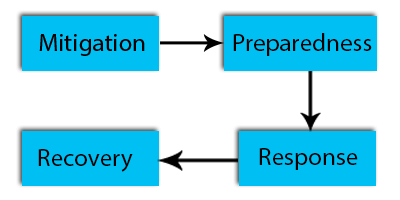
Let’s see how Disaster management is done.

It consists of four different phases.

how Disaster management is done

In the first two phases Mitigation and Preparedness, efforts are made to lessen the impact of future disasters via Simulation, training, or information visualization.

The rest of the two phases involves immediate and adequate decisions to be taken in response to catastrophe and rebuild everything like before.

Augmented Reality app development gives an edge to resilience.

Augmented reality, the technology superimposes virtual content over real-world objects in real-time in real-world environments when viewed through the AR app.

Scratching your head, how technology here comes in?

Let’s shed some light on this concern.

Less often, people have a better understanding of the risks posed by potential natural hazards. Plus, providing the best health care services post-disaster is also troublesome.

It presents a significant challenge for disaster risk management services. But, here, technology can create a big difference in diminishing the damage and improving actions in response to perils.

Applications of Augmented Reality in Disaster Management

The applications of Augmented Reality are wide-spread across various industries and domains. However, it’s applications in disaster management are quite different.

Let’s have a look at them.

Training Simulation

Augmented reality simulation help people experience the threats of catastrophes with compelling visual effect.

When buildings or any specific area is viewed with a mobile app, useful information such as the expected height of floods, the degree of fire risk, and evacuation facilities are displayed.

AR images of the depth of water, obstacles on the road, road congestion, ground status are also shown.

GPS enabled the app to assist people pre-disaster, that which streets and buildings are safe, and how people can evacuate during any emergency.

Real-time help at off-site emergency

The aftermath of flood or storm, condition of regions go to the dogs. Several people are injured, and they require instant medication. Still, it’s practically impossible to drive a team of doctors to the place immediately and treat every individual.

Here, augmented reality smart glasses can save lives by providing real-time critical information to the practitioner and getting proper assistance.

Take a glance, how it works.

A responder at an emergency off-site wearing smart glass enables the doctor to survey the injured person’s body. And thereby, the practitioner can prescribe the best possible medication without actually moving to the location.

This way, real-time treatment, and help can be rendered.

Urban Layouts

While AR can help us in post-disaster recovery, it can also help us to map the possible epicenters in a city or town. It can help us identify which areas are more susceptible to damage.

Having such information beforehand can help us with planning our cities. Moreover, if we mix other emerging technologies such as IoT, AI, and ML with AR, then it’ll help us improve the scope of AR.

The Future Ahead

Augmented reality is the ultimate solution for the places that are hit hardest by the disasters. Rising sea levels and changing weather patterns hinting the next destructive calamities in the future.

Human beings cannot control the acts of God. Still, harnessing the power of technology, the magnitude of destruction can be mitigated.

This groundbreaking technology is helping nations like no other.

Get in touch with our consultants and build an AR solution today!

Augmented Reality in Disaster Management – FAQs

1) How much does it cost to develop an Augmented Reality mobile app?

The cost of developing an Augmented Reality app depends on your requirements. However, if your requirements are simple, it will cost you around $30,000 – $50,000. A medium-sized app can cost you between $50,000 – $200,000. Whereas, a complex AR app can cost you around $100,000 – $1,000,000.
2) What are the best tools to develop Augmented Reality apps?

Some of the most popular AR tools are Vuforia, ARToolkit, Google’s ARCore, Apple’s ARKit, Wikitude, MAXST, Kundan, Deep AR, Xming, EasyAR, etc.

3) Which is the best AR app development company?

Credencys is a top mobile app development and AR app development company in the USA. The company was incorporated in Los Angeles in the year 2008.

4) What are some of the applications of Augmented Reality?

Medical training, retail, repair and maintenance, design and modeling, business logistics, tourism, classroom education, field services, entertainment properties, and public safety are some of the areas where AR is showing wonders.


5 Things to Look When Hiring a Node JS Developer

If you are reading this blog, then we will assume that you already know that you need and want to hire Node JS developer.

It may be because you saw Netflix, Airbnb, and other famous companies using Node JS or you just simply fell in love with the JavaScript language and wants to embrace it in your next project.

In any case, if you have no clue what is Node JS or Where to Learn Node JS, or What kind of web apps you can build using Node JS, here’s a list of a few blog posts we shared earlier to help you understand:

On the other hand, if you already that Node JS is the right choice for your project, then it’s time we jump into the subject right away.

5 Things to Consider When Hiring a Node JS Developer

If you know what is Node JS, then you might also know that the main responsibility of a Node JS developer is to establish a connection between client and server.

Apart from this, Node JS Developers also need to work on high-quality processing tasks, write the logic of app functionalities, and fulfill users’ requests.

The point is, performing all these tasks requires specific skillsets. So, you must assess the skillsets of all candidates effectively before you hire a Node JS Developer.

And in order to help you on your journey to hire the best Node JS developer, we’ve enlisted 5 crucial elements that you must consider.

With that being said, let’s see what they are.

1 – Specify Your Requirements

Before you start looking for candidates, it makes sense to draft your requirements in a proper manner.

What we mean is, knowing what exactly it is that you want to build makes it easy to find the right candidates for your project.

Once you’re done specifying your project requirements, you can start listing the skillsets required in a Node JS developer. To help you get started, following are a few skills a Node JS developer must have:

  • Experience with Git and GitHub
  • Understanding of popular frontend technologies
  • Ability to write tests
  • Familiarity with Agile methodologies & best DevOps practices
  • Experience in your niche
  • Efficiency in writing code

Now, this is only a general list of skills a Node JS developer must possess. Depending on your project complexity and specific requirements, your list may get bigger or smaller.

2 – Assess The Hiring Options

Once you have noted down all your requirements and skillsets that you need to look for in a Node JS developer, it’s time to assess the hiring options you have available.

Now, when it comes to building mobile or web applications, you have generally three options to choose from:

Let’s assess each option individually.

Hiring an in-house staff of developers seems great at first because someone will almost always be in the office when things go sideways or discuss new ideas when they hit, which is definitely an advantage over the other two options.

However, hiring in-house staff also means more costs, and you will also have to set up proper infrastructure in place so they can work efficiently. In addition, all the screening, interviewing, and hiring process is very time-consuming.

So, if speed is your number one priority, then hiring in-house developers might not be the right option for you.

Hiring freelancers, on the other hand, is the most cost-effective option out of the three. However, if your project requires hiring multiple freelancers having different skillsets, then managing the hired remote developers will turn into a really difficult challenge.

This brings us to our third and final option. – Hiring a web development company.

Now, it wouldn’t be wrong to say that hiring a web development company is the best and most popular option.

For starters, not only they provide on-time delivery but because they have a team of developers with different skillsets, you can rest assured that all your project skillset requirements will be met when you hire a web development company.

3 – Check Previous Work

Work experience is basically one of the most important factors to consider when hiring a Node JS Developer.

Checking previous work of a web development company or freelance Node JS developer can give you a better idea of their skillsets, knowledge, and expertise.

In fact, we would suggest hiring someone who has experience in working in a similar domain of yours. However, if you can’t find someone who has already worked in your domain, you can still check their portfolio and testimonials from their previous clients.

4 – Interview

Once you have shortlisted a few potential candidates based on their skillsets and work experience, it’s time to set up an in-person interview with each of them.

During the interview, it’s important to ask certain NodeJS Interview questions to determine whether a candidate is a right fit for the job or not.

Fortunately for you, we’ve already written a comprehensive blog on Node JS Interview Questions to Ask Before You Hire Node JS Developer.

In the above-mentioned blog, we have listed the top 7 Node JS interview questions that will help you test the skills and qualifications of candidates.

So, be sure to check out that blog.

5 – Practical Test!!

Whether you are hiring a freelance developer or a web development company, it is important to assess the technical skills before signing the agreement.

There are a couple of options you can choose from for checking the technical skills of a finalized candidate. For instance, you can involve the candidate in one of your on-going Node JS projects, assign them a fairly complex task, or just assign a mini-project.

These tests will allow you to identify and understand how they work and see if they can meet deadlines.

Conclusion

With this, we have come to the end of this blog. Now, remember, the process is not as easy as it looks.

Freelancer or web development company, simple app or complex app, the ultimate decision basically boils down to your project requirements. Therefore, be sure about what exactly you need and why you need it before you hire Node JS Developer.

General FAQs for Hiring a Node JS Developer

Q1 – What is Node JS & Why it is used?

Node JS is a JavaScript runtime environment and it is used for developing real-time, scalable applications. It is single-threaded and uses an event-driven and non-blocking I/O model that makes the platform efficient and lightweight.

Q2 – What does a Node JS developer do?

A Node JS is basically responsible for coding the server-side of an application using JavaScript programming language.

Q3 – What should a Node JS developer know?

A Node JS developer must possess the following skills:

  • Understanding of front-end technologies
  • Asynchronous programming
  • Hands-on experience working with NPM (Node Package Manager)
  • Error handling
  • Server-side templating
  • Semantic versioning

Q4 – Does Node JS have a future?

Yes, Node JS is already 10 years old and it’s still going strong in terms of adoption rate and popularity. In fact, Node JS is the only platform right now that supports building application using only one language.


10 (Most Innovative) Digital Signage Solutions Use Cases

Every day we come across numerous digital signage displays and billboards. They are everywhere, from airports and malls to offices and restaurants.

However, from time to time, advertising and activation agencies do something that goes beyond the routine.

10 Most Innovative Digital Signage Solutions

#1 The Highest Goal by Adidas

Adidas launched this campaign in Tokyo, placing the interactive projection 200 meters above the ground.

Users had to download an App to throw the football. The campaign was highly popular and was covered by media outlets across the world.

#2 Anti-smoking Campaign by Swedish Pharmacy Hjartat

Last year in December, Swedish pharmacy Hjartat deployed digital displays equipped with built-in smoke detectors in the streets of Stockholm.

The person in the display used to start coughing as soon as someone smoked near the billboard. This campaign was run with the slogan – “New year, new resolutions,” prompting users to adopt a healthier lifestyle and quit smoking.

#3 International Women’s Day campaign by Women’s Aid

Women’s Aid is a charity working against domestic violence. Launched on International Women’s Day in London, the above campaign depicted a woman badly beaten and bruised.

With facial recognition technology, the billboard was able to account for how many people were looking at it, and the bruises healed accordingly.

The advertisers wanted to convey that taking notice of the issue is the first step towards bringing the change.

#4 NCDV’ Drag Him Away’ Campaign

The National Centre for Domestic Violence (NCDV), UK, also launched an interactive billboard campaign at Euston Station asking people to intervene and stop domestic violence.

For interacting with the large screen and “drag the abuser” away, users need just to scan the featured QR code.

#5 Apolosophy by Apotek

Subway commuters in Stockholm were pleasantly shocked to see this innovative product launch. Ultrasonic sensors were employed to start a video loop as soon as a train arrived near the billboard.

#6 McDonald’s on Piccadilly Circus

This campaign perhaps drew its inspiration from the tourists at the Leaning Tower of Pisa. The idea is simple yet very effective in engaging crowds.

#7 Unbelievable Bus Shelter by Pepsi Max

This one highlights how Digital Signage can be integrated with Augmented Reality to create mind-blowing effects, and increase engagement. People can be seen shooting a selfie video with immersive technology.

#8 Lookup by British Airways

This campaign helped British Airways highlight its long list of destinations.

They placed the antennae on the roof of nearby buildings. The antennae were designed to pick up data from the transponders of British Airways aircraft within 200 kilometers and relay it to an application designed for identifying the flights.

Few more systems were involved in the backend to ascertain the right timing, correct information, and also that the information was displayed only when an aircraft was visible to the naked eye.

#9 Responsive Facial Recognition by GMC

General Motors curated the world’s first responsive facial recognition system that profiled its audience via a small camera.

The DOOH display played a small pre-recorded video, based on customers’ gender, expression, age, composition, and engagement.

These highly-targeted responses seemed personalized to customers, which helped General Motors to engage their customers and bring them more near to their brand.

#10 Miami Heat’s Xfinity Plaza [H3]

Digital signage can add significant value to the aesthetics of any public space. It’s increasingly being employed by architects and designers to create amazing experiences.

The Miami HEAT’s Xfinity Plaza is one great example of how to convert an unused space into a happening hangout.

Verdict

Apart from these, many other use cases changed the way people used to see and use digital signages. If you’re looking forward to building your brand or increase your brand value through digital signages, then you’ve come to the right place.

Credencys Solutions Inc. is a leading web and mobile application development services and solutions provider which has helped numerous businesses in their business growth. We offer Xynage – a digital signage solution suiting varying communication needs for businesses.

Digital Signage Solutions – FAQs

1) What is the benefit of digital signage solutions?

There are several benefits of digital signage solutions. Five major benefits are mentioned below:

  • Increase in revenue
  • Reduce overall advertisement cost
  • Increase customer retention
  • Easy to deploy
  • Fosters innovation

2) How effective is digital signage?

Digital signage is way more effective than traditional posters and banners. It attracts more customers than print advertising. Moreover, it allows you to change your content from anywhere and at any time.

3) Who offers the best digital signage solutions in the USA?

Credencys Solutions Inc. provides the best digital signage solutions in the USA via its product – Xynage. It is a simple digital signage solution that allows you to manage content on-the-go.

4) How much does digital signage solutions cost?

The cost of digital signage essentially depends on the number of screens and backend features/functionality. Higher the features, the higher the price.


Pimcore Revolutionizes Retail Experience for Retailers and Customers

Retail is a highly competitive market where customers can easily switch from one vendor to another, whether it’s a physical store or eCommerce platform.

To engage customers for a long time and encourage them to make a buying decision, retailers keep implementing different strategies. But they are sure which strategy will work and which won’t.

Let’s have a look at customer expectations while makes retail shopping:

  • Personalized shopping experience
  • Hassle-free return policy
  • Getting the lowest price
  • Uniformity across physical and digital stores
  • Easy loyalty program

Retailers design different strategies to satisfy the expectations of the customers. For the successful implementation of these strategies, they need to

  • Consolidate and manage all data
  • Create a personalized purchase journey for customers across all channels
  • Bridge the digital divide between the online and physical store
  • Amalgamate of mobile, voice assistants, micro-location, and AI-powered technologies
  • Improved time-to-market of the products

Pimcore offers Product Information Management (PIM) software that allows retailers to deliver an omnichannel experience along with effective product management.

Working with a technology partner who offers end-to-end Pimcore development services, retailers can build highly customized digital solutions that address all the above-mentioned requirements of the retailers and help them in satisfying most of the expectations of the customers.

How PIM of Pimcore Addresses the Challenges of Retailers?

Product Information Management of Pimcore contains many advanced features that enable retailers to manage product data seamlessly. Retailers can update data as per the changing business needs from a centralized platform.

Spread the latest product information across all customer touch-points consistently and continuously to deliver the outstanding user experience. Pimcore lets you build a robust online product catalog that is engaging for customers and easy to manage for retailers.

The technology is compatible to store and manage multi-vendor and multi-domain data of any size of organizations from any industry. Integration of Master Data Management (MDM) also allows them to manage customer and vendor data along with product information.

Data Modeling

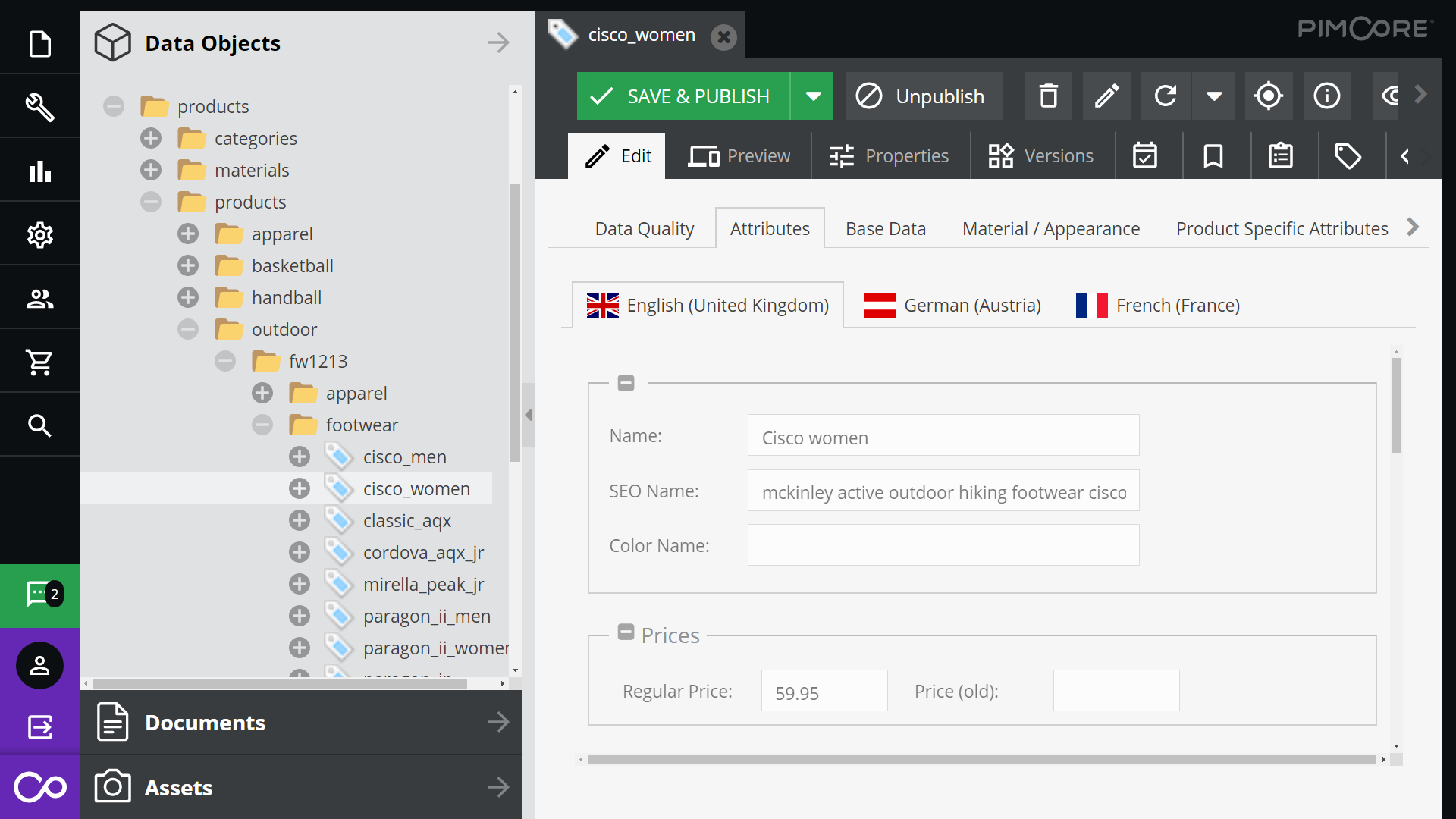
Data model analyses the data and its characteristics and how it relates to other data. Skilled Pimcore developers help you to build a flexible product data model for PIM and MDM that is scalable as per the growing requirements of the organization.

Flexible Modeling

PIM contains a web-based data modeling engine that allows retailers to create a new product data model within a few minutes. They can manage products, customers, and vendor data along with the thousands of different attributes. The software is capable of managing 40 high-performance data types of master data and product information.

Multilingual Support

Pimcore PIM Multi-lingual Support

As the Pimcore supports multiple languages, retailers have the flexibility to choose the language as per their regional preferences and display the content in the respective language. The administrative interface of PIM supports 20 different languages such as German, Spanish, Italian, Chinese, English, French, and more.

Object Relation

Pimcore PIM Object Relation

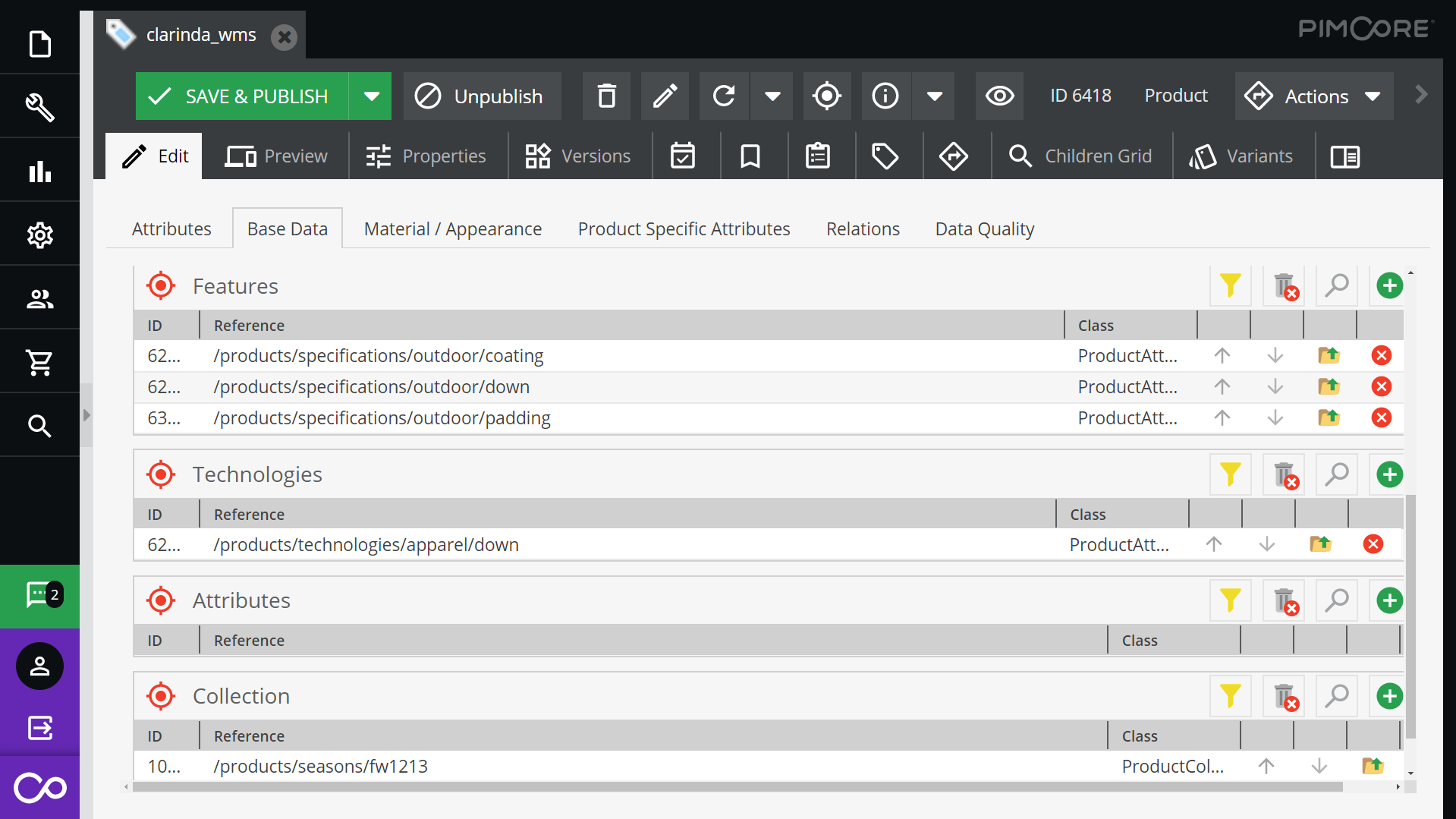
To enable retailers with the real value of the product data, the PIM data model constantly represents the full range of attributes specifications and relations. They can add and change the data in real-time.

Data Classification

The initial stage of the Pimcore data modeling contains static attributes, media, text handling, and data relationship of products. In the next level, PImcore developers classify the product data based on the industry domain and create a structure to manage the same data in a harmonized way.

Retailers can manage any type of product classification by harnessing advanced data modeling components of Pimcore.

Digital Asset Management

Pimcore PIM DAM

Along with text and attributes of the products, Product Information Management also manages the media assets. Integrating MDM in PIM, retailers can easily manage and integrate images, videos, graphics, audio, documents, and more.

Data Inheritance

Harnessing data inheritance, Pimcore disputes the data in the different and relevant groups. It reduces time to market of the product by streamlining the editorial process and maintaining the data in a centralized location.

Product Data Management

Effective data management is the prime requisite of modern organizations. Pimcore allows retailers to deliver a user-friendly and consistent customer experience by aggregating, classifying and translating the product information.

The technology helps to manage data with the next level of accuracy and efficiency by providing advanced data security.

Data & Batch Editing

The Data Editing component of Pimcore allows retailers to manage the product data with appropriate hierarchy, validation, structure, description, versioning, documentation, and other data related components.


Pimcore PIM Batch Change

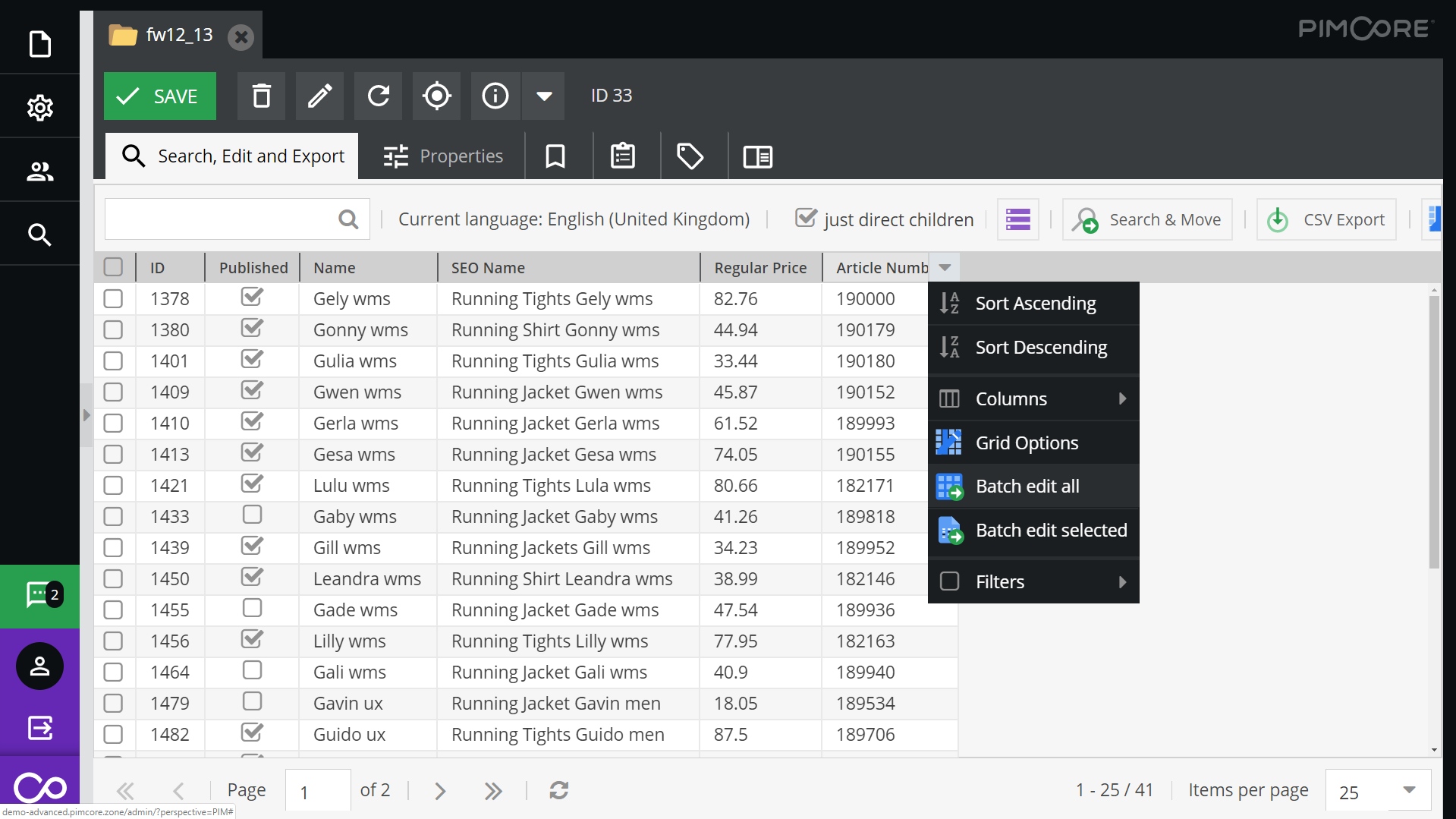
Batch editing is a flexible and tabular interface for retailers where they can edit records in an Excel-like manner, select multiple records for editing, and find specific records for editing with the help of search/filter functionality.

User & Rights Management

Pimcore PIM User & Rights Management

PIM contains advanced rights management system that can be customized as per each user and use cases of retailers. The software interface is 100% customizable and compatible to adapt the data entry masks at the field level granularity.

Digital Asset Management

To manage the media files and documents, PIM allows to integrate DAM. Seamless integration of PIM and DAM provides effective metadata management and advanced image manipulation/editing of media files.

User Profiling & Data Collection

Pimcore PIM User Profiling & Data Collection

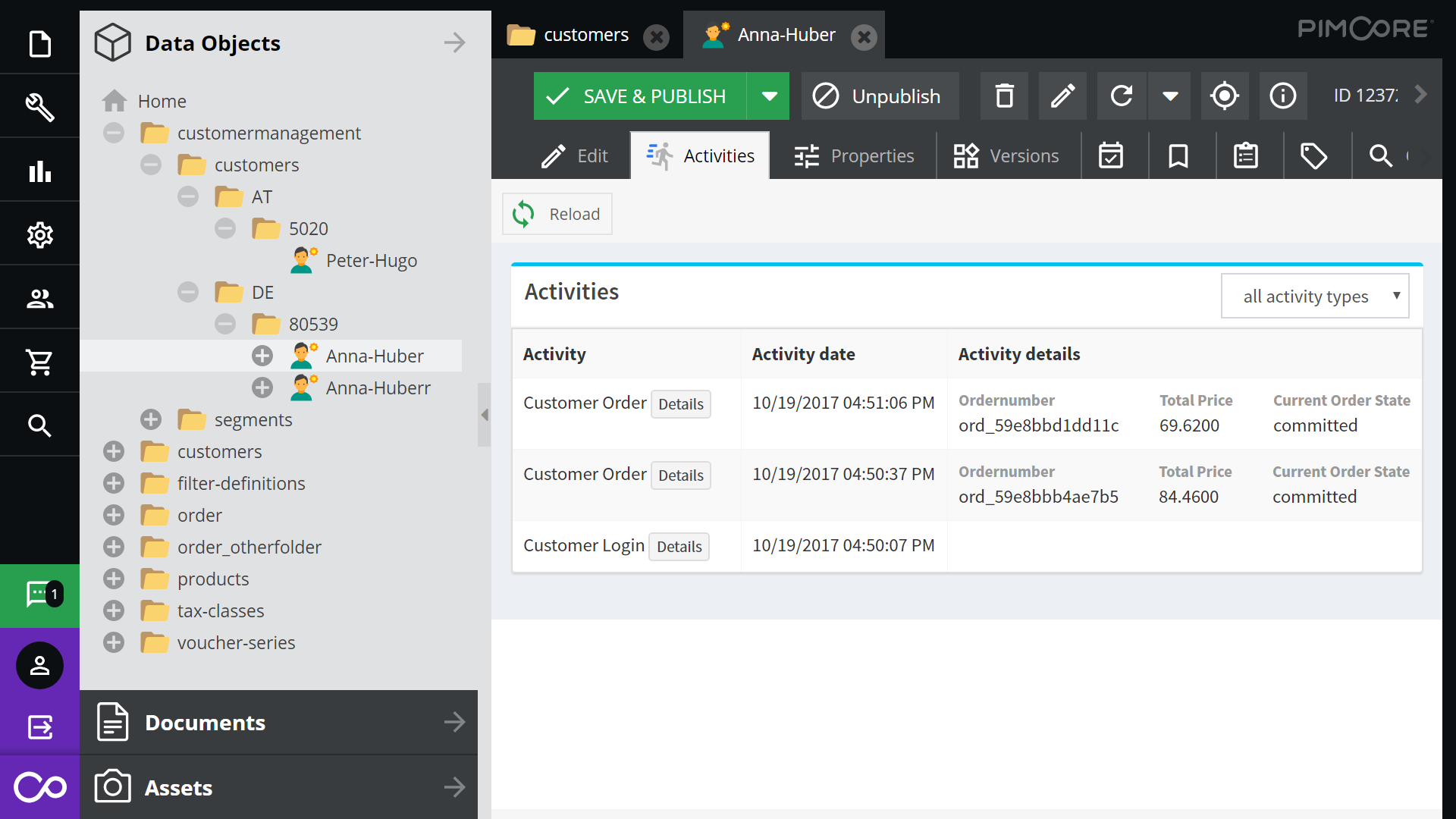
To define user profiles, retailers need to collect customer data and analyze them accurately. Customer Data Platform (CDP) of Pimcore contains advanced functionality of marketing automation, personalization, and segmentation.

The feature allows retailers to aggregate user profile & customer data, link social media profiles, trigger events, execute marketing automation, enrich data, build audience segment, and much more.

Product Data Integration

Retailers require detailed insights about the different business aspects to make appropriate decisions. Pimcore collects the data from different third-party software such as ERP, CRM, hard drives, suppliers, syndicates, external partners, and others.

Pimcore allows retailers to integrate the product information by importing and exporting the data amongst Pimcore and third-party software. Integration with MDM allows PIM to integrate data of any size and pace. Moreover, Pimcore allows retailers to build the custom integration solution as per their specific business needs.

3rd Party API Integration

Pimcore PIM 3rd Party API Integration

Pimcore has a highly flexible architecture and an API driven approach that allows to connect enterprise software or external third-party applications. In order to establish two-way communication with other systems, the technology user either REST Web Services API or Native PHP API.

Data Import & Export Toolkit

Pimcore PIM Data Import & Export Toolkit

It is an add-on feature of PIM to define, model, map, and execute manual and automatic export of Pimcore data and import of 3rd party software/application data.

CSV (comma-separated values)

Pimcore allows to create one and two-dimensional data models through the import and export of CSV. It requires a definition of data fields for exports and data mapping for imports.

Data Quality/Semantics Management

The product data quality system helps enterprises in addressing the data quality-related issues in PIM and MDM. It presents the data in a clean and structured way to enable retailers to perform better data governance to help them grow faster.

The system ensures the data quality is the most structured and lucid way within a dynamic unified environment. The more qualitative the data, the better the business intelligence and analytics, retailers can take benefit of.

Data Quality & Completeness

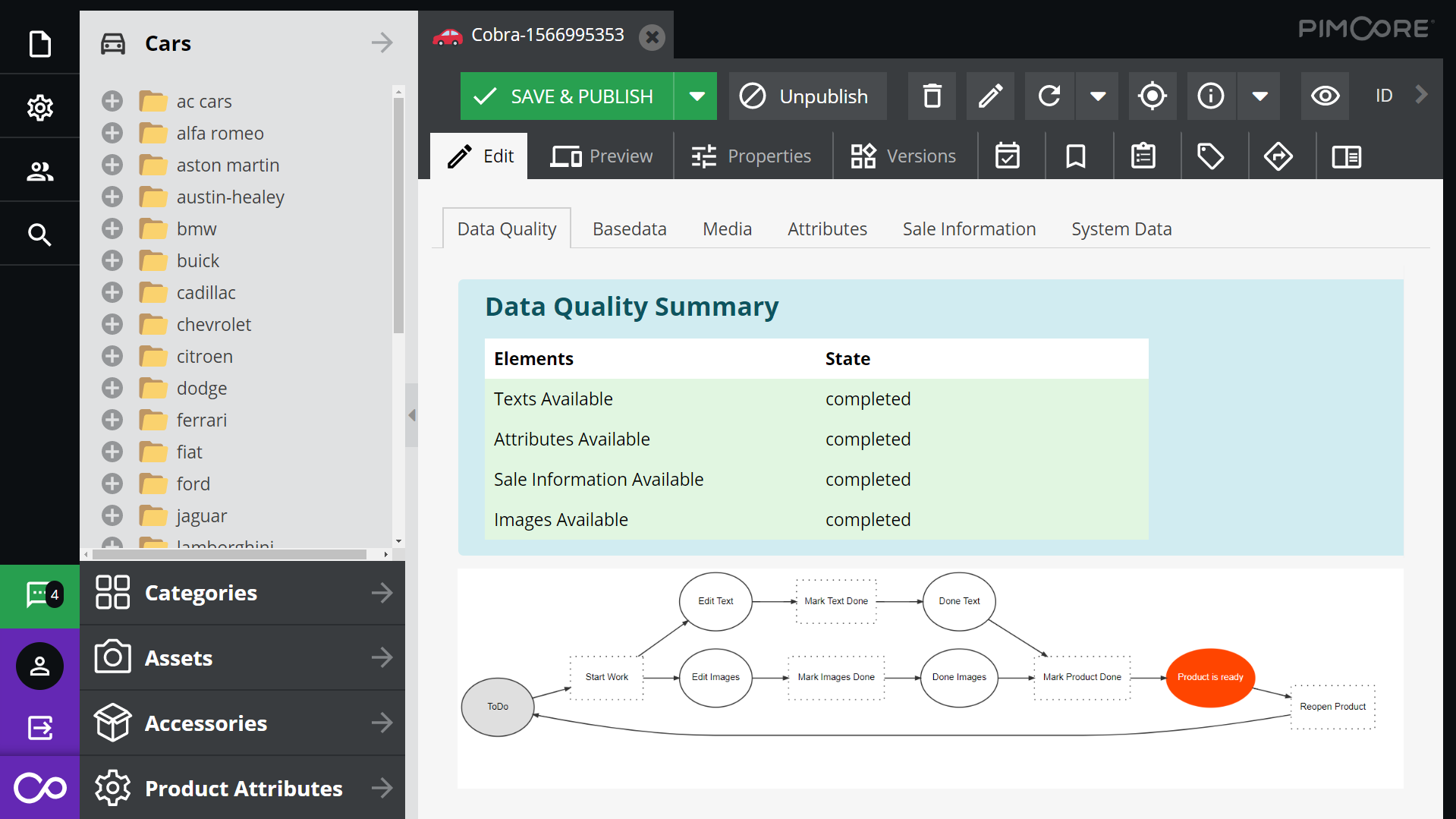
Pimcore PIM Data Quality & Completeness

PIM contains varied functionalities that help define and improve data quality and completeness. Pimcore sends data quality and data validation reports to the retailers to confirm the data quality. Moreover, providing the calculated value fields, the technology allows to monitor whether the data is complete or not.

Data Validation

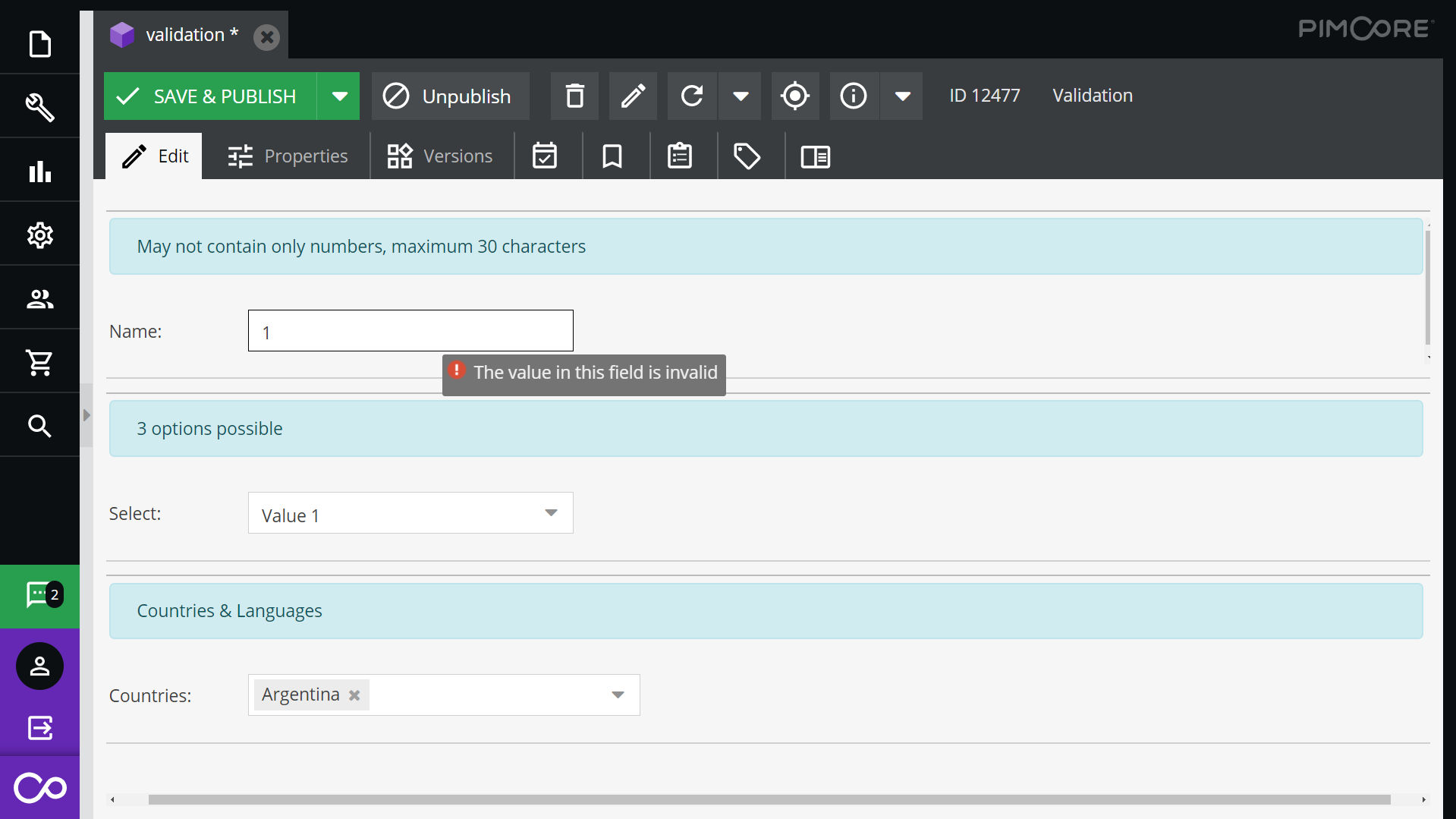
Pimcore PIM Data Validation

Leverage the flexibility to define the rule to ensure the data quality and validate the data based on the pre-defined rules. PIM allows to create different data types that too with predefined possible values.

Data Audit & Versioning

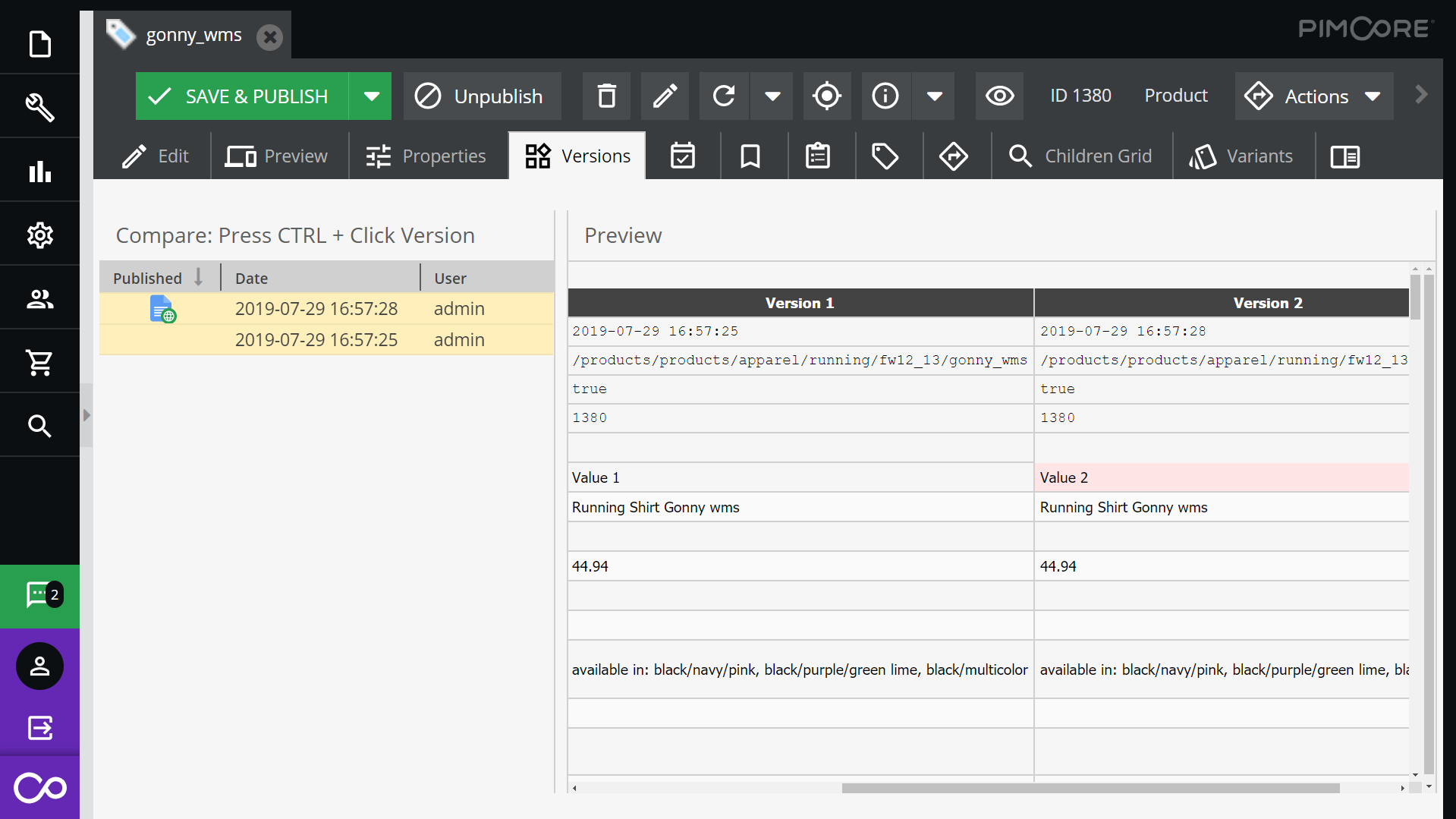
Pimcore PIM Data Audit & Versioning

Leverage the data audit and versioning features of Pimcore. It allows to make changes within a record and creates a new version of the same record and saves the audit trail.

Custom Reports

Pimcore PIM Custom Reports

In order to generate custom and dynamic reports, Pimcore has integrated an advanced reporting engine with PIM platform. The engine access the Pimcore database to generate different reports such as data completeness reports, data quality reports and many other reports with export functionality and further filtering.

Dashboard

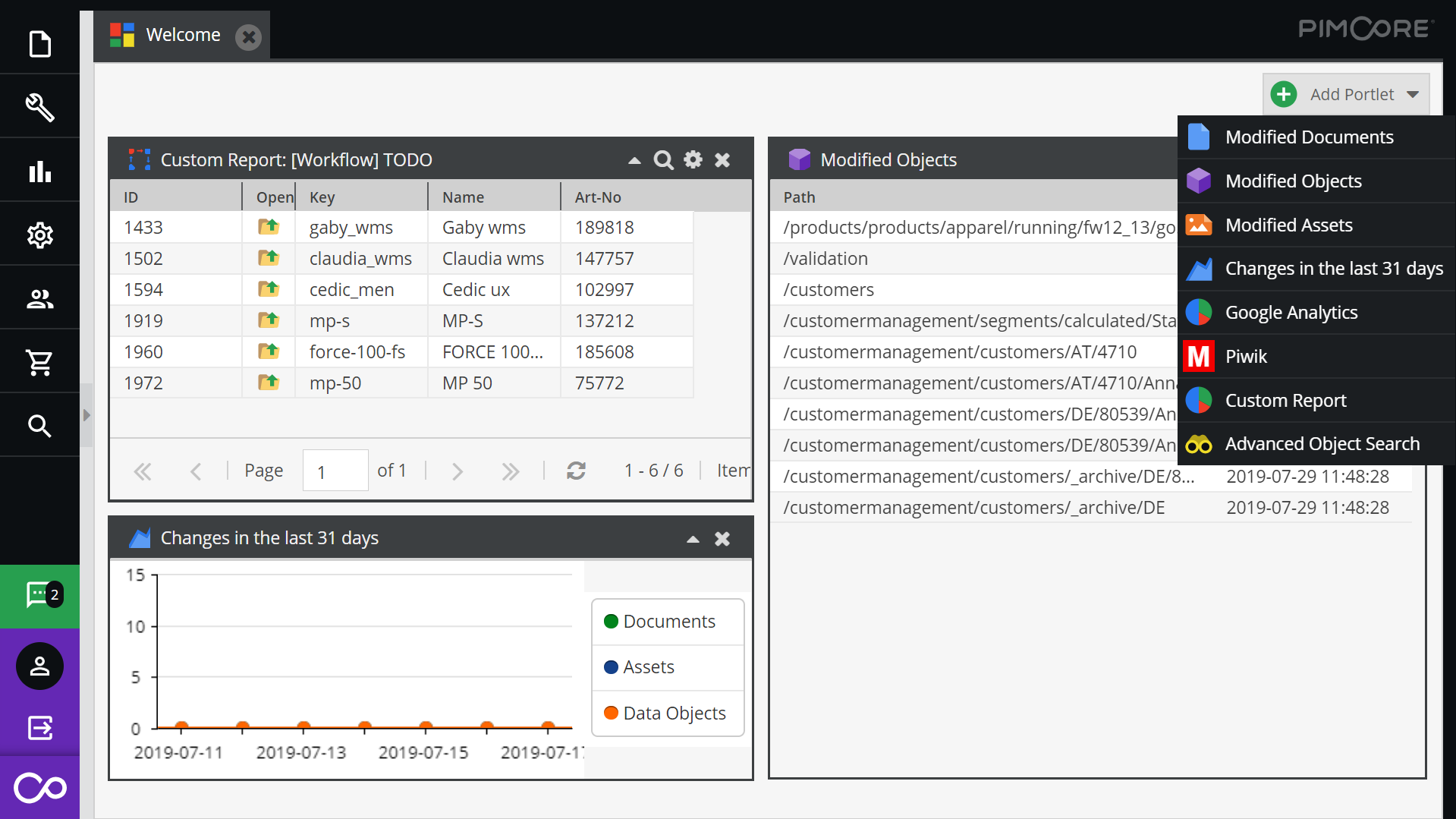
Pimcore PIM Dashboards

Get a user-specific and configurable dashboard that highlights relevant information, specific workflows, important states. It can be extended by portlets.

Product Information Workflow Management

Create custom workflows for your business processes using an open-source workflow management solution of Pimcore. It helps you to boost productivity and accuracy by minimizing the risks at the same time.

There should be a free flow of information in order to meet the PIM and MDM requirements so that the enterprise data can interact seamlessly. Retailers can create their specific workflow by selecting elements from the drop-down or modifying the workflow paths to keep the business process updated.

Workflow Engine

Pimcore PIM Workflow Engine

Harnessing the capabilities of the workflow engine, retailers can define business processes and editorial workflow. It allows to create a highly complex workflow that is based on action, states, transition, and notification. The workflow history provides an audit trail of each workflow step on a record.

Custom Frontend

Pimcore PIM Custom Frontend

PIM provides a 100% customizable interface and allows to develop & integrate custom models and functionalities. It can be easily integrated with your existing business and application infrastructure.

Ending Lines

Credencys, a Gold Partner of Pimcore, has developed robust Product Management solutions for retailers to manage their online product catalog in a hassle-free way. We offer end to end Pimcore development services that involve consultation, UI/UX design, code development, integration (3rd party software/APIs and existing business systems), testing, and support.

We have a team of skilled and experienced Pimcore developers who hold expertise in developing e-commerce & marketplace platforms, content management systems, APIs, custom modules, web applications, mobile apps, configuration, upgradation, migration as per the specific business needs of retailers.

Do you want to adapt Pimcore technology for your next digital solution? Talk to our Pimcore experts and take advantage of a free consultation.

Image Credits: Pimcore

7 Reasons for Banks to Invest in a Digital Signage Solution

It’s not a big secret that customer experience (CX) today is a more powerful customer loyalty driver than price-value perception.

This is specifically true for banks, says a Forrester Research –

Customer experience accounts for 55% of loyalty, and when taken together with price-value, the percent of loyalty goes up only slightly, to 56%.

It means that for higher customer loyalty, traditional bank branches should prioritize to improve customer experience. Like every other retail business, banks need to adopt the latest in digital to keep their customers happy when visiting their brick-and-mortar branches.

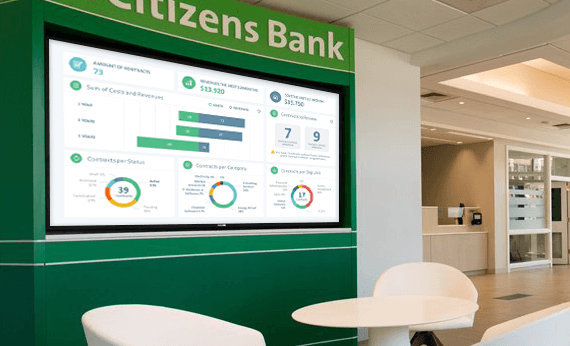
The applications of digital signage for banks are widespread. This article will help you identify the top 7 reasons for you to adapt banking signage solutions.

Benefits of Digital Signage for Banks

#1 Better In-branch Customer Experience

Better In-branch Customer Experience

With a majority of retail banking tasks being shifted to online space, brick-and-mortar experience has to be different from what it used to be a decade ago.

In the age of consumerism, everyone is glued to some form of screen. Digital signage provides an opportunity for banks to create a familiar experience for their screen-obsessed customers.

#2 Queue Management


Queue Management

Token-number-based queue management systems allow customers to sit and relax while waiting for their number. However, the same can easily be implemented with Digital Signage.

Further, Banks can keep customers engaged by using the unavoidable waiting time for providing useful and relevant information.

#3 Branding and Promotions

Branding and Promotions

Dynamic visual content can help banks in generating customer interest and raise awareness about their products and services. It also provides cross-sell and upsells opportunities to banks.

Digital signage can substantially enhance communications by integrating with banks’ CRMs and marketing automation tools.

With content in the form of videos and banners, relevant information can be easily and effectively passed on to customers.

#4 Easy Updates

Easy Updates

A major challenge for banks is to update their posters and banners to reflect the latest rates constantly. Printing and distribution of banners/posters involve huge costs.

These costs can be easily minimized with Digital Signage as one can easily tweak the content across the board via a central CMS.

Further, administrators can choose to customize content for specific branch requirements (regional language/ festival, etc.)

#5 Automation

automation-digital-signage-for-banks

Banks can create a calendar for content and systematically schedule it weeks and months in advance. This allows managers to focus on other critical aspects of their operations.

#6 Internal Communications

Internal Communications

Digital Signage can offer numerous similar benefits to banks in meeting their communication needs at non-retail branches. Banks can utilize digital signage for internal communications, reporting, policy updates, and training purposes.

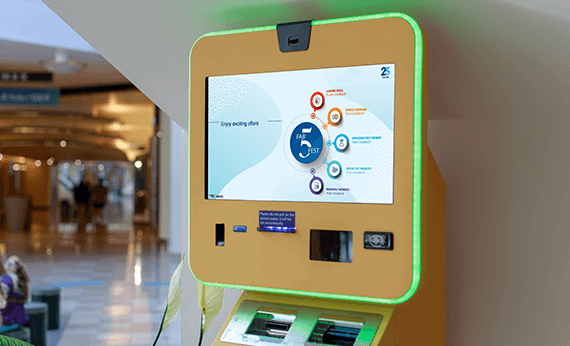
#7 Self-Help Interactive Kiosks

Self-Help Interactive Kiosks

These days, customers are more used to online banking than visiting the branch in person. Banks can offer them touch-screen kiosks to access their account details or browse through other services provided by the bank. Further, kiosks can also help banks in reducing staffing requirements.

Conclusion

Credencys Solutions Inc is a leading mobile app development services and solutions provider which has helped numerous businesses in their business growth. We offer Xynage – a digital signage solution suiting varying communication needs for businesses.

Digital Signage for Banks – FAQs

1) Why is digital signage prominent in banks?

Digital Signage is essential to catch the attention of customers within the bank premise. It is also used to provide the necessary information instantly.

2) How much does digital signage solutions cost?

The cost of digital signage for banks mainly depends on the number of screens and back-end functionalities/features. Higher the features, the higher the price.

3) What are the use cases of digital signage in banks?

There are mainly four use cases of digital signage in banks:

  • Branding and Promotion
  • Internal Communication
  • Display Financial Data
  • Digital Directory

4) What are the different types of Digital Signage?

External branding, internal branding/way-finding digital signage, stand-off signage, digital hoardings, retail point-of-sell signage, etc. are some of the primary types of digital signage.


6 Insurance App Ideas to Enhance Operational Productivity and Streamline Processes

The insurance industry has been struggling to leverage technology for its benefit. The old paper-based processes are stoping the industry from growing at a faster rate.

The Insurance industry is already aware of the benefits that mobile apps will bring to their business. However, it is quite complex to put insurance app ideas into execution.

According to Research and Markets, The global smartphone insurance market was valued at $22.6 billion. It is predicted to grow at a CAGR of 9% during 2019-2024 and reach $38.1 billion by 2024.

Many insurance agencies are partnering with mobile app development services providers to convert their insurance app idea into reality. Mobile apps will help insurance companies to remain transparent and provide a user-friendly experience.

Insurance mobile apps can help you to eliminate the traditional customer care representative system with 24/7 assistance using a chatbot. It will not only help you reduce the cost of running a call center but also save your customers time.

Companies like China life insurance, AXA, Allianz AE, Zurich Insurance Group, etc. are one of the first insurance companies to implement insurance mobile apps.

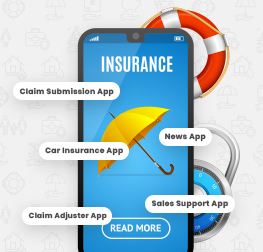
Insurance App Ideas

In this article, we have covered the top six insurance app ideas that’ll help you deliver a fantastic customer experience and streamline your business operations.

Idea 1 – Claim Adjuster App

The job of a claim adjuster is mostly a field job. They have to investigate claims and by consulting the police, interviewing the claimant, examine the damage occurred, and check hospital records to identify the company’s liability to pay the claim.

However, with the claim adjuster application, you will be able to increase the productivity of your claim adjusters. Moreover, they will also be able to provide you the documents and details about a claim faster.

To fulfill all the tasks mentioned above, you need to incorporate below-mentioned features:

  • Documents Library: The app must be capable of holding all the necessary documents and data. It should also allow them to access the uploaded documents on-the-go.
  • Up-to-date Information on Claims: Claim adjusters should be updated with all the latest and old claims data. They must have a feature to update adjusters with push notifications.
  • Photo Upload: Claim adjusters should be able to upload the pictures of damages directly to the cloud using their mobile phones.
  • Customer Communication: There should be a built-in chat feature for claim adjusters to communicate directly with their clients on-the-go.
  • Signature Capture: Claim adjusters should be able to take signatures of their customers using their smartphones or tablets. It will reduce a massive amount of paper-work, documentation, and scanning.

Customer Apps

Customers are at the center of every business. Insurance apps can genuinely elevate the customer experience. Now, customers will have all the information related to the insurance companies, their policies, etc. on their fingertips.

Mainly, there are two types of customer mobile apps for insurance. Read further to get a better understanding of each of them in detail.

Idea 2 – Claim Submission App

Claim submission has always been a significant issue among customers. This app will help customers to submit their claims quicker and deliver excellent customer experience.

With the help of the claim submission app, customers can now submit the claims flawlessly while providing every possible information using their smartphone.

It also reduced the efforts of claim adjusters as they now don’t have to spend as much time visiting the incident site in-person as earlier. It saves their time and other expenses, as well.

Finally, the app will help customers to know the progress status of their claims directly.

Idea 3 – Car Insurance App

Since today everyone is taking vehicle insurance, and especially for cars, developing a car insurance app can grab customers’ attention.

To give you a few use cases, drivers can use their smartphone camera to take pictures of the scene, take insurance details of other drivers to submit all the information to the insurance company.

Besides this, you can also include features that help customers to monitor their cars. Give them tips to drive better and reduce the chances of accidents and other risks associated with the car.

Moreover, using sensors, you can also create an IoT app that allows them to monitor the amount of petrol left and other parameters such as breaks, accelerators, and more.

Broker Apps

Idea 4 – News App

The job of a broker demands him/her to stay updated with the latest information on the environment, economics, and other aspects to give the best possible advice to his/her customers.

You can ask your analyst team from the office to send the latest information to the brokers on their smartphones. Sometimes, brokers get so busy that they are unable to read all the information and news sent to them.

Therefore, if you create a news app for your insurance company, it will help brokers only to receive the news and information, which is necessary.

You can use a broker’s calendar to identify when to send then the right information about their customers, such that it helps both the broker and the customer.

Idea 5 – Sales Support App

Since brokers mostly work on the field, they face many challenges related to capturing and accessing information.

A sales support app will help brokers to access all the marketing and sales-related documents and materials to capture and track leads and increase cross-selling.

The app must include the following features:

  • Lead Tracking: The app must have a section, which provides all the information about customers so that the brokers know everything about a customer before setting up a meeting.
  • Lead Capture: This feature will help brokers to save the successful conversions in the database that happened after every meeting. It will help them to save time transferring the information related to each lead.
  • Material Access: The app will help brokers to access every material related to sales and marketing from anywhere at any time.

Idea 6 – Training Application

Today almost any company or businesses are adopting mobility solutions that allow their employees with broker training.

A mobile app can help to-be brokers to acquire knowledge in a personalized way. It will help your employees to get acquainted with all the practices and guidelines that they must abide by to deliver amazing customer experience.

Employee training app can be extremely convenient as it can help employees to learn by audio and video lectures. Moreover, employees can recall any lecture whenever they want.

You can also include gamification features in the app to further engage the employees. For example, you can include quiz-based learning. Give points on the completion of each lesson/quiz/training session.

Moreover, you can create leaderboards to promote healthy competition among employees and motivate them to work more effectively.

Concluding Thoughts

Implementing these six insurance app ideas can help you deliver excellent customer experience, manage various workflows, and streamline business processes.

We understand the insurance sector and the critical requirements of an insurance company. We also know features that can help your company to achieve new frontiers.

If you hire mobile app developers from Credencys, we will help you from mobile app consulting to post-deployment support. Send us your requirements, and we’ll get back to you within 24 hours.

Insurance App Ideas – FAQs

1) How much does it cost to develop a health insurance app?

To develop a health insurance app for iOS and Android platforms take approximately $30,000 to $50,000. It will mostly depend on the amount and types of features you define.

2) How to develop an insurance app?

Below are the steps to develop an insurance app:

  • Identify the problem in the insurance industry
  • Perform market research
  • Think of customer problems before listing down features
  • Create a development team
  • Develop and test every feature, one at a time
  • Make relevant changes based on test results
  • Deploy the final product

3) How to make a policy holder’s life easier through insurance apps?

You can make a policy holder’s life easier by including app features that allow them to:

  • track insurance claims
  • create an insurance card (digital)
  • manage insurance policies
  • create a home insurance inventory

4) What are the must-have features of an insurance app?

  • Don’t create an app for the sake of creating it; bring value to your clients.
  • Create an app with simple navigation and an intuitive user interface.
  • App design should be responsive and should integrate well with every mobile device.
  • Deliver personalized user experience based on demographics, user location, or user behavior.
  • Do not overload your app with features; keep only the most important ones.


Why iPhone App Developers Prefer Swift for iPhone App Development?

Apple has introduced the first version of Swift during the Worldwide Developers Conference (WWDC) 2014. The objective behind the launch of this programming language was to make iOS app development faster and easier for programmers. Since then, the iPhone app developers prefer Swift to develop and deliver robust apps within the timeline and in a highly cost-effective way using the latest versions of the programming language.

Swift is a more sophisticated, safe, and modern technology compared to Objective C. Objective C is a comparatively older and highly used C language by iPhone app developers for a pretty long time. Swift provides high-level interactivity to build iPhone apps.

Here are seven reasons that prove Swift is really an advanced and simple programming language that allows programmers to build highly dynamic iPhone apps quickly.

Top 7 Reasons Why iPhone App Developers Prefer Swift

1. Advanced Programming Language

To meet the needs of modern iPhone apps, Apple has come up with Swift. It is an open-source programming language that improves the performance of applications with its advanced debugger, compilers, and framework infrastructure. The technology allows iPhone app developers to write code faster using simple syntax.

Apple has simplified memory management through Automatic Reference Counting (ARC). Programmers can use Cocoa and Foundation as a solid base of the app development framework.

Swift can be easily intermixed with Objective C by supporting the collection, modules, blocks, and literals of old technology. It reduces the friction between both the programming languages and allows iPhone app developers to switch on the go and gradually rather than replacing the entire code base.

2. Easy to Learn

While using Objective C and C languages, the beginners have to develop the app and run it in a specific programming environment. iPhone app developers need to import a separate library to develop functionality like string handling, input/output, etc. for a simple test of code each time.

Apple has reduced this process with the Playground feature that allows developers to experiment code in Xcode directly. They can see the results instantly without performing any extra activity.

3. Easy to Adopt

Swift holds a greater level of interoperability with Objective C so that the iPhone app developers can start creating applications using the Swift code, features, and functionality. Swift code can easily work with objective C files in the same project. Also, it allows developers to have complete access to the Objective C API.

It is a compact and light programming language that provides better readability and simplicity with less coding. Additionally, the technology is error-prone and prevents programmers from making mistakes. It removes the classes of unsafe code.

4. Simple to Code

Swift has a very simple coding and syntax pattern. The programming language doesn’t contain semicolon and other symbols at the end of each scripting. Thus, developers can run the code swiftly.
Moreover, Apple has developed advanced compilers for Swift. It makes iPhone app development easy to code and more object-oriented in nature by allowing to complete the complex tasks at a time using simple code.

5. Easier Maintenance

Objective C has not been evolving with the changing demand as it cannot evolve without the evolution of the C programming language. iPhone app developers need to maintain the two while they are planning to build an app using Objective C.

With Swift, programmers can use Xcode and LLVM compilers that perform the incremental build automatically by identifying dependencies within the code. The programming language combines the table of content (the header file) along with the body (implementation file). Thus, there is no requirements for creating two separate files.

As a result, programmers need to spend less time for bookkeeping as Swift eliminates boilerplate code and invest more time in creating the app logic.

6. Supports Dynamic Libraries

Dynamic libraries are the chunks of code that can be linked to iPhone apps. Actually, dynamic libraries are external elements but included in the app and available to the users when they download the app from the Apple Store.

Earlier, the iOS platform was not supporting the dynamic libraries even though they were available for Mac. Swift allows programmers to add dynamic libraries in iPhone apps and link the app against the latest version of the programming language. Using and linking the external code, Swift reduce the size of the apps.

7. Cost Viability

To build iPhone apps, programmers have to select from Objective C or Swift. They charge around 100,000 USD for Objective C based iPhone app development. On the other hand, for Swift based iPhone app development, developers charge around 95000 UDS. For large scale organizations, 5000 USD is not a large difference but for startups, it is a very crucial amount. Thus, compared to C based programming languages, Swift is an affordable technology.

Conclusion

Definitely, Swift is a promising technology for iPhone app development and has been evolving continuously to address the dynamic requirements of the iOS platform. Apple keeps updating the essential features of the technology such as expressive and cleaner syntax, easy of readability and writing, shorter development lifecycle, compatibility with different iOS devices, and more to build next-generation apps for startups and large scale organizations.

Credencys iPhone App Developers Prefer Swift to Build iPhone Apps

Credencys holds more than a decade long experience in developing iPhone apps for startups to large scale enterprises. Having exposure to working with Fortune 500 companies, we have an in-depth understanding of what the organizations are looking for while hiring iOS app developers.

Our iPhone app developers keep an eye on the latest tools and technologies launched by Apple and use them to build futuristic iPhone apps for the organizations. We keep updating our technical knowledge to meet the dynamic demands of the tech world.

Moreover, we have proven expertise to enable the clients with the competitive iPhone solution that helps them in not just generating better ROI but also delivering extremely fantastic customer value. Are you planning to migrate your legacy iPhone app on Swift or build a new application using the advanced programming language? Let’s connect to build amazing business solutions.

Frequently Asked Questions

Do iPhone apps have to be written in Swift?

To create the graphical interface of the iPhone apps, you can use Xcode. While developing features and functionality of iPhone apps you need to write the code using Swift. The programming language is only available on Mac OS so make sure you have a running OS X.

What apps are coded in Swift?

Almost all the big brands have developed and upgraded their iPhones apps using the Swift programming language such as Lyft, LinkedIn, VSCO cam, and more. Even the brands prefer the latest version of Swift to build the latest version of their app.

Is Swift the future?

Swift introduced by Apple as a programming language in WWDC 2014. Since that time, Swift is considered as a sophisticated, modern and secure programming language that allows iPhone app developers to build highly interactive iPhone apps.

Is Swift a good language?

Swift is the highly preferred programming languaged by iPhone app developers. It provides the faster performance along with improved readability and preventing errors. Swift allows developers to build the apps 2.6× faster than Objective-C.


Why you Must Hire Android App Development Company (and Not a Freelancer): 8 Good Reasons

Mobile apps are the most effective ways to reach out to your target audience in this digital economy. There are over 2 billion Android users in the world.

With over 3.3 million Android apps in the Play Store, it takes around 77% of the total mobile app market share. It is often seen that businesses who ignore building apps lose a majority of their customers to their competitors.

The market share of Android apps is growing, and so are the business opportunities for an Android app development company. Today, there is a cut-throat competition between Android apps that are similar.

There is a pressure on the heads of businesses to create the best app in their business domain. To build the best app, a business must find the right Android app development services provider.

8 Reasons to Hire Android App Development Company

1. Necessary Skillset

If you hire Android app development company, you’ll get a team of developers having a precise skillset to build Android apps.

The team that you’ll hire will have the appropriate knowledge and experience to carry out the Android app development project.

If you hire Android app developer from a development firm, you’ll receive full-stack app development services. It includes designers, developers, and testers.

2. Dedicated Effort

Unlike freelancers, mobile app development companies provide you dedicated resources, who work only on your project. It increases the chances of project success.

You’ll also be able to finish the project on-time or in some cases before time. A mobile app development services provider plans the entire development into small cycles or milestones.

3. Flexible Engagement

Creating a dedicated in-house team will probably increase your budget developing an Android app. On the contrary, if you hire Android app development company, you can get free service for a certain period.

Development firms also offer multiple hiring models. It means that you can decide how much engagement do you want from developers in your project.

You might have to pay more to your in-house team if it takes more time to finish the project. Since mobile app development companies take care of the cost, you’ll get cost-optimized app development.

4. Well-managed Project Development

Android app development is a tedious task and requires a lot of effort to manage costs, resources, and more. App development companies offer you a project manager whose job is to keep track of project progress.

Project managers manage resources, project timeline, project anomalies, testing, and deployment. He/she also does daily meetings with the team to ensure everything is in place.

5. Higher Commitment Levels

You’ll receive better commitments on the project deadlines if you hire Android app development company. On the other hand, if you hire freelancers, the chances of project incompletion are higher.

Since Android app development companies have a sufficient pool of resources, your project will not get delayed due to a lack of resource. Whereas, for some reason, if a freelancer is not able to finish the task on time, there is no other way you can meet deadlines.

If you hire Android app development company, you’ll be able to reduce the risk associated with the project. Moreover, a company can provide you ample support and maintenance to the application whenever necessary.

6. Access to Cutting-Edge Technology

The mobile app ecosystem is changing every day. The features or trends that we see is today might not stand valid tomorrow. Development companies are capable of adapting to new technologies quickly.

Freelancers, on the other hand, might not be aware of the latest advancements. Even if they are aware, they might not have enough time or resources to catch up.

Development companies can fill the technology gap by hiring new talents, whereas freelancers can not hire other freelancers to fulfill the technology gap.

Android app development companies can provide you with the latest tech and build your applications that last for years. Moreover, development companies have ways to reduce the overall cost of the app development using the latest in tech.

7. Value-added Services

A development company has access to a large pool of talent 24/7. Hence, they can pick anyone to build an app in a way that adds value to it.

Whether we talk about adding more aesthetics, intuitive designs, or future enhancements, the development company has got you covered.

While with freelancers, you might get limited support for your applications. Hence, limited opportunities for releasing an update or upgrade.

8. Non-Disclosure Agreement

Your idea is precious. And development companies know that which is why they have a well-structured non-disclosure agreement in place that helps you to protect your app idea.

If you share your app idea with a freelancer, you might put it into high risk. Freelancers don’t have a well-structured NDA in place similar to app development companies.

Conclusion

It is crystal clear that your only way towards successful app development is to hire Android app development company.

If you are a business owner who is on his way to grow the business, you’re recommended not to go with a freelancer because of the above reasons.

You’re badly mistaken if you think that hiring freelancers will save you money. Freelancers will cost you more in the long-term compared to an Android app development company.

Hire Android App Development Company – General FAQs:

1) When should I hire a freelancer rather than a company?

You must hire a freelancer only when you have an application ready and live, and you want to make a few necessary changes in the application. However, if you ever want to build an application from scratch, you must always hire Android app development company.

2) How do I hire Android app development company?

You can search for an app development company in multiple ways. First, you can search for one in popular business catalogs like Clutch, ThinkMobiles, G2Crowd, and more. Second, you can also perform an organic search on search engines like Google or Bing.

3) What are the criteria to hire an Android application development company?

Before hiring a development company, you must check what methodology do they follow to carry out projects. Then you can check the stability of the teams and knowledge of the team members.

4) Which is the best Android app development company in USA?

Headquartered in Los Angeles, California, Credencys Solutions Inc. is one of the leading Android app development companies out there. They have demonstrative experience in developing Android applications since 2008.


Top iPhone App Development Trends to Keep an Eye Out

Apple is known for tech innovations and evolutions since its establishment. The brand releases tech inventions for its different platforms during the World Wide Developers Conference (WWDC) every year. All new updates and features affect the existing iPhone app development practices as they have to be revolved in order to meet the latest trends.

Recently, Apple has released iOS 13. It is going to change earlier iPhone app development trends. To address the changing demands of the tech world, iPhone app developers also have all set to adopt new standards and implement them in the development process.

Excited to explore the top trends that are going to make remarkable changes in the iPhone app development? Let’s deep dive into right away.

Top 7 iPhone App Development Trends

#1. Swift 5.0

Swift is a widely used programing language by iOS app developers due to some of its advanced attributes such as effortlessness, scalability, security, and flexibility. Swift 5, the latest version of the technology, introduced during the WWDC summit in April 2019.

It is expected that the new version will come with more stable technology for the Application Binary Interface (ABI). It enables iPhone app developers with a better-embedded mechanism for Swift libraries on a runtime basis. Swift 5.0 will help developers to build powerful apps with seamless performance. Thus, while hiring iPhone app developers, make sure they have worked with all the different versions of Swift.

#2. Machine Learning (ML)

iOS 13 has introduced the Core ML 2. It is going to be used for the development of future-ready hardware products. It is expected the technology will empower iPhone app developers to build responsive, interactive, high-performing, and feature-rich apps for iOS platforms by integrating groundbreaking features of machine learning.

Additionally, the company is planning to introduce Apple Neural Engine to make ML and AI integrations easier and quicker. Let’s get ready to leverage the more intelligent iPhone apps with advanced ML and AI in the coming years.

#3. Siri with Advanced Artificial Intelligence (AI)

Siri, AI-based Voice Assistant of Apple, is going to be smarter with the release of new software updates. It will become more advanced than Amazon’s Alexa and Microsoft’s Cortona. According to a report from Loop Venture, “Siri gave correct answers about 70% of the questions.” It keeps improving response accuracy over time.

Apple has all set to auction its Sirikit to facilitate iPhone app developers to integrate it into the apps. With the Sirikit advancements, developers can build robust iPhone apps that open up many opportunities for the businesses.

#4. On-demand Delivery Apps

The on-demand delivery apps industry is growing like leaps and bounce as it gives next-level comfort to the customers to receive their desired products or services at the doorsteps. On-demand apps have started impacting almost all the industry domains.

New concepts of on-demand apps have transformed the way industries used to operate and the traditional business models of various organizations.

#5. App Security

App security is always a prime concern for Android and iOS developers as well as businesses. Undoubtedly, iOS wins over Android due to its high-end security features.

The tech giant has all set for implementation of Transport Layer Security (TLS) in iPhone apps to offer App Transport Security (ATS). It controls the hackers who carry out cyber attacks to damage your app code. TLS versions have been securing the Apple platforms for the last two decades. Each new release of TLS came up with robust privacy policies.

Now, the tech giant is going to introduce ATS compliance standards as a biological feature that makes it near impossible for the hackers to reach iPhone app security layers.

#6. Apple Pay

It’s an era of mCommerce where people use mobile wallets to make safer payments. There are a lot of applications on the App Store that require payment gateway integration and in-app purchase feature where the users can integrate Apple Pay as a digital wallet.

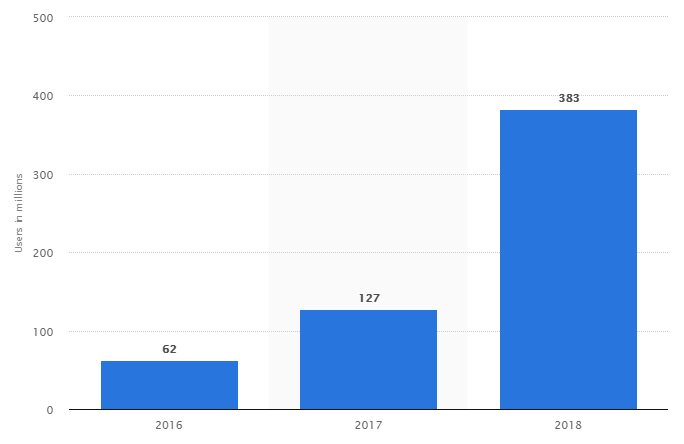
Apple Pay Usage

Image Credit: Statista

According to Statista, the global user base of Apple Pay amounted to 383 million users worldwide, up from 127 in the previous year. This number clearly depicts that Apple Pay had billions of transactions in 2018. It is estimated by Loup Ventures, the number will grow by 200% in 2019.

#7. Apple Homekit

With the Homekit, Apple becomes one of the significant players in the realm of the smart home industry. To address the varied requirements of Smart Home, iPhone app developers can use Apple Homekit. Combining Apple Homekit with IoT devices, businesses can develop hi-tech Smart Home devices & appliances and generate extraordinary results. Thus, Apple Homekit is going to be a buzzing trend in the upcoming time.

#8. Augmented Reality and Virtual Reality

Augmented Reality (AR) and Virtual Reality (VR) both the technologies have transformed the business landscape by enabling end-users with visually rich and compelling experiences. AR/VR iPhone apps help businesses in creating personalized shopping experiences for customers.

With 3D visualization, it becomes easy for the brand to communicate its message with next level clarity and effectiveness. These technologies continue to impact the iPhone app development in the upcoming time.

The updated ARKit 2 is going to spice up the user experience by improving the rendering of the AR and VR elements. It allows businesses to create a 3D art that can be viewed by other people in the same place at any time.

ARKit 2 with SceneKit allows for designing lifelike 3D graphics to build highly immersive iPhone apps.

iPhone app developers of Credencys are early adopters of the latest trends

Credencys has a team of 50+ iPhone app developers who have successfully delivered 300+ projects to clients from different industry verticals. We have proven exposure and expertise to build tailored consumer-facing apps or enterprise mobile apps for startups to large scale enterprise by following Agile and DevOps practices and considering the advanced iPhone app development trends and technologies.

iPhone app developers of Credencys have experience of dealing with the challenges that come across during the app development process. As a result, businesses can be sure of receiving reliable iPhone apps with timely delivery.

Frequently Asked Questions

What are the top iPhone app development trends?

To build the robust iPhone apps, developers integrate advanced tool and technologies in the app that includes Machine Learning, Swift, Apple Pay, Artificial Intelligence, IoT, Cloud, Augmented Reality, Virtual Reality, On-demand app development, Siri, and more.

How long does it take to develop an iPhone app?

When it comes to iPhone app development time, it depends on the complexity of the app. An iPhone app with basic features can be developed in four to five months. However, an iPhone app with highly advanced features takes more than twelve months to be developed and deployed.

Which is the best company to hire dedicated iPhone app developers in the USA?

Many options are available to you when it comes to select an iPhone app services provider. But Credencys is a reliable and experienced iPhone app development company with proven expertise in developing the iPhone apps considering the latest tools, technologies, and trends. Check out the work of the leading iPhone app development company.

How to hire the best iPhone app developers?

You can hire iPhone app developers by following the three simple steps, 1. Access the Talent Pool, 2. Interview & Select Developer(s), and  3. Kick Start.