How Internet Of Things Is Modernizing Agriculture Landscape?

An alarming fact!

According to the UN projections, world population will rise from 6.8 billion today to 9.1 billion in 2050 that signifies food production has to be raised to feed the one-third more mouths.

And, the agriculture industry is accountable for fulfilling humans’ need for food, energy, and shelter (To a great extent). Furthermore, the agriculture industry composes less than 5 percent of the combined GDPs of the world.

But, there is one more distressing fact revealed by Bureau of Labor Statistics, employment of agricultural workers is projected to decline 3 percent from 2012 to 2022.

Why is this employment supposed to reduce? And, what farm owners or farmers would do to sustain the productivity, increase yield and feed additional 2.3 billion people by 2050.

The only solution to all these problems is Agriculture Modernization that has already started by some of the tech-savvy farmers. For the next generation agriculture fields, data collected from sensors would become the fertilizer to grow crops. It’s really perplexing but true.

Embracing IoT (Internet of Things) would uncover the new ways that tap the full potential of agriculture yield and alleviate all the challenges that hinder the growth of the crop. Before heading to know how IoT solutions can turn out to be a magic bullet for the agriculture, let’s understand what IoT is.

IOT is the technology that extends the limit of internet connectivity from digital devices to physical objects. It enables the communication between digital devices, objects, and other systems. The data collected can be shared between person to person, machines to person or machine to machine, and data is stored and managed at Cloud.

With IoT remote water valves, weather forecasts, pest control, food storage and transportation data, and monitoring system could be connected and information exchanged via sensors is available to the farmer on the mobile phones.

Now, take a look how IoT can make agriculture more profitable and crop healthier at every step.

Decide which crop is the best to grow on a piece of land

Every crop requires different atmospheric conditions and land to grow, but concluding the same is tricky. How could farmers find which land or other conditions are the best fit for their crop? It can be identified by conducting a survey for the agricultural land combining the power of artificial intelligence and IoT in unmanned aerial vehicle (UAV).

UAV, a small airplane used for the in-flight observation and monitoring that gathers data like- visual, thermal, and multispectral imagery, air pressure, humidity, the weather condition at resolutions up to 1 cm/pixel. This data is really helpful for the farmers to take the decisive step.

Moreover, UAV also helps farmers in knowing plant height, weed detection, plant-counting, crop health and changes in the plant in different seasons.

Making irrigation smarter

Water supply at the right time, in right quantity and at the right place plays a vital role in the plant’s growth. Water management remotely is also challenging task, especially the management becomes more difficult during the shortage of water, which may otherwise damage the crop.

Connecting humidity sensors, water valves and monitoring system, water supply for irrigation can be managed easily. Humidity sensors smartly measure the soil moisture and based on that data, water valves provide water to the field automatically without any human interventions. Also, any leakage in the water pipes can also be identified. The complete data is accessible to the farmers at distance on the mobile.

With smart irrigation, there will be the least wastage of water, water consumption in the field can be tracked, in drought areas the crop water management could be done efficiently and unauthorized water consumption (If any) is detectable.

Know weather forecast information in advance

Climate and weather influence the crop production at large scale. This dependency on weather and frequent changes in the climate sometimes damage the crops and ultimately farmers suffer from a great loss. How about if the farmer knows weather information before they decide plantation or harvesting of crops. It’d be great. Isn’t it?

With IoT farmers would get accurate weather forecast in real-time and based on this information, they can pre-plan the different activities. Also, in case of future contingency, right steps could be taken beforehand to prevent the loss to happen.

Evaluate the growth performance of produce

Despite having right irrigation facility, perfect weather and optimum pest management, plants won’t grow well. Constant performance measurement and evaluation is necessary, but for that regular visit to the field is arduous. Smart technology makes this work done from a distance with sensors.

Implanting remote sensors would check the soil temperature, humidity, air temperature, pressure and pretty more! Getting this data, farmer can plan accordingly like- change the harvest time, irrigation time, determine heat events and improve plant health.

When plant breeding is done in such a perfect environment, the better would be the food quality and increased production.

Check the level of nutrient in the crops

Presently, getting a good quality food is essential, but having the right level of nutrients is vitally important. Now, farmers can manage the level of nutrients in the produce. Bewildered? As, how is it possible to check, control or manage the level of nutrients in the food. But, yes skyrocketing technology has made it possible.

The nutrient analyzers are built where sensors monitor the level of nutrients in the crops. Every sensor relates to a specific ion that would sit on one side of the membrane and when water passes through, these sensors detects the ion presence and its quantity. Simultaneous measurement of six ions can be done in the real-time. The analyzer is synced with mobile phone where all the data is displayed.

During plant’s growth, farmers knowing the ion level, they can change the mix of nutrients and improve the plant’s yield. Moreover, changing the proportion of nutrients, color and maturity rate of produce can also be altered.

Control the pest at the fingertips

Yes, the healthy crop becomes a prey to pests effortlessly and farmers have to suffer from a great monetary loss. It’s very crucial in the whole crop production cycle to identify when these pests would attack and what quantity of pesticides need to be used.

Here pest control sensors would help. The sensors monitor the pest behavior, pest’s population, and analyzes environmental parameters and plant growth. Based on this data the pesticides are automatically sprayed into the field at the place where it requires and in the right amount so that pests are disrupted initially.

The complete record of the pest’s attack on the crop, the amount of pesticides sprinkled and how much crop production is affected could be tracked. Implementing IoT reduces pesticide usage in the field and keep crop healthier.

Monitor the food storage safety

Once the crop is harvested, farmer’s work is not done. If you are thinking so, you are mistaken. As, crop storage is an essential part of the crop production process. Employing the correct grain storage techniques includes maintaining the accurate temperature, humidity, air control and pressure in the warehouse. But, getting real-time information is difficult and info received lately would result in the severe damage.

Integrating different IoT sensors at storage place would allow farmers to monitor the crop storage in real-time, control the storage temperature, humidity and a lot more. Plus, they would receive the alerts, in case any set parameter in the grain storage changes.

Bring coordination in logistics

Transferring the yield from storage to the market at the correct time through right means of transportation is very crucial. By optimizing the supply chain, farmers can reap good monetary benefits and reduce losses or overhead expenses.

With GPS sensors, the owner can easily track where the transport vehicle is and exact its location in the real-time. It helps in monitoring the vehicle and providing help to the vehicle in any emergency. Plus, installing the thermostat sensors in the vehicle would sense the change in the set temperature and if any fluctuation is found, then the owner would be informed.

Expected outcome

With the potential IoT innovations in the agriculture industry at large scale would certainly bring a global shift in the way farming is done and yields are produced. It is predicted that by 2025, there would be 600 million sensors implanted on 535 million farms worldwide and in 2015, these sensors would grow by three folds by the year 2020.

It concludes one thing- Be tech savvy to grow more and if you want to yield more, embrace IoT in your fields to stay at the top.

Our skilled professionals stand ahead in engineering IoT solutions for all industry verticals. If you want to have one such IoT application to modernize farming, consult our consultants today!

10 Reasons Explaining Why Mobility Is A Must For Next-Gen Workplaces

Mobility has slowly trickled down in our lives. Its benefits are impossible to ignore. Mobile usage is not limited to a means of communication, but now they have become an integral part of IT workforces working style. Even, presently, table tops of business lunch are more graced with mobile, laptops and other digital devices.

According to the latest report by Forrester, on mobile adoption in the enterprise, 66% of employees now use two or more devices every day, including desktops, laptops, smartphones and tablets.

Enterprise mobility

It signifies considering the latest trend and performance growth, enterprises should start investing in mobile technologies. Are you overwhelmed with change? Let’s take a look in what way going mobile can meet emerging workforce demands and help enterprises to be more productive. The 10 reasons are enumerated as follows:

1) Mobilize organization assets

Instead of storing bundles of files in the office shelves, it’s better to put all the company’s data and files into the cloud. It avoids the need to go to a particular site for a meeting or access system to get data, and adds flexibility to the work culture and reduce costs as well.

2) Keep the complete workforce on the same page

Making employees know about every activity initiated, awards received or new strategy deployed makes them feel connected, engage them and strengthen their bond with the company and its culture. This way they will be completely aware of what’s going on in the company.

3) Match the velocity of workforce changing behavior

According to The U.S. Bureau of Labor Statistics, Millennials will overtake the majority representation of the workforce by 2030. Millennials are more tech savvy, hyper-connected and high on technology. To keep pace with changing technology and workforce, employers must adopt mobility applications for the workplace.

4) Provide immediate support

Sometimes, when employees are away from the office, they need assistance or some files instantly to get things done. With the integration of a mobile solution, employees’ productivity can be improved with real-time help and they can handle the project in a better way.

5) Keep tabs on workforce

Going mobile, employers get to know how much time employees spend sitting idle, in business meetings or working on the desk. Also, in mobile with GPS tracker on, they can track the employees in real-time. All this helps in assessing employees’ work performance-productivity ratio and carrying out any action plan if required.

We need to bring learning to the people instead of people to learning- Elliott Masie

6) Training on mobile

In today’s competitive world, keeping the workforce updated with latest technology and knowledge is important, but along with managing business efficiencies, the things become difficult. Organizations could enable knowledge transfer on mobile and make employees learn at minimal cost leveraging technology.

7) Reduce carbon footprint

Employing E-training and E-learning would minimize the use of paper in the organization. Moreover, it alleviates the traveling cost that results in less carbon emission and makes the environment green.

8) A common ground for project teams

Employers can unify the communication with a mobile app chat feature where workforce can communicate, collaborate and discuss business projects they are handling. Also, by creating groups, employees can share the project challenges they are facing and get immediate assistance from the colleagues no matter where they are.

9) Data security

Mobilizing and connecting the IT infrastructure enable carrying out various business tasks without any pre-planned schedule. With restricted access, different level of data can be accessed securely by the range of workforce anytime, anywhere on the smart devices.

10) Strong physical authentication

Ensuring secured entry to physical space is absolutely vital. Replacing physical tokens with tokens on mobile is simple, robust and cost savvy. Leveraging software-based tokens, businesses can say goodbye to the clunky hard tokens that are shelling out big bucks. Also, a reset/upgrade can be easily made to mobile tokens that otherwise becomes cumbersome for the hard tokens.

The way forward

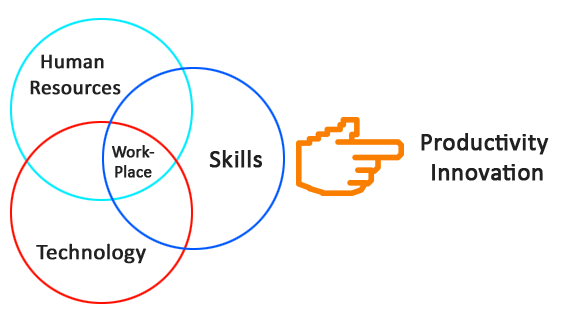
The convergence of mobile and technology innovations has the tremendous transformative potential to bolster workplace efficiency and strengthen security. Even, massive proliferation of mobile devices motivating the emerging workforce to bring their own device for work related projects.

According to Gartner research, by 2017, half of the employers will require employees to supply their own device for work purposes.

Time is changing and so is technology. With more innovations, enterprises are struggling to sustain and grow. Stay ahead in blood-thirsty competition by mobilizing your workplace and workforce!

Do you have any mobile app idea, but short on talent to engineer it? If yes, our pool of developers has great experience and expertise in building a range of mobility solutions. Explore the world of enterprise mobility solution development with us.


Why oil and gas sector should adopt big data and cloud computing?

Oil and gas industry- the well-known engine that drives the world economy! It’s true. Instead, the companies producing the most valuable resources suffer from either improper exploration methods, inefficient refining, manufacturing practices, or disconnected supply chains that directly impacts revenue generation.

Moreover, handling dozens of excel file manually is like herding cats and evaluation of huge data is a hard nut to crack for the oil and gas companies. Plus, getting access to the real-time data from the oil field or drilling platforms to collaborate, analyze and make quick decisions or instructing the workers at remote place where petroleum operations are carried out are the different challenges that oil and gas companies face. But, the sole problem that all of them find is in making the right choice for the technology.

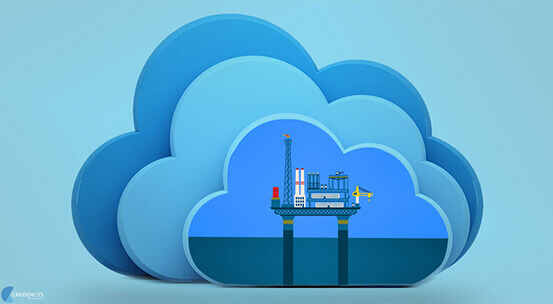
The unique technology that has potential to wipe out all the worries of Oil and gas industry is Big data and cloud computing. The spectacular technology that’s shaping the future of every industry vertical along with fulfilling industry-specific needs would enable companies to operate more efficiently even during a downturn.

According to a Dell survey, companies using the cloud, mobility, big data enjoying 50% faster revenue growth.

Incorporating Big data and cloud computing would allow oil and gas companies work highly automated, increase collaboration, build enduring customer relationships and improve speed. Before we begin counting the advantages of embracing the oil and gas IT solutions, let’s understand first what the Big data and cloud computing are.

With big data, business would gain insights from the collected data and encourage data-driven processes. Cloud computing reshapes the IT infrastructure of traditional data centers computing data in the virtual world and bring out the actions.

Let’s take a look how the IT solution is a perfect fit for the oil and gas sector

Reduce IT costs

For any IT solution, companies are required to procure the necessary hardware or software setup on their company premises, which requires good amount of investment. With cloud computing, oil and gas companies can extend their existing IT capabilities without installing any hardware. Companies would work on pay by use basis where hosted services are offered over the internet and cloud is built over the premise company is running in a virtualized world where virtual computing is done on big data files.

The complete process requires just a thin client device like- iPad, laptop or desktop, zero down the maintenance costs, and significantly reduces capital expenditure requirements. Big data and cloud computing would transform the economics of IT by reducing IT expenses and complexity.

Plus, oil and gas software solutions would be helpful to the small operators, independent software developers, and consultants as the cost-of-entry to cloud-based computing are low.

Empower the communication and collaboration

The work of oil and gas companies is not limited to the walls of the oil and gas offices while experts need to collaborate with employees in the oil fields in the remote areas and sometimes required to instruct upstream and downstream petroleum operations as well. It demands to get real-time information which requires huge investment in IT infrastructure.

With cloud-based systems, regardless the size of an organization, partners, employees, stakeholders and individuals outside the company firewall can collaborate hassle-free. Experts can analyze the data, take quick decisions, and then inform the same to the person at oilfields or drilling platforms. The modern solution made oil and gas assets mobile and more connected.

To know about the rewarding benefits of the enterprise mobility in oil and gas sector, click here.

Making operations greener

Increased Server efficiency leads to less energy usage for the same amount of work done. For highly efficient operations, data centers try to cool the equipment by passing outside air or isolate the hot air expelled from the servers. While, with the virtualization of the server, server efficiency heightens up to 80%, carbon footprint and energy consumption get reduced, and money is saved that otherwise spent on energy.

According to the Carbon Disclosure Project, by 2020, large US companies that use cloud computing can achieve annual energy savings of $12.3 billion and annual carbon reductions equivalent to 200 million barrels of oil.

Data storage with zero security threats

Safeguarding the information by locking down the files behind the office locked doors is inconvenient if the company is having multiple branches around the world. How can files be shared? Plus, how to recover the files if destroyed in some local catastrophe like- flood or fire? The enclosed information is at the potential risks and it demands to keep the backup of data.

Instead, storing all the information in the cloud would eliminate the need to manage on-site storage, take complicated data back-up and maintain file security as data is secured behind the dedicated firewalls. Moreover, the data access security can be customized by enabling authentication to the network, applications and other files.

Centralization of data

Oil and gas industry is a large industry where work is done in multiple steps across several locations and that’s managed by a different rank of workers from managerial level employee to the field worker. All the processes and people involved requires access to a distinct set of data. Traditionally, manual management of data at multiple locations and by multiple people would heighten the chances of error, redundancy or data loss.

Incorporating big data and cloud, the complete information gets centralized at the server from where the staff could have immediate access to the data. The centralized system automates the process with no security threat by providing restricted access to the data to a different level of employees and eliminates the file versioning and management frustration.

The future

With unmatched capabilities of big data and cloud solutions, increasing number of oil and gas organization are migrating their existing legacy system to the cloud. Credencys professionals have the necessary expertise and a wealth of experience to offer a higher level of efficiency, and secure and controlled access across complex cloud implementations. Our consultant will discuss and suggests industry-best oil and gas software for your oil and gas company.

Enhance the value of your business and address the challenges you face by driving a new level of innovations with our big data and cloud engineers.

Top 12 Reasons Why Enterprises Should Embrace Big Data

With exponential increase in data, it has become extremely challenging for the organizations to systematically arrange the data, analyze it and compute actions out of it. Adoption of BigData technology is the panacea to all industries’ data storage and computation struggle. That’s why BigData is gaining momentum and increasingly making inroads in the enterprise.

According to IDG Enterprise Big Data research, 70% of enterprise organizations have either deployed or are planning to deploy big data-related projects and programs.

Enterprises ahead in big data initiatives

It’s a large share of the market! It implies ignoring or not utilizing the power of technology means a big deal to ignore. Simultaneously, there are also companies that suspect using and making something better leveraging bigdata.

To answer all the critical questions, here 12 reasons are outlined that strengthens the decision made by the enterprises to adopt BigData technology

1) With the intelligent tool, you can manage the growing variety of raw data hassle-free.

2) Extract the useful data for specific purpose from distinct data resources that’s unstructured and in different format like- audio, text or video.

3) It is cost savvy as without investing in single high-end hardware, enterprises can have multiple cheap hardware to store and analyze the massive data sets.

4) It enables working at speed. Bigdata hosted model abstract the complexity that enables immediate deployment and preconfigured sandbox environment make the developers set up the necessary configurations from scratch in a shorter span.

5) BigData applications let users visualize the data in real-time. Showcases the business intelligence data in easy-to-read charts, graphs, and slideshows which user can easily envision.

6) After getting insights out of the stored data, enterprises can get 360° view of their customers which aids in understanding customer’s needs and behavior.

7) Also, this valuable data creates business opportunities and helpful in taking new merchandising decision at right time, which in turns improves the productivity of an organization.

8) Enterprises can smartly capitalize on the analytics and generate more revenue and profitability.

9) Embracing ERP system in cloud, results in improved reliability, support, no ownership, low manageable costs and speedy setup.

10) Big data insights diminish the risk by optimizing the complex decisions involved in unplanned event or business decisions.

11) Searching the data from data warehouse is time consuming, but that could be done in no more time with big data.

12) Check the veracity of data by analyzing and drawing insights from the volume of data.

Wrap up

With magical bullet: big data, managing voluminous data, mining the required information and processing it on the fly is now no more daunting.

Big data that’s widely known for 3V’s: large Volume of data, huge Variety of data and Velocity at which data can be processed, impacts the enterprises from internal operations to the supply chain.

For instance, storing massive data by the manufacturing industry in traditional database is difficult to process that’s increasing day by day and identifying the valuable data instantly seems impossible. Also, industry has to spend a good amount of time and resources to extract the information and compute the action.

Consequently, in the absence of real-time insights, strategizing and initiating new merchandising decision promptly is not possible. However, embracing big data technology, things can be turned upside down and manufacturing industry would gain a performance edge.

In distinct ways, every industry is reaping the rewards and becoming more productive.

Are you ready to take a big leap with big data? If yes, do connect with our consultants as we have proficient team of bigdata experts.

Credethon: The Remarkable Event of Ideation, Innovation And Collaboration

Organizing stellar events often to enlighten the office environment and introduce a fun element in the routine work of employees is the thing for which Credencys culture is known for.

Moreover, these events create a worthwhile opportunity and provide a stage to employees to showcase their hidden talent and expertise. Advancing in this direction, company has come up with a new idea of hosting Credethon.

Credethon was a two-day hackathon where hackers were invited to animate their hacking ideas into cool applications leveraging the technology they like to incorporate.

This event was aimed to nurture the spirit and encourage engineers, programmers, designers, testers and marketeers for digital innovations. Fortunately, event brought the result what’s desired, as number of employees was eagerly waiting for the event to take up the challenge and exhibit their skills.

# Credethon
The phenomenal event brings together entrepreneurs, hackers, technologists and designers under one roof in the guise of Credethonians to stimulate new ideas, new processes or prototypes, and new business solutions.

The event was kicked off on 14th August, 2015, and 55+ resources in 12 teams were amassed to put their brain to a little more exercise for engineering a world-class solution that solves global challenges and serves customers’ needs.

48 hours long hackathon was brain-crunching, code-driven, entertaining and charged the air at office space. Not only had the resources with years of experience participated, while beginners also took an initiative to drill down into the depth of their favorite technology to build creative and complex prototypes.

The ideation was seen on multitude of devices, multiple platforms and in diverse technology like- iBeacons, Android image processing, Unity 3D, Android wear, Solr, core PHP, virtual reality, Google cardboard, and signalR

The rigorous coding session of two days has lasted until the evening of 15th August 2015. Twelve applications were crafted by the techies to solve the core challenges related to virtual mall, immersive gaming, heart rate monitoring, E-commerce, social media, shopping list, mobile device management, web-based software and data computation.

After the completion of Credethon, a common buzz was all around- “We get a wonderful chance to learn novel technology, languages, tools and pretty more.”

Finally, winners were selected based on the ideation, team collaboration, innovation, design, architecture, complexity, and presentation. After assessing the apps on the above criteria, three teams conquered that were rewarded with a trophy and sponsored trips to Goa to get relax, enjoy the nightlife and have fun at beaches away from work.

Last but not least, the words with which Credethonians came up with are- We all enthusiastically await the worthwhile event of ideation, collaboration, and innovation. That’s Credethon 2.0.

Why Wearables Are Great For Business Travelers?

Travelling is a great fun, but the case is not with the business persona.

Business people take work related trips very frequently and hassles in the travel are strenuous.

For instance, a business traveler rushing through a busy airport or train station at a hectic time and the pressure is mounting as they near boarding time. They are pulling luggage with one hand and looking for passport in the pocket. The cell phone rings in the pocket and they have no free hand to answer it.

Consequently, some important business meeting updates and emails get missed.

It’s really upsetting!

Is there any solution?

YES, Wearable Technology is the perfect fit that let business people work in an optimized way without any distraction.

Wearable that one can wear on the body are connected with cell phone or blue tooth device. All information quickly and easily can be viewed on the watch or glass, or listen to a headset.

Google glass, Sony Smart Glass, Epson, Moto 360, Pebble and Apple watch are some of the well-known wearable.

These devices can be used by the business travelers to connect with customers anywhere and even while on a train or airplane and with distracting background, they can work on a business project.

There are five concrete reasons which illustrate why wearable are the novel gadget for business travelers

1) Business Travelers Face Time Management Problems

Business travelers must function in a fast paced environment and perform many important tasks on time. Rushing to the airport or even checking into a hotel can be stressful when you have to be at a meeting in a hour or less.

Time management is important for business travelers for keeping clients and vendors satisfied. If the business traveler misses an important message or meeting it could hurt the company’s business.

Smart watches are designed to provide the same information that can be looked up on a cell phones. Often a smart watch has to have a smart phone or blue tooth device to work properly. Carry the phone in a pocket and just glance at the watch much easier.

With a smart watch you can receive email from your employer or clients and keep up with a changing fast paced schedule. You won’t miss a change in business plans or an important request from a client or vendor. Emails will come quickly in real time and important information that you need will not be lost.

An important meeting time is change and you miss the email. When you arrive at the meeting it is almost over. You lose the client and potential sale from your mistake. Many smart watches have calendar applications that allow users to store meeting and flight schedules.

Changes in Travel Schedule

With weather and other conditions flights are delayed and travelers have to wait in an airport. A smart watch let’s you store all your travel information, flights, booked hotels, and other details.

For example, an Apple Watch gives you travel information from flight departures to arrivals. In fact, you can store a boarding pass in your Apple Passbook and digitally use the watch scan your boarding pass at the airport.

This is convenient and makes travel easier. Many smart watches notify users about gate changes, weather, and flight delays. This is an important part of travel. This applies to train travel too.

Taking Notes and Recording Information in Meetings

Business travellers have to often take notes at conventions and meetings. The information is important for companies to keep up with trends and changes. Many smart watches have a note taking and dictation function that makes it easy to keep track of information.

You are sitting in a convention meeting for an hour taking notes on business trends and new products. When the meeting is over you go to quiet spot dictate or type in the information to save it for later. A few hours later you get an email from the boss for an update. Quickly you send him this information using your smart watch while continuing to attend more seminars or meetings.

Working without Distraction

Business travellers often need to work in a hotel room or on a plane without distraction. A quality set of blue tooth headphones will keep your mind on your work while listening to some quality music or programs.

These devices should be lightweight and not too heavy. Many business travellers like to walk around a city when travelling and these are a great way to exercise by walking or even at the gym. Another point is that if you drive you can make calls without using cell phone having both hands on the wheels. It is safer for business travellers than using a cell phone.

Finding Direction and Locations

Some smart headphones connect to a smartphone and tablet and keep track of where a person is at all times. Roaming through a big city when travelling often requires finding new places like hotels, restaurants, and businesses.

The smart headphones have GPS qualities that allow users to find directions to and from locations. These headphones allow you to walk, get directions, listen to music and communicate with others.

Wrap up

Wearable allow business travellers to be more organized with time while travelling, keep up with information and manage projects, get travel directions, and help with concentration when working in a hotel or airport, and keep hands as free as possible. These are some of the many pluses.

Do you find some more benefits of wearable for business travel persona? Weigh in about it in the comments given below.

Will Apple Watch App Development Be A New Gold Rush?

The novel products of Apple have taken the tech world by storm.

It’s really phenomenal!

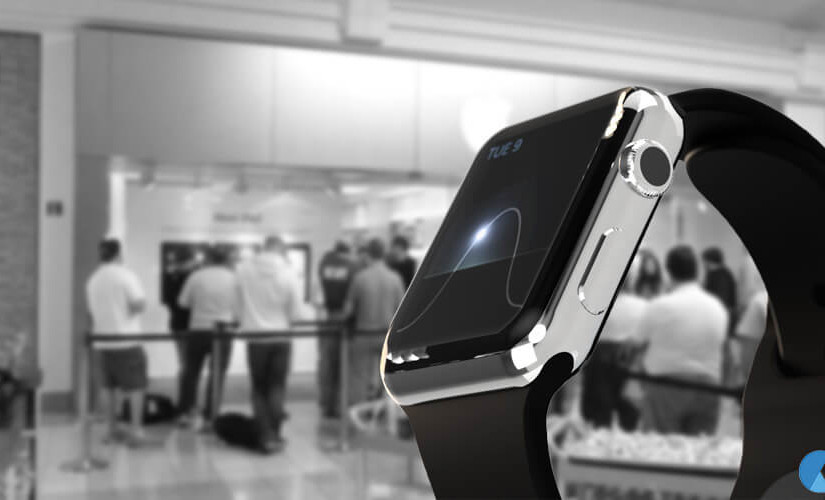
Presently, keeping pace with advanced technology, Apple is dominating the wearable market and taking hold of its fan base with new offering that’s Apple watch.

The new wearable has grabbed the attention of masses quickly, but it’s uncertain that Apple watch applications will also deliver the similar seamless experience and make the users take interest in.

Scratching your head, why?

Designing killer apps for the Apple Watch is a bit tricky.

With limited space on watch, building unique apps with intuitive UI and WatchKit restriction makes the developers fight with tooth and nails.

In global Apple watch app development hackathon, technical experts find it extremely taxing and arduous to craft apps that perfectly suits what customer needs.

A veritable rush among the developers is going across the globe, but there are caveats.

Here are the bizarre challenges that skilled engineers may face in crafting beautiful apps for Apple watch.

Caveat #1: Watch Apps have to be Simple by nature. This is, paradoxically complex.

The budding apple watch app developer will have their work cut out for them because with an Apple Watch, the small screen size and general simplicity of the device mean that minimalism will be key when it comes to user interface and front-end functionality.

This is a big difference that developers will need to get used to – the screens on our smartphones have gradually gotten bigger, meaning more buttons and features could be added to every app. People will expect that functionality to remain. They will want their app to still be intuitive, however.

Caveat #2: Users Will Have a Learning Curve Steeper Than Before.

This is something that developers need to be aware of. Most people who are developing for apps now weren’t developing when the first smartphones came out – and so never experienced a customer base who expects the Earth of their luxury product yet has no idea of how to work it.

With the Apple Watch, people will expect it to work exactly like an iPhone, and when it doesn’t, expect to face a gauntlet of criticism and customer support.

Caveat #3: Wearable tech… Think about the market- what will they wear?

One of the glorious things about App development is that all kinds of niches have been filled – from doctor’s devices to financial calculators. When you are thinking of starting your iWatch app Development Company, think hard about what people are actually going to want from a wearable tech device.

Chances are they’ll be wearing wearable tech for a reason – on the go, moving around, etc. Chances are you’re not going to be developing heavy statistical programs which will require sitting at a PC to digest.

Caveat #4: Apple is not Open Source.

This is both a great advantage for Apple and the bane of their development. Firstly, if you want to hire apple watch app developers, then you’re paying a premium. If you’re developing yourself, then realize that you are not going to be able to stand on the shoulders of giants when it comes to code.

The lack of open source community hurts Apple development because everything needs to be started from scratch every time.

Caveat #5: Apple Price means that a lot of app buyers are not the target market.

The Apple Watch is not a cheap device. If you’re looking to profit in a similar way to the gold rush of iPhone and Android it’s going to be a little different a process than looking to hire apple watch app developers in third world countries, have them write a simple child’s game and then watch millions roll in.

The reason that such apps were successful is that everyone had a phone and so giving the kids something to distract them wasn’t a huge diversion. The Apple Watch will not share the same ubiquitous nature for a long time.

Conclusion

The budding Apple Watch app developer has a veritable treasure trove of potential projects to do. However, careful thought needs to be put into this to ensure that their efforts don’t fall flat. Remember, despite the wild success of Apple in the past, there is no guarantee of future success.

We are entering new and unchartered territory for product development with wearable tech and the Apple Watch with it.

Despite having a lot of challenges involved in the Apple watch app development, our proficient iOS developers have the expertise and extensive experience in engineering Apple watch apps.

So, don’t hang fire and let’s build intuitive Apple watch applications!

5 REASONS Specifying Which Platform is best for Your App – iOS Or Android

All you need is a real platform to get started with the Apps. App development companies have different strategies to select the platform for launching their apps.

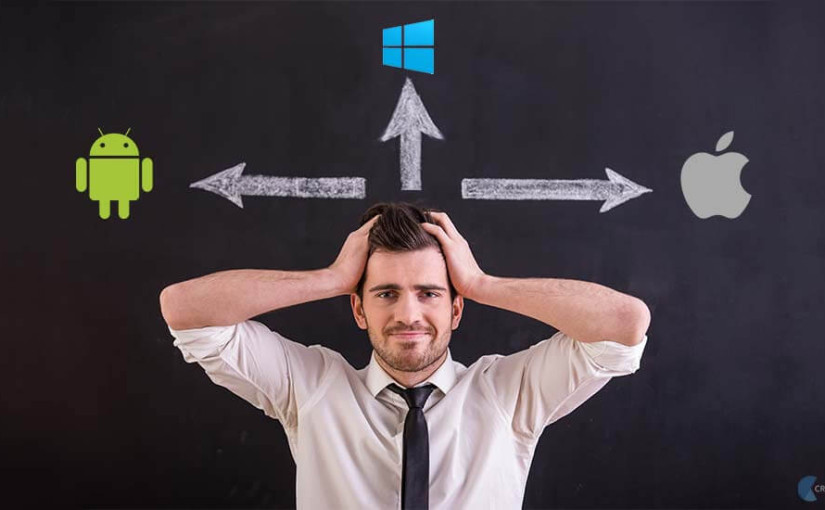
It depends that the apps they are launching are meant for Windows, Android, Apple or for all three devices. Don’t get entangle in the network of platforms like Android, iOS, asp.net or Joomla and Google Launchpad. Let’s narrow our option to iOS and android selection

iOS, a sophisticated launching pad is committed to Apple customers only. It has identical elements. You have to switch the platform if you are using any other device. The apps cannot be moved to other platforms and the customers using iOS apps are ready to pay for it but these are lesser in number as compared to the ordinary Android users. Special skills are required to develop the iOS Apps. Although the trend is diverting towards the iOS launching platforms but Android platform’s utility made it more vulnerable for new App launching.

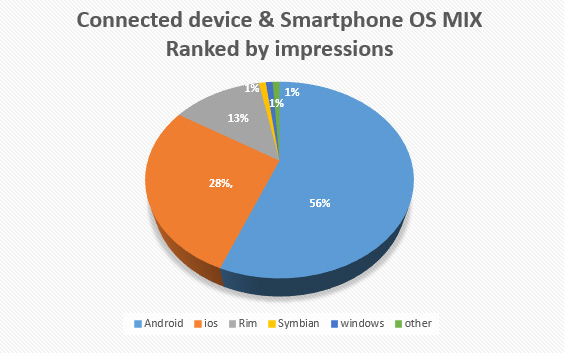
mobile statistics

Why to use Android?

This widely use platform is the most convenient stage to launch the Apps for the following reasons:

1) Customizable options

Android devices have customizable options .it instantly provides accessibility to e-mails calendars or social media via its shortcuts and updates. Unique indoor mapping, subscriptions based music service free video calls are available and accessible. The screen offer you to make custom alterations of your requirements

2) Tailor-made options

Androids provide the opportunity for other developer and hardware specialists to make changes in Android devices easily .they tend to add their customs on top of the existing Android software.

3) The pricing option

The worldwide usage of Android has made it economical to install. It offers cheaper Apps. Android apps can be used in affordable devices, devices like manufactured by Huawei and ZTE China for less than£ 100 and if you are not convinced with the quality of these phones then you can go for Motorola with the Moto g and Google with its Nexus with £150 and £300

4) Google services

Android has officially incorporated Google play store to download new software, Google services are built in by default in android and android is designed to ensure integration with them all. Google is renowned for building innovative hardware accessible in modern devices

Schmidt the CEO of Google said in an interview: “Android is more secure than the iPhone”
Schmidt added: “You will be happier with Gmail, Chrome, and Android more than you can imagine”.

5) Accessible in modern devices

This New Year will exhibit many new innovative devices like HDMI, Smart TV sticks. These devices have variable screen measurements like from no screen to 24″screen, likewise modified tablets, phablets and other revolutionized device will adopt Android as its operating platform which offers interconnectivity between all devices.

Hence, in spite of the modish variety of iOS platforms, it is economical and accessible to use Android as a platform of launching your Apps.

10 Reasons Why CloudKit is Worse Than Parse

If you must save a great deal of work in the cloud, whether for personal or work-related purposes, then you obviously need a reliable cloud-based program.

With so many different cloud-based software programs available, it can sometimes be challenging to choose the best one. The right software offers many helpful features, ample storage space and much more.

Many people opt for CloudKit as opposed to Parse or similar programs, here’s a simple question: why would someone choose Parse over CloudKit?

Simple questions don’t always have simple answers, but this one does, ten simple answers, in fact.

Both apps aim to offer easy cloud management, but one simply does it better. Both are loaded with great tools, great features, and powerful capabilities.

Unfortunately, CloudKit falls behind in many areas where Parse excels.

Here are 10 reasons why you may want to consider Parse over CloudKit

1) The Dashboard

A recent trend in design, especially user interface design, is to streamline and streamline until there’s nothing but the bare essentials, or even less, in CloudKit’s case. The Dashboard is incredibly limited compared to Parse’s.

2) Analytics

With Parse, you get support for data-based analytics, allowing you to monitor all the numbers you need to track. An old joke suggests that Apple users aren’t as technical as Windows users, but the truth is that you simply cannot compete in this age without knowing your way around analytics, even if you don’t pride yourself on being deeply technical.

3) Easy Importing and Exporting

With Parse, it’s easy to back your data up in JSON to make sure that it’s there for you when you need it, and it’s just as easy to import it back in. This makes it very easy to transfer data if you get a new phone, laptop or other devices. If you make sure to backup every night, or just right before you make the switch, you can pick up where you left off without skipping a beat.

4) Background Tasks

You don’t get Background Task with CloudKit. You do with Parse. This makes it very easy to automate and streamline your process in development, analytics, and design.

5) Cross-Platform Compatibility

With Parse, you can work on OS, iOS, Windows and Windows Phone, and Android. If you don’t have an Apple product, you can’t use CloudKit. This can create serious problems if you’re working with a team and you’d like for everyone to be on the same page. If your Android users can’t operate on the same apps as your iPhone users, there’s going to be a lot of doubling-up on the work and a lot of miscommunication.

6) Hosting

You can create a website and grab a domain name right from inside of the Parse app. If you want to do that with CloudKit, you’ll need to find your own web host and then figure out how you’re going to get your work from the app onto that site. With Parse, it’s easy to import and export to and from your website and publish web content directly from the app. CloudKit, not so much.

7) Rest API

REST API allows you to access third-party libraries in order to receive and transfer data. Parse offers REST API support, where CloudKit does not. This is one of the ways in which CloudKit could be seen as more of a “closed eco-system.”
Parse is available on platforms like Android and Windows and reflects the more liberal philosophy of those operating systems. Put simply: accessibility is key in all aspects of Parse’s design, and REST API is a big part of that accessibility.

8) Social Network Support

This is the age of social media. Parse lets users log in through Twitter, Facebook, and other social networks, and then it stores their data in a Users table. CloudKit is a little archaic in this regard, as it does have a Users table, but there’s no built-in function to collect data when users log in through their social networks.

9) Server Side Logic

Parse uses CloudCode, allowing developers to implement tasks on the server. Calculating data or accessing a library is very easy with CloudCode. CloudKit has nothing like this.

10) Support for Local Storage

Last, and far from least, Parse offers support for local storage. A simple piece of CloudCode will let you store locally anything that you need to. There’s no feature in CloudKit to let you choose whether to store your data locally or in the cloud. CoreData and Realm both allow you to do this, but the fact remains that the feature is built right into Parse, but not CloudKit.

Wrap up

CloudKit is not without its strong points, however, it is deeply lacking in many crucial areas if its developers wish to remain competitive.

The cloud allows a streamlined, efficient approach to work, no matter your field, and hopefully, CloudKit takes a cue from Parse in order to make life a little easier for its users.

Based on the features or functions requirement during development, preferably Cloudkit or Parse can be chosen.
Happy development!

5 Ways Apple Watch Is A Boon For Hospitality Industry

In 1977, President of Digital Equipment boldly stated publicly, that he thought there would never be any reason why anyone would want a computer in the home.

He could not have been more wrong.

Not only do people want to have computers in their homes, they now want them everywhere.

The micronization of technology reduced the size of computers that originally took up gigantic rooms, to the desktop, to the laptop, to the tablet, to the smartphone…

Now, Apple has reduced the computation capacity to be a wearable computer in the form of a super cool and highly functional wristwatch.

Of course, it tells the time, but it does so much more. Apple Watch is smart technology that has the ability to do so much like- it monitors the heartbeat and fitness activities, one can check email, instant messages, and maps, and pretty more.

Wearable computers are superb solutions because there is no need to pay attention to them except when they perform useful functions.

It’s being quite a reason that many industries have embraced this solution to grow by manifolds, and hospitality sector is one of them.

Luxury hotels distinguish themselves by the level of service that they perform to satisfy their customers. Service is best done when it is automatic, meets the needs of the clients, and is non-obtrusive.

Here is how some hotels and the hospitality industry are already embracing and getting benefits leveraging Apple Watch applications

Directions to the Hotel

In a new city, exploring and navigating the hotel is a quite a task. When the directions automatically appear on the Apple Watch as the guest arrives in the city of the hotel, it improves user experience as customer always love comfort.

Automatic Check-in

There is no need for guest to go to the hotel registration desk. They can check-in to their room using the Apple Watch. This reduces the burden of providing check-in services at the desk.

Keyless Room Entry

With the advancement of technology, now watches become the keys to unlock the door. Yes, Apple Watch becomes the room key for hotels’ guests. It shows the room number. The guest simply walks to the room and the door unlocks as they approach the room.

This feature enthralls the guest and turns them into loyal customers. Also, this unique experience that they will get would improve the word of mouth about the hotel. Bottom the line, adoption of Apple watch solution means you are turning your customer base into the ambassador of your hotel.

Food and Drink Service from any Location on the Property

With Apple watch, people can search for the nearby food stores and order the food or reserve the space in any hotel. This convenience not only makes the guest happier, it increases the hotel’s reach to large customer base and boosts their revenues from Food & Beverage sales.

Special Promotions and Offers

These increases return visits and usage of hotel services. Upgrades that increase revenues include things like automatic breakfast delivery to the room and access to spa services at a discounted price, which helps to maximize profits for facilities.

Luxury Daily reports, the Starwood luxury hotel chain created a preferred guest program for Apple Watch owners. Full access to all the services provided for Starwood Preferred Guests is accessible from the watch. Now, excellent service it is available by a touch of the Apple Watch.

Conclusion

From the hotelier’s point of view, the increased service opportunities, not only makes guests return, they also increase revenues. Moreover, these technology-based offerings attract a younger demographic who then become life-long customers for the hotel chain. The expectation is that many more hotel chains will make use of the new Apple Watch capabilities in the future.

So, why to wait for?

Get started rendering exhilarating experience to your guests with Apple watch solution.

Here, at Credencys, our skilled developers has all expertise and rich experience in building Apple watch solution that perfectly suits your hotel needs. Let’s create amazing experiences altogether.