


How Databricks Benefits Supply Chain Leaders with Real-Time Insights
Global supply chains are more interconnected and more unpredictable than ever. Disruptions can stem from supplier delays, transportation bottlenecks, sudden demand surges, or geopolitical shifts.
In this environment, real-time visibility is a strategic necessity.
However, currently only 31% of companies regularly use real-time supply chain data, revealing a significant opportunity for competitive advantage.
Databricks delivers on this need by providing a unified analytics platform that integrates, processes, and analyzes vast volumes of supply chain data in real time. By breaking down data silos and enabling AI-powered insights, it equips decision-makers to act faster, optimize operations, and build resilience into their supply chains.
The Modern Supply Chain Challenges
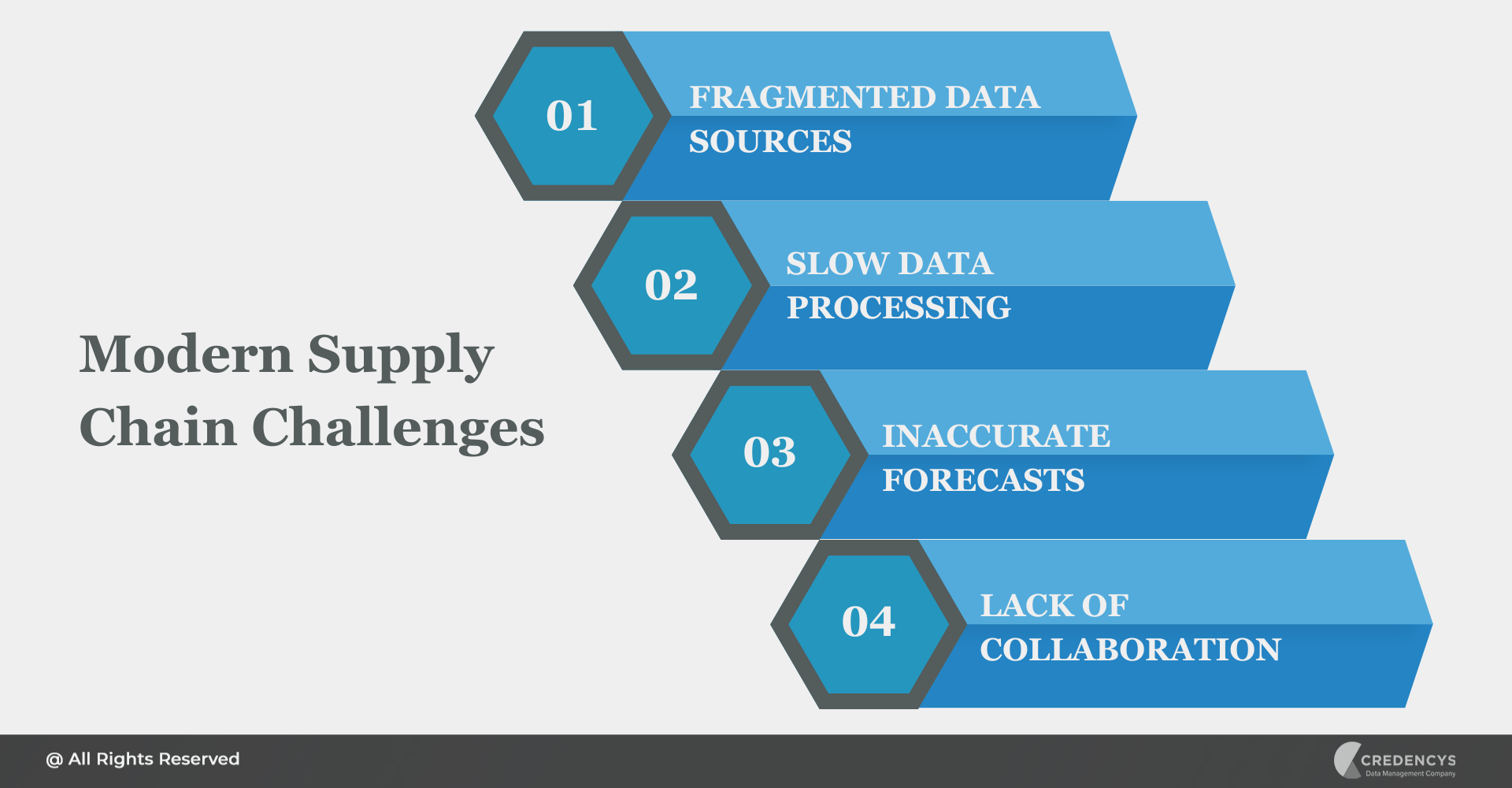
Even the most established supply chains face unprecedented pressures. Leaders often grapple with:
- Fragmented Data Sources: Supply chain data is scattered across ERP systems, warehouse management solutions, IoT devices, supplier portals, and logistics platforms. Integrating them manually leads to delays and errors.
- Slow Data Processing: Traditional batch data updates can mean decisions are based on information that’s already hours or days old. This lag is costly during disruptions.
- Inaccurate Forecasts: Outdated models fail to capture sudden market shifts, leading to stockouts or excess inventory.
- Lack of Collaboration: Disconnected systems make it difficult for procurement, logistics, and operations teams to align quickly.
The result? Missed opportunities, higher operational costs, and a reactive rather than proactive approach to supply chain management.
Why Real-Time Insights Matter for Supply Chain Leaders
Supply chain decisions can’t wait for weekly or even daily reports. The ability to act in the moment is a key competitive advantage.
Real-time insights enable leaders to:
- Manage Demand Responsively: React to sales spikes or sudden drops with agility, preventing both lost sales and overstock.
- Enhance Customer Experience: Provide accurate delivery timelines and proactive updates, which can increase customer satisfaction by 20–30%.
- Make Dynamic Adjustments: Reroute shipments, shift production schedules, or change inventory allocations instantly based on live data.
- Detect Disruptions Early: Identify supplier issues, transport delays, or quality problems before they impact customers.
In short, real-time visibility turns supply chains from reactive cost centers into proactive growth enablers.
How Databricks Delivers Real-Time Supply Chain Insights
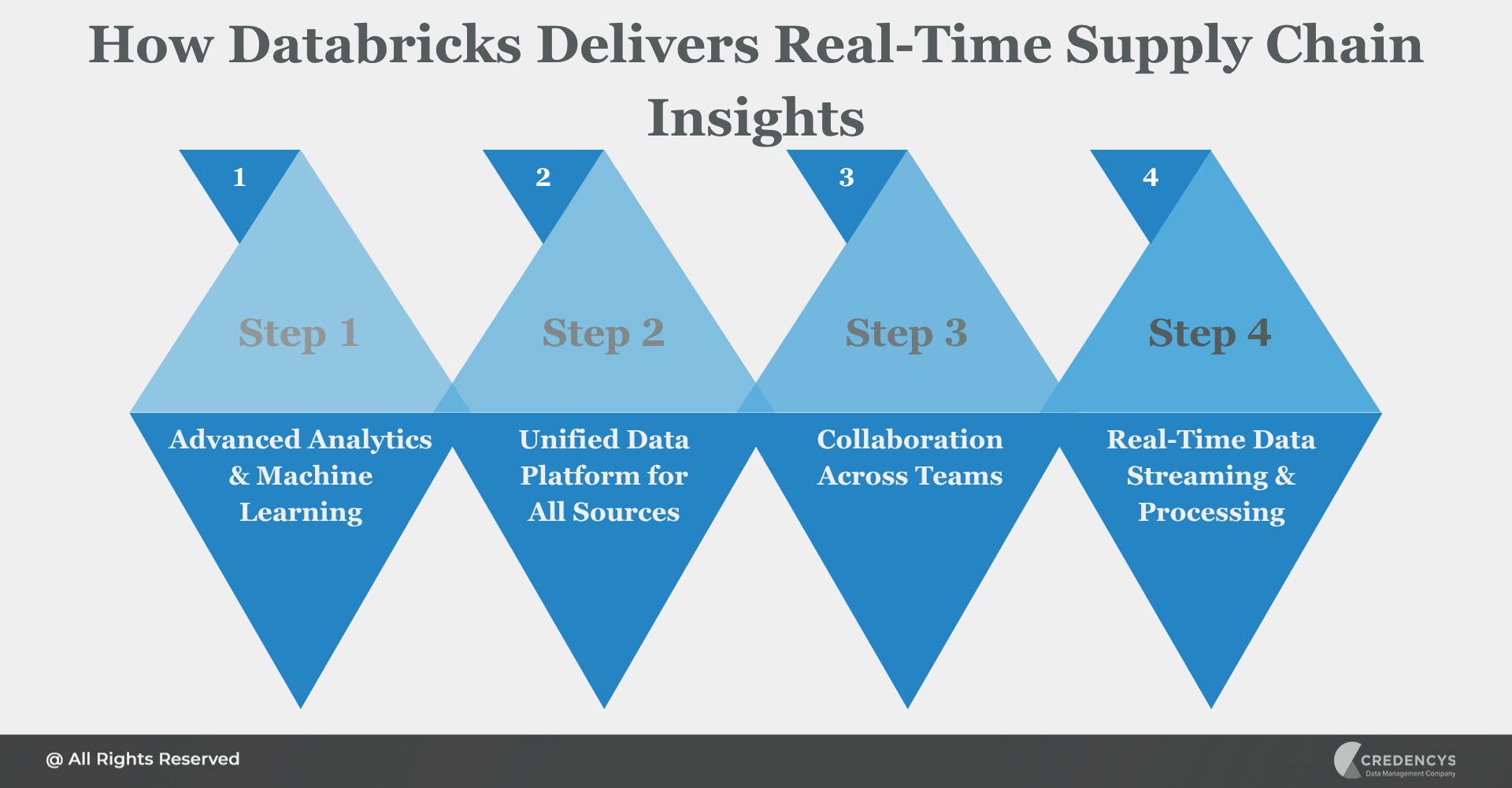
Databricks combines advanced data engineering, machine learning, and analytics capabilities in a single platform, enabling supply chain leaders to see, understand, and act on what’s happening right now.
1. Advanced Analytics & Machine Learning
Databricks empowers teams to build predictive and prescriptive models, such as:
- Demand Forecasting: Combine historical and real-time sales data for highly accurate predictions.
- Route Optimization: Factor in traffic, fuel costs, and weather to find the fastest, most cost-effective delivery paths.
- Predictive Maintenance: Use sensor data to anticipate equipment failures and prevent costly downtime.
Impact: Lower costs, improved delivery performance, and reduced operational risks.

Unlock the Power of AI-driven Supply Chain Decisions with Databricks and Stay Ahead of Disruptions Before They Happen
2. Unified Data Platform for All Sources
Supply chain data typically comes from a mix of ERP systems, IoT sensors, supplier APIs, logistics providers, and market feeds. Databricks ingests and unifies these streams into a single source of truth, eliminating silos and giving teams one consistent view of operations.
Impact: Faster decision-making, reduced reconciliation errors, and stronger cross-functional alignment.
3. Collaboration Across Teams
With shared workspaces and built-in integration with BI tools via Databricks SQL, teams can analyze the same live data without duplication or delays. Analysts, data scientists, and operations managers can work together on models, dashboards, and reports all in real time.
Impact: Aligned decision-making and faster execution across the supply chain ecosystem.
4. Real-Time Data Streaming & Processing
With Apache Spark and Structured Streaming, Databricks processes events in milliseconds, making it ideal for:
- Monitoring delivery vehicle telematics in real time.
- Tracking warehouse scanning systems for live inventory updates.
- Analyzing order tracking data as shipments move.
Impact: Instant awareness of bottlenecks, enabling quick corrective actions before issues escalate.
Key Business Benefits for Supply Chain Leaders
By leveraging Databricks for real-time insights, supply chain leaders can achieve measurable gains across efficiency, cost, and customer satisfaction:
- Improved Forecast Accuracy: Reduce stockouts and overstocks with AI-powered demand planning that adapts instantly to market changes.
- Faster Response to Disruptions: Minimize revenue loss by identifying and addressing issues in minutes instead of days.
- End-to-End Visibility: Strengthen supplier partnerships and customer trust through transparent, up-to-date information.
- Scalable Insights: Handle seasonal peaks or sudden demand surges without performance bottlenecks.
- Optimized Inventory Levels: Lower carrying costs while maintaining service level agreements (SLAs).
With Databricks, supply chain management shifts from a reactive function to a proactive driver of business growth.
Getting Started with Databricks for Supply Chain Analytics
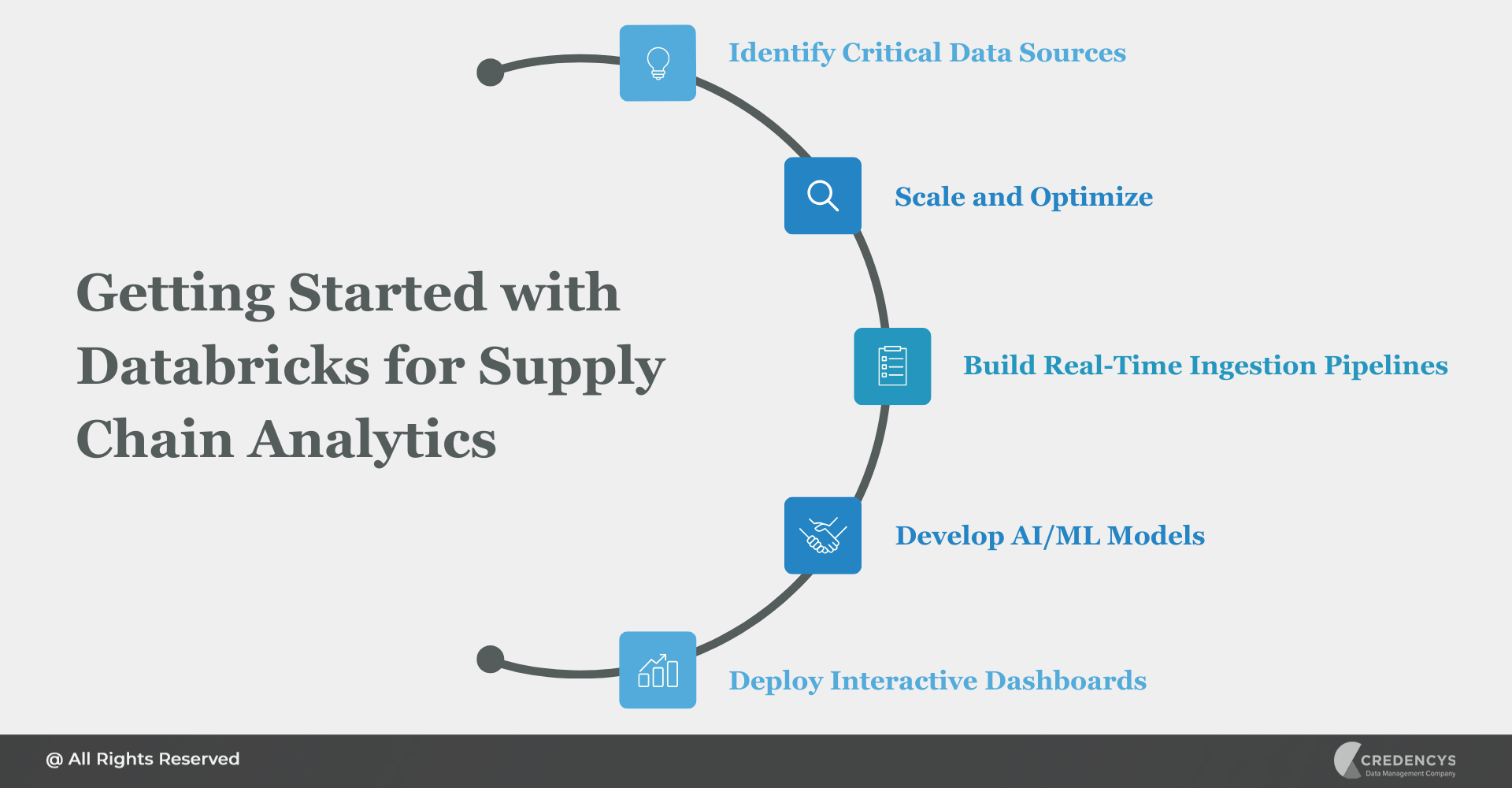
Adopting Databricks for your supply chain doesn’t have to be complex. A structured approach ensures quick wins and long-term scalability:
- Identify Critical Data Sources: List ERP systems, WMS, IoT devices, supplier APIs, and market data feeds essential for visibility.
- Scale and Optimize: Expand use cases across procurement, logistics, and customer service for enterprise-wide impact.
- Build Real-Time Ingestion Pipelines: Set up streaming data flows into Databricks to enable instant updates.
- Develop AI/ML Models: Create predictive and prescriptive models for forecasting, route optimization, and maintenance.
- Deploy Interactive Dashboards: Give decision-makers live insights via Databricks SQL and BI tool integrations.
With expert guidance from Credencys, you can accelerate implementation, reduce risks, and ensure your Databricks solution delivers measurable ROI.
Conclusion
For supply chain leaders, speed and visibility are the ultimate competitive advantages. Databricks delivers both unifying fragmented data, enabling real-time analytics, and empowering teams with AI-driven insights that lead to faster, smarter decisions.
In a market where every second counts, Databricks transforms supply chains from reactive networks into agile, resilient, and growth-focused ecosystems. Credencys can help you design and implement a Databricks-powered supply chain analytics solution tailored to your business needs, improving resilience, lowering costs, and accelerating decision-making.
Ready to Transform Your Supply Chain?





Tags: