


Top PIM Companies in 2026: Best Implementation Partners for Product Data Management
Retailers, manufacturers, and CPG brands are now managing product information across dozens of channels: eCommerce sites, marketplaces, mobile apps, retail systems, distributor portals, and more. Each one demands accurate, enriched, and consistent product content.
And when the data isn’t aligned? Product launches delay, listings break, and customers bounce.
Research from Gartner suggests that poor data quality costs organizations an average of $12.9 million every year.
Product data is often one of the biggest culprits. That’s where Product Information Management comes in.
A modern PIM platform serves as the single source of truth for product data, centralizing information from multiple systems and distributing it across all sales channels. It helps teams enrich product content, maintain data accuracy, and launch products faster.
However, implementing PIM isn’t just about installing software. It involves data modeling, integration with ERP and commerce platforms, governance frameworks, and cross-team change management.
Without the right expertise, even the most powerful PIM platform can turn into a complicated data silo, which is why businesses increasingly rely on PIM companies. These specialized consulting companies help organizations choose the right PIM platform, design scalable product data models, integrate systems, and ensure the platform actually delivers business value.
And the demand is rising quickly. More companies are investing in PIM.
And they need the right partners to make it work. In this article, we will explore some of the top PIM companies in 2026: the firms helping enterprises manage product data at scale, streamline omnichannel commerce, and turn messy catalogs into structured, actionable information.
But before we get into the list, let’s quickly look at what these PIM consulting companies actually do.
What Do PIM Companies Do?
Buying a PIM platform is easy. Making it actually work across your organization is the tricky part.
Because a PIM project isn’t just a technology rollout. It’s a data transformation initiative.
Product information lives everywhere: ERPs, spreadsheets, supplier feeds, legacy databases, etc. A PIM implementation partner steps in to bring order to that chaos.
They help businesses design the data architecture, workflows, and integrations needed to turn scattered product data into a centralized, structured system that every team can rely on. And yes, sometimes they also translate between business teams and IT.
Because product managers, marketers, and developers often speak very different languages. Most PIM consulting firms provide a combination of strategy, implementation, and optimization services.
Here’s what that typically includes.
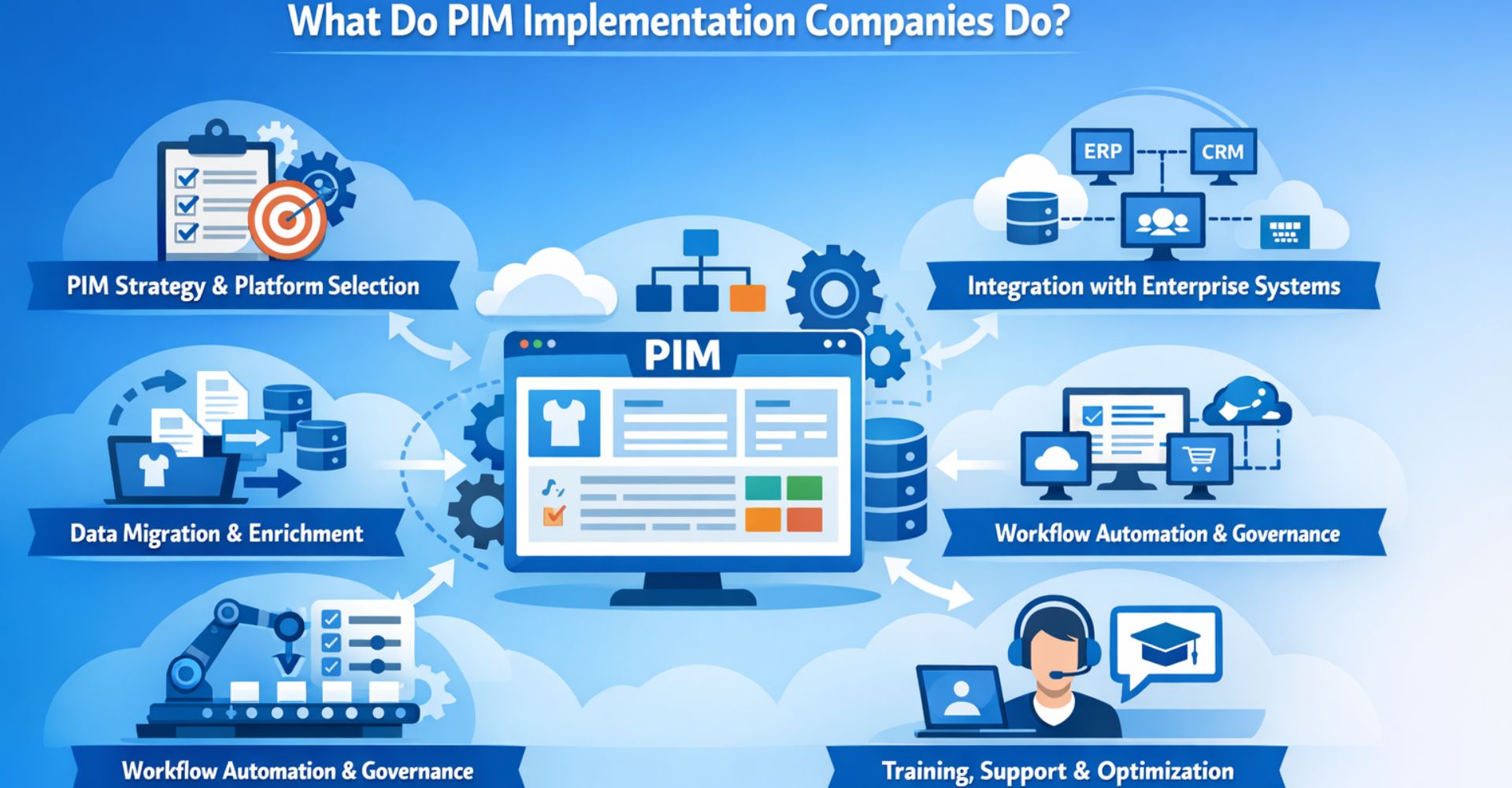
1. PIM Strategy and Platform Selection
Not every PIM platform fits every business. Implementation partners evaluate your product catalog complexity, sales channels, integrations, and growth plans to recommend the right solution.
2. Data Modeling and Taxonomy Design
Consultants design the product data structure, hierarchies, and attributes that will support thousands, sometimes millions, of SKUs. If the data model is wrong, the whole system struggles later.
3. Data Migration and Enrichment
Legacy data often arrives messy, with duplicate entries, missing attributes, and inconsistent naming conventions. Implementation teams clean, standardize, and migrate this data into the new PIM platform.
It’s tedious work but absolutely critical.
4. Integration with Enterprise Systems
A PIM rarely works alone. It needs to connect with systems like:
- ERP platforms
- eCommerce platforms
- Digital Asset Management systems
- Marketplace integrations
- Supply chain systems
Seamless integration ensures product data flows automatically across the organization.0
5. Workflow Automation and Governance
Good PIM systems introduce structured workflows for product creation, enrichment, and approvals. Consultants help define governance models, so teams know exactly who owns what data and when updates happen.
6. Training, Support, and Optimization
Implementation partners help teams adopt the platform, optimize workflows, and continuously improve product data processes. Because the goal isn’t just a functioning PIM.
It’s better product experiences, faster launches, and cleaner data across every channel.
Key Factors to Consider When Choosing PIM Companies
Not all PIM implementation partners are the same. Some are excellent at installing the software, and then they disappear.
Others take a deeper approach, helping businesses rethink how product data is structured, governed, and distributed across channels. A PIM project rarely succeeds based on the platform alone.
It depends on how well the partner understands your data, your workflows, and your long-term business goals. So, before you shortlist a consulting firm, here are a few things worth paying attention to.
1. Experience With Multiple PIM Platforms
A good implementation partner is not tied to just one platform. They have worked with several platforms, each with different capabilities, architectures, and limitations.
That experience helps them recommend the right platform for your needs, not simply the one they are most comfortable with.
2. Data Architecture and Modeling Expertise
PIM projects live or die based on data modeling. Attributes, product hierarchies, taxonomy structures, variant relationships- these need to be carefully designed before implementation begins.
If the model is flawed, teams struggle later when the catalog grows, or new channels are added.
3. Integration Capabilities
A PIM rarely operates in isolation. It needs to talk to ERP systems, eCommerce platforms, supplier portals, DAM solutions, and sometimes even legacy databases that nobody wants to touch anymore.
Integration expertise is critical. Experienced partners know how to build reliable data pipelines, ensuring product information flows smoothly across systems rather than getting stuck in silos.
4. Industry Experience
Retail, manufacturing, distribution, and CPG companies all handle product data differently. A consulting firm that understands your industry will already know the common challenges: complex product variants, supplier data inconsistencies, marketplace requirements, and so on.
Which means fewer surprises during implementation. And probably fewer late-night troubleshooting calls, too.
5. Scalability and Enterprise Readiness
A capable implementation partner designs systems that scale with your business, ensuring the PIM platform keeps performing as you add new products, channels, and markets.
6. Implementation Methodology and Support
Finally, ask about their implementation approach.
- Do they follow structured frameworks?
- How do they handle data migration?
- What happens after the system goes live?
The best PIM partners don’t treat implementation as a one-time project. They treat it as the foundation of a long-term product data strategy.
Top PIM Companies in 2026
Choosing the right PIM platform is important. Choosing the right implementation partner matters more.
Because a PIM initiative touches multiple systems: ERP, eCommerce, supplier portals, digital asset management platforms, and sometimes a few legacy tools nobody remembers installing. That’s a lot of moving pieces.
The companies listed below specialize in helping organizations design, implement, and optimize PIM solutions that actually deliver results. From data modeling to system integrations, these firms bring the expertise needed to turn complex product catalogs into structured, scalable product data ecosystems.
Let’s take a look.
1. Credencys Solutions
In product data management, Credencys Solutions has built a strong reputation as a data-focused consulting company. Unlike firms that treat PIM as just another software implementation, Credencys approaches it as a broader data management challenge.
Their teams focus heavily on building scalable data architectures, designing effective product taxonomies, and ensuring product information flows seamlessly across enterprise systems. The company works extensively with global enterprises across retail, CPG, manufacturing, and distribution, helping them manage complex product catalogs and omnichannel commerce requirements.
Another differentiator is their experience in integrating PIM with enterprise data ecosystems, including ERP systems, digital commerce platforms, and analytics environments.
Key PIM Services
- PIM consulting and platform selection
- Data modeling and taxonomy design
- PIM implementation and integration
- Product data governance frameworks
- Data migration and enrichment
Industries Served
Retail, CPG, Manufacturing, Distribution
Success Story: Enhanced Brand Consistency for a Global Energy Leader
The company partnered with a global energy giant specializing in petroleum and natural gas that needed to improve how it manages its branding and digital assets across global teams. Their existing brand portal, built on Pimcore, had become outdated and difficult to maintain.
The platform lacked proper support, relied on outdated technology, and failed to maintain consistent brand guidelines across regions. Credencys stepped in to modernize the system.
The team upgraded the platform from Pimcore 5.x to Pimcore 10, redesigned the portal interface, and integrated multiple capabilities, including Product Information Management (PIM), Digital Asset Management (DAM), and Digital Experience Platform (DXP), within a unified environment. They also introduced tools that helped internal teams generate announcements, signatures, and branded assets while ensuring all content aligned with global branding guidelines.
Business Impact
- Improved data quality through structured approval workflows
- Faster updates and content distribution across global teams
- Consistent brand experience across digital channels and partner ecosystems
- A significantly improved user experience through redesigned UI and modern architecture
Projects like this highlight why organizations often turn to Credencys for complex PIM and data management initiatives, especially when product information, digital assets, and global brand governance need to work together seamlessly.
Why Businesses Choose Them
Organizations often partner with Credencys when they need deep expertise in product data architecture and governance, not just platform deployment.
2. Happiest Minds Technologies
Happiest Minds Technologies is a global digital transformation company that provides a wide range of services, including PIM consulting and implementation. The company has significant experience implementing Pimcore-based PIM solutions, helping enterprises centralize product information and improve data consistency across multiple business systems.
One of Happiest Minds’ strengths is its ability to integrate PIM platforms with broader enterprise ecosystems, particularly ERP, commerce, and supply chain systems. For organizations undergoing large-scale digital transformation initiatives, this integration capability can make a big difference.
Key PIM Services
- PIM consulting and architecture design
- Pimcore implementation
- Integration with ERP and commerce platforms
- Product data migration and enrichment
- Platform optimization and support
Industries Served
Retail, Manufacturing, Technology, Healthcare
Notable Strengths
Strong enterprise integration expertise and digital transformation capabilities.
3. Krish TechnoLabs
Krish TechnoLabs focuses heavily on digital commerce consulting, and PIM implementation is a key part of its service portfolio. Their teams help brands centralize product data, improve catalog management, and distribute enriched product information across online marketplaces and eCommerce platforms.
With a strong background in commerce technologies, the company is well-suited to businesses looking to streamline product content across multiple digital sales channels.
They also provide expertise across several PIM platforms, allowing businesses to choose solutions that align with their commerce strategies.
Key PIM Services
- PIM consulting and platform evaluation
- Product data modeling and taxonomy design
- PIM platform implementation
- Integration with eCommerce platforms
- Product data enrichment workflows
Industries Served
Retail, Fashion, Consumer Goods, eCommerce
Why Businesses Work with Them
Their strength lies in aligning product data management with digital commerce strategies.
4. Ntara
Ntara is well known for its focus on product experience management, a discipline that combines product data management with digital customer experience. The company helps organizations implement PIM systems that support not just internal data management but also rich product storytelling across channels.
Their consulting approach often starts with understanding how product information flows through the business before designing the PIM architecture. That strategic perspective helps companies create systems that are easier to manage and scale over time.
Key PIM Services
- PIM consulting and architecture planning
- Product data modeling and governance
- Integration with ERP and commerce platforms
- Product content optimization
Industries Served
Manufacturing, Distribution, Retail
Notable Strength
Deep expertise in product experience strategy combined with PIM implementation.
5. Nvizion Solutions
Nvizion Solutions is a consulting firm that specializes in product data strategy, governance, and enterprise PIM implementations. Their work typically focuses on helping large organizations transform scattered product information into structured, governed, and scalable data environments.
Often, businesses come to them when product data has grown messy. Multiple systems, inconsistent attributes, supplier feeds that don’t match internal standards.
Nvizion’s consulting teams help clean that up by designing robust product data models, governance frameworks, and PIM architectures that support long-term scalability. They also bring strong expertise in enterprise PIM platforms, particularly for organizations managing large, complex product catalogs across global markets.
Key PIM Services
- PIM consulting and implementation
- Product data governance frameworks
- Data modeling and taxonomy design
- Data migration and quality improvement
- Integration with enterprise systems
Industries Served
Manufacturing, Distribution, Retail
Why Businesses Work with Them
Organizations often partner with Nvizion when they need deep expertise in enterprise product data governance and large-scale PIM transformations.
How to Choose the Right PIM Company
Here’s the truth most vendors won’t say out loud. A PIM platform alone won’t fix your product data problems.
You could buy the most advanced solution on the market, deploy it perfectly, and still struggle if the underlying data strategy isn’t right. That’s why choosing the right implementation partner matters.
The right partner doesn’t just configure software. They help you rethink how product data moves across the business from suppliers and internal systems all the way to customer-facing channels.
If you are evaluating PIM consulting firms, here are a few practical questions to ask.
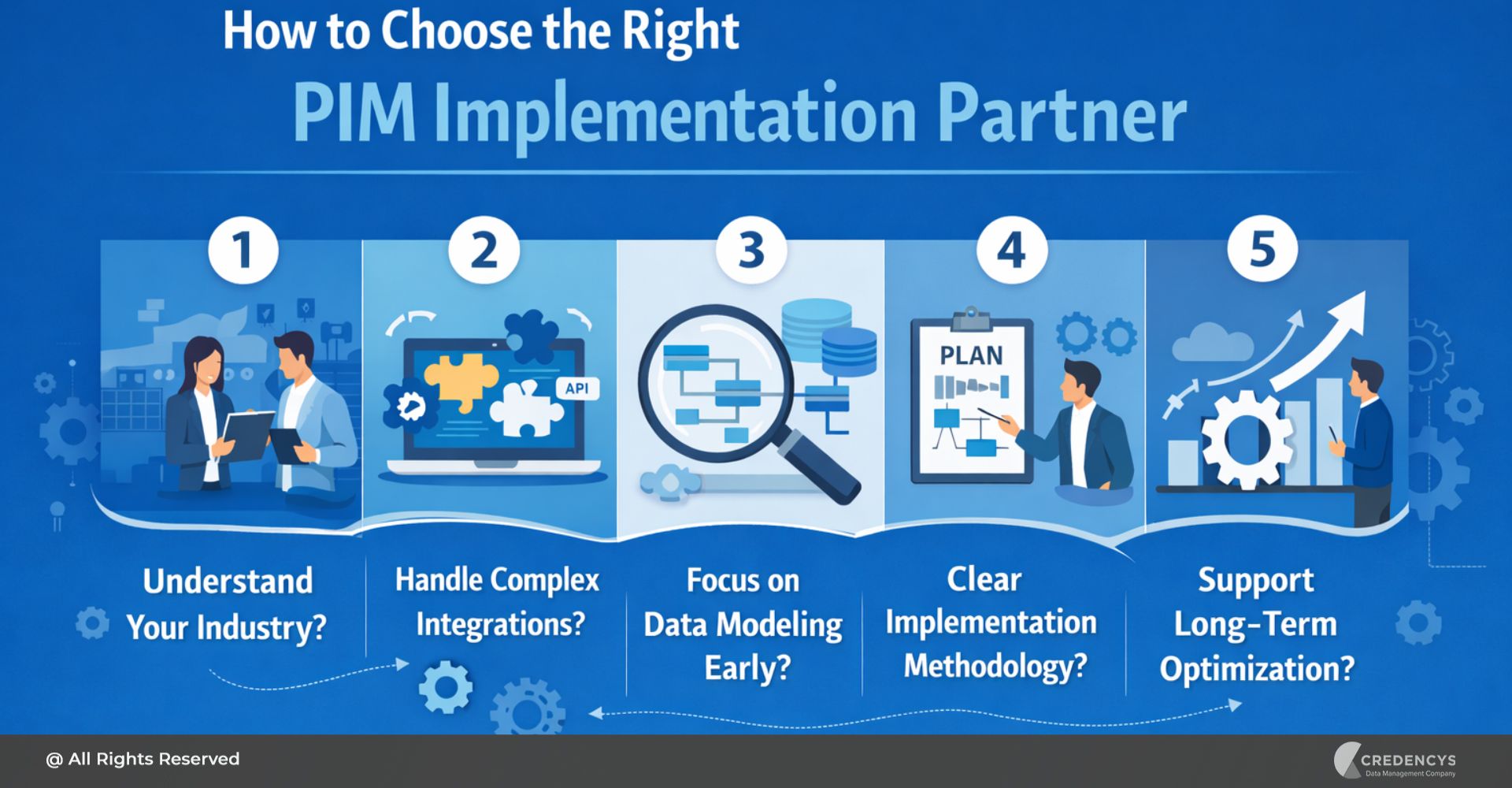
1. Do They Understand Your Industry?
Product data looks very different across industries. A fashion retailer deals with variants like sizes, colors, and seasonal collections.
A manufacturing company might manage complex product specifications, technical attributes, and compliance documentation. Implementation partners with industry experience already understand these nuances.
That familiarity speeds implementation and reduces costly trial and error.
2. Can They Handle Complex Integrations?
A PIM rarely works alone. It needs to connect with ERP systems, eCommerce platforms, digital asset management tools, supplier portals, and sometimes legacy systems that were built long before anyone used PIM.
Strong partners know how to design reliable integration architectures so product data flows smoothly between systems. Without that, you end up with yet another silo.
3. Do They Focus on Data Modeling Early?
Product hierarchies, attributes, variant structures, and taxonomy definitions form the foundation of the PIM system. If the data model isn’t properly designed from the start, the system becomes difficult to scale later.
Experienced PIM partners spend serious time here, which is usually a good sign.
4. Do They Have a Clear Implementation Methodology?
Every consulting firm claims they can implement PIM. The better ones can explain how they do it.
Look for structured approaches that include:
- Data discovery and assessment
- Product data modeling
- System integration design
- Phased implementation
- User training and governance frameworks
Clear methodology usually means fewer surprises during the project.
5. Do They Support Long-Term Optimization?
PIM isn’t a one-and-done project. Product catalogs evolve, new channels appear, and data standards change.
The right implementation partner stays involved beyond go-live, helping businesses refine workflows, improve product data quality, and expand the platform as the organization grows. The real value of PIM shows up months after deployment, when teams use it to launch products faster and deliver better product experiences across every channel.
Conclusion
Product data has quietly become one of the most important assets inside modern organizations. Every product page, marketplace listing, distributor catalog, and marketing campaign depends on accurate, structured product information.
When that data is scattered across systems or managed in spreadsheets, things start to break. Listings go live with missing attributes, teams waste hours fixing inconsistent data, and customers leave because product information simply isn’t clear enough.
That’s why PIM has moved from a nice-to-have tool to a core component of digital commerce infrastructure. But the PIM platform alone doesn’t guarantee success.
The real impact comes from how well you implement, integrate, and align the platform with your product data strategy. That’s where experienced implementation partners make a huge difference.
PIM companies help businesses structure their product data, connect systems, and build workflows that actually scale as catalogs grow. As product catalogs grow and omnichannel commerce continues to expand, organizations that invest in structured product data management will have a clear advantage in launching products faster, delivering better customer experiences, and operating with far less data chaos behind the scenes.
And honestly, that’s the goal most teams are chasing.







Tags: