

The Scale and Complexity of B2B Product Data
B2B organizations manage complex product information across suppliers, ERP systems, spreadsheets, engineering sources, digital assets, sales catalogs, commerce platforms, distributors, and customer-specific channels.
As product portfolios, suppliers, markets, and buying channels expand, fragmented data and manual catalog processes make it increasingly difficult to keep technical product information complete, consistent, and ready for every buyer.
Complex Technical Product Information
B2B products often contain detailed specifications, dimensions, materials, performance values, compatibility information, manufacturer references, certifications, and technical documents. Managing hundreds of attributes across diverse product categories becomes difficult without a structured product-data model.
Fragmented Supplier and Enterprise Data
Product information may originate from manufacturers, suppliers, ERP, PLM, spreadsheets, databases, PDFs, DAM, APIs, and legacy systems. Different formats, naming conventions, units, and levels of completeness create significant manual work before products become usable.
Customer-Specific Catalog Requirements
Different customers, distributors, dealers, regions, and business units may require different assortments, product references, descriptions, documentation, or channel-specific information. Maintaining separate copies of the same catalog increases duplication, errors, and operational overhead.
Complex Product Relationships
B2B buyers frequently need to identify compatible products, accessories, spare parts, replacements, substitutes, bundles, product families, and superseded items. Missing or inaccurate relationships can make products difficult to find, compare, specify, and purchase.
Multiple B2B Sales and Procurement Channels
Product information may need to support B2B commerce portals, sales teams, distributors, dealer networks, marketplaces, customer catalogs, eProcurement platforms, and PunchOut experiences. Each destination may require different structures, attributes, documents, and content formats.

How Much is Your Product Data Costing You?
Get Your Score + 90-day action plan in 3 minutes.
Check Your ScoreThe Strategic Role of PIM in B2B
PIM gives B2B organizations a governed foundation for managing complex product information across suppliers, product categories, customers, regions, and digital channels.
It helps standardize technical product data, manage product relationships, accelerate catalog creation, improve product discovery, and deliver trusted information across the B2B buying journey.
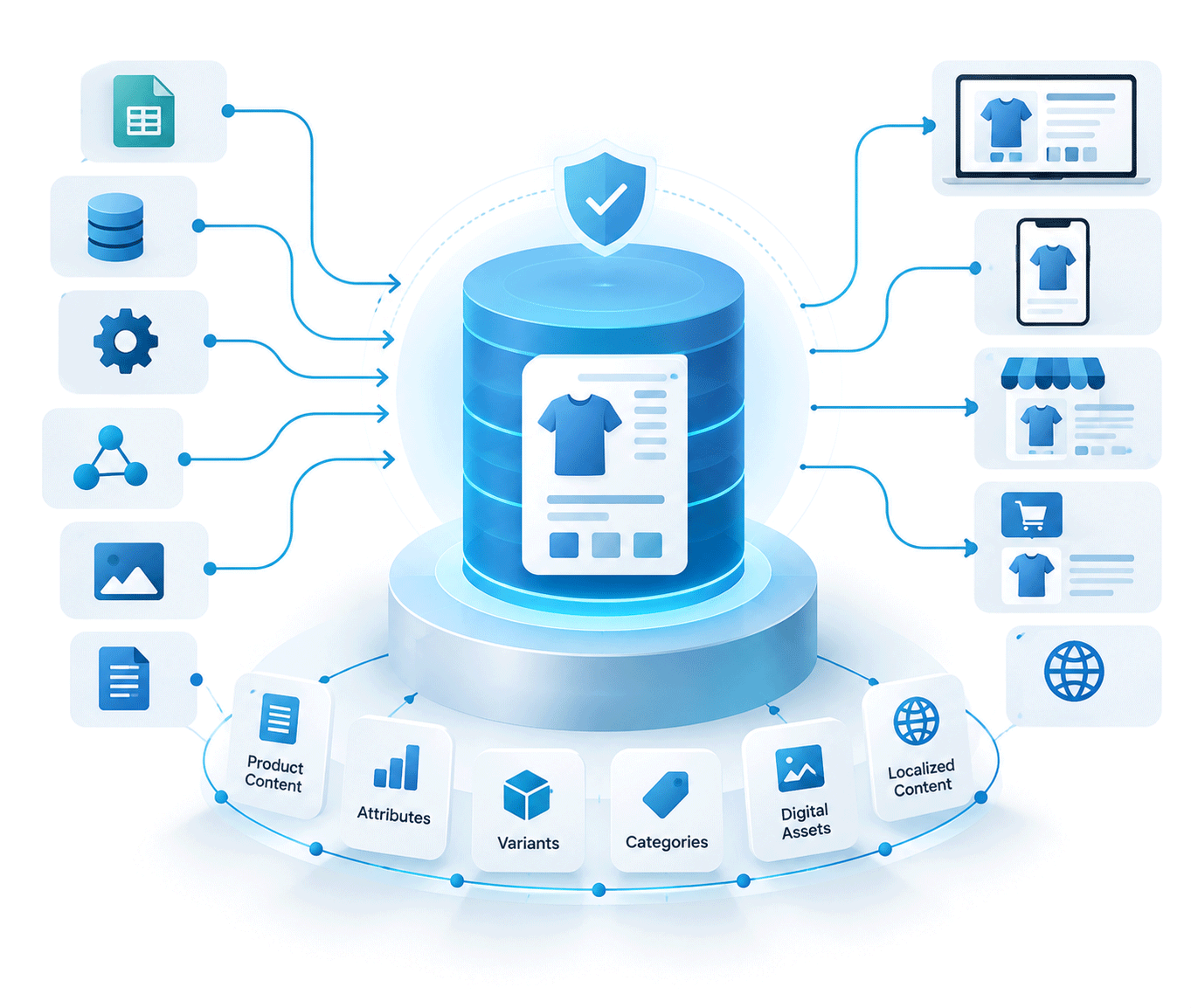
The Single Source of Truth
PIM consolidates product information from ERP, suppliers, spreadsheets, PLM, DAM, databases, and other systems into one governed product-data foundation. It enables product, data, sales, marketing, commerce, and operations teams to work with consistent information.
- Centralize product specifications, descriptions, identifiers, documents, and assets
- Reduce duplicate and conflicting product records
- Establish clear product-data ownership and governance
- Maintain consistent information across markets, customers, and channels
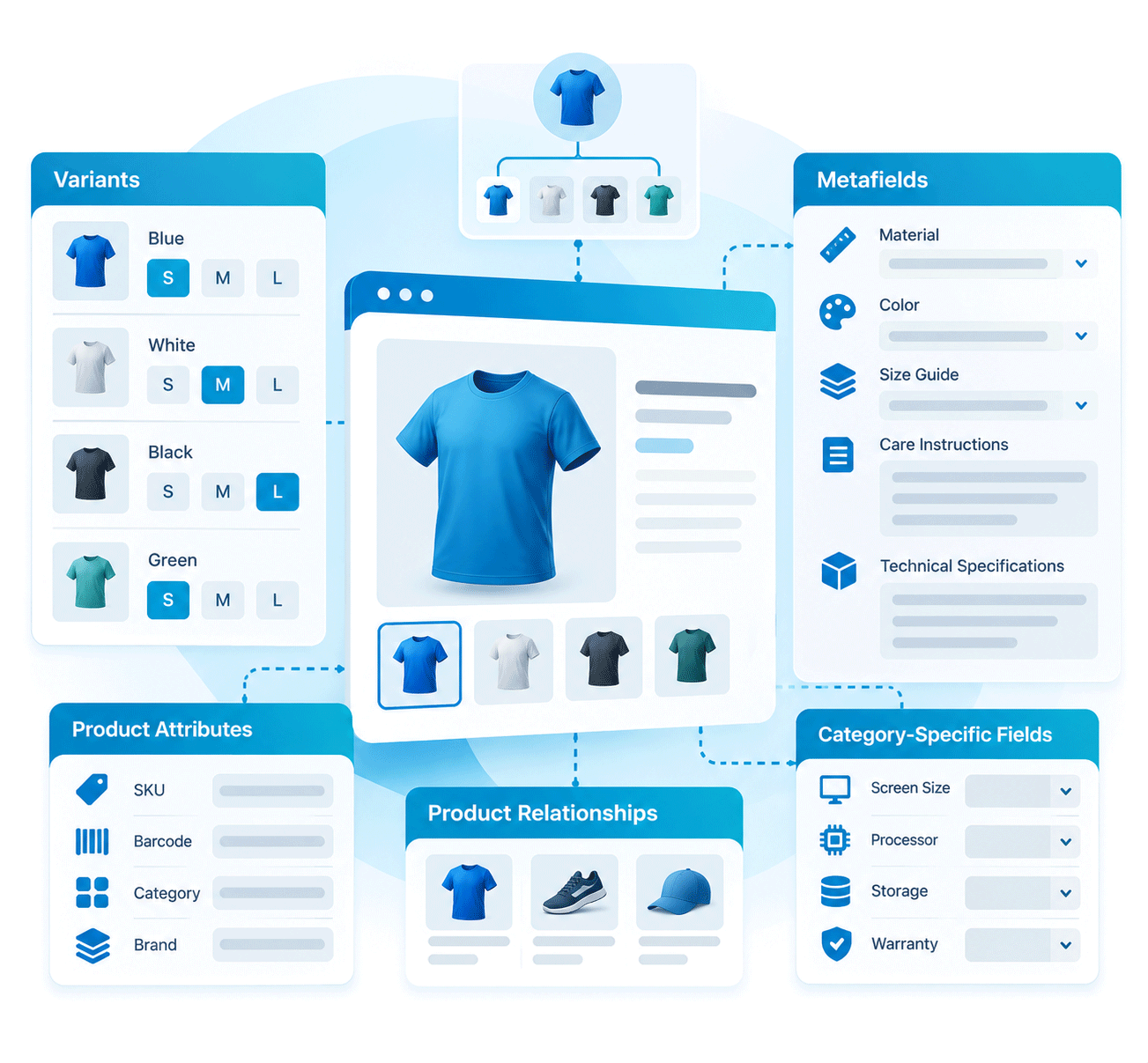
Standardized Technical Product Information
B2B catalogs often contain highly technical and category-specific product information. PIM enables organizations to structure this complexity using governed product models, standardized attributes, controlled values, classifications, and validation rules.
- Standardize technical specifications and product terminology
- Normalize units of measure and supplier values
- Define category-specific product attributes
- Apply completeness and validation rules before publication
- Maintain manufacturer and internal product identifiers
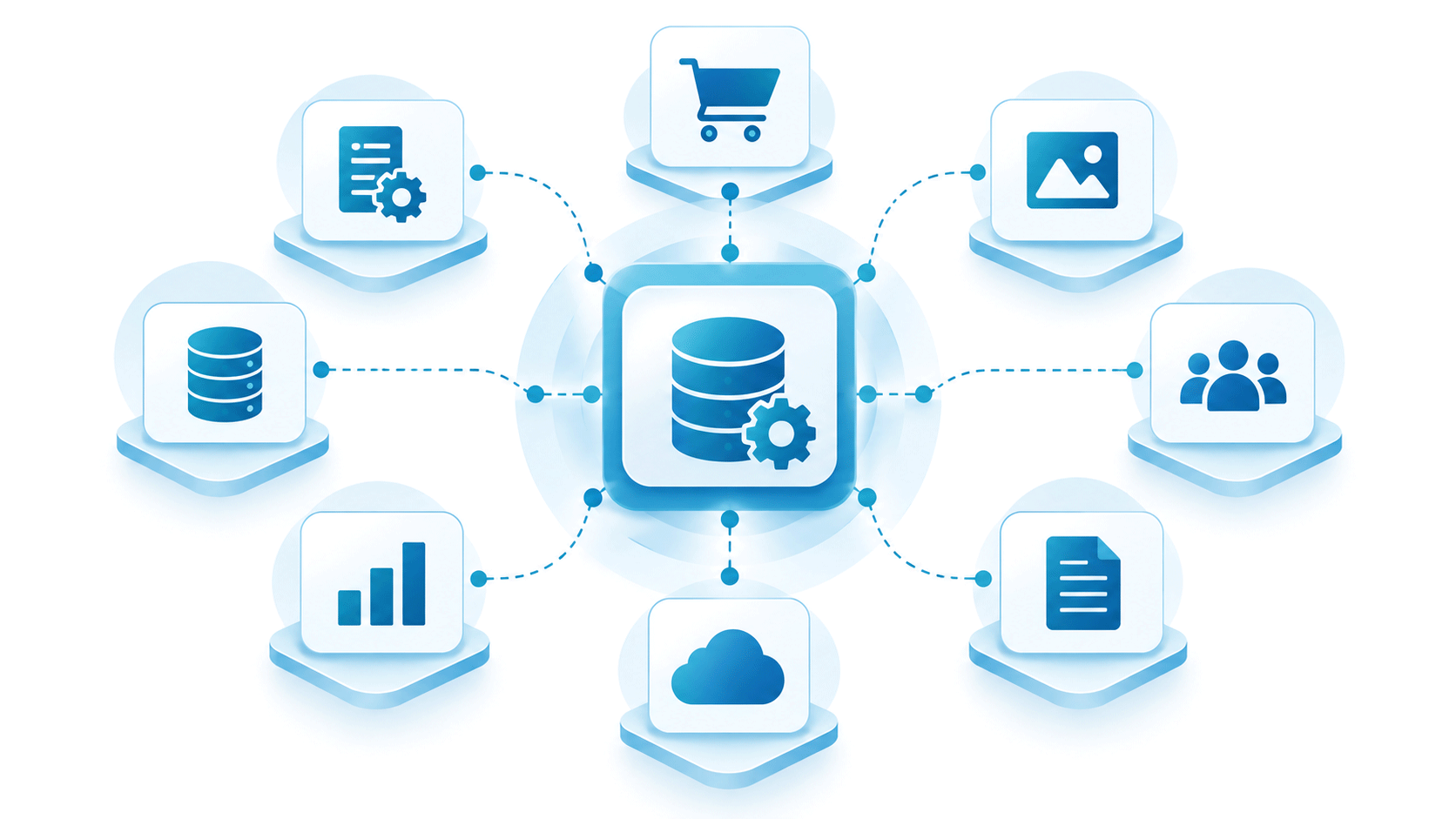
Product Relationships and Complex Catalog Structures
B2B purchasing often depends on understanding how products relate to one another. PIM enables organizations to model these relationships so buyers and sales teams can navigate complex catalogs more effectively.
- Manage product families and parent-child structures
- Connect accessories, spare parts, and complementary products
- Maintain approved replacement and substitute relationships
- Link compatible products and components
- Structure bundles, kits, and related product groups
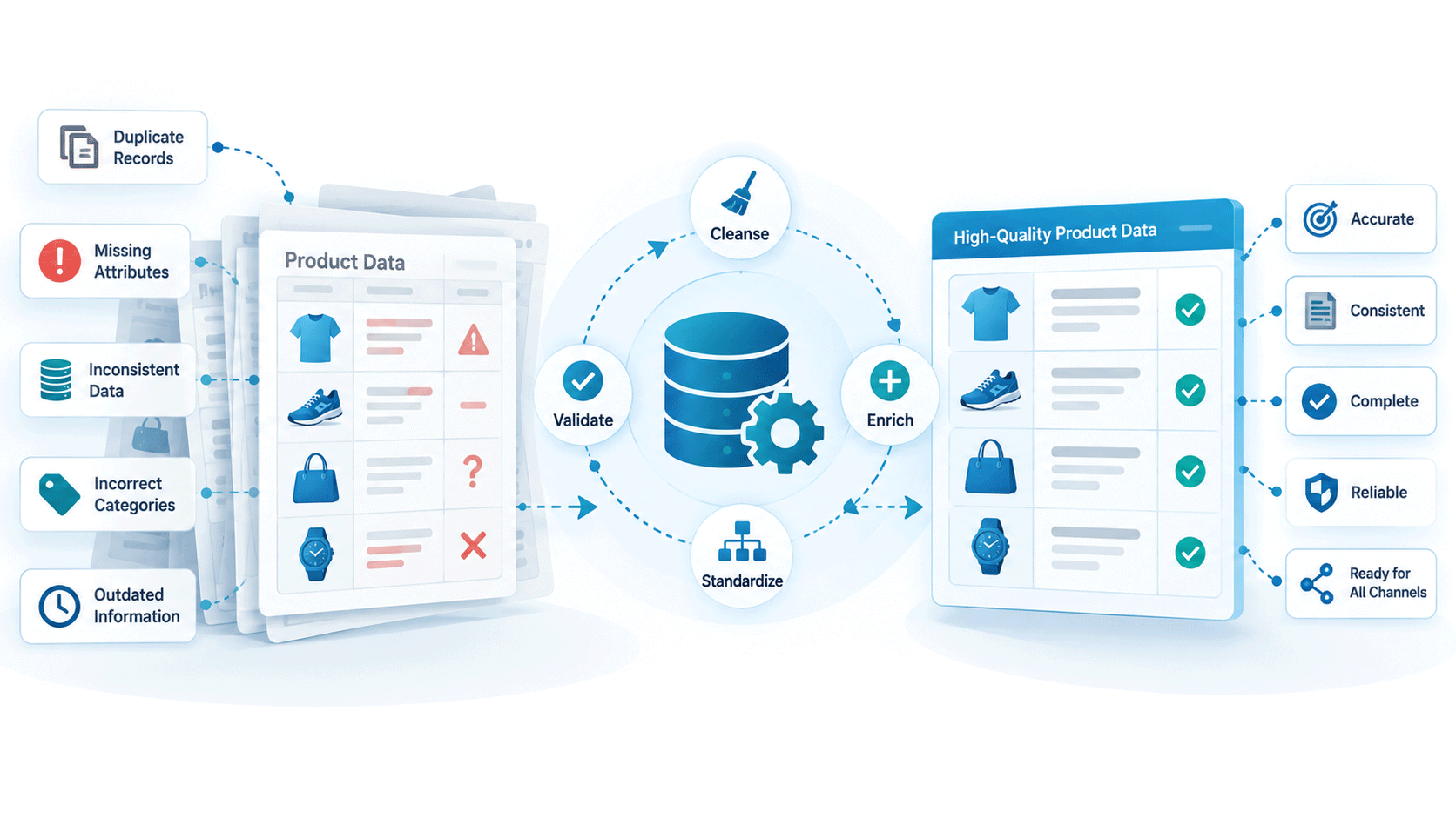
Customer and Channel-Ready Product Catalogs
B2B organizations often need to reuse the same governed product information while presenting different assortments and content across customers, partners, regions, and selling channels. PIM enables teams to prepare channel-ready product information without maintaining disconnected master catalogs.
- Create customer- and channel-specific product content
- Support distributor and dealer catalogs
- Prepare product information for B2B commerce portals
- Maintain localized and market-specific content
- Syndicate approved product data to partners and marketplaces
Buyer entitlements, contract pricing, inventory, and transactions can continue to be managed by ERP and commerce systems while PIM governs the product information they consume.
B2B Commerce, Procurement, and AI Readiness
Structured product information improves how buyers, sales teams, procurement systems, search engines, and AI applications understand complex products. PIM creates the product-data foundation required to support richer B2B digital experiences.
- Improve technical search, filtering, and product comparison
- Support semantic and natural-language product discovery
- Provide trusted information to B2B commerce and dealer portals
- Enable eProcurement and PunchOut product-data experiences
- Support product recommendations and sales-assist applications
- Prepare governed product information for AI-powered commerc
Our Approach to PIM Implementation Services
From initial assessment to enterprise rollout, we follow a proven four-step approach to build a scalable B2B PIM environment around your product complexity, systems, suppliers, customers, and digital channels.
01 Assessment and Planning
Evaluate your product catalog, suppliers, technical attributes, data sources, enterprise systems, customer groups, sales channels, procurement environments, and governance requirements. Define the target product-data architecture, implementation priorities, integration requirements, and roadmap.
02 Customization and Configuration
Design category-specific product models, taxonomy, attributes, units of measure, product relationships, validation rules, workflows, user roles, customer structures, and channel requirements. Configure the PIM around the way your organization manages and sells complex products.
03 Enrichment and Governance
Cleanse and migrate product information, standardize supplier values, normalize technical attributes, associate digital assets and documents, resolve duplicates, and configure review and approval workflows. Establish governance rules that keep product information complete, consistent, and trusted over time.
04 Deployment and Training
Integrate PIM with ERP, DAM, commerce platforms, marketplaces, procurement environments, dealer portals, and other enterprise systems. Launch priority catalogs and channels, train internal teams, monitor adoption, and continuously improve product-data quality.
Business Impact of B2B PIM
PIM transforms fragmented B2B product information into a governed business asset. It reduces manual product-data work, accelerates onboarding, improves technical product discovery, strengthens digital commerce, and enables organizations to scale catalogs and channels without multiplying data-management complexity.

Real Business Impact: PIM Success Stories in B2B
Largest U.S. Wholesale Distributor of Landscape Supplies
40%
Increase in Backend Processing Speed
Credencys modernized the distributor’s enterprise PIM environment to support its extensive product catalog and growing operational requirements. The engagement included a multi-stage Pimcore upgrade, database migration, modernization of 14 custom bundles, configuration standardization, and performance optimization for large product volumes.
The upgraded platform improved backend performance while reducing dependence on custom components, making the product-data environment easier to maintain, integrate, and scale.
Global B2B2B Sourcing & Supply Chain Company
200+
Factory Partners Connected
Credencys implemented a centralized PIM and DAM solution to consolidate product information and digital assets received from more than 200 factory partners. The solution replaced spreadsheet-, document-, PowerPoint-, and email-driven processes with centralized product-data management, automated onboarding, digital catalog creation, retailer product discovery, RFQ management, and workflow automation.
Read MoreLeading Wood Products Manufacturer
60%
Faster Product Data Updates
Credencys modernized the manufacturer’s product-data environment to replace an inflexible legacy PIM setup, centralize fragmented product information, and eliminate manual website updates. The solution connected PIM with the company’s website through APIs, enabled data exchange with third-party industry databases, automated product-data workflows, and centralized product and environmental information.
Read MoreReady to Turn Complex Product Data Into Better B2B Buying Experiences?
Build a trusted B2B product-data foundation that simplifies supplier onboarding, technical catalogs, product discovery, customer-ready content, product syndication, and digital commerce.
Book a Free ConsultationWhy Leading Enterprises Choose Credencys?

End-to-End Data Expertise
From data modeling and governance to migration, integration, enrichment, syndication, and commerce enablement, we address product-data complexity across the complete PIM lifecycle.

Domain-Focused Solutions
We design PIM solutions around your product structures, technical information, supplier ecosystem, customer requirements, and B2B operating model.

Enterprise-Grade Partnerships
Our technology partnerships and implementation expertise help enterprises build scalable product-data environments integrated with their broader digital ecosystem.

AI-First
We help organizations create structured and governed product-data foundations that can support intelligent enrichment, semantic search, recommendations, automation, and AI-enabled commerce.
50+
Enterprise Clients
100%
Certified Consultants
15+
Years Experience
4.9/5
Client Satisfaction
Industries We Support


Frequently Asked Questions
B2B PIM is a centralized approach to collecting, structuring, enriching, governing, and distributing product information used across business-to-business sales and procurement channels. It helps organizations manage technical specifications, identifiers, product relationships, documents, supplier information, digital assets, and channel-specific content from one governed product-data foundation.
B2C PIM often focuses heavily on consumer-facing descriptions, imagery, merchandising, and digital shelf experiences. B2B PIM typically manages deeper technical information such as specifications, manufacturer part numbers, units of measure, compatibility, spare parts, replacement products, certifications, documentation, packaging structures, and customer- or channel-specific catalog requirements.
B2B organizations frequently manage product information across ERP, supplier files, spreadsheets, PLM, DAM, databases, commerce platforms, and customer catalogs. PIM centralizes this information so teams can standardize, enrich, validate, govern, and distribute product data without repeatedly maintaining separate versions for every customer or channel.
A B2B PIM can manage information such as:
- Product identifiers
- Manufacturer part numbers
- Technical specifications
- Dimensions and measurements
- Materials
- Units of measure
- Packaging information
- Product families
- Variants
- Product relationships
- Compatible products
- Replacement products
- Accessories and spare parts
- Certifications
- Technical documents
- Images and digital assets
- Descriptions
- Channel-specific content
The exact data model depends on the industry and product category.
Yes. PIM can manage category-specific technical specifications using structured attributes, controlled values, units of measure, classification systems, validation rules, and inheritance. This enables organizations to standardize technical information received from different manufacturers and suppliers.
Trusted by Best
Choosing Credencys means partnering with a team that’s deeply committed to unlocking the true value of your data. Here’s why industry leaders trust us:
Our Valued Clientele


Send us a Message
