


What Is GDSN? The Global Data Synchronization Network Explained
GDSN is the Global Data Synchronization Network: a GS1 network that lets suppliers automatically share standardized product data with retailers and other trading partners. If you sell groceries, health products, or consumer goods to large retailers, they often expect to receive your product data via GDSN.
This guide explains what GDSN is, how it works, the key terms, who uses it, and how a PIM feeds GDSN.
What Is GDSN?
GDSN is a network of certified data pools, connected through the GS1 Global Registry. A supplier publishes product data to its data pool once. Every retailer that subscribes to that product, through its own data pool, receives the same standardized data.
Instead of filling in a different spreadsheet for every retailer, the supplier maintains one record in a format every connected trading partner understands. GS1 runs GDSN, the organization behind the barcode and the GTIN.
The data follows GS1 standards, so attributes such as dimensions, weights, packaging levels, allergens and nutrition mean the same thing for every trading partner.
How GDSN Works
- Prepare the data: the supplier assigns GTINs, classifies each product with a GS1 Global Product Classification (GPC) brick, and fills in the required attributes.
- Load the data pool: the supplier sends the product data to its certified data pool, usually from a PIM or ERP.
- Validate: the data pool checks the data against GS1 validation rules and rejects errors.
- Register: the data pool registers basic identifying data in the GS1 Global Registry, so trading partners can find the product.
- Publish and subscribe: the supplier publishes the product to a retailer, or the retailer subscribes to it. The full record travels from the supplier’s data pool to the retailer’s data pool.
- Confirm: the retailer confirms it has accepted the data, or reports a problem, and changes flow the same way.
The supplier and the retailer do not need to use the same data pool. The network connects data pools, which is what makes GDSN a network rather than a single portal.
Key GDSN Terms
| Term | What it means |
|---|---|
| GTIN | Global Trade Item Number: the unique number behind a product barcode, for each product and packaging level |
| GLN | Global Location Number: identifies companies and locations, such as the supplier and the retailer |
| GPC | Global Product Classification: the GS1 category code (brick) every product needs |
| Data pool | A GS1-certified service that stores, validates, and exchanges product data for its users |
| Global Registry | The GS1 directory that records which product data exists and in which data pool |
| CIN / CIC | Catalog Item Notification (the data sent to a recipient) and Catalog Item Confirmation (the recipient’s reply) |
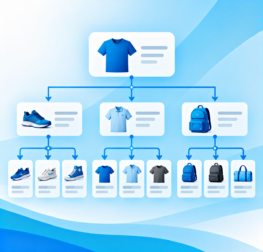
| Hierarchy | The packaging levels of a product, such as each, case, and pallet, each with its own GTIN |
Who Uses GDSN?
GDSN is used most in industries where retailers and distributors need large amounts of standardized, trustworthy product data:
- Grocery and food: nutrition, ingredients, allergens and packaging data.
- Health and beauty: regulatory and safety information.
- Consumer packaged goods: logistics data for replenishment and planning.
- Healthcare: product data for hospitals and group purchasing organizations.
- Foodservice: product specifications for distributors and operators.
Many large retailers require suppliers to publish through GDSN before listing a new product. Even when GDSN isn’t required, it can replace much manual spreadsheet work.
GDSN Data Pools
A data pool connects you to GDSN. Several certified data pools exist, including 1WorldSync and Syndigo, which describes itself as a GS1-certified GDSN data pool. Some GS1 member organizations also run data pools in their country.
When you compare data pools, look at:
- Which of your trading partners they already connect to
- How well they validate data before it reaches retailers
- Whether they also offer non-GDSN syndication to retailers and marketplaces
- How they connect to your PIM or ERP
- Their pricing model, which is usually a subscription quoted per customer
For a closer look at one data pool, read our Syndigo GDSN guide.
GDSN vs Other Ways to Share Product Data
| Method | Best for | Watch out for |
|---|---|---|
| GDSN | Grocery, health, CPG and foodservice retailers that require it | Needs GTINs, GPC classification and a data pool subscription |
| Retailer portals and templates | A few retailers with their own requirements | Manual work for every retailer and every change |
| Marketplace feeds and APIs | Amazon, Walmart Marketplace and similar | Each marketplace has its own rules |
| Syndication platforms | Brands selling to many retailers and marketplaces | Subscription cost; overlaps with GDSN for some retailers |
Most brands use GDSN alongside other methods. The key is to manage product data once in a PIM and send it from there to every channel.
See our product data syndication guide.
How a PIM Feeds GDSN
GDSN only works if the data you publish is complete and correct. That is where a PIM helps:
- Model the GS1 attributes in the PIM, including packaging hierarchies, so each GTIN carries the right data.
- Classify products with GPC bricks alongside your own categories.
- Validate in the PIM against GDSN rules before sending, so the data pool doesn’t reject it.
- Connect the PIM to the data pool through its API or files, and publish only approved changes.
- Read back the confirmations so the team can see which retailers accepted the data.
Our product content syndication services cover GDSN setup, data pool integration, and data clean-up.
Common GDSN Errors and How to Avoid Them
- Wrong packaging hierarchy: case and pallet GTINs that do not add up to the right number of units.
- Inconsistent measurements: dimensions or weights in the wrong unit, or different from the physical product.
- Wrong GPC brick: products classified in a category that does not match, which triggers the wrong required attributes.
- Missing mandatory attributes: nutrition, allergen, or regulatory fields left empty.
- Changes not published: updates made in the ERP or PIM that never reach the data pool.
Most of these are product data quality problems, not GDSN problems. Fixing them at the source pays off on every channel. See product data quality management.
How to Get Started With GDSN
- Join your local GS1 organization and get GTINs and a GLN.
- Ask your key retailers which data pool and attributes they require.
- Choose a data pool that connects to your trading partners.
- Clean and complete your product data, ideally in a PIM.
- Test with one retailer, then roll out to the rest.
What Retailers Ask For in GDSN
The attributes you publish depend on the product category (the GPC brick), the target market, and each retailer’s requirements. Most GDSN records include:
| Group | Examples |
|---|---|
| Identification | GTIN, brand, product name, GPC brick, target market |
| Packaging and logistics | Dimensions and weights for each packaging level, pallet configuration, quantity per case |
| Food and nutrition | Ingredients, nutrition values per serving, allergens, dietary claims |
| Regulatory and safety | Hazard information, certifications, country of origin |
| Lifecycle | Start and end availability dates, replacement products |
| Marketing | Descriptions and feature text, where the retailer accepts them |
Retailers often add their own required fields on top of the GS1 standard. Ask each trading partner for its attribute list before you start, and build those requirements into your PIM validation.
Benefits of GDSN
Benefits of GDSN for suppliers
- One record serves every connected retailer, instead of a spreadsheet per retailer
- Changes reach all subscribed retailers automatically
- Validation catches errors before retailers see them
- Faster listing of new products with retailers that require GDSN
Benefits of GDSN for retailers
- Standardized, validated data from every supplier
- Reliable logistics data for replenishment, warehousing and transport
- Accurate nutrition and allergen data for online and in-store use
- Less manual supplier onboarding
GDSN and Product Images
GDSN focuses on structured product data. Images, videos, and rich marketing content usually travel alongside it, either through links to an asset library or through the content services many data pools and syndication platforms offer.
Plan where your approved images live, usually a DAM connected to your PIM, and how retailers receive them. See digital asset management services.
What to Budget For
GDSN costs come from three places: GS1 membership for GTINs and GLNs, the data pool subscription, and the work to get product data complete and correct. The third is usually the largest and the one most often underestimated.
A PIM reduces it over time because the same data serves every channel. For a first estimate of the PIM side, use the PIM cost calculator.
GDSN in Practice: An Example
Imagine a snack manufacturer launching a new 150 g pack, sold in cases of 12 and pallets of 60 cases. Before GDSN, the team filled in a different spreadsheet for each of its eight retail customers, each with slightly different column names and units.
With GDSN, the work looks like this:
- The product manager creates the product in the PIM with three GTINs: the pack, the case, and the pallet.
- The data team adds the GPC brick, dimensions and weights for each level, ingredients, nutrition and allergens.
- PIM validation checks that the case and pallet quantities add up and that every mandatory field is filled.
- The approved record is sent to the data pool, which runs GS1 validation and registers the product.
- The supplier publishes to all eight retailers at once; each confirms receipt through its own data pool.
- When the recipe changes, the team updates the PIM once and the change flows to every retailer.
The work shifts from repeated spreadsheet filling to keeping one record accurate, where a PIM helps most.
GDSN Readiness Checklist
- GTINs assigned to every product and packaging level
- A GLN for your company
- GPC bricks chosen for every product
- Measured dimensions and weights for every level
- Mandatory attributes for your categories and target markets identified
- Retailers’ extra requirements collected
- A data pool chosen and a test retailer agreed
- A single source of truth for product data, ideally a PIM
If several of these are missing, start with the data. Publishing incomplete data through GDSN only spreads the problem faster.
GDSN: FAQ
What does GDSN stand for?
Global Data Synchronization Network. It is run by GS1.
What is a GDSN data pool?
A GS1-certified service that stores, validates, and exchanges product data on GDSN for its users. Suppliers and retailers each connect through a data pool.
Is GDSN mandatory?
Not by law, but many large retailers, especially in grocery, health and foodservice, require suppliers to share product data through GDSN.
Do I need a PIM to use GDSN?
Not strictly, but a PIM makes it much easier to keep GS1 attributes, packaging hierarchies, and classifications complete and correct, and to publish only approved changes.






Tags: