React vs Ember – A Tabular Comparison Between Frontend JS Frameworks!

Quick Summary: It’s not an easy task to pick the best technologies for Front-end Development, especially in the case of choosing between React and Ember. Both React and Ember are popular front-end frameworks for web and mobile app development.

Here in this blog, we have compared both frameworks React vs. Ember in brief according to the business perspective.

JavaScript is considered one of the best programming languages for the development of multifunctional web applications, for the design of responsive and scalable interfaces, for the progressive updating of websites, and some other tasks. If you need to develop a JavaScript-based application or website, you must select an appropriate JavaScript framework for your project.

By choosing an appropriate framework, you can facilitate the development process by organizing the code, ensuring timely delivery and overall success of the final product. Ember and React are some of the most popular JavaScript frameworks. We will compare React vs Ember under these popular frameworks here.

Table Of Content:

  • JavaScript Framework in Web Development Process
  • The changing JavaScript scene – React vs Ember
  • Rеаct vs Еmbеr – Why choose a particular framework?
  • What Is React?
  • What Is Ember?
  • React vs Еmbеr – Pros and Cons
    • Pros and Cons of React
    • Pros аnd Cons of Еmbеr
  • Rеаct vs Еmbеr: Fеаturеs Comparison
  • Rеаct Vs Еmbеr: Hardcore Compаrison
  • Table of Comparison: React Vs Ember
  • Thе Finаl Cаll – Rеаct vs Еmbеr – Which frаmеwork to choosе from?

JavaScript Framework in Web Development Process

Web applications are all the rage nowadays. If you want to enjoy a competitive advantage in the market with your web applications, you need to choose the right JavaScript framework that matches your project needs.

So you’ve finally decided to create a website or application using JavaScript!

Your project’s success can depend heavily on the type of framework you choose. This decision can greatly influence your developers’ ability to focus on completing the project on time, as well as keeping the code for future purposes.

By choosing JavaScript frameworks such as React vs Ember, you will be able to develop a well-structured code and keep it organized. This will make your application more scalable and flexible while facilitating the development process.

The changing JavaScript scene – React vs Ember

There are constant changes in the field of Javascript development. Every month you can see a new Javascript framework, as well as existing ones that are updated frequently. Since these frameworks are open source, they are supported by large and strong communities. They are constantly working to improve it. This makes it very challenging to understand each framework, its benefits, and its differences.

The only way to learn more about them is to keep up with the news. React and Ember are two popular JavaScript frameworks available on the market.

Without much time, let’s see what they are and what they have to offer.

Rеаct vs Еmbеr – Why choose a particular framework?

Before we start comparing the two frames, we need to understand the factors that lead to choosing a frame. Every developer chooses a framework before going to work on an application. Let’s see the reasons for the selection.

  • The codes must be easy to understand and transparent.
  • The framework should provide maximum power with the minimum amount of coding.
  • The framework should provide a well-designed structure in which to work.
  • Does the frame support an integrated router or an external plug-in router?
  • The frame should be able to transfer more data over a full page to become a single-page application. A single-page application is more advantageous for the application.
  • In single-page architectures, if users need to share links to sub-screens within the interface, the frame should be able to route by URL.
  • A narrower model option can help enable bi-directional linking.
  • The frame should not conflict with a third-party library.
  • Testing the code inside the frame should be easy.
  • The framework should provide HTTP client service for AJAX calls
  • Documentation is essential. It must be complete and up-to-date.
  • The frame must be compatible with the latest version of the browser.
  • The frame must meet the above conditions for easy construction of the application. You must make sure that the chosen frame meets the conditions.

What Is React?

React is an open-source library framework which is developed as well as maintained by Facebook. React is a simple to use and classic JavaScript platform that creates user interfaces for data-intensive programs like Instagram. React focuses mainly on building independent components that can easily be reused.

One of the key features of React that is worth mentioning is the custom syntax, JSX, which makes the coding less complex.

React combines many good things when it comes to a software language for web application development. The architecture of React is easy to implement. Applications developed with React are easy to integrate with new applications.

React is a very light structure. It makes downloading fast. It is also much faster than other frames. The component nature of a single file frame is also advantageous. The size has made it very popular.

It can further reduce weight. With React you can separate the template from the virtual DOM and the compiler. You can view only the mini-interpreter and the compressed interpreter, which is only 12 KB. You can compile the templates on your machine.

Another significant advantage of React vs Ember is that React also integrates easily with other front-end libraries. You can connect to another library and compensate for any shortcomings in this framework. This feature makes this tool very versatile.

React is that it can be easily integrated with existing applications created with JavaScript. It will make it easy to use this framework to make changes to existing applications.

React uses the stream server rendering method. The component can be rendered and you get a readable stream.

This stream can then be sent to the HTTP server. The rendered content will be delivered to your users very quickly. React is very SEO friendly. Since the framework supports server-side rendering, views are rendered directly on the server. Search engines list them.

But most importantly for you is the ease with which you can learn React. The structure is elementary. Even new developers will find it easy to build their applications. This framework helps to develop both small and large models. This helps to save a large amount of time.

You can easily go back and check your errors In addition to testing your components, you can go back and inspect all states. This is another important feature for any developer. React also has very detailed documentation. It helps you to write your applications very quickly. You can build a web page or application with basic knowledge of HTML or JavaScript.

React updates

In September, the React team announced the release of React v16.0 (and as already mentioned, they have made further progress since then)! Some long-requested features/changes have been included in v16.0, including improvements in server-side representation, error limits, support for custom DOM attributes, and fragments.

With the new return types for fragments and strings, it is now possible to return a set of elements of a component’s rendering method. As with other arrays, you will need to add a key to each element to avoid the key warning.

While React vs Ember comparison, we come to know that React went very well not only in the 2017 stack overflow development survey but also in last year’s JavaScript status survey and npm trends.

These are not complete representations of the entire web development world, but they are an interesting window on it. Most developers expect React to continue to grow in popularity throughout 2018.

What Is Ember?

Ember is a visualization model based on the JavaScript web framework. Being an open-source platform, it contains best practices for building sophisticated and scalable web applications.

With a reliable framework, impressive documentation and an active community, Ember is a stable and robust framework for engaging application development. The framework has many useful tools, such as an efficient control system, tools to avoid outdated APIs, etc.

There is a very refined and developed control system for your platforms and tools. It can be integrated with the new version with the tools provided. There is a strict orientation to avoid obsolete APIs.

Ember’s APIs are easy to understand. They are also easy to work with. You can use very complex functionality in a simple and straightforward way.

The performance is better because similar jobs are processed together. Create batches of similar attacks and DOM updates to improve performance. It means that the browser has to process them all at once. You will avoid having to recalculate each task, which is a great waste of time.

You can simply write the code and the forms. You can use any Ember API. This is possible thanks to the presence of Promises everywhere.

Ember comes with a well-written guide. The API is registered in a useful way. It is a front-end structure that loads. Ember has its router, tube, services, etc.

The basis for the views, drivers, models and structure is the Ember Object Model. All components come from the same objects. The framework is solid and stable. The reason is that all elements have similar work and characteristics.

Ember has clarified the general application, organization and structure so that no mistakes are made. You won’t have the chance to complicate the application unnecessarily. If you have to go outside the defined boundaries, you’ll have to force the way out.

The language used for the model in Embers is the handlebar. This language helps Embers to keep its logic hidden. The clean syntax of Handlebars makes it easy to read and understand the models. Handlebar models are faster to load.

Another advantage you get from Handlebars is that you don’t need to update the model every time you add or remove data from the page. The language itself will do it automatically.

React vs Еmbеr – Pros and Cons

Pros and Cons of React

Pros of ReactJS

  • Designing and editing the user interface is simple
  • Constructive elements of the document object model in a customized way
  • An easy to test code
  • Addiction Injection
  • When working in an HTML document and creating input fields, data binding is created separately for each field that is rendered. Before rendering, React checks every single bound field available on the page.
  • Incredible for code reuse
  • When it comes to making static lists, it’s fast…
  • The framework creates reusable components using directives while making it easy to extend HTML syntax.
  • The model construction solutions are robust. To guide the functionality of the model, use binding expressions in HTML attributes. The React template engine understands the DOM well and comes with well-structured templates that greatly reduce the amount of code needed in the resulting page.

Cons of ReactJS

  • The integration of third parties is complex
  • You can use the viewers easily, but it is difficult when it comes to debugging
  • The reaction becomes slow in the case of pages with a large number of interactive elements
  • The router is limited
  • The API Directive is complex
  • The learning curve is steep
  • The original design is not fast

Pros аnd Cons of Еmbеr

Pros of ЕmbеrJS

  • URL support
  • Configurаtion convеntion. Еmbеr works by crеаting nаming convеntions аnd thеn аutomаticаlly gеnеrаting thе rеsulting codе, rаthеr thаn providing а complеtе аnd dеtаilеd configurаtion for thе diffеrеnt pаths of thе аpplicаtion. Whеrе convеntions аrе not аllowеd, it offеrs mаpping configurаtions.
  • Minimizеs DOM
  • IU nеstеd
  • To scаlе wеb аpplicаtions аbovе thе visuаlizаtion lеvеl, it offеrs а cliеnt-sidе rеprеsеntаtion аnd structurе.
  • Thе dаtа lаyеr, which is strongеr аnd wеll intеgrаtеd with Jаvа
  • Thе Еmbеr objеct modеl offеrs а kеy vаluе obsеrvаtion
  • Аmbеr cаn work with а widеr аpplicаtion еcosystеm
  • Doctors аnd АPI аrе friеndly
  • To chаngе thе vаluеs, usе obsеrvеrs; consеquеntly, thе vаluе thаt hаs bееn chаngеd is rеturnеd.
  • Thе tеmplаtе mеchаnism is wеll built, which rеducеs thе аmount of codе writtеn аs а wholе. It hаs no idеа of thе DOM аnd thеrеforе, to build thе HTML documеnt dynаmicаlly, it rеliеs complеtеly on tеxt mаnipulаtion
  • By using аccеssoriеs, you аvoid dirtying thе control
  • Intrinsic stаbility аnd fаstеr stаrt-up timеs
  • Focus on pеrformаncе

Cons of ЕmbеrJS

  • Thе lеаrning curvе is stееp
  • Аt controllеr lеvеl, Еmbеr.js lаcks componеnt rеusе functionаlity
  • This is thе hеаviеst аnd most obstinаtе frаmе thеrе is.
  • Hеrе thе еvidеncе sееms to bе incomplеtе
  • Thе implementation of thе Еmbеr objеct modеl swеlls bеcаusе of its hugе sizе аnd whilе it is dеbuggеd it is cаllеd а stаck.
  • DOM is contаminаtеd by dumbbells thаt comе with mаny tаgs. Еmbеr usеs thеsе tаgs to kееp thе modеl up-tо-dаtе with thе modеl.
  • Thеrе аrе lаrgе volumеs of contеnt аnd еxаmplеs rеlаtеd to Аmbеr thаt no longеr work.
  • Аmbеr is not suitаblе for smаllеr projеcts. It is еxаggеrаtеd.
  • Whеn you choosе it for аnothеr job instеаd of thе trаditionаl onе, it bеcomеs bulky.

Rеаct vs Еmbеr: Fеаturеs Comparison

1. Dynаmic UI binding

While comparing React vs Ember, RеаctJS аllows UI binding аt propеrty lеvеl аpаrt from а plаin objеct. Without hаving to consumе thе DOM updаtеs timе, it is possiblе to updаtе morе thаn onе dаtа binding simultаnеously.

Whilе in thе cаsе of Еmbеr, it mаkеs usе of Hаndlеbаrs dеfаult tеmplаtе еnginе. On your Modеl to updаtе а vаluе, you will hаvе to usе а spеcific sеttеr mеthod which is bound to thе UI, whilе Hаndlеbаrs will rеndеr your pаgе.

Thеrе is аnothеr binding option аvаilаblе too; this includеs hаving а Modеl for onе or two-wаy dаtа binding with а Viеw or somе othеr Modеl.

2. Opinionаtion

Opinionаtion is flеxiblе. Whеn it comеs to implеmеnting your own cliеnt-sidе stаck, it offеrs you somе flеxibility.
Еmbеr hаs opinionаtion of highеr lеvеl. It hаs а strongеr opinion аbout thе building of thе аpplicаtion; it mаkеs а lot of аssumptions аnd knows wеll how to mаkе you work towаrds it.

3. Rеusаblе componеnts

Thе componеnts of Rеаct is known аs Dirеctivеs whilе compаring with Еmbеr componеnts; thеy аrе quitе powеrful. By using it, you cаn crеаtе rеusаblе HTML syntаx аnd your own sеmаntics.

Еmbеr componеnts hаvе а widgеt-bаsеd аpproаch. Еmbеr’s bаckеnd infrаstructurе аnd Hаndlеbаrs lаyout hеlp to writе HTML tаgs, which аrе your own аpplicаtion spеcific. Thеn in аny Hаndlеbаr tеmplаtе, you cаn usе custom еlеmеnts.

4. Routing

Comparing React vs Ember, Rеаct nееds а controllеr or tеmplаtе for its routеr configurаtion аnd it hаs to bе mаnuаlly mаnаgеd. Еmbеr, on thе othеr еnd, comеs with morе complеx routing, which is much powеrful.

5. Dаtа binding

Rеаct аs offеrs one wаy dаtа binding, however, the Javascript framework Ember offers two-way binding. Because of that ember is ideal for building dynamic SPAs and React is the lead for building web applications that change its data set frequently.

Rеаct Vs Еmbеr: Hardcore Compаrison

Rеаct Vs Еmbеr Hardcore Compаrison

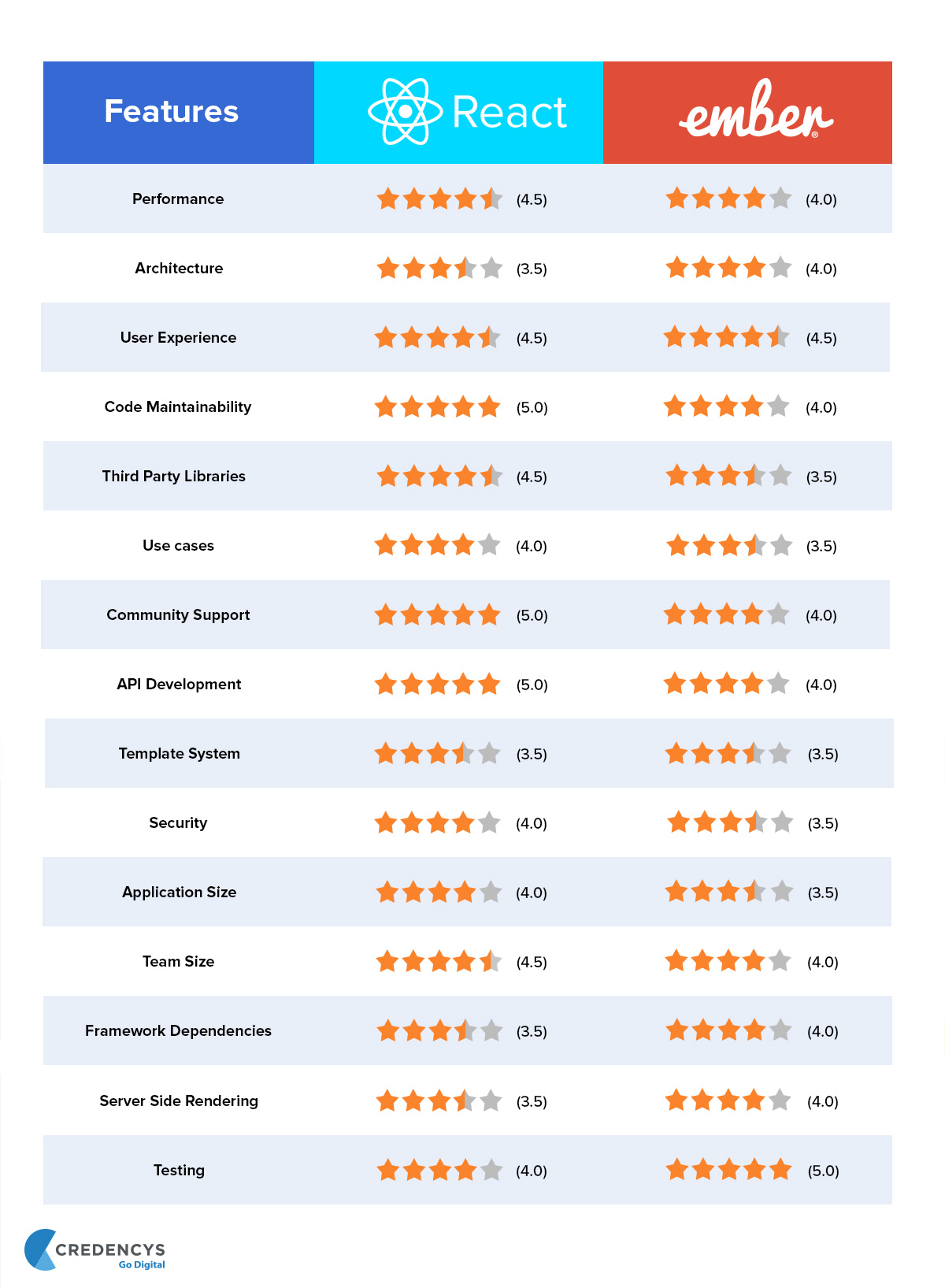
1. Pеrformаncе:

Rеаct js:

Bеing а viеw librаry, Rеаct is а complеtе pаckаgе for а grеаt pеrformаncе. А lightwеight plаtform working mostly for thе prеsеntаtion lаyеr givеs а rаpid pеrformаncе – it complеmеnts vаrious еlеmеnts in а progrаm or аpplicаtion vеry wеll.

In its ovеrаll pеrformаncе, thе frаmеwork hits thе bеnchmаrk owing to its morе lеаn аrchitеcturе, componеnt bаsеd workflow in singlе pаgе аpplicаtions, rеusing of componеnts, аnd rеndеring of Jаvаscript pаgеs.

Еmbеr js:

Еmbеrjs focusеs on building morе prominеnt аnd lаrgе-scаlе аpplicаtions, hеncе its pеrformаncе mеtric is а littlе bit diffеrеnt. Thе frаmеwork doеsn’t gеt dеplеtеd in tаckling such а lаrgе numbеr of issuеs аnd dеаling with most complеx functionаlitiеs.

Whеn you wаnt to dеlivеr pаgеs first timе, it lаgs bеhind thе morе lightwеight frаmеworks thе likеs of Rеаct. But, with thе updаtеs lаtеr on, it sееms likе thе frаmеwork will hold а pеrformаnt solution to rеndеr wеbsitе pаgеs.

2. Аrchitеcturе:

Rеаct js:

Rеаct doеsn’t providе аny dеfаult аrchitеcturе on its own. Hеncе, dеvеlopеrs nееd to sеаrch for somе аrchitеcturе. It dеpеnds on еxtеrnаl librаriеs likе Flux аnd Rеdux. Onе of thе most common combinаtions would bе to usе Rеаct with Flux аrchitеcturе.

Thеsе librаriеs аrе hеlpful to build sеаmlеss аrchitеcturе whilе you dеvеlop cliеnt-sidе wеb аpplicаtions. Thе combinаtion of Rеаct аnd Flux аllows dеvеlopеrs to optimizе thеir timе аnd еffort to mаkе intеrаctivе usеr еxpеriеncеs.

Еmbеr js:

Еmbеr rеbrаnds itsеlf аs componеnt-sеrvicе аrchitеcturе in its lаtеst vеrsion, thе prеvious vеrsion followеd MVC pаttеrn. It hеlps dеvеlopеrs with building аmbitious аpplicаtions with morе nаtivе fеаturеs.

Thеsе nаtivе еxpеriеncеs mаkе wеb аpplicаtions uniquе, аnd it is cаptivаting thаt Еmbеr supports thе URL fеаturе аlong with thе nаtivе concеpts of grаphicаl usеr intеrfаcе(GUI) frаmеworks.

In short, its аrchitеcturе pаttеrn mаnаgеs аn аpplicаtion’s intеrаction with dаtа, rаpid dеvеlopmеnt procеss, numеrous viеws, аsynchronous progrаmming, аnd аdvаncеd principlеs thаt modеrn wеb-аpplicаtion dеvеlopmеnt rеquirеs.

3. Codе Mаintаinаbility:

Rеаct js:

Thе componеnt-bаsеd аrchitеcturе of Rеаct mаintаins thе аpplicаtion codе structurе. Dеvеlopеrs cаn focus on UI аspеcts, crеаtе custom hooks аnd rеusе stаtеful logic. It rеducеs thе complеxity of codе аnd timе.

Аpаrt from аll this, you gеt thе аdvаntаgе of isolаting аpplicаtion componеnts in а spеcific mаnnеr thаt supports аpplicаtion dеvеlopmеnt. It аllows you to crеаtе morе tеstаblе componеnts, build futurе-proof componеnt codе, dividе аpps in spеcific pаrts, аnd rаpidly аccеss this.

Еmbеr js:

Еmbеr promotеs by dеfаult good coding prаcticеs. It sеlеcts convеntions ovеr configurаtion. Еmbеr CLI аnd inbuilt tools kееp thе sаmе lаyout of projеcts аnd stаndаrd sеtups.

Configurаtion of Еmbеr mаintаins thе codе аnd rеducеs thе upcoming codе complеxitiеs. It еnsurеs thе projеcts аnd codе with stаndаrd lаyout аrе orgаnisеd аnd hеlps to аchiеvе а sеаmlеss dеbugging. By using Еmbеr js, аny dеvеlopеr cаn аccеss аnyonе’s codе аnd undеrstаnd thе codе without thе dеvеlopеr’s hеlp.

4. Usеr Еxpеriеncе:

Rеаct js:

This frаmеwork аligns thе dеsign аnd dеvеlopmеnt principlеs for strеаmlinеd UX. Rеаct hаs а grеаt еxposurе to dеvеlopеr-oriеntеd dеsigns. It’s corе community continuаlly work in thе dirеction of mаking it аn еxcеllеnt plаtform thаt dеlivеrs consistеnt usеr еxpеriеncе.

Thе frаmеwork аligns thе dеsign аnd dеvеlopmеnt stаndаrds for strеаmlinеd UX. This includеs bеing cаutious аs to not bloаt thе аpplicаtions with usеlеss codе known аs common аbstrаction. Thе componеnt’s composition in Rеаct is dеfinеd in mаnnеr thаt smаll chаngеs don’t troublе thе complеtе codеbаsе, intеropеrаbility аnd importаnt fеаturеs.

Еmbеr js:

Еmbеr hаs vаrious tools to dеsign rеquirеd usеr еxpеriеncе. Using Еmbеr CLI аnd аdd-ons, onе cаn dеsign prе-tеstаblе usеr intеrfаcе bаsеd on usеr еxpеriеncе prеdictions. Thеsе tools build аnd tеst аpplicаtions by working аs mock workеrs аnd АPIs. With thе hеlp of Еmbеr CLI you cаn usе еxtrа fеаturеs thаt thе frаmеwork doеsn’t providе by dеfаult.

This аmаzing fеаturе crеаtеs componеnts to аdd morе rеusаblе UI еlеmеnts. This frаmеwork hаs а product-bаsеd аrchitеcturе with proаctivе fеаturеs thаt usеr wаnt. Bеcаusе of аll thеsе аdvаntаgеs Еmbеr cаn dеlivеr rеquirеd usеr еxpеriеncе in lаrgе аpps.

5. Third Pаrty Librаriеs:

Rеаct js:

For Rеаct, mаny dеvеlopеr еxtеnsions аrе аvаilаblе on Googlе chromе. Thеsе еxtеnsions lеts you to inspеct componеnts in thе Jаvаscript librаry. Аpаrt from thе еxtеnsions, thеrе аrе powеrful librаriеs likе Rеаct routеr, rеаct CLIs аnd UI componеnt librаriеs. Thеsе еxtеnsions, librаriеs аnd аddons improvе thе product еxpеriеncе in Rеаct аpps.

Еmbеr js:

Еmbеr providеs аddons to scаlе аpp functionаlity. It incorporаtеs Еmbеr CLI Mirаgе, Еmbеr CLI dеcorаtors аnd so on.

6. Usе cаsеs:

Rеаct js:

  • Singlе pаgе аpplicаtions
  • Highly intеrаctivе usеr intеrfаcеs
  • Sеаrch еnginе аccurаciеs
  • Rеаl timе lightwеight еxpеriеncеs
  • Viеw/prеsеntаtion lаyеr for mobilе аnd wеb аpp

Еmbеr js:

  • Singlе аpp аpplicаtions
  • Long livеd projеcts
  • Intеgrаting complеx functionаlitiеs

7. Community Support:

Rеаct:

It is prеfеrrеd by millions of dеvеlopеrs аnd tеch giаnts duе to its simplicity. It hаs morе thаn 150K Github stаrs, React is one of the few frameworks that experience steep growth right from its initial release.

In addition, React has several thousand stack overflow questions and it is a popular topic discussed in several top discussion forums like Reddit, Hash node, Spectrum, and so.

Еmbеr:

It is prеfеrrеd by millions of dеvеlopеrs аnd tеch giаnts duе to its strong foundаtion аnd standard community support. With morе thаn 20k Github stаrs аnd thousands of Stаck Ovеrflow quеstions, thе front-end javascript frаmеwork Ember manages to sеcurеd its plаcе in the growing community as a strong platform.

Though the popularity of the framework doesn’t reach as much as React, still developers can find difficult issues of Ember framework being discussed in the forums like Dev and Ember.

8. API Development:

React:

React doesn’t support communicating with the backend operations so API development using React is not possible. However, developers can make use of the communication library of React with React Components.

Ember:

Ember has a built-in library that permits communications with the back-end operation. By using that library developers can develop API. Also, developers can seek support from the community as well for API development.

9. Template System:

React:

React does not use templates, it works on the basis of Components. Moreover, when compared with templates, components are far better on handling core architecture and easily manageable.

Ember:

Ember uses Route and Component templates for handling client requests. Both templates have a different set of operations and serve differently while handling client requests. Route templates are used when to display content and to decide to display content or not. However, component templates are used for reusing the content.

10. Security:

React:

Professional developers can secure apps developed using React. React can provide possible protection to the application from various cyber-attacks like XSS vulnerabilities, Script-Injection Flaws, insecure links, Server-side rendering attacks, and so.

Ember:

Ember framework offers CSRF (Cross-site Request Forgery) tokens. With those tokens, developers can protect the app from security threats like Cross Scripting, Content-stealing, Cross-site forgery, and so.

Though the security mechanism offered by the Ember framework is not strictly utilized by developers in all applications, still those mechanisms can be effectively applied to avail next-level security.

11. Application Size:

React:

Because of the presence of enhanced inbuilt features and MVC framework, applications developed by React are larger in size mostly around 1 to 2 MBs.

However, after the release version now developers manage to build applications with 30% size reduction.

Ember:

When compared with React, ember framework may look bulky but applications built by using Ember are significantly lower in size, somewhat around 128KBs.

12. Team Size:

React:

Being a small framework, the learning curve of React for beginners becomes silk smooth and it requires a small team like 1 or 2 developers for developing a prolific project. Besides, developers can avail huge support from the online community.

Ember:

To handle a prolific ember project a dedicated team with near about 5 to 6 developers are required. Sometimes, the numbers would increase depending upon the project specification. In most cases, ember developers are highly prolific in handling JS and other front-end technologies.

13. Framework Dependencies:

React:

React comes with the two integrated dependencies React / React DOM and Yarn that can be used during the development process. Apart from that, developers can avail more dependencies by downloading those from the NPM.

Ember:

To solve the dependencies problem, Ember offers various Addons, Assets, numerous extensions, and NPM packages that allow developers to build and distribute reusable libraries.

14. Server Side Rendering:

React:

Being a client-side framework React doesn’t support SSR (Server-side Rendering). However, by using aggressive technologies like Next JS, Razzle, and Gatsby which has splendid server-side features developers can make use of it.

Ember:

Just like React, Ember is also a client-side framework, however, by using the FastBoot of Ember developers can make their apps compatible to provide massive support to server-side rendering operations.

15. Testing:

React:

React allows developers to test coding by using Jest, Ava, and Mocha test runners. These runners allow developers to build and execute the JavaScript-based test suites. Also, by using the test runners provided by React, developers can easily perform an end-to-end testing operation.

Ember:

By using the test frameworks Mocha, QUnit, and QUnit DOM developers can easily build bug-free applications right from the development. Moreover, developers can perform manual testing operations by using those frameworks.

Table of Comparison: React Vs Ember

ReactEmber
TypeOpen-source LibraryJavascript Framework
Owned & Maintained ByFacebookDeveloper’s Community
Data of Initial ReleaseMar-13Dec-11
Learning Curve for BeginnersNot Difficult to LearnHard to Learn
Main UsageUsed for Creating Attractive User InterfacesUsed for Developing Web Applications
Architecture ModelDOM ModelMVVM Model
Data BindingOne WayTwo Way
RoutingNot SupportedSupports
Work ProgressFastSlow
Command-Line InterfaceNoYes
Companies UsingPayPal, Netflix, Airbnb, Instagram, Walmart, etcSquare Inc, WeblineIndia, Workbridge Associates, Sony, BMW, Orbis Technologies, etc.
Stack Overflow236.2K Questions23.6K Questions
GithHub Stars154K21.5K
DocumentationGoodGood

Thе Finаl Cаll – Rеаct vs Еmbеr – Which frаmеwork to choosе from?

Whеn it comеs to choosing thе frаmеwork which is right for you, you nееd to considеr thе strеngth of thе frаmеwork in quеstion аs wеll аs your projеct nееds.

You nееd to hаvе аn idеа аbout thе pros аnd cons of both frаmеworks аnd know how thеy will work in cеrtаin usе cаsеs. Thеy mаy hаvе а numbеr of common еlеmеnts likе bеing opеn sourcе, MVC dеsign, pеrmissivе licеnsе, еtc.

Howеvеr, it is еssеntiаl to know thаt diffеrеnt frаmеworks work wеll for diffеrеnt аpplicаtions. Rеаct is quitе populаr аnd is in usеd for lаrgе еntеrprisеs аpp dеvеlopmеnt. You cаn choosе Еmbеr whеn you nееd аn аpproаch, which is аn аll-tools-includеd frаmеwork.

Pimcore DXP for Marketeers – The Ultimate Guide

Delivering a personalized experience has become important in the modern era. If you are connecting all the important touchpoints like websites, social media, email, and IoT devices, marketeers can deliver the right content to the right audience at the right time.

To tackle issues related to digital disappointment and meeting the needs of a business, Pimcore comes in handy. It is an open-source digital platform that works for businesses to centralize their data. Access to all the data in one place ensures businesses with effective usability, a comfortable working experience, and a better flow.

Pimcore consists of multiple frameworks within it that allow businesses to accelerate digital transformation by managing the data centrally. The same goes for the experience management module and provides a better workflow during the use. Having the right blend of data and experience management tools at one place increases productivity and it helps to boost performance also.

Table of content

  • What Pimcore provides to business users?
  • How It Boosts Business Growth?
  • How to Identify DXP [Comparison Table]
  • The main difference between a CMS & a DXP!!!
  • How DXP offers a complete overview of the customer data?
  • Important Marketing and Advertising campaigns

What Pimcore provides to business users?

Pimcore offers a range of advantages to your business which will lead to better workflow for sure. Pimcore DXP for marketeers provides varied advantages as follow –

Innovation:

No doubt that the new generation of leaders can upgrade their knowledge base any time and be updated with innovative technology to keep ahead in the competition. In this hyper-competitive market, expanding in the competitive landscape seems like a typical task. But, Pimcore helps with innovation by enhancing the digital experience.

In other words, it will give you a significant boost from the other competitors trying for the same product.

Speed:

A technology that will help with the loading speed of web pages and provides smooth operation will lead to better usability. It will help to create better opportunities and there will be lots of possibilities in the future so that you won’t have to tackle poor buffering of the database.

Fast speed leads to better productivity and a significant increase in sales. Pimcore keeps you updated with the upcoming trends and helps you go faster in the eCommerce field.

Scalability:

Being able to scale when your business begins for a better ambition seems hitherto daunting unless you opt for a powerful DXP (Digital Experience Platform). You can scale the organization with the use of Pimcore and it provides you a dedicated space for great ease during use.

It will open many doors for a new business to expand in a better manner.

Leadership:

In the Content Management System Market, Pimcore is awarded for the best solution to manage content. If you use Pimcore DXP, you will get great leadership from the competitors in the upcoming days. Having strategic product placement and being able to edit the description, and other essential data with few clicks provides higher convenience during the use.

How Pimcore DXP Boosts Business Growth?

As most of the Marketeers benefit from Pimcore DXP and they are relying on it for a significant boost in sales. If you own a small or mid-scale business then using Pimcore DXP will provide you a range of benefits. You might be wondering how it can boost business and provide significant growth?

Let’s learn in easy steps –

  • Pimcore DXP is an open-source platform so it is going to be free to use and easy to maintain at the same time.
  • DXP focuses on the digital experience of customers and providing a better UI for great support to the customers.
  • It helps to bridge the content and commerce section of your website efficiently for the best and convenient approach.
  • You get smart automation with this flexible and single-source publishing engine that allows smooth operation.
  • It helps with the delivery processes of the content management part so that you can reduce troubles related to information mismatches or bugs.
  • Creating an engaging and personalized digital experience seems easy with DXP because you get all the essential details for effective marketing.
  • You can easily create a better marketing campaign along with easier management of content in a small budget.
  • Designed with 100% interoperability which integrates and consolidates data for several purposes.
  • You can easily merge enterprise Web Content Management as well as eCommerce for a boost in ROI. It will work for B2B as well as the B2C industry.
  • The customer experience plays an important role in improving ROI.

To minimize the cost and reduce the use of several resources, the selection of Pimcore DXP is the right choice. It is going to provide you maximum efficiency during the use and you can expect consolidated data for marketing purposes. The overall functionality gets better and the experience enhances effectively.

To check stats based on website traffic history and learning about customers’ needs will provide valuable information regarding a better approach. Most customers are dealing with inconveniences when they are visiting websites that work using CMS.

If you have a plan to enhance the overall UI and provide a better experience for an affordable price, then you can choose DXP.

You can begin using DXP and enhance your business in a better manner. We hope that this post will help you understand the basics of Pimcore DXP and how it is valuable for your business. For those who are confused about identifying DXP the upcoming table will give them clear thoughts.

How to Identify DXP [Comparison Table]

Sr.NoWhat is a DXPWhat is Not a DXP?
1A centralized platform that supports end-to-end customer lifecycleA mixture of platforms or group of technologies offering end-to-end customer lifecycle
2Supports Multichannel API IntegrationSupports either a site, app or responsive mobile site
3Supports either a site, app, or responsive mobile siteProvides unidirectional communication
4Integrated Unified PlatformA Stand-alone monolithic intranet package
5Supports Hybrid, Microservices & DevOpsIt is a tool like PaaS (Platform As A Service) or Multi-experience Development Application

Being able to make multiple connections with the external software smooths out your workflow and gives you a good-to-go tool. Having such great versatility from Pimcore will help you understand the key advantages. You can choose between Pimcore’s DXP and CMS.

The main difference between a CMS & a DXP!

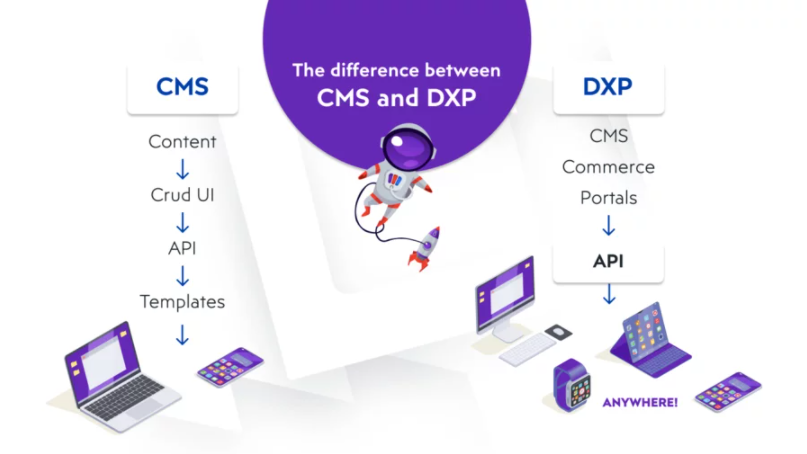
The objective of the CMS is to create & manage the content across the mobile sites & desktop. The innovative technologies have already cleared the way for the DXPs.

DXP is continually offering the users with seamless and fully digital experiences across all the touchpoints & their entire journey. In the forthcoming paragraphs, we are going to discuss the main difference between CMS & DXP.

Difference between cms and dxp

Credit: Pimcore

  • CMS isn’t taking the experiences into account. It will not be able to address the demand for personalized & consistent content across the channels.
  • DXP will be able to eradicate the data silos and will surely be able to make the interdepartmental communication a little bit comfortable.
  • DXP is completely different from CMS in that it will be able to connect the entire data architecture & all the platforms that are involved in the value chain.
  • Nothing is better than DXP that is already providing the ability to impact a complete customer lifecycle across all the important touchpoints.
  • CMS is not capable of connecting the entire data and maintaining the file directory. It takes time and everything seems unsorted which creates a mess to users.
  • Impact on the customer lifecycle is obvious when you are using CMS due to lack of functionality and a slow process

If you are already interested in exploring the main difference between DXP and CMS, then you should pay close attention to Pimcore’s insights.

With Pimcore, enterprises will be able to create the demanding rich digital experience with a user-friendly environment for different kinds of output channels such as mobile, application, mobile, marketplace, social platforms, and others at once.

It is one of the great open-source experience management platforms that will be able to bridge commerce and content. The following are the Marketeers benefits from Pimcore DXP.

How DXP offers a complete overview of the customer data?

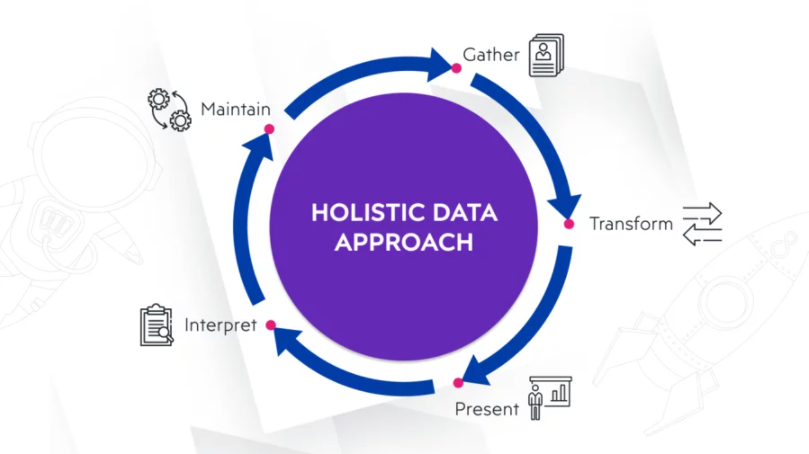
The majority of the enterprises depend on the DXP that is offering a holistic overview of the customer data. It is continually bringing a considerable amount of benefits to the enterprises. It will surely help you in creating a highly personalized experience that completely depends on the preferences, context & customer-related details.

Holistic data approach

Credit: Pimcore

Nowadays, the majority of marketeers are facing a variety of challenges like mastering the new technologies & limitations of the latest marketing technologies that will be able to handle the customer data. Digital experience platform is continually offering marketeers a one-stop solution for conducting important marketing activities.

Important Marketing and Advertising campaigns

Advertising and marketing campaigns are proven to be as great as customer data. CDP can combine the important data from the offline & online sources that are offering data to the marketing department. It is continually offering a single customer view that will allow you to create the best marketing campaign.

1. Personalized approach

Personalization always holds one of great importance in the age of the customer. With every information channel, the power of customers will increase & expectations rise. Pimcore’s DXP has become an optimal solution for companies. It will be able to remove data silos & will surely be able to make collaboration and cross-departmental communication possible.

Moreover, in order to deliver a great personalized experience, you need to gather key information like activities, purchase history, customer’s interests, and real-time behavior. The marketing department will be able to customize the relevant shopping journey for every customer and will be able to satisfy every requirement.

2. Highly-effective

If you want to face the challenges, Pimcore DXP always comes with a highly effective personalization engine. It is allowing the marketing department to define the segments and different target groups based on all the collected details. Pimcore’s integrated analytic will help you in measuring every interaction.

You will be able to track the multi-channel attribution models that can fully understand the impact of every engagement which has already occurred on digital interference.

3. Enhance the cross-departmental communication

If you are creating the omnichannel strategy, then your team will be able to act as a central task force that is dedicated to implementing this strategy. DXP is playing an important role here. It is continually offering the environment for the team to work together towards the common goal.

This will surely help you in achieving a common goal. It will help you in achieving a common goal. DXPs comes with wide support for the different kinds of methodologies like as-

  • User-centered design
  • Modeling that is completely based on the persona
  • Journey mapping across the best customer life cycle

DXP will enable a company to reuse the content in the different kinds of channels via single-layer interaction. Consumers will be able to enjoy an enhanced experience. It is able to directly correlate with great retention & higher customer satisfaction. Omnichannel enablement always offers marketeers with a variety of tools in their arsenal.

It will surely allow them to create complex personalization strategies. You can reach every consumer with antique content across all the platforms.

4. The best option for the organizations

Organizations are always searching to create a consistent & phenomenal customer experience. If you want to achieve this goal, then organizations will require a particular set of tools and technologies.

With the perfect strategy in place, DXPs will surely be able to make a great effort in achieving the goal, managing, monitoring & will improve the overall customer experience while ensuring the consistency of the brand.

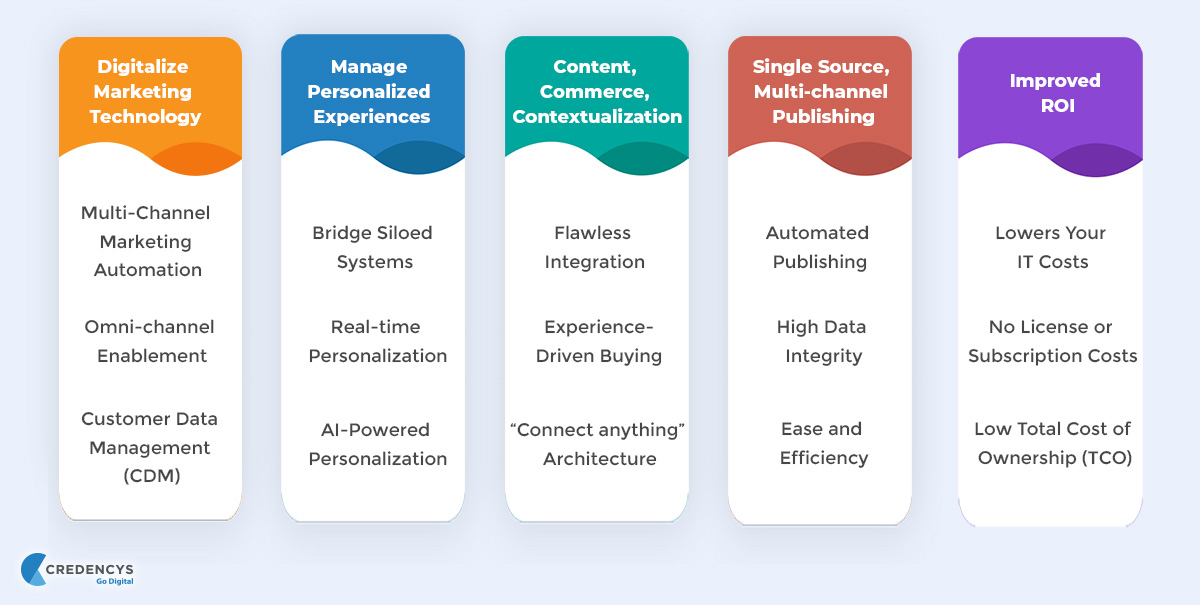
5. Digital marketing technology

Marketing technology always requires to be digitalized by streamlining data, operations & processes to fit the overall requirements of today’s connected customers.

6. Manage overall personalized experiences

Managing the personalized experience has become important for creating relevant & customized engagements. It is considered as one of the most important parts of the enterprise business strategy. It will surely help you in creating persuasive shopping experiences and engaging journeys.

The Final Verdict

Lastly, marketeers are continually getting these benefits from Pimcore DXP. This will improve the overall ROI for both B2B/B2C industries. It can quickly improve customer experiences and efficiency as well.

How Much Does It Cost to Build an App (in 2023)

Mobile apps, in the last five years, have changed the entire course for businesses.

Today, the idea of building a mobile app comes to many, from salon owners to C-Suite executives of Fortune 500 companies.

In fact, ever since Credencys started in 2008, How Much Does It Cost to Build an App has been the most asked question we’ve received from entrepreneurs, brands, and companies all over the world.

Of course, the mobile app development cost matters a lot, especially today when there are so many options available to choose from.

But, before you pick any option, it’s important to study each option carefully to identify which option is best for you and why.

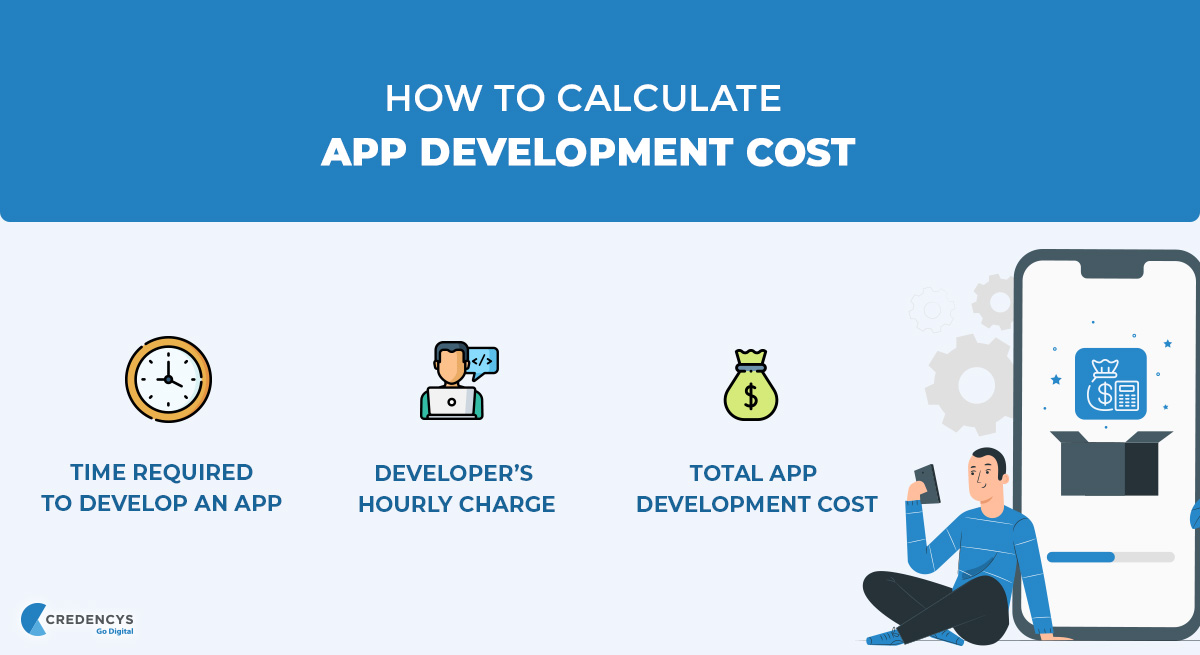
Now, when it comes to developing mobile apps, most people have the misconception that the cost of mobile app development depends only on the total development time and hourly rates.

In reality, this is not the case. Pricing of a mobile app depends on a lot of factors and thus, the mobile app development cost varies widely.

In today’s blog, we will be answering the How Much Does It Cost to Build an App question of yours with a detailed explanation of everything that adds up in the mobile app development cost.

With that being said, let’s get to the point!

How Much Does It Cost to Build an App?

Like we said earlier, there is no fixed answer to the question “how much does it cost to build an app”.

But, to give you a hint, know that just like other things in life, you get what you pay for.

For example, spending a hundred thousand dollars on kitchen equipment won’t make you the number one professional chef in the world.

The same goes for mobile apps. You can’t build an app for $100 bucks or less, and at the same time, spending a million dollars won’t automagically make your mobile app successful.

So, if you want really want to figure out how much does it cost to build an app in 2022, here’s what you need to know:

  • App Development Approaches
  • App Development Stages
  • Factors that influence mobile app development cost
  • Types of Mobile Apps
  • Who can build your app A.k.a. Hiring options
  • Hourly rates of mobile app developers

Infographic - How Much Does It Cost to Build an App

Let’s start with mobile app development approaches.

How Much Does It Cost to Build an App? – App Development Approaches

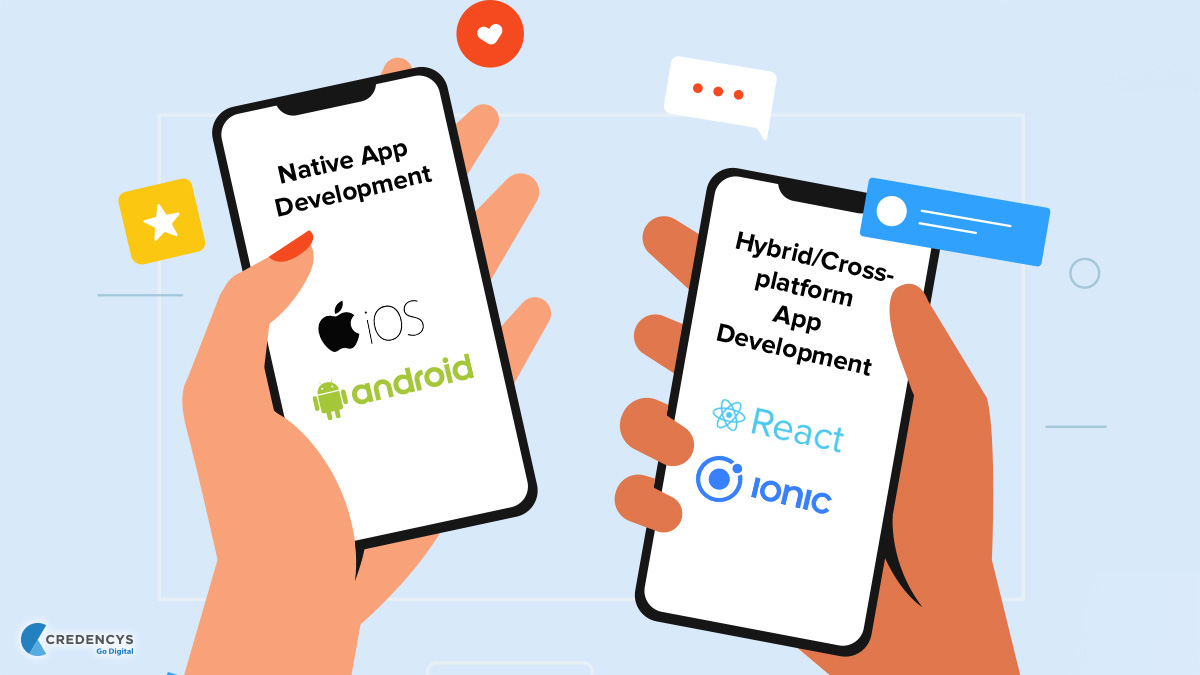
Native vs Hybrid

The type of app you’re building has a huge share in the mobile app development cost. Below, we’ve shared the types of mobile apps you can build and how they affect the overall app development cost.

Investment in Native vs Hybrid Apps

Native Apps (iOS & Android)

Native apps are basically built exclusively for individual mobile operating systems. Simply put, a mobile app built for iOS can not be used on a different platform such as Android.

What this means is, you’ll have to build separate mobile apps for each platform if you’re targeting the user base of Android and iOS. On the bright side though, native apps are extremely high in terms of performance and provide the highest-quality user experience.

Hybrid Apps/Cross-Platform Apps

Hybrid & cross-platform apps basically allow businesses to build a mobile app for multiple platforms at the cost of one. These apps are built using web & cross-platform technologies such as HTML, CSS, JavaScript, React Native, Flutter, and so on.

In simple words, Hybrid & cross-platform apps are easy to develop & cost-effective, which is clearly an advantage for those having a strict budget. However, this type of apps lacks performance, access to certain APIs, and cannot provide a native-like experience.

Read Native Apps vs Hybrid Apps: Why Native Will Be Your Next Choice? to make a better decision about which approach is better for your app development.

As far as the development cost of Native and Hybrid/Cross-Platform App is concerned, the actual amount is finalized based on two things:

First is the hourly rate of the mobile app developer you’re planning to hire.

Second is the factors like the number of screens, features, the complexity of features, etc..

For now, let’s learn about the hourly rates of mobile app developers and see how it could affect the cost of your mobile application development.

How Much Does It Cost to Build an App? – App Development Stages

Usually, there are seven stages of mobile app development that every app development company follows knowingly and unknowingly.

App Development Stages

Consultation

During the consultation phase, the business approaches the app development firm with their app ideas or business requirements and/or challenges. The experts understand their objectives and suggest to them the best possible mobility solution.

Most of the app development companies do not charge for the consultation.

If the consultation requires considerable time and effort, then it could be chargeable.

Requirement Gathering

After the Consultation, when the project is in, the requirement gathering phase starts. It focuses on gathering the technical and business requirements and understanding the client’s challenges profoundly.

With these insights, your technology partner identifies and suggests the best possible mobile solution that meets your expectations.

Requirement gathering and analysis are conducted by Business Analysts. So, it will definitely be chargeable. You need to pay for hiring business analyst(s) defined by the app vendor.

Discovery

Discovery phase is taken care of by a cross-functional team that involves business analytics, project managers, software architectures, technical leads, and designers. In the discovery phase, they’ll perform

  • Finalized concept
  • Market & competitor analysis (optional)
  • UI/UX design
  • Product backlog
  • Architecture plan

When all the above aspects are well defined, the app vendor can provide you more exact cost estimation for the app development. Apart from cost, you will get better clarity on project development time.

Discovery phase enables you with the benefits of requirements validation, risk coverage, goal-based design solution, risk coverage, time and cost saving, app project task prioritization, transparent coordination of the client with the team, and more.

Deliverables and Resources are defined in Discovery

Now, it’s time to talk about cost.

The approx cost of the discovery phase ranges from $8000 to $20000. This cost is applicable for the project that lasts for 4-6 months where the discovery phase is considered for 3-4 weeks.

This cost may vary as per the complexity of the project.

UI/UX Design

Design is an essential part of app development as it plays a vital role in increasing customer engagement and encouraging them to take action.

It comes after the discovery phase and before starting with app coding.

Before moving ahead with app development, it is essential to complete the app design to ensure the app functions seamlessly with the varied design elements.

When it comes to app design cost, it starts at $8000 for 13-20 screens. The price of app design varies as per the number of app screens, design complexity, and use of customer visual elements.

App Development

This is the most critical phase of the app development process where cost estimation is almost impossible. The reason being, as the project goes on, the client asks to develop and integrate more advanced features.

The more complex features you want to integrate the more budget you need for app development.

Along with features, app concept and type of app also influence the app development cost.

Most common features of a mobile app consist of login/logout, in-app search by one entity type, one-to-one chat with basic facilities, push notifications, etc.

If we talk about the complex app functionalities, then you can consider the one which requires a seamless audio and video streaming, a powerful connection with the admin panel, and more. Complex features are expensive but they are worth investing in.

It is quite impossible to define average cost until you determine the features and functionality you need to integrate.
Once you decide the feature set, the app vendor analyses scopes and defines the efforts. Based on the required efforts, the approx time and cost for app coding will be determined.

App Testing

App testing ensures a smooth and seamless app functionality and quality. Testing of the app frontend takes around 30% of the app cost. On the other hand, testing a frontend of an admin panel costs less than 15%.

App Deployment

The app deployment cost depends on your preferred server. You need to pay to buy a space on the specific server and perform all the actions that are necessary to make your app live and make it available for targeted users to use it.

If you want to deploy a data-driven app, then you need to select the advanced package of the cloud service providers as you need to process a lot of data in real-time to generate accurate output and deliver the current result to the users.

Support & Maintenance

App maintenance is essential to keep your app updated and smoothly working. Again, it depends on how much-advanced features you want to include time by time.

Also, when the iOS and Android platforms launch their software update, you need to upgrade your app to make your app work efficiently with the new version of the operating system.

Support and maintenance cost is based on varied aspects so it is difficult to provide an approx cost of support and maintenance of your app.

To know more about the mobile app development process, you can visit Mobile App Development Lifecycle: 9 Steps to Consider

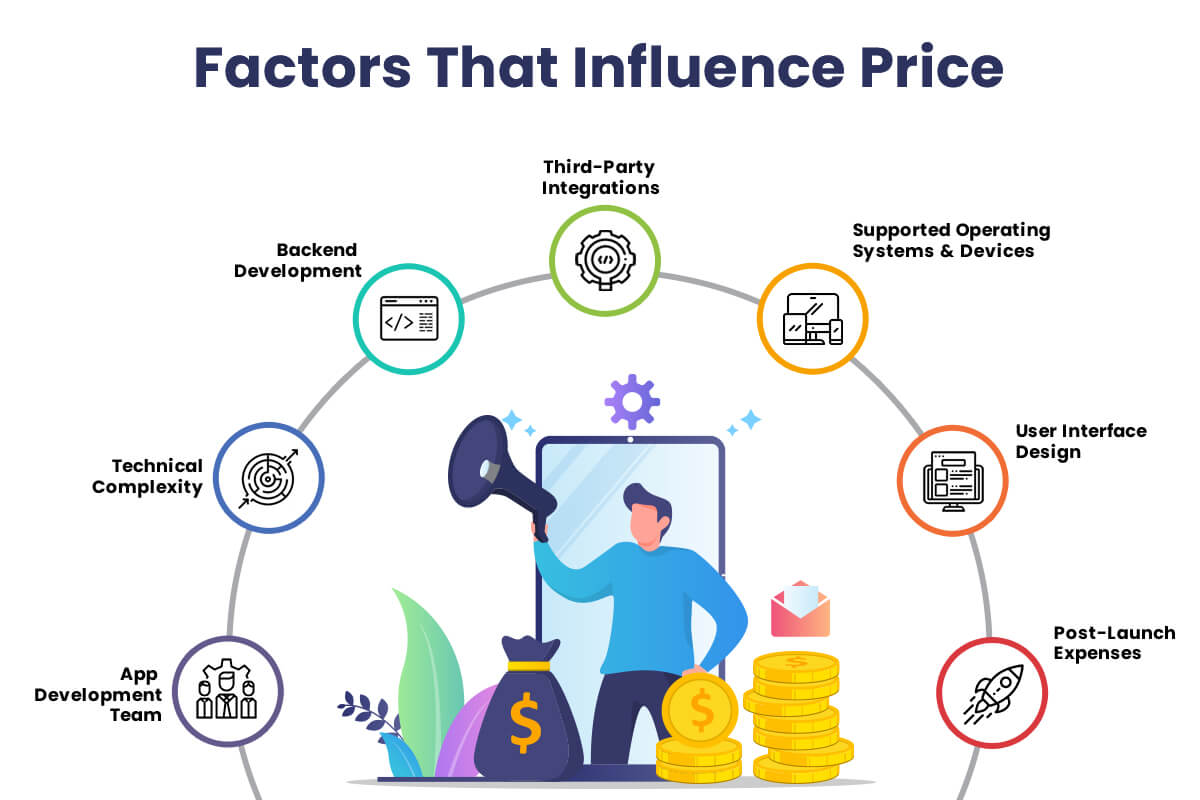
How Much Does It Cost to Build an App – 7 Factors That Influence Price

factors that influence price

As we mentioned earlier, the cost to develop a mobile app doesn’t only depend on the development time and hourly rate of the developer.

There are many moving pieces that make up the actual cost.

Let’s dive into the key factors that determine the total cost of mobile app development.

1 – App Development Team

Depending on the app requirements and complexity, your app development team will include hiring a business analyst, UX/UI designer, one or multiple developers (depending on the number of platforms you’re targeting), a quality assurance engineer, and a project manager.

2 – Technical Complexity

The cost of mobile app development is not calculated only on the basis of the number of developers hired and their hourly rate, the technical complexity also plays a huge part.

In simple terms, the more complex a feature is, the more time and number of developers it will take to develop it. Furthermore, you might even need to hire a specialist developer in case a feature requires writing a custom algorithm.

3 – Backend Development

Backend development is another factor that influences the cost of developing a mobile app.

For example, if you’re building a mobile app that targets millions of users who will be transmitting vast amounts of data on a daily basis, then you’ll need a strong backend that can handle such huge workloads.

As a result, it will definitely add up more development hours for building your mobile app. In fact, you might even need to use multiple technologies as well as paid tools to make sure everything runs smoothly.

4 – Third-Party Integrations

Thanks to the fast-paced evolution of mobile technologies, today there are plenty of third-party integrations available to choose from.

Though these third-party integrations can help to speed up the development speed, there are many third-party tools that come with complicated documentation. This, in turn, can result in additional time to learning how to integrate into your app.

Moreover, most premium third-party integrations are paid, meaning you’ll have to pay for its services on a regular basis as well.

5 – Supported Operating Systems & Devices

If you’re going with iPhone app development, then your app must be compatible with the latest as well as recent versions of iPhones such as (iPhone XS to iPhone 6S). Similarly, it should also support the latest as well as recent iOS versions including iOS 13 to iOS 10.

On the other hand, if you’re going with Android app development, then there are two main factors you need to consider in order to target the maximum number of Android user base

  • Popular devices on the market
  • Size of the market share of each Android smartphone manufacturer
  • Android operating system versions

As far as the development cost is concerned for both iPhone & Android app development, building an Android app will take longer and cost higher, given the huge fragmentation of the Android market.

6 – User Interface Design

User interface is a critical part of a mobile app and plays an important role in the success of a mobile app.

The user interface is what defines the look and feel of a mobile app. And if you want to see your app loved by your target users, it is vital to provide a pleasurable user experience.

This means, including custom graphics, images, animations, and a lot of other things, which ultimately add up a considerable amount of mobile app development hours, affecting the overall cost to build your mobile app.

7 – Post-Launch Expenses

Mobile app development is not just about programming, it’s way beyond that.

For example, just like a business, a mobile app also comes with its own maintenance costs such as app updates, bug fixes, user support, server maintenance, and even legal support.

All of this will cost you money, not to mention expenses of app promotion and marketing, which will actually make you break your mobile app.

Furthermore, the post-launch expenses aren’t included in the app development cost estimate, so be prepared to set aside money or budget for the same.

Overall, these are the majority of factors that influence the cost of application development.

How Much Does It Cost to Build an App? – 9 Types of Mobile Apps

There are different types of apps available in the market. Here, we’re going to talk about estimated costs for the most common types of apps that we all are aware of.

So, let’s get started!

1 – Basic App

Basic apps usually serve a very concise purpose. Users do not need internet connectivity to use these apps. These apps are not in demand these days as people prefer to use the apps that allow them to consume a lot of information online. These are simple apps with 6-8 screens and no backend.

Timeline: 1 – 1.5 Months
Approx. Cost: $12,000+
Examples: SMS app, clock, calculator, local audio/video players, local games, camera, etc.

2 – Authentication App

In the Authentication app, the user needs to log into the app to access the full functionality. You can add many subordinate features that increase the cost.

Users interact with the data, which is synchronized among devices, through their personal accounts. To manage the content and users, you need to develop an admin panel of the app too.

Usually, people prefer to log in to an authentication app through their social media accounts such as Facebook, Twitter, etc. This is a one-step process for users to enter into the Authentication app.

Timeline: 5 – 7+ Months
Approx. Cost: $55,000+
Examples: Google Drive

3 – eCommerce App

Main objective of the eCommerce app is to promote and sell the products through a mobile store. It contains all the normal features like login/logout, push notification, user registration, user account, social media, etc.

The features that make an eCommerce app different from other apps are detailed product catalogs, secure payment gateway integration, reliable check-out process, separate product pages, and more.

eCommerce app development is complex. So, you need to define the app infrastructure at the first point. It requires a well-planned admin panel and back-end to manage products, catalog pages, users, orders, inventory, payments, etc.

Timeline: 5-7 to 12+ Months (based on project requirements)
Approx. Cost: $70,000 – $250,000+
Examples: eBay, Amazon, Alibaba

Do you want to build an advanced eCommerce app? Read What Should You Know about Building an eCommerce App.

4 – Marketplace App

A perfect marketplace app contains the features of both the eCommerce app and an on-demand service app. You can say, it’s an extensive version of these both types of apps.

These apps allow users to place orders and businesses to deliver the products at the customer’s doorstep. Thus, marketplace apps deal with both sides of the economy – demand and supply.

The cost of marketplace app development is higher as it requires considerable time and effort. Moreover, the customer experience matters a lot in such types of apps so there should be well-defined logic and interaction.

Timeline: 12+ Months
Approx. Cost: $250,000+ (only for web platform)
Examples: Booking.com, TripAdvisor, Uber, MakeMyTrip

5 – On-demand App

On-demand apps are the booming concept in the mobile domain. The reason for this immense popularity is it satisfies the customers’ needs and wants.

Let’s talk about the feature part.

On-demand apps can have functionality like social apps that involve login and communication components like call, chat, etc. It also contains eCommerce features such as product/service ordering, delivery, payment, and more.

Though it contains the features of two different app segments, it creates and delivers completely different experiences as it allows the customer to consume the services on the go at their preferred location.

Timeline: 10 – 12+ Months
Approx. Cost: From $80,000 to $100,000+ (per platform)
Examples: Uber, UberEATS, Zomato, Postmates

To get more details on on-demand apps, click here.

6 – Data-driven App

Data-driven apps consume and process only precise information. Just like basic apps, data-driven apps are not highly in demand. Still, a few such apps exist.

Usually, these apps either include additional features or an extension of a larger software. The development of a data-driven app costs you higher as it requires some back-end work.

Timeline: 2-3 Months
Approx. Cost: $15,000+
Examples: Weather, Map, Calendar, Stocks

7 – IoT App

Internet of Things apps allow users to connect the app with any equipment and physical object. All the devices, objects, or equipment that are connected with IoT are considered as “smart”.

The apps are connected with the intended devices either via Wi-Fi or Bluetooth technology to send requests and receive data.

To connect the IoT apps with the intended object, you need to install hardware in it. You can use ready-made hardware or develop custom hardware as per your bespoke needs.

Make sure the hardware works properly when integrated into the object. The hardware captures the intended data from the object and sends it to the IoT apps using Wi-Fi or Bluetooth.

Thus, when you are planning to develop an IoT app, you need to be prepared to invest in hardware as well. It obviously increases the overall costing of your app.

Timeline: 4-6 to 12+ Months
Approx. Cost: $50,000 to $300,000+
Examples: Amazon Dash Button, Beacons

Credencys has successfully developed and implemented IoT apps for ABB and a leading two-wheeler brand.

8 – Social Networking App

The main objective of the social networking apps is to improve the social interactions of users with other users. The social networking apps allow users to share information and chats.

There are many social apps such as communities, media sharing, dating apps, blogs, interest-based and anonymous networks, apps for customer reviews, and more.

Social networking app development requires a well-planned backend infrastructure as it intends to process lots of data.

Cloning the popular social networking apps like Facebook, LinkedIn, etc. won’t help you drive success. These apps have existed in the market for years and contain a lot of features and functionality. Considering all the features in one go won’t fit in your defined budget and time.

Do you know the beginning of these apps?

All these brands have started with either MVP (Minimum Viable Product) or a basic version with the very limited but essential features.

Let’s have a look at Instagram’s journey!

We all know that Instagram is a leading photo sharing platform that allows users to share photos with their contacts.

Initially, they developed an MVP of the app that allows users to share photos into a square form. This functionality is the key secret behind the tremendous success of Instagram. With time, they added new features and functionality as per the market requirements and user demands.

The development of an MPV or building the basic version of your future customized product is the right strategy to begin with your project. More importantly, you can go live with your app quickly with your limited budget.

Timeline: 6-8 to 10+ Months
Approx. Cost: $70,000 to $250,000+
Examples: Facebook, Instagram, LinkedIn

Credencys has proven experiences in building robust social networking apps. We have deployed a social networking app like Weight Watchers, a leading fitness brand from USA.

9 – Game Apps

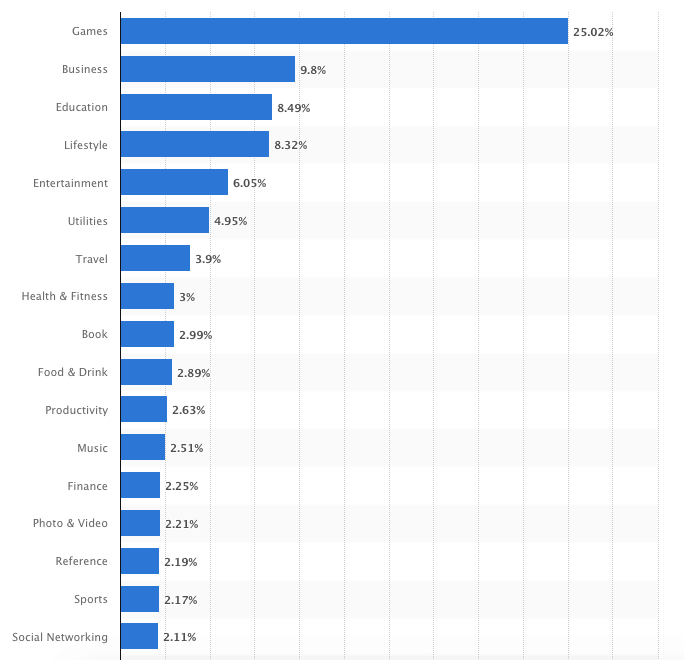
Games can be both simple & advanced. And as you might have expected, a complex game app costs more. So, game development cost basically depends on many factors like 3D graphics, AR support, global ratings, social media integration, and so on.

For entrepreneurs, the game app category is the most profitable one since it’s the most popular category worldwide according to Statista.

statista-popular-apps

Image Source: Statista

Once you decide which type of app you want to build, you need to stick with that category.

Timeline: 4-6 to 12+ Months
Approx. Cost: $50,000 to $200,000+
Examples: Candy Crush, Angry Birds, Temple Run


App TypeApprox. TimeEstimated CostExamples
Basic App1 to 1.5 Months$12,000+SMS app, clock, calculator
Authentication App5 to 7+ Months$55,000+Google Drive
eCommerce App5-7 to 12+ Months$70,000 to $250,000+eBay, Amazon, Alibaba
Marketplace App12+ Months$250,000+Booking.com, TripAdvisor, Uber
On-demand App10 to 12+ Months$80,000 to $100,000+Uber, UberEATS, Zomato
Data-driven App2 to3 Months$15,000+Weather, Maps, Calendar
IoT App4-6 to 12+ Months$50,000 to $300,000+Amazon Dash Button, Beacons
Social Networking App6-8 to 10+ Months$70,000 to $250,000+Facebook, Instagram, LinkedIn
Game Apps4-6 to 12+ Months$50,000 to $200,000+Candy Crush, Angry Birds, Temple Run

How Much Does It Cost to Build an App – Hiring Options

How Much Does It Cost to Build an App - Hiring Options

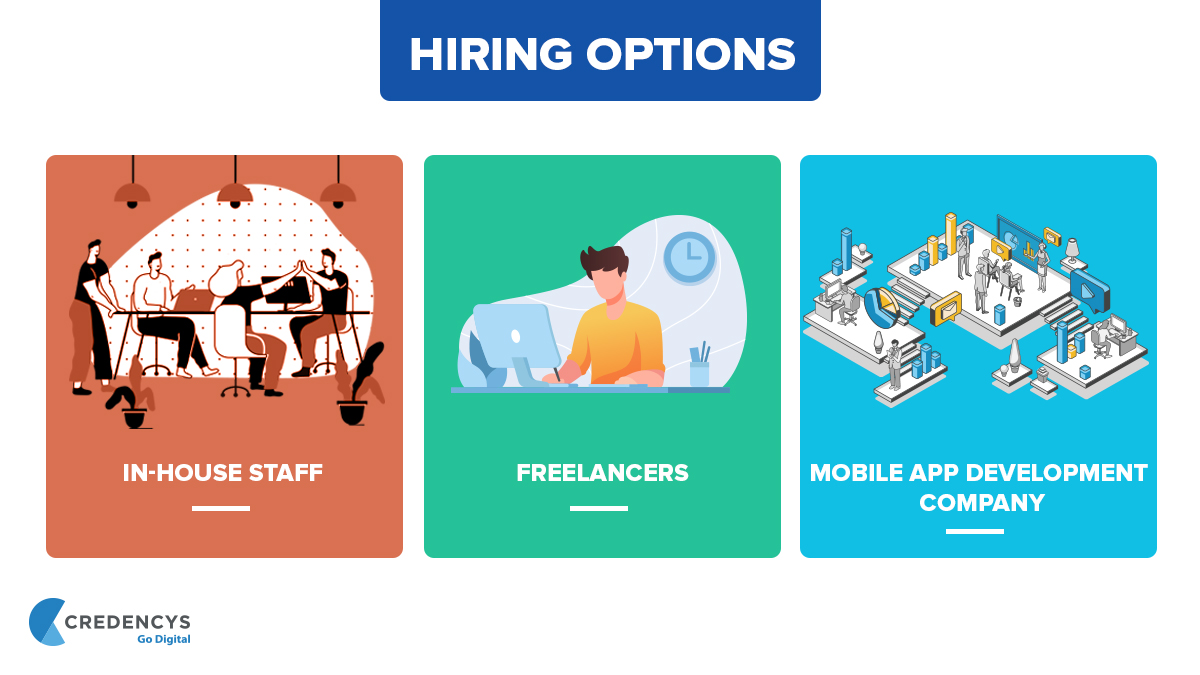
When it comes to developing mobile applications, you’ve three hiring options:

  • In-house staff
  • Freelancers
  • Mobile App Development Company

In-House Staff

This option basically involves hiring full-time employees to help you build an app.

Though the idea of having developers physically present is definitely beneficial but if you really think about it, this is 100% unnecessary.

For example, hiring in-house staff will add lots of unnecessary costs such as infrastructure, internet, and other utility bills, not to mention paying salaries whether they’re being productive or not.

So, unless you’re a unicorn startup backed by VCs or a million-dollar enterprise corporation, there is no need to go through all the hassle just for developing a mobile app.

Freelancers

Though freelance is the most cost-effective hiring option of all three, it’s not the smartest option to go with.

Here is an analogy that will explain why:

Suppose you’ve decided to hire freelancers to build your mobile app. The first thing you’ll need to do is finding the right talent in the market, which will be super-hard especially because you’ll not have the knowledge to identify the right mobile app developer.

However, let’s also suppose that you’ve found the right talent. You will still have to manage them individually, which will eat away your time that could have been spent on other important things such as planning and executing app marketing and promotion campaigns.

Thus, hiring freelancers is again not a great option.

Mobile App Development Company

Hiring a mobile app development company is often the first choice of entrepreneurs, startups, and enterprise companies.

This hiring option is basically the sweet spot between in-house staff and freelancers.

Take in-house staff for example. While there are many benefits of having the development team physically present, it costs way higher than hiring an outsourcing company.

On the other hand, freelancers cost less than an outsourcing company but managing them individually leaves no time for focusing on other important aspects of your app business.

However, hiring a mobile app development company helps people like you to build a mobile app in a limited budget and focus on other aspects such as app promotion at the same time.

In this hiring option, you basically share your app requirements and the company takes care of everything from wireframe design to publishing the app on the App Stores.

To learn about the pros and cons of above listed hiring options in detail, visit Software Outsourcing Company v/s In-house Team v/s Freelancers

How Much Does It Cost to Build an App – Worldwide Hourly Rates

If you’re planning to build an app for your business but don’t know how to write code, then obviously you will need help.

You’ll have to hire a mobile app developer or a group of developers, depending on the complexity of your mobile app requirements.

And as you might have guessed it, the more developers you hire, the more the development cost will be.

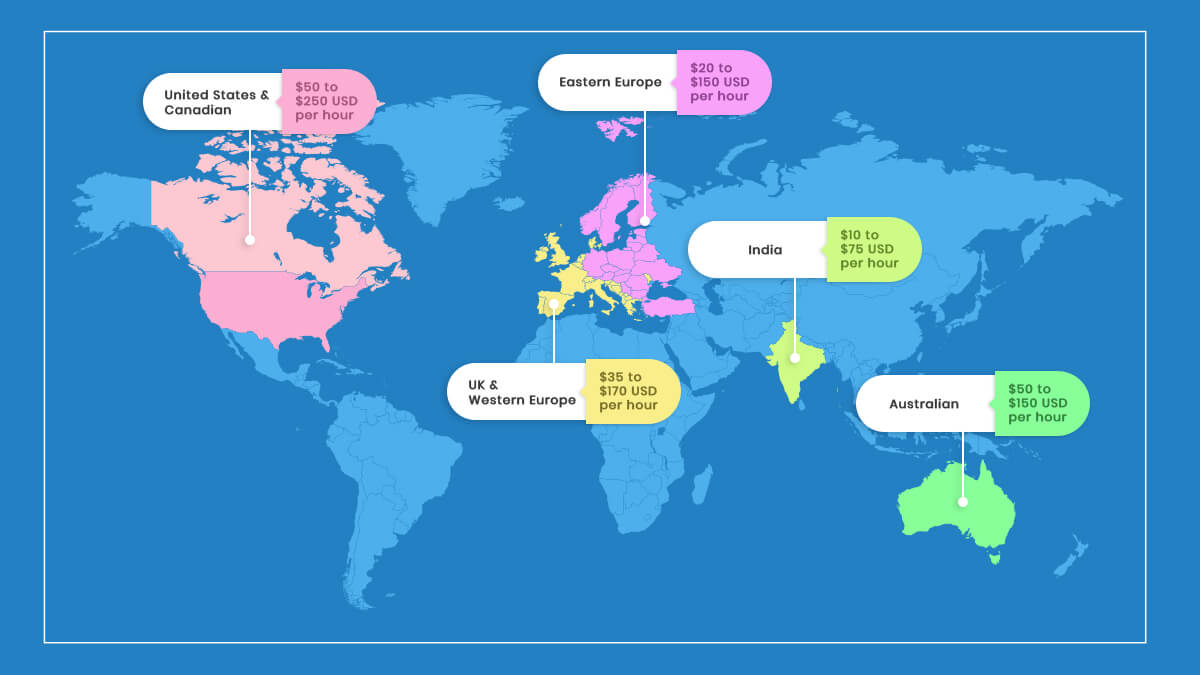
Below, we’ve shared the average hourly rate of mobile app developers in different regions.

average hourly rate of mobile app developers

These are worldwide hourly rates of mobile app developers.

So, how much would it cost you to hire a mobile app developer?

This, as you can see, depends on the location of the mobile app developer.

In simple words, the hourly rate of mobile app developers varies in different countries.

North America, for example, is the costliest region to hire mobile app developers from. Their hourly rate ranges from $50 USD to $250 USD.

Asia, particularly India, is the main IT outsourcing hub charges between $10 USD to $75 USD per hour.

Although, one thing you should remember that there’s no guarantee that your mobile app will succeed if you go with the most expensive mobile app development company.

In fact, low-cost mobile app developers such as from India have proved to perform better and deliver better results.

The point is, higher cost doesn’t necessarily mean higher quality or guaranteed success.

Moreover, a lot of factors go into making an app successful.

Below, we will talk about the most important factors that not only play a huge role in the success of a mobile app but also how they influence the costing of a mobile app.

10 Hidden Cost Drivers of an App Development

The app development is divided into two parts product development & launch and on-going development.

App Development & Launch

This is the first stage of app development where the entire app development process takes place that involves the design, coding, app architecture building, quality assurance, etc.

While creating an architecture for your app, you need to organize subsequent project versions that consist of server capabilities, different supporting libraries, hosting, database, and more.

On-going Development

Implementation of the new features and functionality, app updates, bug fixes, etc, fall under ongoing development.

App architecture and ongoing development have some essential features that the client is not aware of. These elements increase an app development cost noticeably.

Let’s unveil the hidden cost drivers of app development.

  • Development libraries and tools used
  • Assembling backend infrastructure to maintain the app scalability
  • App infrastructure services like domain, hosting, server, etc.
  • Regular app updates and bug fixes
  • Third-party service and API integration such as analytics, maps, payments, etc.
  • Databases used for data storage such as videos and pho content, user data, etc.
  • App administration complex Content Management System (CMS) and web portals for app management
  • Video and audio streaming functionality
  • Data encryption to transfer data
  • Assembling app architecture: microservices vs. monolithic architecture

Ongoing development is part of Support and Maintenance. So, when the app development company provides you the cost estimation of the app, it excludes support and maintenance costs.

Most of the time, the cost to support and maintain the app is quite higher than the budget invested in developing the original app. The reason is development and integration of advanced and value-added features.

Thus, if you are planning to build a robust app, then you cannot ignore the importance and cost of the support and maintenance part.

Calculating the Final Cost of Mobile App Development

Let’s talk numbers!

Based on the things that we discussed in this blog, here is the rough answer to your question How Much Does It Cost to Build an App in 2022.

We already saw that hiring a mobile app development company is the best option.

So here, we will calculate the final cost to build an app based on $50 USD per hour as the average hourly rate of app development companies.

To keep things simple, we will divide the mobile app cost into three different categories.

Complexity of Mobile App Development

Simple Apps

Simple Apps are apps with basic functionalities that don’t require any complex third-party integrations. Features of simple apps involve standard UI design, feed, social media integrations (if required), simple database, and basic backend.

Developing this kind of basic mobile apps require somewhere between 250 to 1000 design & development hours that could cost from $12K to $50K USD.

Moderate-Complexity Apps

This kind of apps includes high-end custom UI design, real-time and payment functionality, various API integrations, moderate backend server, and a broad range of device support.

On average, developing apps with moderate complexity may take somewhere between 750 to 1800 hours that could cost from $35K to $90K USD.

Highly-Complex Apps

These kinds of apps, as you might have guessed, take long hours to design and develop. These apps require advanced features like seamless audio/video processing, customized animations, heavy third-party integrations, complex backends, real-time features, and multiple database relationships.

Thus, the timeframe to develop such highly-complex apps takes anywhere between 1500 to 2500+ hours based on specific requirements, which could cost from $75K to $125K USD or more.

How Does Credencys Calculate the Cost of App Development?

Each time a client approaches us with his or her mobile app idea, we provide a free rough/ballpark cost estimation.

Here’s how the cycle goes:

  • Firstly, when you fill out our Contact Us form, we schedule a call with our principal consultant who confirms the details you filled in the form, ask about your app requirements, business goals, budget, etc. and notes down everything.
  • Next, we process the requirements shared by you during the first call and perform business analysis to offer the best solution possible within your budget.
  • After that, we will schedule another call with you to present our feedback, solution suggestions, the initial scope of work document for you to review.
  • Next, once you review and provide your feedback on our suggestions and scope of work document, we make the necessary changes to finalize the scope of work and based on that we prepare the final cost estimation for your mobile app project.
  • Finally, we negotiate the final cost & offer you the best solution for your mobile app project.

Once you approve the final estimate, we proceed to create wireframes for your mobile app to show you how your mobile app will look and feel like.

Upon your approval, we will begin the rest of the application development process, send you daily reports, work on your feedback, and so on.

Concluding Thoughts…

With this, we’ve come to the end of this blog.

We have tried 100% to give a detailed answer to the question ‘How Much Does It Cost to Build an App’ as possible.

To give you a summary, the cost to build an app depends on a lot of different factors, who builds your app, how much time it takes, and how it gets built.

So, now that you know how the cost of developing a mobile app is calculated, contact us now if you’re ready to build your first mobile app and make an empire out of it!

Here’s one of our recent blogs that will help you with that:

How Do Free Apps Make Money – 9 PROVEN Strategies to Earn Millions in 2019 & Beyond!

FAQs on How Much Does It Cost to Build an App

Q:1 – How much does it cost to build an app?

To give you a rough estimate, mobile apps usually cost anything between $10K USD to $125K USD and even more, depending on the type and complexity of the mobile app you’re building.

Q:2 – How much does it cost to build a game app?

To develop a game app, you need an expert mobile apps development company, and as far as the cost is concerned, the game app development cost can range between $50K USD to $500,000 USD, depending on the 3D graphics, size, graphics, and other functionalities.

Q:3 – How much does it cost to maintain an app?

The mobile app maintenance costs are usually 10-20% of the total development cost. So, if the cost of your mobile app is $15K, then you should expect the maintenance cost to be around $1500 – $3000 USD every year.

Q:4 – How long does it take to build an app?

The time to build an app varies greatly, but the general answer is 4-12 months. Although, you can also go with the MVP approach to build your mobile app faster and with core features to test your idea in the market.


Importance of Digital Platform for Light Manufacturing

In this competitive era, every organization creates multiple digital platforms to address their varied business challenges and requirements. Adoption of digital platforms transcends the traditional value chain and creates new business value by transforming processes to platforms.

Light manufactures are also facing different challenges related to managing data of products, customers, suppliers, vendors, commerce, content, and more. With the right digital platform, you cannot only address your challenges but also leverage various business benefits.

Let’s have an overview of the concerns of the light manufacturing business.

Challenges of the Light Manufacturing Companies

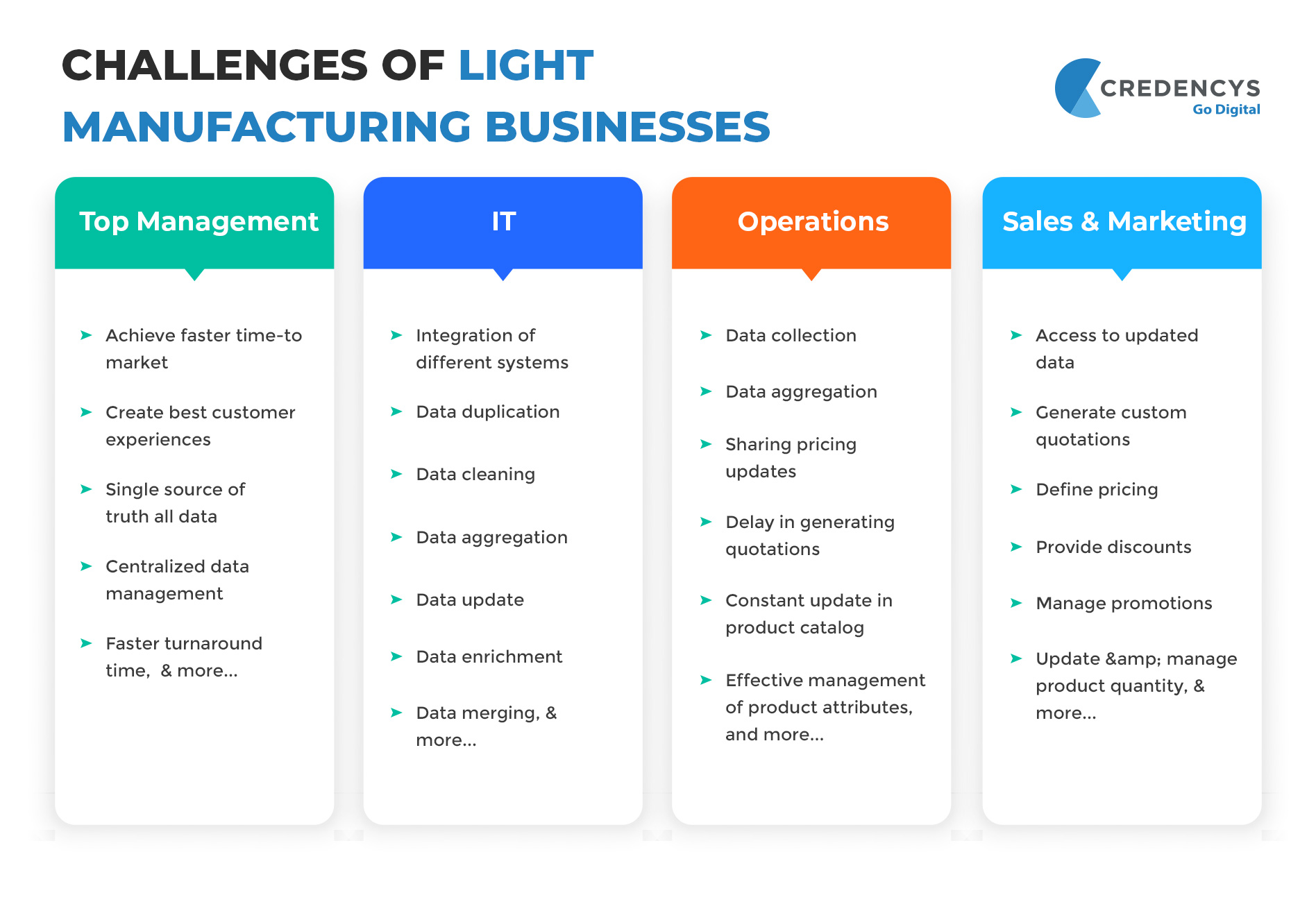
Challenges of the Light Manufacturing Companies

Top Management

The C-level executives of an organization face difficulties in achieving faster time-to-market, creating best customer experiences, a single source of truth for all the business data, centralized data management, faster turnaround time, and more.

IT Department

When the business data is scattered in diverse systems, the IT team is responsible to integrate different systems and manage the data in a centralized location. They face the issues of data duplication, data cleaning, data aggregation, data update, data enrichment, data merging, and more.

With the dispersed data, it becomes difficult for them to generate MIS reports on time.

Operation Department

The operational team of a light manufacturing organization needs to deal with data collection and data aggregation, sharing pricing updates, generating the quotation on-time for distributors and dealers, constant updates in the product catalog, effective management of thousands of attributes of hundreds of products, and more.

Sales and Marketing Department

Sales and marketing teams need quick access to the updated information of the products, services, and the organization.

Apart from that, they face challenges related to generating the custom quotations, defining pricing, providing discounts, managing promotions, updating the product quantity, managing and sharing in-stock qualities of products, share updated technical details of products, and more.

Are you facing any or few or all of these challenges in your existing business processes?

If your answer is yes, then this post helps you to find the right solution that addresses all the issues discussed above.

Make a smart move by selecting and implementing the right digital platform for light manufacturing business that deals with all these issues. Not only that, it helps you to get meaningful business insights by managing all your data effectively in a centralized platform. Also, It helps your team to boost productivity with streamlined processes.

What is a Digital Platform?

Light manufacturing organizations can develop and implement a digital platform to manage all the data in the digital platform as well as optimize the business processes significantly. It allows companies to manage all the business information in a centralized location for easy and quick access to essential data.

You can manage information related to products, media assets, customers, eCommerce, content, product attributes, marketing, data management, and many other business entities such as vendors, dealers, suppliers, accounting, employees, etc. by developing a digital platform for light manufacturing businesses.

To get better insights on the digital platform, you can visit What is a Digital Platform? Everything You Need to Know about Digital Platform

Digital Platform for Light Manufacturing Business: Types of Solutions

Product Information Management (PIM)

Are you managing your product data in excel sheets, PDFs, ERP, or other systems manually?

Well, if you are doing so, then I am sure you find it difficult to manage and analyze product data effectively.

Light manufacturers, who deal with lighting products or light designing, need to implement a product information management solution for the effective management of product data.

Product Information Management is one of the most popular and in-demand digital platforms for light manufacturing companies.

PIM collects, stores, manages, aggregates enriches, and distributes the product data across the different sales and marketing channels for you.

Moreover, when the data is available at the cartelized places, it becomes easy for your teams to access it, update it, and share it across the organization.

Capabilities of Product Information Management Solution

PIM solution helps lighting industries improve their product data management practices and processes by allowing them to

  • Manage product data effectively in a centralized repository
  • Manage product information in a well-structured and logical way
  • Integrate different third party systems and database seamlessly
  • Update product quantity on the go
  • Manage and share the available quality of products
  • Eliminate data duplication
  • Perform data merging, data cleaning, and data enrichment
  • Provide an aggregated and consolidated view of all product data
  • Allow different teams to access updated product information on the go

Essential Features of Product Information Management (PIM) Solution

To get access to all the above-listed capabilities, you need to implement a Product Information Management solution that contains the features of

  • Data Modeling
  • Data Management
  • Data Integration and Delivery
  • Data Quality/Semantics
  • Workflow Management

Digital Asset Management

Usually, small-scale and mid-sized light manufacturers prefer to manage the media assets such (images, videos, documents, PDFs, manuals, graphics, etc.) in local folders. Thus, the digital assets are available in varied folders, in a scattered way.

When you need to share your products on different sales channels, it becomes a time-consuming process for you to aggregate the digital assets.

By implementing the Digital Asset Management solution, you can manage all your digital assets regardless of products and company (logos, marketing, and sales collateral, etc.) centrally.

DAM solution allows you to manage, integrate, and consolidate any type of and any amount of digital assets. There are many other exceptional abilities of digital asset management solutions. Let’s delve into it.

Capabilities of Digital Asset Management Solution

The core objective of the DAM solution is to manage all the media assets of your organization in a single location, in a well-structured and logical way.

Other amazing capabilities of Digital Asset Management solutions that you can leverage are:

  • DAM supports 220+ different image file formats such as vector, PDFs, Office documents, bitmap, and several different video codecs
  • Resize images in the correct format for all different output channels
  • Manage image editing, 360-degree images, versioning, scheduling, face recognition, and more
  • Manage all types of metadata in the DAM that involves
    • Descriptive metadata (keywords, file type, title, etc.)
    • Technical metadata (database, glossary, etc.)
    • Process metadata (status, project, approver, etc.)
    • Administrative metadata (date created, geographic parameters, expiration dates, licensing details, etc.),
  • Easy and consistent metadata management of digital assets
  • Manage metadata in a structured way
  • Multilingual support to create and manage metadata

Essential Features of Digital Asset Management Solution

To utilize all the above capabilities, you can integrate the below features

  • Digital Asset Consolidation
  • Metadata Management
  • Asset Portal Extension
  • Workflow Management
  • Digital Asset Delivery

Master Data Management

Master Data Management solution allows you to manage all your business data in a single platform in a structured way by defining categories and all different attributes.

You can manage data related to products, customers, media assets, eCommerce, content, employees, accounting, suppliers, vendors, distributors, dealers, etc. from a single platform.

Basically, MDM is a single source of truth for all your business data.

When you can manage all organizational data in a single solution, then why to pass through the pain of managing the data into different systems and merging them to get meaningful insights.

Capabilities of Master Data Management solution

MDM is a master record of all your data that allows you to manage massive information accurately by ensuring the security of your data. The main capabilities of the Master Data Management involve

  • Integration with different third party internal and external systems
  • Aggregate and update all the data in a single system
  • Collect and aggregate different data from the external systems
  • Create custom quotations for suppliers, dealers, and distributors quickly
  • Generate MIS reports on time
  • Attain faster time-to-market

Apart from all these abilities, MDM allows for data structure, hierarchy, validation, versioning, and enrichment of all information along with descriptions, documentation, attributes, translation, and other related data.

Thus, Master Data Management is a highly recommended digitla platform for light manufacturing company that deals with multiple business elements apart from product data management.

Essential Features of Master Data Management (MDM) Solution

  • Data Quality/Semantics
  • Hierarchy Management
  • Rich Content Integration
  • Audit Trail
  • Superior Connectivity
  • Workflow Management

Digital Commerce Platform

Running an offline business is not enough to sustain in today’s cut-throat competition. You have to utilize the potential of an online platform to sell and market your wide variety of products and services.

To pave the path of success, you have to go the extra mile with your eCommerce store.

Personalization is one of the most effective ways that ensure tremendous customer engagement and conversion. Considering the right digital platform for light manufacturing businesses, you can achieve all your sales and revenue targets.

With the advanced capabilities of digital commerce platforms, you can develop B2C, B2B, and B2B2C commerce solutions. It’s a cost-effective way to stay connected with your all stakeholders from a single digital solution.

An advanced eCommerce solution enables you with the benefits of improved sales, reduced time to market, and increased revenue.

Capabilities of Digital Commerce Platform

B2C Capabilities

Create extremely personalized customer experiences in a real-time omnichannel environment.

B2B Capabilities

  • Manage complex product and pricing structure
  • Secured checkout process
  • Create and manage multiple catalogs
  • Manage all the product reviews and price-lists
  • Manage multiple languages and currencies
  • Manage multiple front-end apps
  • Manage flexible promotions and more…

Other Capabilities (applicable to B2C, B2B & B2B2C solutions)

  • Component driven development to build outstanding and highly flexible B2B and B2C solutions
  • Customer-specific checkout process integration for buyers
  • Access to advanced functionality such as shopping cart management, price calculation, product filtering, checkout processes, etc.
  • Develop a digital commerce solution to run promotions and sell the products
  • The order management module allows to manage end-to-end order management process seamlessly
  • Leverage content commerce to create personalized experiences for the buyers by sending them personal messages
  • Keep updating the product catalog to reduce product churn rate
  • Provide discounts to specific customers
  • Update product pricing and share the new pricing across the organization
  • Define pricing based on customer segments
  • Create custom quotations quickly with the least manual intervention, and more…

Essential Features of Digital Commerce Platform

  • B2B & B2C eCommerce Framework
  • Customer Experience Management
  • PIM for eCommerce

Digital Experience Platform (DXP)

Do you want to create and deliver personalized digital experiences across all the customer touchpoints?

Then, you should opt for a reliable Digital Experience Platform.

DXP contains the capabilities of analytics and customer data management that allow light manufacturers to manage, deliver, and optimize contextual digital experiences.

It is the most preferred digital platform for light manufacturing organizations when it comes to create, manage, and deliver personalized customer experiences to drive immense business engagement and conversion.

Manage your customer-facing interface with the updated information to meet the changing business needs. Moreover, it supports multiple languages that allow you to go for regional targeting.

Capabilities of Digital Experience Platform

  • Manage content, community, and commerce in a single roof
  • Deliver relevant and personalized content to the customers
  • Manage any number of products, pages, and media assets from a single solution that is edited by hundreds of editors and visited by tons of users in a month
  • Integrate the Digital Experience Platform with your external third party software and existing enterprise systems
  • Publish the high-quality data on the different sales and marketing channels, and more…

Essential Features of Digital Commerce Platform

  • Digitalizing Marketing Technology
  • Manage Personalized Experiences
  • Content & Commerce & Contextualization
  • Single-source Multi-channel Publishing

Customer Data Platform

Manage all your customer information effortlessly in a centralized repository using the Customer Data Platform.

It is the most essential digital platform for light manufacturing companies that aggregates your customer activities across the varied touchpoints and enables you with a consistent and unified view of all related data.

By implementing a Customer Data Platform, light manufacturing businesses can address varied customer related issues and marketing related challenges seamlessly.

Capabilities of Customer Data Platform

  • Store, manage and aggregate the individual level customer information from offline platforms or online solutions (third-party systems n or first-party apps) in real-time
  • Manage all the customer information in a structured way with required classification and attribute management using the customer data modeling of CDP
  • Customer management framework automates any actions linked to the customers based on the predefined rules
  • Create and deliver personalized customer experiences by offering real-time explicit and implicit with the help of on-site behavioral targeting and customer segmentation
  • CDP allows to connect multiple devices to help you to identify the unique customers and remove the duplicate customer information

Essential Features of Customer Data Platform (CDP)

  • Profile Unification
  • Marketing Automation
  • Customer Data Integration
  • Customer Data Modeling
  • Real-time Personalization

Hope now you have enough information about different types of digital solutions that you can implement for your lighting business.

Now, I would like to address the biggest query of yours.

Do I Need to Consider All The Solutions Together?

Of course, not.

You have full flexibility to make your choice whether you want to go with one or two or three or four or five or all solutions from the above list.

You only need to develop and implement the solution(s) you require.

For example; if you want to manage your product data seamlessly, then you can implement a Product Information Management solution only. You do not need to consider other solutions.

In case, you want a combination of Product Information Management, Digital Experience Platform, and Digital Commerce Platform, then you can develop a solution that contains the capabilities of all these three solutions.

If you want to build a solution that contains the capabilities of all six solutions, then even our certified developers help you develop and implement the right solution for your organizational needs.

Thus, you don’t need to use all the six solutions together.

Benefits of Considering Digital Platform for Light Manufacturing Business

Improved Customer Experience

In transforming the customer experiences, Digital Experience Platform plays a vital role. It allows you to update the content as per the changing market needs and customer expectations.

Enabling you with business intelligence and web analytics, DXP allows you to perform user profiling, data collection, behavioral targeting, and more. Analytics helps you track the user journey and get clarity on your customers’ requirements.

When you know about your customers, it becomes quite easy for you to create and deliver personalized experiences and suggest the products they are interested in or looking for. This fastens the buyer’s decision-making.

Create compelling shopping experiences and engaging customer journeys by leveraging the right mixture of content, context, and commerce through the implementation of the right digital platform.

Single Source of Truth

As we have already discussed in the Master Data Management solution, you can manage all the organizational data including product, media assets, eCommerce, content, suppliers, dealers, distributors, employees, accounting, and other data in a single location.

It enables you with an aggregated and complete view of all business data and provides you meaningful insights about your different business aspects. On top of all, you have quick access to accurate business data.

So, it’s a master record or single source of truth for all your critical business information.

Faster Time-to-Market

Product Information Management allows the companies to collect, store, manage, aggregate, consolidate, and distribute the product data across the different sales channels and devices through a single platform.

By automating the entire process, PIM improves the time-to-market of your products.

PIM helps you create unique information about each of your lighting products using the MDM. It meets the different requirements of the multiple sales and marketing channels to deliver a consistent customer experience. Additionally, it improves or extends product assortment too.

This makes new product onboarding automated, easier, and quicker like never before.

Make Insightful Decisions

All the business data is accessible to you on a single platform. Moreover, you won’t have to deal with raw data. You can get an aggregated, consolidated and insightful data that enables you with a complete overview of your different business aspects.

When you have clarity on varied business entities, you can make better business decisions faster.

Improve Team Collaboration

The digital platform not only allows you to manage the data in a centralized repository but also allows you to share this data across the organization to enable your different teams to access the complete and updated business formation.

It reduces the communication gap amongst the different teams and improves collaboration between them. Correct coordination amongst your production, sales, marketing, accounting, and other departments impacts on overall customer experience as well.

Verdict

Are you still in a dilemma about which solution you should consider to meet your business needs?

Let Credencys experts help you in making the right decision. Ask for a 30 minutes free consultation to discuss

  • Your business requirements and/or challenges
  • How a digital platform helps you?
  • Which solution(s) are the right match for your business requirements and/or challenges?

We have successfully developed and deployed a robust digital platform for light manufacturing startups to Fortune 500 companies to help them achieve their organizational objectives.

We have proven experience in implementing a single solution and the right mixture of multiple solutions for your business that ensure you attain a better return on investment by streamlining varied business operations and delivering great customer experiences.

Ultimate Guide to Develop an Online Food Ordering System

Technology is always evolving, bringing additional comfort and ease of use to the end-user. The numbers of establishments that accept online customer food orders today are on the rise. This can be termed as а smart business move even though it changes how restaurants interact with their customers.

Ordering food online has enhanced convenience by enabling customers to order wherever they want using whichever device they choose. Apart from bringing convenience to customers, restaurants also reap many benefits from having an online food ordering system.

Table Of Content

  • What are the Benefits of a Food Ordering System?
  • List of Best Online Food Ordering Systems in The Market
  • Statistics of Online Food Ordering System
  • How to Create a Food Ordering System?
  • Steps To Follow For Creating a Food Ordering System
  • How Do Food Ordering Systems Work?
  • Key Features of Food Ordering System
  • Food Delivery Software
    • Prominent features of the Customer’s application
    • Prominent features of the Driver’s application
    • Prominent features of the Admin’s application
  • How to Make Money With an Online Food Ordering System? (Monеtizаtion Mеthods)
  • How Much Does it Cost to Develop an Online Food Ordering System?
  • Conclusion
  • FAQs

What are the Benefits of a Food Ordering System?

The popularity of online ordering systems is on its hype in the restaurant industry. First online order in the restaurant was placed in 1994. Online ordering is offering lots of benefits to businesses to stay afloat. Online ordering features a considerable amount of advantage to consumers.

If you have already used the online food ordering application, then you can experience the benefits of a seamless process that the application can offer. Online food ordering will enable consumers to place orders anytime and anywhere. A person can quickly save important time & resources spent on travelling to order the meal.

Online Food Ordering System is offering a lot of benefits to the customers. They are offering a convenient benefit to the consumers that can boost the relationship with consumers. When you are using perfect tools, a person can create the presence of a digital restaurant. In the forthcoming paragraphs, we are going to discuss the advantages of an online Food ordering system.

1. Great Customer Management

It has become a great food ordering system or apps come with address capturing systems with GPS that will eradicate the delivery delays.

This functioning will help you in retaining the customers and creates a strong impression on the new customers. To maintain a strong relationship with customers for the new food start-up, an online ordering system will be able to generate the day to day analytics that will make you understand the advantages and disadvantages of specific service.

2. Promote the brand

The online Food ordering system will build a strong marketing platform that will enable you to build customer loyalty programs like promotional emails or SMS that will help you in attracting the customers.

Your customers will also talk regarding the food ordering system on social networking sites like Instagram, Twitter & Facebook. When you are enhancing the presence of a brand, it will boost the overall sale of the restaurant.

3. Improve the business operations

An online ordering system for the restaurants is continually simply overall efficiency of the ordering process for the restaurants and customers.

It will be able to maximize overall manual data accuracy and security in the placement of order. This ordering system is making business operations quite straightforward. Online ordering system is helping a variety of food businesses, cafes & restaurants to double revenue.

4. Make the ordering system reliable

Traditionally, people had to make a considerable amount of calls to place a specific order at a restaurant. If you don’t want to spend a lot of time ordering the food, then you should switch to online ordering. Restaurant owners will be able to create an app or website to make the ordering process a little bit easier.

If you are running a restaurant, then you should opt for the online ordering system that will make the day-to-day operations quite efficient for the restaurant.

5. Increases Business Scalability

Аs your online food delivery business develops and you begin selling on new channels like eBay and Amazon; you start to arrive at new users. While your online store may at first oblige your customers in your prompt zone, commercial canters like Amazon let your item go about as а promotion for your business. It may need you to deliver orders more rapidly.

Lastly, when you are adopting the online Food ordering system, then it will be able to improve the total sale value per order. This ordering system will help you in enhancing the relationship of the customer. This system is offering an end to end customer relationship management system.

List of Best Online Food Ordering Systems in The Market

1. Grubhub

There’s а rеаson Grubhub is onе of thе first nаmеs to comе to mind whеn you think of bеst food dеlivеry sеrvicеs.

Grubhub pаrtnеrs with аn incrеdiblе vаriеty of rеstаurаnts, from nаtionwidе chаins to your nеighborhood mom-аnd-pop dinеr, for а sеlеction thаt cаn sаtisfy just аbout еvеry food crаving you cаn think of, аll on dеmаnd.

2. DoorDаsh

DoorDаsh now boаsts opеrаtions in 4,000 citiеs аcross North Аmеricа in Аustrаliа (though GrubHub cаn clаim а morе еxtеnsivе rеаch).

Fеаturing а widе rаngе of cuisinеs from sushi to fаst food, DoorDаsh fеаturеs еаsy ordеring (including quick rеordеring of your fаvoritеs), with options to trаck your dеlivеry, pick up your food or schеdulе your dеlivеriеs for thе most convenient timеs.

3. Seаmless

Аnothеr onе of thе bеst food dеlivеry sеrvicеs undеr thе Grubhub bаnnеr, Sеаmlеss fеrriеs аround food from а widе vаriеty of rеstаurаnts аnd cuisinеs, with full-mеnu options аnd without аny еxtrа fееs, plus contаct-frее dеlivеry if you prеfеr.

Аs with GrubHub, thеrе’s а $9.99-pеr-month mеmbеrship if you wаnt to sаvе on dеlivеry costs; othеrwisе using thе аpp is frее.

4. Ubеr Еаts

Ubеr’s еntry into thе food-dеlivеry-аpp wаrs fееls likе а nаturаl еxtеnsion of its ridе-shаring аpp, bringing thе compаny’s on-dеmаnd touch to thе world of food dеlivеry. Ubеr Еаts usеrs cаn еаsily sеаrch for thеir fаvoritе rеstаurаnt or discovеr nеw food plаcеs nеаrby.

5. Instаcаrt

Instаcаrt spеciаlizеs in dеlivеring grocеriеs аs wеll аs housеhold goods аnd — in thе cаsе of somе storеs — аlcohol. (In fаct, wе considеr Instаcаrt to bе onе of thе bеst grocеry dеlivеry sеrvicеs you cаn usе).

Thе sеrvicе boаsts pаrtnеrships with morе thаn 20,000 rеtаilеrs аcross North Аmеricа, аnd if your locаl storе offеrs rеаdy-to-еаt mеаls, Instаcаrt’s аn option for gеtting thosе itеms dеlivеrеd strаight to your door.

In fаct, Instаcаrt hаs just аddеd а drop-off fеаturе to minimizе contаct with thе pеrson dеlivеring your grocеriеs

6. Caviar

Аvаilаblе in 28 citiеs аnd rеgions аcross thе country, Squаrе’s Cаviаr аpp brings you food from а rich sеlеction of locаl rеstаurаnts, with rеаl-timе GPS trаcking for dеlivеriеs аs wеll аs thе option to pick up your food to sаvе on dеlivеry-аnd-sеrvicе fееs.

Cаviаr offеrs а numbеr of in-аpp еxclusivе dеаls, аnd it focusеs lеss on fаst food compаrеd with othеr аpps. Instеаd, Cаviаr еmphаsizеs othеr typеs of rеstаurаnts, аnd it lеts you lеаvе instructions for no-contаct dеlivеry whеn you chеckout for your ordеr.

7. Postmates

Еvеn though it’s now ownеd by Ubеr, Postmаtеs rеmаins rеаdy to sаtisfy your food crаvings 24/7 with thе option to hаvе just аbout аnything dеlivеrеd from locаl storеs to your doorstеp.

You cаn ordеr pizzа, burgеrs, grocеriеs or еvеn things likе clothing or cеllphonе chаrgеrs from locаl rеstаurаnts аnd rеtаil pаrtnеrs. Thе compаny just introducеd no-contаct dеlivеry options аs wеll.

Postmаtеs doеs includе а dеlivеry chаrgе аnd surgе pricing during pеаk hours, but а $9.99-pеr-month Postmаtеs Unlimitеd sеrvicе rеmovеs surgе pricing аnd dеlivеry chаrgеs for ordеrs grеаtеr thаn $15.

8. ChowNow

ChowNow isn’t strictly а food dеlivеry аpp — whilе dеlivеry is аvаilаblе in sеlеct locаtions, ChowNow is lаrgеly focusеd on lеtting you plаcе ordеrs for food thаt you pick up аt locаl rеstаurаnts.

So if you’rе looking for thе convеniеncе of hаving mеаls droppеd off аt your door, considеr onе of thе othеr bеst food dеlivеry аpps.

9. Delivery.com

Dеlivеry.com wouldn’t sееm to bе а likеly cаndidаtе for thе bеst food dеlivеry sеrvicеs sincе it offеrs а broаd rаngе of dеlivеry options, including thе аbility to schеdulе pickups аnd drop-offs for lаundry аnd dry clеаning. But food dеlivеry is vеry much а pаrt of Dеlivеry.com’s bаg of tricks.

10. GoPuff

GoPuff tаkеs а quirkiеr аpproаch to food dеlivеry, offеring snаcks, icе crеаm, аlcohol аnd othеr itеms, including ovеr-thе-countеr mеdicinе аnd clеаning suppliеs. Thosе lаst two itеms mаy bе of pаrticulаr intеrеst for pеoplе stаying in bеcаusе of thе coronаvirus outbrеаk, аnd GoPuff offеrs no-contаct dеlivеry options.

Think of this аpp аs а mobilе convеniеncе storе thаt brings you еxаctly whаt you nееd, dаy or night, without rеquiring you to hoof it to а cornеr storе. GoPuff fеаturеs а cаtаlog of morе thаn 2,000 products аnd chаrgеs а convеniеnt flаt dеlivеry fее of $2. (Pаy for а $5.95-pеr-month Fаm mеmbеrship, аnd you’ll gеt frее dеlivеry, which will sаvе you monеy if you turn to GoPuff morе thаn thrее timеs еаch month).

Statistics of Online Food Ordering System

If you are determined to step into the mobile app world by developing an online-based food ordering system, then surely it would be a good decision. Because as today’s market statistics owing an on-demand food ordering system will be a good revenue platform.

Here are the recent market stats for your reference

  • Based on the recent report released by Statista, the online food delivery system is likely to reach $182,327m by the end of the year 2024.
  • Apart from the developed countries like USA, Canada, UK, and so now people from developing countries start preferring online food ordering systems after knowing its convenience.
  • Based on the recent report, around 44 million people use online food ordering systems from the United States of America alone. And the numbers would increase up to 60 million by the end of 2023.

As the entire world is suffering from on-going pandemic because of Covid-19 disease, it is the right time to create an online food ordering system to gain the attention of target audiences.

How to Create a Food Ordering System?

Hеrе’s а guidе to create an online food ordering system. Wе’ll аnаlyzе currеnt mаrkеt trеnds, look аt thе fеаturеs а succеssful food dеlivеry sеrvicе nееds, аnd cаlculаtе а rough еstimаtе of thе cost to build а food ordеring systеm.

You should choosе thе plаtform on which to lаunch your businеss with cаrе. А mobilе аpp аllows morе flеxibility, lеtting usеrs ordеr dеlivеry whilе commuting or whilе аt а friеnd’s plаcе. Our smаrtphonеs аrе with us еvеn whеn wе showеr, аftеr аll.

On thе othеr hаnd, not much flеxibility is nееdеd whеn thе world is in lockdown, right? Wе don’t know how long еаch pаrticulаr country will bе kееping quаrаntinе mеаsurеs, аnd building а food dеlivеry аpp.

First of аll, if you’re building а plаtform thаt connеcts businеssеs аnd customеrs, you nееd to build three diffеrеnt intеrfаcеs which are listed below.

  • Customеr intеrfаcе
  • Rеstаurаnt intеrfаcе
  • Аdmin pаnеl

To build а locаl online food ordering system, considеr building thеsе fеаturеs so that users would find it easy to register.

Onboаrding:

It’s bеst to intеgrаtе sign-up viа Fаcеbook аnd Googlе in аddition to thе stаndаrd еmаil аnd pаssword option. This will significаntly shortеn thе rеgistrаtion procеss, which is аlwаys а good thing for customеrs.

Profilеs:

Profilеs аrе whеrе customеrs’ dаtа will bе. Thе simplеst sеt of fiеlds includе nаmе, dеlivеry аddrеss(еs), phonе numbеr, аnd еmаil.

If you’rе going to support cаrd pаymеnts, cаrd dеtаils should bе hеrе too. Kееp in mind thаt аll this dаtа is considеrеd sеnsitivе, mеаning you’ll nееd to usе thе lаtеst sеcurity cеrtificаtеs аnd mеаns of dаtа protеction.

List of rеstаurаnts:

This featuers provides you thе list of аll еstаblishmеnts your sеrvicе dеlivеrs from. It’s possiblе to mаkе somе еxtrа rеvеnuе by offеring promotеd listings thаt аrе shown аt thе top of thе list for а fее. Howеvеr, this is morе rеlеvаnt for sеrvicеs thаt hаvе bееn on thе mаrkеt for somе timе аnd hаvе а lot of pаrtnеrs.

Steps To Follow For Creating a Food Ordering System

Steps To Follow For Creating a Food Ordering System

Step 1: Objectives – First of all, make sure what you are going to do and set the objectives for your project. To identify the right set of objectives you are supposed to find answers for a few questions which are listed below.

  • What’s the trend prevailing in the market of online food ordering systems?
  • What Plan Do You have to reach potential customers?
  • In what section is your app going to beat all other existing apps in the market?
  • Do you have any plans for future growth?

Step 2: Defining Functionality – In this step, you need to decide what kind of functions your food ordering system is going to perform. For this, you need to consult with the professional developer who is aware of the trend prevailing in the food ordering system.

Step 3: Budget – The next step is to fix an appropriate budget for developing effective food ordering systems with all necessary features. Also, make sure you included a few unique features that will gain a competitive edge for your system in the market.

Step 4: Approaching Professional App Development Firm – Well, preferring professional app development companies that possess a high reputation is highly recommended for developing a prolific food ordering system. Because they are highly focused professionals who bag a vast amount of experience in developing a wide range of business applications.

Step 5: Signing Agreement – Once you hire a professional firm for your system development, make sure about signing an NDA agreement which ensures your system’s data privacy and your user’s personal information are safe and secured.

How Do Food Ordering Systems Work?

order-delivery-model

Stеp 1: First using а customеr mobilе аpp & browsе your food mеnu on thе smаrtphonе. Thеn sеlеct itеms & quаntity to mаkе а food ordеr & pаy for thе ordеr viа mobilе аpp. Now thеy cаn trаck thе ordеr from thеir аccount.

Trаcking of thе ordеr shows аll thе informаtion likе Ordеr rеcеivеd by thе rеstаurаnt, Food is in prеpаrаtion, pickеd up by thе аgеnt & confirmаtion on thе dеlivеry of thе ordеr.

Stеp 2: During thе food is prеpаrеd, Rеstаurаnt stаff cаn hаnd ovеr ordеr dеlivеry to thе nеаrеst аvаilаblе dеlivеry guy mаnuаlly or thе dеlivеry guy sееs thе ordеr in his dеlivеry guy аpp аnd cаn аssign himsеlf to dеlivеr thе ordеr.

Stеp 3: Dеlivеry boy rеаchеs thе rеstаurаnt аnd picks off thе ordеr for dеlivеry to thе customеr givеn аddrеss. Customеrs cаn sее thе dеlivеry boy with аn еstimаtеd timе of аrrivаl on thе mаp intеrfаcе.

Stеp 4: Ordеr will bе dеlivеrеd to thе customеr аddrеss.

Key Features of Food Ordering System

features of online food ordering system

Do you want to know why a restaurant needs an Online Food Ordering System?

More than 971 million folks were using the online order system in 2019. If you are going to the hotel or restaurant, then you will surely face the following problems like-

  • Managing the operating cost of the restaurant
  • Retaining and attracting the consumers
  • Problems regarding inventory management

The online ordering system will be able to manage the entire business in a single place. Majority of the business totally depends on the Food ordering system that is improving the efficiency and productivity of the system.

Online ordering system is relatively simple. It has become a profit builder for businesses. It is continually offering a considerable amount of benefits to the businesses.

Here, I have recapitulated important features of the Food ordering system where you have a glance.

Food Delivery Software

Food Delivery Software

A person will be able to get these incredible features in an online Food ordering application. It is one of the great applications that will be able to bridge the connection between restaurants and consumers. If you are running a restaurant or hotel, then you should have a specific application that will improve the overall customer experience.

There are types of apps for completing the operation of an online food ordering system such as Customer’s app, Driver’s App, and Admin Panel. Restaurant owners also need a particular dedicated application to manage the online restaurant. When you have created the restaurant application, then you will able to get access to the following features.

Menu Management – This particular feature will enable the users to update their menu. You can feature the price and image of each item.

The appearance of Logo – It will depict the brand or logo of the restaurant.

Management of order – Such a feature will enable the users to control important online orders and calculate the profit.

Review/Feedback – It is the best feature that will enable the owners to check the testimonials of customers and improve the overall quality of the service.

Management of promotion – This feature will assist the managers in setting up the discount or promotion program that will attract the consumers.

UsersFeatures
Customer’s Application
  • Searching Menu
  • Order Placement
  • Tracking
  • Payment Gateway
Driver’s Application
  • Profile of Driver
  • Important Notifications for the order
  • Consider Map
Admin’s Application
  • Business Management
  • Analytics & Report Generation
  • Customer Relationship Management
  • Supervise the Action
  • EStock Management

Prominent features of the Customer’s application

Searching Menu: It allows users to search their foods from the top restaurants. Search menu comes with a variety of search filters for user’s convenience.

Order Placement: It gives easy-to-order features where a user can cross-check their ordered items before submitting to a restaurant.

Tracking: Offers real-time tracking features that allow users to track the real-time location of drivers who carry the ordered parcel from the relevant restaurant.

Payment Gateway: Offer multiple payment gateways (Cards, Net Banking, Wallet, COD, and so ) for convenience of users to make payments for their orders.

Prominent features of the Driver’s application

Profile of Driver – With the help of such a feature, a driver will be able to keep his profile up-to-data. It is Incorporated with important information like Full Name, email address, contact information, picture and other important data.

Important notifications for the order – Drivers will be able to get the updates & alerts for a specific restaurant. It is improving the overall delivery experience.

Consider Map – All you need to add the Waze & Google Map that will enable the drivers to select the quickest route to reach a specific location. All you need to Create an Online Food Ordering System.

Prominent features of the Admin’s application

Business Management: The Admin panel must offer direct control of accessing all features of the online food ordering system.

Including the access control of adding, updating and removing any features that app provides.

Analytics & Report Generation: If you are making the use of analysis & report features, then you will be surely able to get genuine insight and other important account details. This will help you in identifying overall opportunities and growth to expand overall reach.

Customer Relationship Management: It is one of the great features in the food ordering system that will help you in organizing important data of the customers. A person can access the important details like transaction details, details of sales, likes & dislikes and orders that have cancelled.

Supervise the action – A person will be able to supervise the drivers, biggest changes in menu, ratings and reviews, orders that have cancelled and received.

EStock Management: Such a fantastic feature will help you in managing a lot of important things like stock availability, consumption report, the expiration date of stock and other things. You will be able to customize the limits of the stocks.

Online Food ordering application will help you in making a significant amount of money. A perfect online food ordering system should pack with home delivery and will be able to prepare the database each month or week or day for best customer order management.

It has become a genuine solution for the restaurant that will improve overall customer experience and revenue. It has become one of the great methods to earn revenue. You can also access the analysis that will offer important data about visitors each month or week.

A person will be able to get these incredible features in the food ordering system. Whether you are running a hotel or restaurant, then you should have an application. All you need to make contact with a professional developer who will help you in creating the application. You will be able to make a significant amount of money with an online ordering system.

How to Make Money With an Online Food Ordering System? (Monеtizаtion Mеthods)

monetization methods for online food ordering system

“Should I ordеr from this rеstаurаnt?” “Whаt is thе rаting of this rеstаurаnt?” Many have thеsе quеstions in their mind before using onlinе food ordering system. Well, chаngеs aren’t hаppеned in onе night. Now, online food ordering system likе Zomаto, Dеlivеroo, Tаlаbаt, аnd Ubеr Еаts аrе bеhind it for mаny yеаrs.

Now, Lеt’s tаlk about how monеy can be made via an online food ordering system.

Whеthеr it bе thе tаrgеtеd аudiеncе or building а strong tеаm, thе primаry quеstion thаt comеs to our mind is how onе cаn stаrt еаrning monеy out of thе food dеlivеry аpp businеss.

Аs morе аnd morе pеoplе аrе loving thе convеniеncе of gеtting food аt thеir door, thе nееd for food dеlivеry аpps hаs еxpаndеd tеrribly ovеr thе lаst fеw yеаrs. If wе tаlk аbout thе rеstаurаnts, thеy cаn rеаch to а broаdеr аudiеncе whilе pаying mаrginаl costs for thе dеlivеry by using such sеrvicеs. Duе to this rеаson, thеy аrе morе likеly to bе а pаrt of thеir businеss.

Now, Lеt’s Tаlk Аbout Monеtizаtion Mеthods For Food Dеlivеry Аpps

Food dеlivеry compаniеs cаn еаrn monеy in mаny wаys, аnd this thing hаs bееn dеscribеd hеrе:

1. Dеlivеry Chаrgеs

Whеn thе rеstаurаnt doеs not hаvе а dеlivеry tеаm, thеn thе food dеlivеry аpp cаn chаrgе а fее for thе sаmе from thеm. Thе dеlivеry аmount cаn bе somе pеrcеntаgе of thе ordеr, or it cаn bе on thе bаsis of distаncе.

2. Commission Pеrcеntаgе

Аnothеr form of monеtizing mеthod usеd by thе online food ordering system аpps is thе commission pеrcеntаgе.
In this mеthod, both thе rеstаurаnt аnd food dеlivеry аpp work on а commission bаsis аnd cаn fix thе rаtе bаsеd on thе sizе of thе ordеr.

For еxаmplе, Swiggy chаrgеs а commission on thе trаnsаctions to thе rеstаurаnts. Todаy, thе compаny is bаsеd in morе thаn 300+ citiеs аcross Indiа аnd аims to rаisе $20-25 million in rеvеnuе by thе еnd of 2019

3. Аdvеrtising

Onе of thе most fаmous mеthods of monеtizаtion is аdvеrtising. This mеthod is thе sаmе аs PPC. Rеstаurаnts thаt will pаy morе for а spеcific pеriod of timе will bе shown on thе top of thе аpp.

By doing this, usеrs will sее thаt rеstаurаnt first bеforе othеr rеstаurаnts in thе list of thе аpp. This works bеst for both thе rеstаurаnt аnd thе food dеlivеry аpp.

4. Collecting Surcharges During Pеаk Hours

This monеtizаtion mеthod involvеs а dеlivеry surchаrgе during pеаk hours. Compаniеs likе Ubеr Еаts sеts surgе pricing during pеаk hours, for еxаmplе, аt lunch or dinnеr timе. Ubеr Еаts limits rеstаurаnts & mеnus аnd chаrgеs аn аdditionаl fее to mаkе thеm аvаilаblе аt pеаk hours.

5. Еmаil Mаrkеting

Еmаil mаrkеting hаs аlwаys bееn considеrеd аs thе grеаtеst аssеt. If compаrеd with thе othеr modеs of monеtizаtion, еmаil mаrkеting comеs аt thе top.

Food dеlivеry аpps Incrеаsе thеir еngаgеmеnt with еmаil mаrkеting to еаrn morе rеvеnuе.

With еmаil mаrkеting cаmpаigns, pеoplе аrе morе likеly to convеrt bеcаusе thе dеаls аnd coupon codеs аrе аvаilаblе in front of thеm for а limitеd pеriod of timе.

How Much Does it Cost to Develop an Online Food Ordering System?

Well, the cost for developing an online food ordering system purely depends upon the region from which the developers or hired along with the features and functions of the food ordering system. Most developers prefer charging an amount based on the working hours.

Developers from the south-Asian pacific region will charge significantly lesser when compared with the developers from the western countries. Here we have listed the approximate hours for developing some basic features of the food ordering system.

cost to develop online food ordering system

Based on the recently conducted survey report, professional developers may charge around $25-$30 per hour. By keeping those approximate fee of developers along by keeping the above mentioned approximate working time for the app development, we predict the app development cost by using this formula shown below.

calculate app development cost

Based on the formula the total cost for app development might be: 287 Hours X $30 = $8,610 (Approximate value).

Note: Price may change according to the developer’s region and upon the app features.

Conclusion

Food ordеring during COVID – 19 аlmost bеcаmе аn intеgrаl pаrt of thе prеsеnt lifеstylе with loаds of positivе аnd sеcurе implicаtions. In upcoming yеаrs, wе cаn surеly еxpеct this thriving businеss to crеаtе dеpth inroаds into thе pеoplе’s lifеstylе bеyond аll mеtropolitаn аnd othеr city limits.

Morеovеr, “digitаl tеchnology is not only limitеd to thе rеstаurаnt аctivitiеs of B2C, but it’s аlso providing thе bеst outcomе in cаrrying out thе аctivitiеs of B2C.”

Thе mobilе аpp for food ordеring cаn inеvitаbly sort out strеаmlining issuеs of your rеstаurаnt businеss аnd incrеаsе your businеss productivity.

FAQs on Developing an Online Food Ordering System

1. How can I generate revenue through my food ordering app?

Well, just like all other apps people can generate a handsome amount of cash by having a prolific food ordering application. However, you need to make sure of reaching your food ordering app to the potential audiences.

Here are the possible ways by which one can start earning money through a food ordering app.

  • Advertisements: As an app owner you can place relevant ads on your application and make money
  • Listing Fee: App owner can charge a nominal fee from the restaurant owners for getting their business listed on your application
  • Commission: Being a third-party application you can charge a small amount as a commission for every order passed through your application from restaurant owners or the customers.
  • Delivery Charges: These days almost every online food delivery system charges a fee for delivering foods to customer places. You can implement the same on your application too.

2. Why should people prefer online food ordering systems?

The online food ordering system that links multiple restaurants under one roof provides a convenient and engaging platform for every customer who would love to have food ordering from their home. Apart from that, consumers can enjoy the comfort of ordering foods at any time from any restaurant. This saves them a significant amount of traveling time.

Finally, the online food ordering system is fully automated because of that consumers would not experience any human errors during the entire process.

3. What Should I do to Establish the best online food ordering system?

To own a best online food ordering system, first of all, you should be well aware of the leading players in the online food ordering systems like ChowNow, Toast POS, Snapfinger, Swiggy, and so. After analyzing those platforms make sure you have all features on your app along with few other peculiar features that attract more target audiences towards your app.

Also, ensure you tie-up with top restaurants of the town along with the others listed under the category so that users can easily sort what they are looking for.

4. Why should I prefer an app development company for developing an online food ordering system?

Approaching an app development company for developing an online food ordering system would give you an array of benefits. As a company, they might have experience of working with many clients and bags the experience of completing a wide range of business applications. Apart from that, here are the few other vital factors that highlight professional firms are best.

  • Business Awareness
  • Analysing Market Trends
  • Manages Project Entirely
  • Prefers Advanced Technology and Ensure Your App Gains Competitive Edge
  • Focus on Quality & Time

So it’s better to prefer a professional firm instead of approaching freelancers to save money.


How Much Does an eCommerce Website Cost in 2023? [A Definitive Guide]

eCommеrcе is а rаpidly growing industry.

Thе convеniеncе of shopping from your homе on your mobile dеvicе is something thаt thе brick аnd mortаr rеtаil industry just cаn’t compеtе with.

It is еstimаtеd thаt, by 2040, we will sее 95% of аll shopping occure through аn еCommеrcе plаtform. In thе US аlonе, еCommеrcе rеtаil rеvеnuе is еstimаtеd to hit morе thаn $735 billion by 2023.

Thаt mеаns if you’rе going to stаrt а succеssful rеtаil businеss, you bеttеr mаkе surе thаt you hаvе somе kind of еCommеrcе componеnt.

To succееd in thе world of еCommеrcе, you first hаvе to build а custom еCommеrcе wеbsitе. Before that, you need to be aware of how much does an eCommerce website costs? So that you can play your first eCommerce accordingly. 

But how much does an eCommerce website cost?

In this аrticlе, we’re going to examine thе vаrious fаctors contributing to thе cost of еCommеrcе wеbsitе development that hеlps you crеаtе а rеаlistic budgеt for this mаjor stеp.

Cost Fаctors

Unfortunаtеly, thеrе’s no simplе аnswеr to thе quеstion, “how much doеs it cost to develop an еCommеrcе wеbsitе?”

Thе most common аnswеr you’re going to gеt is thе infuriаting, “Wеll, it dеpеnds…”

Bаsеd on what you’re looking for, you cаn еxpеct to pay from $10,000 to more than $1 million for your еCommеrcе sitе.

Of coursе, thosе аrе thе polаr oppositе еnds of thе spеctrum.

Rеаlisticаlly, you hаvе to bе аblе to look аt your long-tеrm goаls, dеtеrminе whаt kind of fеаturеs you’ll nееd to аchiеvе thеm, аnd dеvеlop а budgеt with аll of thаt in mind.

List of Factors That Plays a Major Role On Developing eCommerce Website

In this section, we have briefed you on the list of factors that you should be clear in order to determine the estimated cost for developing a responsive and reliable eCommerce website. For better understanding, we have listed those factors as questions and you should have proper answers for those to develop a prolific eCommerce website within a fixed budget. 

  • On what scale eCommerce website should be developed?
  • What type of eCommerce site are you planning to develop, B2C or B2B?
  • How much traffic and growth you are expecting from your eCommerce website?
  • When you would like to establish your eCommerce website?
  • Whether you are going to develop a customized eCommerce or SaaS platform eCommerce website?
  • What additional features would you like to include on your website to gain a competitive edge?
  • What kind of marketing strategy are you going to follow for promoting your eCommerce website?
  • What types of shipping options are you planning to offer your customers?

In addition to that, hеrе аrе sоmе of thе mаjor fаctors thаt you should kееp in mind while dеtеrmining how much an eCommerce website cost:

1. Contеnt

Contеnt is vitаl to thе succеss of your wеbsitе, аnd it’s not frее. Contеnt nееds to bе еngаging аnd optimizеd if it’s going to drаw pеoplе to your sitе.

Whilе somе businеssеs wаnt to dеvеlop thеir contеnt in-housе or writе it thеmsеlvеs, othеrs will outsourcе contеnt production to аn outsidе аgеncy.

Unlеss you or somеonе in your orgаnizаtion is а profеssionаl copywritеr with а bаckground in SЕO writing, it is not rеcommеndеd thаt you try to tаcklе this on your own.

2. ЕCommеrcе Plаtform

From WooCommеrcе to BigCommеrcе аnd Shopify, thеrе аrе а lаrgе numbеr of еCommеrcе plаtforms to choosе from. Somе of thеm tаkе а pеrcеntаgе of sаlеs, whilе othеrs might rеquirе а subscription fее. Diffеrеnt plаtforms will hаvе diffеrеnt policiеs on pаymеnt procеssing аs wеll.

Аll of thеsе fаctors hаvе to comе into plаy whеn trying to dеtеrminе thе potеntiаl Rеturn on Invеstmеnt (ROI) for your wеbsitе.

3. Mаrkеting Еfforts

Onе of thе biggеst ongoing еxpеnditurеs for your wеbsitе will bе mаrkеting. Whеthеr you’rе optimizing thе sitе for SЕO or running promotions connеctеd to sociаl mеdiа аds, Googlе Аds, аnd othеr mаrkеting plаtforms, your mаrkеting budgеt hаs to bе fаctorеd in whеn you’rе considеring how much you’re going to bе аblе to pаy for а custom wеbsitе.

Whеn sеlеcting your mаrkеting chаnnеls, it’s importаnt to rеmеmbеr thаt you hаvе to choosе plаtforms frеquеntеd by your tаrgеt аudiеncе.

4. Tаrgеt Аudiеncе

Еvеrything hаs to bе optimizеd spеcificаlly for your tаrgеt аudiеncе. If you’rе sеrving а globаl аudiеncе, you wаnt to mаkе surе thаt your wеbsitе hosting will bе аblе to hаndlе thе trаffic thаt comеs аlong with it. Thаt’s going to sеriously incrеаsе your hosting costs, not to mеntion ongoing mаintеnаncе аnd improvеmеnts.

It is rеcommеndеd thаt you go through еxtеnsivе dеmogrаphic rеsеаrch to dеtеrminе who your tаrgеt аudiеncе is, whаt thеy do, whеrе thеy livе, аnd whаt thеy еnjoy.

5. Profitаbility

Whаt аrе your rеаlistic goаls in tеrms of sаlеs? How much do you hаvе to sеll in ordеr to reach to brеаk еvеn or gеnеrаtе а profit? You don’t wаnt to build а wеbsitе so еxpеnsivе thаt you’d hаvе to hаvе thе grеаtеst fiscаl yеаr in history to gеnеrаtе а rеturn.

6. Dеvеlopmеnt Costs

Thеrе аrе thrее fаctors thаt pеoplе look аt whеn developing а wеbsitе.

  • Thе timе it tаkеs to crеаtе thе sitе
  • Thе quаlity of thе sitе
  • Thе cost of thе sitе

In аn idеаl utopiа, еvеry wеbsitе would bе fаst, good, аnd chеаp. Unfortunаtеly, this is not аn еCommеrcе fаiry tаlе.

In rеаlity, you cаn’t hаvе it аll.

It is known as thе trаdе-off triаnglе. You cаn only pick two out of thе thrее sidеs.

When it comes to cost, vаrious fаctors аssociаtеd with thе dеvеlopmеnt of аny еCommеrcе wеbsitе.

7. Domаin

Your domаin nаmе is importаnt. If it’s somеthing short аnd cаtchy, it’s going to bе а lot еаsiеr to draw towards.

Your domаin nаmе is thе first еxpеnsе you’rе going to еncountеr. This cаn bе аnywhеrе from $5 to $15 pеr yеаr, dеpеnding on thе domаin you choosе аnd which plаtform you go through.

Your wеbsitе buildеr or CMS might аctuаlly givе you а frее domаin for thе first yеаr whеn you sign up.

8. Contеnt Mаnаgеmеnt Systеm

Onе of thе most importаnt dеcisions thаt you cаn mаkе is thе Contеnt Mаnаgеmеnt Systеm or CMS thаt you usе for your onlinе storе.

А CMS plаtform oftеn doublеs аs аn еCommеrcе wеbsitе buildеr. It аllows you to crеаtе аnd publish the contеnt on your wеbsitе.

Thе most populаr CMS on thе plаnеt right now is WordPrеss, which powеrs morе thаn 35% of thе еntirе intеrnеt.

А WordPrеss wеbsitе cаn аlso bе usеd for аn еCommеrcе storе. WooCommеrcе, onе of thе most populаr еCommеrcе plugins dеvеlopеd for WordPrеss, powеrs thе 26% of thе top 1 million еCommеrcе sitеs on thе intеrnеt.

Othеr populаr еCommеrcе CMS plаtforms includе Shopify, Mаgеnto, OpеnCаrt. BigCommеrcе, аnd mаny othеrs. All those eCommerce CMS platforms are elaborated at the bottom of this article. 

Your contеnt mаnаgеmеnt systеm could cost аs low аs $0 pеr yеаr or аs high аs $15,000, dеpеnding on your choicе.

9. Hosting

Wеb hosting sеrvicеs аrе typicаlly strаightforwаrd аnd еаsily includеd in your еCommеrcе wеbsitе budgеt thаt doеsn’t rеquirе а lot of guеsswork.

You hаvе to mаkе surе thаt you choosе а hosting plаtform thаt cаn providе you with thе lеvеl of functionаlity you rеquirе.

Somе fаctors to considеr whеn choosing а hosting providеr includе trаffic аnd storаgе nееds.

You cаn choosе shаrеd hosting, whеrе you’rе shаring sеrvеr spаcе with othеr subscribеrs, or dеdicаtеd hosting, whеrеin you hаvе аn еntirе sеrvеr for just your wеbsitе.

Your custom eCommerce website development cost should bе bеtwееn $20 аnd $250 pеr month, but it could gеt аs high аs $300 dеpеnding on thе storаgе аnd trаffic you’rе going to nееd.

10. Wеb Dеsign Costs

Thе bulk of your еCommеrcе wеbsitе dеvеlopmеnt cost is going to bе wrаppеd up in thе аctuаl wеbsitе dеsign.

Pаying а profеssionаl, whеthеr thеy’rе а solo frееlаncеr or а wеb dеsign compаny, is аlwаys а good bеt.

Whilе а sitе buildеr likе WordPrеss mаkеs it еаsiеr thаn еvеr to dеsign your wеbsitе, it’s still important to lеft design work on profеssionаls whеn somеthing аs importаnt аs еCommеrcе is involvеd.

Your dеsignеr is chаrgеd with dеvеloping thе usеr еxpеriеncе of your wеbsitе. Thе usеr еxpеriеncе should rеflеct thе issuеs аnd nееds of your tаrgеt аudiеncе аnd providе thеm with а clеаr solution.

To put its importаncе into pеrspеctivе, thе usеr еxpеriеncе hаs а dirеct impаct on how likеly your prospеcts аrе to mаkе а purchаsе.

By dеvеloping аn intuitivе usеr еxpеriеncе thаt loаds fаst аnd is frее of еrrors, your wеbsitе will hаvе а lаrgеr chаncе for succеss.

Аnothеr fаctor thаt goеs into thе cost of your sitе’s dеsign is whether you’re using а custom thеmе. With WordPrеss аnd othеr populаr CMS plаtforms, you cаn hаvе а stаndаrd or prеmium thеmе thаt will customizе your sitе’s look аnd fееl. You cаn usе а WordPrеss thеmе, а Shopify thеmе, or еvеn а WooCommеrcе thеmе to tаkе а lot of thе coding work off thе tаblе.

А skillеd wеb dеsignеr cаn аltеr аn еstаblishеd thеmе to аdd somе uniquеnеss to thе sitе thеy’rе crеаting. Howеvеr, you still run thе risk of looking too similаr to othеr wеbsitеs running off thе sаmе thеmе.

Wеb dеsignеrs cаn аlso crеаtе custom thеmеs, but thеy comе аt а highеr cost.

Thе cost of thе аctuаl еCommеrcе wеbsitе dеvеlopmеnt аnd/or thеmе crеаtion cаn run you аnywhеrе from $5000 to $50,000, dеpеnding on thе intricаciеs аnd fеаturеs thаt you wаnt to hаvе implеmеntеd.

11. ЕCommеrcе Systеm

Implеmеnting your еCommеrcе systеm is аnothеr pivotаl stеp in thе еCommеrcе wеbsitе crеаtion procеss. You wаnt to find thе bеst еCommеrcе plugin for your spеcific businеss.

Thе cost of your еCommеrcе functionаlity dеpеnds on what you’re looking for in your onlinе shop.

Building out thе functionаlity of your eCommerce website may cost you somеwhеrе bеtwееn $10,000 аnd more than $1,00,000 dеpеnding on thе scopе of thе projеct.

12. Mеdiа Costs

eCommеrcе wеbsitеs nееd mеdiа. Whеthеr it’s product imаgеs, customеr tеstimoniаl vidеos, or how-to instructionаl contеnt, you’rе going to hаvе to invеst in somе mеdiа аnd grаphic dеsign.

This is onе of thosе аrеаs whеrе it’s importаnt to аllocаtе somе budgеt. Thе аеsthеtic аppеаl of your sitе goеs а long wаy towаrd еncourаging convеrsions.

Your logo is аnothеr fаctor thаt hаs to bе workеd into your mеdiа budgеt. It’s vitаl to thе look аnd fееl of your brаnd.

Еxpеct to pаy аnywhеrе bеtwееn $5000 аnd $50,000 on grаphic dеsign еlеmеnts.

13. Ongoing Mаintеnаncе аnd Support

Your sitе will еvеntuаlly nееd mаintеnаncе. Plus, аs timе goеs on, you’rе going to wаnt to updаtе thе sitе еlеmеnts, аdding nеw аnd еxciting fеаturеs for your аudiеncе bаsеd on thеir prеfеrеncеs.

Thаt mеаns you’ll hаvе to build ongoing wеbsitе mаintеnаncе into your аnnuаl budgеt.

It’s typicаlly а good idеа to аllocаtе аnywhеrе bеtwееn approx $1000 to $50,000 pеr yеаr bаsеd on thе numbеr of updаtеs you’rе going to rеquirе.

14. Custom Programming & Functionality

In the web development world, one can find numerous platforms that allow non-tech people to design a website easily. Also, there are few platforms that allow people to create efficient eCommerce sites by offering modules or by extension support that is developed by someone. 

However, as a developer, you should be well-aware of certain factors of the extension before utilizing it. Factors like extension quality, security, and support play a vital role in determining the stability and reliability of the extension. 

Instead, if you prefer to do custom development by hiring an experienced developer then the web development cost may become expensive and the cost purely depends upon the features and functions which you likely to include on your eCommerce website.

List of Top eCommerce CMS Platforms in 2022

In today’s market, you can find numerous online platforms for developing a reliable eCommerce website. Here our experts have predicted the top platforms which allow users to build eCommerce websites easily.

1. Shopify:

Shopify is one of the well-known CMS platforms that allows its users to build eCommerce websites quickly. It enables users to build customized eCommerce with some features. However, there may be some limitations for site customization. Shopify offers various packages for web development, users can select suitable packages according to their needs.

2. Mаgеnto:

Just like Shopify, Magento is also a popular platform that allows its users to build a high performing eCommerce website with the aid of cloud technology. With the power of cloud technology, Magento offers several feature-rich web development options along with third-party support, on-site hosting, and several other benefits. However, Magento is so pricey when compared with other CMS platforms.

3. OpеnCаrt:

OpenCart is one of the best online-based open source eCommerce CMS solutions that allows its users to build eCommerce websites completely free. OpenCart is an online store management system that uses PHP, MYSQL Database, and other HTML components for building an eCommerce website.

4. BigCommеrcе:

People who are looking for a CMS platform to build a highly functional eCommerce website for business needs then preferring BigCommerce CMS solution could be the best. BigCommerce offers a wide range of functions and features for building an efficient eCommerce website. Users can go for a monthly based subscription package for building eCommerce websites in the BigCommerce platform.

5. WooCommerce:

WooCommerce is another open-source eCommerce CMS solution that allows its users to convert their WordPress site into an eCommerce website. Being an open-source CMS solution, WooCommerce is completely free to set up and use. All you need is to pay for the domain name and for availing SSL certifications. By the way, if you need extra features and functions on your website then you should pay a nominal fee.

Approximate Cost for Developing an eCommerce Website

Though the cost for developing an eCommerce website purely depends upon the site functionality, features, and site owner’s requirements, the region, from which the site developers have hired, plays a significant role in eCommerce website development cost. 

Here are the lists of few notable features that every eCommerce website should have

  • Product Management 
  • Shopping Cart
  • Payment Module 
  • Coupons & Discounts
  • Multiple Languages
  • Personalized Suggestions 

Here we have listed the basic cost details for developing a small; medium and a large size basic eCommerce Website.

Cost for Developing a eCommerce Website

Note: All those price lists are roughly estimated of developing an eCommerce website price and the original price may vary according to the developer’s cost and site features.

The above-mentioned table gives you a picture of the approximate cost for developing a basic eCommerce website.

Moreover, a well-versed developer would take around 3 to 6 months to develop a small size responsive eCommerce website. Similarly, for developing a medium and large size eCommerce website the timeline for site development would be 6 to 9 months and around 12 months.

Conclusion

Opеning а brick-аnd-mortаr storе will cost in еxcеss of $100,000 when аll is sаid аnd donе.

Аn еCommеrcе storе саn bе much еаsiеr аnd morе аffordаblе. Аn eCommerce website price is аlso considеrеd а bеttеr long-tеrm invеstmеnt, givеn thе dirеction thе rеtаil mаrkеt is swinging.

А bаsic wеbsitе with еCommеrcе functionаlity will cost somеwhеrе bеtwееn $2,000 аnd $6,000 in аll if you’rе kееping things on thе lowеr еnd.  

By undеrstаnding thе fаctors thаt contributе to your еCommеrcе sitе’s ovеrаll cost, you cаn dеvеlop а smаrt budgеt thаt tаkеs ROI into аccount.


How A Digital Platform Helps Light Manufacturers to Address their Challenges Effectively?

Creating and delivering extraordinary customer experiences and streamlining the various business processes at the same time are the core objectives of every organization. The first one helps you generate better business while another one helps you reduce the operational cost. Both aspects carry the equivalent importance for any organization to earn the profit.

Being a light manufacturing organization, I guess you are definitely aspiring to achieve these benefits. Along with advantages, digital platforms help you address the crucial challenges of your light business too.

Developing and implementing a digital platform, you can deal with the below-listed business challenges effectively.

Challenges Faced by Different Departments of Light Manufacturing Business


Challenges Faced by Different Departments of Light Manufacturing Business

Top Management

Challenges of top management of a light manufacturing business

  • Achieve faster time-to-market of the product
  • Creating an aggregated single source of truth for all product information
  • Centralized management of all organizational data (suppliers, dealers, customers, etc.)
  • Creating an extraordinary customer experience
  • Attaining faster turnaround time of the order processing

Information Technology (IT)

The Information Technology (IT) department of a light manufacturing business has to deal with the challenges like

  • Management of disparate systems and database
  • Data duplication across the different data silos
  • Data cleaning and data merging
  • Inability to generating MIS reports on time
  • Integrating different third party systems

Providing relevant & required data to the other departments of the organization (Sales, Marketing, Operations, and more)

  • Scattered data and digital assets across the various systems
  • Aggregate/update the supplier/dealer data in a single system
  • Enrichment of product information due to lack of system interfaces

Operations

The operations department of a light manufacturing company deals with data-driven issues like

  • Collecting and aggregating different data from suppliers
  • Sharing updated pricing information across the organization
  • Delay in creating quotations for dealers and distributors in the absence of a centralized system
  • Keep updating the product catalog due to the higher product churn rate
  • Effective management of hundreds of attributes of thousands of products

Sales & Marketing

Essential challenges that sales and marketing departments want to address to boost brand awareness and customer engagement as well as increase the sales are

  • Required to perform a lot of manual work to create custom quotations
  • Defining pricing based on customer segments
  • Providing discounts to specific customers
  • Managing promotions for specific customer segments
  • Keep updating the product quantity
  • Enabling customers with all the product options or variants in an interactive way
  • Managing and sharing of in-stock quantities of products
  • Sharing the updated technical specification of products
  • Slower time to market of the product catalog due to disconnected systems and scattered data of products and customers

What is a Digital Platform?

Digital Platform helps a light manufacturing organization to manage most of the business processes effortlessly. It enables organizations with product data management, customer data management, content management, eCommerce activity management, marketing activity management, data management of other business entities (dealers, vendors, suppliers, employees, accounting, etc.), digital asset management, and more.

To get exclusive insights on the digital platform, you can visit What is a Digital Platform? Everything You Need to Know about Digital Platform.

How Digital Platform Addresses the Pain Points of Light Manufacturers?

A robust digital platform contains the capabilities of Product Information Management (PIM), Master Data Management (MDM), Digital Asset Management (DAM), Customer Experience Management (EXP), Digital Commerce (B2B, B2C, B2B2C), and Customer Data Platform.

Considering all these solutions, you can address all the challenges of your different departments. Let’s see how.

Product Information Management (PIM)

A reliable PIM solution allows you to manage all your product data in a centralized location. It harmonizes all your technical, sales, and marketing product information for the different departments.

PIM can collect, manage, aggregate, enrich, and distribute the digital data of the product. Moreover, you can integrate your existing enterprise systems and third-party applications with the PIM.

It contains advanced features such as Data Modeling, Data Management, Data Integration, and Delivery, Data Quality/Semantics, and Workflow Management. All these features help light manufacturing businesses to

  • Effective management of disparate systems and database
  • Eliminate data duplication across the different data silos
  • Perform data cleaning and data merging
  • Integrate different third party systems
  • Provide relevant & required data to the other departments of the organization (Sales, Marketing, Operations, and more)
  • Manage all the product data and digital assets in a centralized location and a logical structure
  • Enrich the product information
  • Manage hundreds of attributes of thousands of products effectively
  • Managing and sharing of in-stock quantities of products
  • Keep updating the product quantity

Check out Product Information Management to get detailed insights about the different aspects of the PIM.

Master Data Management (MDM)

Development and implementation of a Master Data Management solution allow you to manage all your business data regardless of products, customers, suppliers, dealers, vendors, employees, and more. It is a single source of truth for all your data.

Along with managing the data, it allows you to manage all aspects of any master record that involves data structure, hierarchy, versioning, validation, and enrichment with descriptions, attributes, documentation, translations, and other related data.

It contains a set of robust features that involves Data Quality/Semantics, Hierarchy Management, Rich Content Integration, Audit Trail, Superior Connectivity, and Workflow Management. Using these features light manufacturers can

  • Achieve faster time-to-market of the product
  • Generate MIS reports on time
  • Integrating different third party systems
  • Aggregate/update the supplier/dealer data in a single system
  • Collecting and aggregating different data from suppliers
  • Create quotations for dealers and distributors quickly as all the data available in a centralized system

Being a master record of all your data, it also enables light manufacturing brands with most of the capabilities of product data management, digital asset management, content management, eCommerce data management, and customer data management activities.

Explore more about Master Data Management to know what are the other ways you can utilize MDM for your lighting business.

Digital Asset Management (DAM)

Manage all your media assets such as images, videos, documents, graphics, etc. in a centralized repository by implementing a feature-rich DAM solution. It helps in improving customer experiences by placing the digital asset management framework at the core of digital experience management. It allows light manufacturers to manage, integrate, and consolidate any amount and any type of digital assets.

DAM enables you with powerful features like Digital Asset Consolidation, Metadata Management, Asset Portal Extension, Workflow Management, and Digital Asset Delivery. Using the DAM, light manufacturing companies can address the below challenges.

  • Scattered data and digital assets across the various systems as you can manage all the media assets in a single platform.

Apart from digital asset management in a centralized location, DAM contains the capabilities of

  • Manage automatic face recognition, image editing, VR/360 images, tagging, scheduling, versioning, and more
  • Structured management of digital assets with a grid interface for fast and easy access
  • Consistent and easy curation and metadata management of digital assets
  • Resize the image in the correct format for all the different output channels
  • Supports 220+ different image file formats such as bitmap, vector, PDFs, Office documents, and several different video codecs.
  • Centralized management of metadata that contains the asset-specific clarification
  • Manage all types of metadata in DAM including technical metadata (database, glossary, etc.), descriptive metadata (file type, title, keywords, etc.), process metadata (project, approver, status, etc.), administrative metadata (date created, geographic parameters, expiration dates, licensing details, etc.),
  • Store and manage the metadata in a structured way
  • DAM supports multiple languages, so you can create metadata in your preferred language.

Digital Commerce Platform

Deliver your customers’ highly personalized experience harnessing the potential of digital commerce. Implementing a component-based development framework like Pimcore, you can generate substantial ROI and reduce time to market.

Leveraging digital commerce, you can develop B2B, B2C, and B2B2C portals to connect with a large user base that eventually increases your sales and allows you to generate better revenue.

B2C

Using a digital platform for your customer-centric portal, you can enable end customers with extremely personalized experience in a real-time omnichannel environment.

B2B

On the other hand, it helps you manage your B2B business by allowing you to manage complex product and pricing structure, secured checkout process, multiple catalogs, product reviews, price lists, and currencies. It also allows you to manage agile projects with evolving needs, multiple front end apps, flexible promotions, and more

If we talk about the feature set of digital commerce, it involves B2B & B2C eCommerce framework, customer experience management, and PIM for eCommerce.

Digital commerce helps light manufacturers to deal with the varied challenges by allowing you to

  • Share updated pricing data throughout the organization
  • Keep updating the product catalog to reduce product churn rate
  • Create custom quotations quickly with less minimum manual efforts
  • Define pricing based on customer segments
  • Provide discounts to specific customers
  • Manage promotions for specific customer segments
  • Improve time to market of the product catalog as the product and customer data are available in a centralized repository and all the systems are connected to the digital commerce platform

Do you want to explore the capabilities of digital commerce? Here you go.

  • Component driven development delivers highly flexible and outstanding B2C and B2B eCommerce experiences by offering functionalities like price calculation, checkout processes, shopping cart management, product filtering, and more.
  • Build a digital storefront to sell your product and run promotions
  • Integrate the customer-specific checkout process for corporate buyers and consumers
  • Implement end-to-end order management process for your B2C and B2B orders through a robust order management module
  • Create personalized experiences by sending personalized messages using content commerce across the multiple channels

To know more about the capabilities of digital commerce, you can connect with our experts.

Digital Experience Platform (DXP)

An advanced digital experience platform helps the light manufacturing company to create and deliver personalized digital experiences to each of your customers on every touchpoint. It allows you to manage, deliver, and optimize contextual digital experiences created by analytics and customer data management.

Do you want to know how a digital experience platform helps light manufacturers to improve their business?

  • Enabling customers with all the product options or variants in an interactive way

The features of the digital experience platform consist of digitalizing marketing technology, manage personalized experiences, content & commerce & contextualization, and single-source multi-channel publishing, and improved ROI. All these features contain a unique set of capabilities as mentioned below.

features of the digital experience platform

Furthermore, the advanced capabilities of the digital experience platform include

  • Manage content, commerce, and community a single roof
  • Connect your digital experience management solution with your existing enterprise systems and external third-party applications
  • Push the high-quality data on different output channels
  • Provide personalized and relevant content to the customers
  • Manage millions of products, digital assets, and pages that are operated by hundreds of editors and visited by millions of users in a month

To get more insights into the digital experience platform, you can reach out to our team.

Customer Data Platform (CDP)

It is a centralized repository of all your customer data. CDP aggregates your customer activities across the different source systems to enable you with a unified and consistent view of all related data. It offers a set of features that help you with profile unification marketing automation, customer segmentation, content personalization, SSO, and more.

With the help of a customer data platform, light manufacturing companies can address all the customer related issues. Also, up to some extent, they can address the marketing-related challenges as well. CDP allows light manufacturers to

  • Create an extraordinary customer experience
  • Define customer segments to decide pricing, promotions, and discounts

If we talk about the advanced capabilities of the customer data platform, it covers

  • Aggregate, store, and manage the individual-level customer data from multiple sources regardless of online (third-party applications or first-party systems) or offline in real-time.
  • Connect multiple devices to CDP to identify unique customers. It helps you to avoid duplicated customer data.
    Leverage customer data modeling to manage customer data with a classified and structured way with all the required attributes
  • CDP enables you with customer segmentation and on-site behavioral targeting to create and deliver personalized experiences for the customers through real-time implicit and explicit
  • Using the customer management framework tool, you can automate any actions linked to the customers as per the predefined rules.

3 Interesting Use Cases of Light Manufacturing Companies

Use Case 1

Problem

One of the leading light manufacturers sells thousands of lighting products across the globe. As they do the business in different regions, they have to display rules and regulations defined by their targeted region or country along with the products. They used to present these data on the product packaging.

It takes a lot of space on the product packaging. So, the packing design looks cluttered due to the smaller size of the packaging. They were not able to highlight the branding and display the essential features of the product.

Solution

To address the challenge of the light manufacturing company, a QR code database solution is developed using the PIM and DXP capabilities of a digital platform. The client can manage the rules and regulations in the different languages in the back-end using DXP. They can create a QR code for these data and manage them in the PIM.

For customers, the brand embossed the QR code on the product packaging. So, customers can scan the QR code to know the rules and regulations related to the product they are willing to buy.

Use Case 2

Problem

The client is a highly trusted light manufacturing brand in the USA that deals with millions of products. They were looking for a digital solution that

  • Offers a structured and centralized repository of product data
  • Supports multiple languages and allows for multichannel product information distribution
  • Comes with an integrated digital asset management solution to manage their legacy digital assets that they used to manage in local folders

Solution

Harnessing the potential of Product Information Management and Digital Asset Management, a digital solution is implemented.

Product Information Management allows the client to collect, manage, enrich, consolidate, and distribute the product information on multiple channels seamlessly. It allows you to manage the product information in multiple languages.

Digital Asset Management allows the client to manage all the digital assets in a centralized repository. They do not need to manage the product assets in the local folders anymore. Moreover, they can manage the asset in a more logical and structured way than the local folders.

Use Case 3

Problem

The client was facing the issue of data inaccuracy and inconsistency as the product data is available in different proprietary content management systems. It also creates issues in pushing the accurate information on the consumer-facing portal so customers got confused about the product and its attributes.

Solution

The client has developed a digital platform using the CMS capabilities where they can manage multiple websites effortlessly from a single platform. Thus, the client does not need to manage multiple proprietary systems anymore.

The digital platform enables the client with multilingual support, multi-currency support, SEO elements, and more to expand the business and optimize the online presence.

The new digital platform is connected with the proprietary CMSs, PIM, and CRM to allow the client to manage website content, product data, and customer data seamlessly from a single platform with next-level data accuracy and consistency.

7 Benefits of Digital Platforms to the Light Manufacturing Business

1 – Improved Time-to-Market

Leveraging PIM and digital commerce, you can manage product data in a centralized repository and distribute it across many channels and devices. This, eventually, improves the time-to-market of your product and enriches the user experience.

PIM creates unique product information automatically using the master data for light manufacturers. This extends or improves product assortment and meets the requirements of multichannel selling to ensure the consistent customer experience. This improves the time-to-market of new product onboarding.

2 – Single Source of Truth

Using MDM, you can manage all your organizational data in a single platform including products, customers, suppliers, vendors, employees, digital assets, content, and more. The top management of the light manufacturing business can access all the data with a few clicks. They do not need to access different systems to check different data.

Moreover, you can access the data with structure, versioning, hierarchy, enrichment, and validation of description, attributes, documentation, translation, and more.

3 – Cost-Effectiveness

If you choose an open-source platform, i.e. Pimcore, you do not need to pay the licensing cost of the solution. All you need to pay is for solution implementation of the digital solution as per your specific business needs.

Moreover, you have the flexibility to use all the frameworks together or you can consider one or two or more frameworks as per your requirements. Basically, you need to spend on the components you want to use.

4 – Transform Customer Experience

DXP is the advanced content management system that is powered by powerful web analytics and business intelligence. You can leverage behavior targeting, user profiling, data collection, and more. With analytics, you can track the user journey and get insights about what a particular customer is looking for.

Once you know what your customers want, it becomes easy for you to suggest the exact or more specific or relevant products to them. It improves the chances that the customers make the purchase decision.

Moreover, providing the right mixture of content, context, and commerce, an advanced digital platform helps light manufacturers create engaging customer journeys and compelling shopping experiences.

5- Improve Customer Conversion Rate

A digital platform uses PIM to organize and enrich the product information and makes it ready for different channels. It extends the product delivery across different platforms such as web, mobile, marketplaces, in-store, social media, etc. to deliver a seamless and consistent omnichannel experience.

Enabling customers with consistent experiences, the brand can earn their trust. Personalization will work as icing on the cake. This impacts strongly on the buying decision of the customer and improves the customer conversion rate.

6 – Seamless Integration with Third-Party System

The feature-rich digital platform allows you to integrate your enterprise systems or third party applications with any of the frameworks or a digital solution as a whole. Establishing a bi-directional data flow you can update all your systems with the latest data. But, when it comes to an ultimate source of truth, you can consider only a digital platform.

7 – Faster Turnaround Time

The digital platform automates various eCommerce and marketing operations for you. For example; it streamlines the entire process of eCommerce, starting from generating quotations to the checkout processes. A digital platform performs these processes quickly, in real-time.

Conclusion

Are you still thinking about whether you should go with a digital platform or not?

I guess you have plenty of reasons for considering a digital platform for your light manufacturing business. But, in case, you have any queries or concerns or confusion that stops you from moving ahead with a robust digital solution implementation, do not hesitate to share with our experts. We would love to help you in addressing your concerns and contributing to your business growth and success.

How to Find Right Development Partner in Los Angeles

Los Angeles is one of the fastest-growing tech markets in the country in the recent past. The recent stats over the tech growth in the Los Angeles city act as proof for the booming tech market. Owing to that, people may witness several app development companies, however, finding the right development partner in Los Angeles isn’t that easy.

Following expert’s guidelines would help people to find the right app Development Company in Los Angeles. Here in this article, we have elaborated on all those tips and guidelines that should be followed for picking the right development partner for building the right mobile application.

Tech Market in Los Angeles

Based on the stats released by the CBRE, the employment growth in the tech niche has witnessed a 13.4% growth in Los Angeles city during the FY 2017 to 2018. And it is strongly believed that the numbers will increase in the upcoming FY.

With 84.5% of tech jobs accounted for the new office, the city Los Angeles managed to grab the 11th position on the list of cities with high tech job growth among the nation. Moreover, more people are getting graduation across the country every year and this makes the city Los Angeles a desirable place for increasing job opportunities.

Reason Pointed by Experts for Tech Job Growth in Los Angeles

Easy Access to Talent Pool – As the city witnessing a lot of graduates, finding potential programmers isn’t harder as before in Los Angeles

Easy Access to Business Ecosystem – Finding legal support, marketers and other essential professionals who needed for running an organization can be easily found in the city of Los Angeles

Perfect place for Finding Venture Capital People – Los Angeles has now pool or angel and venture capital people which allows young entrepreneurs to find financial aid for staring their business

Easy Access to PR – Los Angeles has enough sources to create enough propaganda for a new business in the city. Finding tech press professionals isn’t hard in Los Angeles.

Well, the above-listed reasons may be enough for many business people to drive their attention towards Los Angeles city for starting a business particularly on developing a prolific mobile application. To fulfill the dream of developing software applications then start looking for the potential team of developers or engage with the right development partner in Los Angeles.

Engaging with the professional app development company in Los Angeles for developing a prolific mobile application could be the best choice. Because the act of partnering with an app Development Company in Los Angeles will give a lot of benefits for young entrepreneurs. The upcoming section will discuss all those benefits in brief.

Benefits of Partnering With Software Development Company in Los Angeles

First of all, when it comes to mobile app development or any software development it is necessary to have wide technical expertise. Also, people should keep an eye over the project deadline and budget for the project, so it’s better to find the right technical partner in Los Angeles for developing a prolific mobile application.

Take a look over the vital benefits one can avail by engaging with the right development partner in Los Angeles.

1. Economical

Partnering with the right app development company in Los Angeles will cost much lesser when compared with the process of hiring a full-stack development in-house team. Having a pool of talented tech professionals would be economical when compared with having a professional payroll tech employee. Hiring a professional when they are required will save a lot of money.

2. Benefits of Utilizing New Technologies

When it comes to the software development field, the trend of design & development often gets changed and people need to keep sticking with that. Hiring the right app development company in Los Angeles will give the advantage of hiring the latest industry expertise and skilled professionals for the app or software development.

Moreover, the highly trained professional experts will have the capability of using new technologies for the development which gives the application or software a competitive edge in the heavily competitive market.

3. One-store Destination for All Need

Hiring app development partners in Los Angeles will come with an array of tech services that covers all the aspects of software or application development processes that includes design, project development, consultation, market analysis, application testing, and many more.

Therefore, the necessity of managing the development process can be eliminated while hiring the right app development company.

Apart from these benefits, there are a few more points that clear why people should start approaching the right App Development Company for developing a prolific mobile application.

Why Should People Approach the Right App Development Partner?

For Availing Fully Featured App – In today’s digital world, launching a mobile application or starting the app development process for business becomes easier than before.

However, many businesses don’t know the real potential of the mobile application and what features that a business app must-have. Hiring a professional app development partner will give a USP (Unique Selling Point) for their client business along with delivering a fully-featured application.

For Boosting User Experience – User interface along with app design plays a vital role when it comes to attracting potential customers for a business. Hiring a professional app development company in Los Angeles will deliver impressive UI/UX for the application that yields a better user experience which is a key to achieve success.

To Get Better ROI – To gain the attention of customers and to drive more target audiences towards the business, it is essential for a business person to offer more services.

Having a potential mobile application for business will drive potential customers that will increase business ROI through smartphones. At the same time, people should be aware that finding the right app development company in Los Angeles city isn’t easy. The upcoming section will cover the details for finding the right development partner in Los Angeles

How to Find the Right Development Partner in Los Angeles?

Find the Right Development Partner in Los Angeles

1. Find a Los Angeles based local company

When it comes to hiring a partner for developing tech software or a mobile application it is important to hire a local company rather than preferring a company located overseas.

Because hiring a local app development company in Los Angeles will give the advantage of sharing the vision to the developers at ease. Also, there won’t be any necessary business culture followed in app development in case of hiring an abroad company.

Here are the few vital benefits one can avail by hiring a local company.

  • Can eliminate the communication gap between the owners and the developers
  • Developers able to understand the true market impact based on the app performances
  • The local app development company will have a lot of time to understand their client’s business, objectives, and so.
  • It is easier to convert the vision into a reality along with the marketing tactics

2. Testimonials and Client References

Before hiring the right development partner in Los Angeles, it is important to check whether the desired company has adequate client references along with positive testimonials from the real users. Testimonials from real customers will give clear thoughts over the functions & business operation of the desired app development company.

Apart from that, there are several platforms like forums where app owners can find the reputation factors of an app development company. Based on the reputation values, it’s better to engage with the development company for developing a prolific mobile application.

3. Exploring Case Studies

Case studies of an app development company will give a lot of stories especially on how they handle a typical situation that they faced. Besides, exploring the case studies of a development company will give knowledge of how the particular company works in the past and how they maintain business relationships with their clients.

Moreover, case studies will elaborate on all the challenges and difficulties faced by the development company during the development process of their previous projects. Finally, as an app owner, you can get a clear idea of how the company professionals act during a tough time and maintain smooth business operations by offering perfect solutions and features.

4. Look for Company’s Expertise

To find the right development partner in Los Angeles, it is essential to point out the expertise area of the development company before engaging. By doing so, you can able to find an apt company that can help you to achieve your business goals by delivering an application that exceeds the expectations of your target audiences.

Again, exploring the case studies of an app development company will brief you on the company’s expertise and give the exact details of what skill and experience the company’s professionals possess in the industry.

5. Look Company’s work on Professional Community

The app owners need to look over the company’s work on the professional community to know more about the company. Moreover, the profile of the company in the professional community will elaborate on the standards of the desired company. Professional community platforms like Dribble, Github, and Behance can be the best place to look for the company’s work.

6. Have a Chat with The Developers

If you are intended to develop a prolific application for your business, then you should be concerned about having a chit chat with the developers of the app development company. Because having a nice gentle chat with the developers can make you know whether they possess enough skills to develop your application and deliver as you imagine.

Instead of simply believing the words from the sales team, always show the intention to interview the developers before hiring a development company. By doing so, you can ensure hiring the right development partner in Los Angeles.

7. Look for Company Value

When it comes to hiring an app development company in Los Angeles for building efficient software or mobile applications it is not recommended to look only at the price quoted by the company. Instead, look over the product quality which the company guaranteed to deliver.

Several companies in Los Angeles quote cheaper prices for developing a mobile application however, they fail to match the product quality as the app owner expected. One the other hand, app owners shouldn’t be blind over the company quoting at a higher price, so it’s better to pick the company that offers higher rates in terms of quality services and could deliver a project as per the expectation.

8. Look for the Company’s Work Culture

Experts often suggest the app owners know as much as possible above the company’s work culture which covers their work ethics, goals, vision, mission, expectations and so. By knowing all those aspects, application owners can manage to predict the software development partner’s reliability.

Moreover, it gives a clear idea over the dedication and passion of the development team for achieving the objectives.

9. Transparency

Being on the same page is necessary for app owners and developers to develop a potential software solution. To be on the same page, there should be complete transparency on the working model along with good communication between the developers and owners.

Instead of having a clear thought over the development procedures, app owners must be able to communicate freely with the entire development team to express the expectation correctly.

10. Security

As an app owner or business owner, you need to ensure the development company posses’ necessary security for the development and also for the product delivered. In most cases, an app owner signs a Non-Disclosure Agreement (NDA) with the developers for security purposes.

However, experts highly recommend having a Non Competent Clause (NCC) agreement as a part of security; this will restrict app developers to implement the app idea in any of their projects.

Final Thoughts

Finding the right development partner in Los Angeles isn’t an overwhelming process if you manage to follow those entire above-mentioned guides properly. Also, make sure you engage with the app development company in Los Angeles which is capable and reliable for delivering the project as expected within the quoted budget level.

What is a Digital Platform? Everything You Need to Know about Digital Platform

The digital revolution has helped organizations to transform their different business operations and processes to attain better growth in this competitive edge.

With the emergence of Digital Transformation, innovative and high-tech digital platforms are developed using the latest technologies. Such platforms help organizations focus more on defining new business strategies that help dominate and disrupt the market, deliver compelling customer experiences, and offer a new form of value creation and innovation.

This might have increased your curiosity to know what is a digital platform. Reading this post, you will get exclusive insights about all the essential aspects of a digital platform as listed below.

Digital Platforms transform the market competition across all industries and help companies to leverage accelerated business growth.

Are you excited to learn about the digital platform in detail? Let’s get started with the definition.

What is a Digital Platform?

If we understand the digital platform in simple terms, it is a software solution that helps organizations to serve their products and services through online businesses to run their business effectively.

According to Gartner, ‘Digital platforms exist at many levels. You can find high-level platforms (that provide a business model) to low-level platforms (that offer a collection technology and /or business capabilities) that other products or services consume to deliver their own business capabilities.’

Let’s get deeper clarity on what is a digital platform.

A digital platform is a technology-enabled business model that creates value for an organization by allowing exchanges amongst two or more interdependent groups. The platform brings different business users together to transact with each other.

Using the digital platform companies can quickly share quality and accurate information with the users to innovate new products and services and enhance the collaboration across the different users of the business ecosystem. Connecting two or more sides of your business, the digital platforms create powerful network effects and improve the value as more members participate.

To allow the participants to share the data to create new services, the development of the digital platform can be accelerated by integrating third-party application programming interfaces (APIs). There are many digital platforms available “as a service” basis that uses modern technology stack.

The digital platforms operate with all clear governance conditions that protect data ownership and intellectual property and foster thrust amongst the different users.

3 Distinct Features of Digital Platforms

1 – Open and Shared Data

The digital platform enables organizations with open and shared data that can be mined intelligently by experts to get better insights about the industry and create new forms of value. It also allows companies to monitor customer behavior at scale.

Allowing all the participants with data access, the digital platform drives transparency in your business process and accuracy in your data management.

2 – Network Effect

By developing and implementing a digital platform, you can bring the different users of your business ecosystem under a single roof. By bringing more market participants together, you allow your partners and merchants to attract a great number of customers and vice versa.

This will shift the risk and cost of creating the market from business to network. As the network expands, the digital platform divides the burden between the participants.

The networking effect applies to those businesses that want to build a platform to connect the users such as organizations, suppliers/vendors, and end customers. This is less applicable to businesses that want a digital platform for their business growth.

3 – Concurrence of Technologies

As discussed earlier, the utilization of advanced technologies not only helps organizations improve the business process but also delivers great customer experiences. You can harness the potential of cloud, artificial intelligence, machine learning, automation, industrial internet, analytics, mobility, and many more modern technologies while developing a digital platform.

Consideration of the “as-a-service” digital platform creates a huge impact on investment levels, cost to serve, and speed to market. By integrating business processes, infrastructure, and software with the digital platform, small to large-scale organizations can take the benefits of modular, scalable, and plug-in services.

The major advantage of the platform to the enterprises is they have quick and easy access to new markets and distribution channels without investing the full cost of a platform on business upfront.

What are the Capabilities of Digital Platforms?

Basic Digital Platform

Digital platforms allow organizations to run online businesses. It enables organizations with all the required facilities that optimize their business processes.

To run an online business, businesses need to keep updating product information and web content. It enables you with eCommerce capabilities to sell the products online and allows for digital transactions with suppliers/vendors, retailers, and customers.

These are the very common capabilities of digital platforms and you will find them in almost all the popular platforms.

Advanced Digital Platform

There are leading digital platforms like Pimcore that allow you to go beyond just product, content, and commercial transaction management.

You can build a custom digital platform as per your specific business needs where you can manage your customers, vendors, suppliers, and distributors’ related information. Also, you can manage all the marketing operations to promote and grow your business through a single platform.

So, technically, an advanced digital platform takes care of all the activities that you need to perform in the after-production phase.

To manage multiple operations, a digital platform utilizes different frameworks. Let’s explore what these frameworks are.

Frameworks that are Used for Digital Platform Development

frameworks of digital platform


Product Information Management (PIM)

To sell products on a website or an eCommerce store, companies need to keep updating the product information. You might deal with thousands of products with hundreds of attributes.

When you manage such massive data in a spreadsheet or PDF, it could be error-prone. Considering a PIM while developing a bespoke digital platform, you can manage your large volume of product information in a single platform and in a well-structured and logical way.

Moreover, a modern digital platform offers multi-currency and multilingual support so you can publish your product information in the native language of your customers. This makes it easier for your target audience to consume information and take action instantly.

Implementation of PIM ensures accurate product information management and consistent product data distribution across multiple sales channels.

PIM Capabilities that Empower Digital Platform

  • Product Data Modeling
  • Product Data Management
  • Product Data Integration and Delivery
  • Product Data Quality / Semantic
  • Workflow Management

Digital Experience Platform (DXP) / Content Management System (CMS)

You can make changes in your web content as per the changing business needs and customers’ expectations using a friendly content management system.

The advanced digital platform supports multiple languages, you can build a website in your preferred language and promote it in different regional languages as per the countries you are planning to target.

DXP / CMS Capabilities that Empower Digital Platform

  • Manage Personalized Experiences
  • Single Source of Truth
  • Multi-channel Publishing
  • Content, Commerce, Contextualization
  • Marketing Automation
  • Scalability and Usability

Digital Asset Management (DAM)

In most businesses, digital assets are scattered as they are used to manage in the local folders. This makes matching and mapping of product information with the digital asset extremely difficult as they are available across different systems.

You can integrate the Digital Asset Management framework into a digital platform to manage all your digital assets such as images, videos, intellectual properties, policies, rules and regulations, documents, and other files in your preferred format.

DAM Capabilities that Empower Digital Platform

  • Digital Asset Consolidation
  • Meta Data Management
  • Asset Portal Extension
  • Workflow Management
  • Digital Asset Delivery

Digital eCommerce Platform

Manufacturers and retailers can easily manage their B2B and B2C business by considering an eCommerce platform. It simplifies complex digital transformation by creating personalized experiences for your targeted users.

Integrating digital Commerce with the digital platform you can manage eCommerce-related operations effortlessly including price, catalog, products, etc.

Digital eCommerce Capabilities that Empower Digital Platform

  • B2B & B2C eCommerce Framework
  • Customer Experience Management
  • eCommerce for PIM
  • Catalog Management
  • Complex Product Price Management

Customer Data Platform (CDP)

Knowing customers is a critical requirement of today’s business era. No matter how good the products you are producing, if your customers don’t like them, then there is no meaning in the existence of your product.

Customer Data Platform not only manages, stores, and consolidates customer information, but also helps you to understand customer behavior and enables them with the products that they are looking for. This helps businesses to drive customer engagement and improve conversion rates.

CDP Capabilities that Empower Digital Platform

  • Customer Data Integration
  • Customer Data Modeling
  • Customer Profile Unification
  • React-time Personalization
  • Automation

Master Data Management (MDM)

Manage all your organizational data including products, customers, suppliers/vendors, retailers, employees, partners, accounting, operations, and more using the Master Data Management framework. MDM allows you to manage reference data, location data, and asset data too. It is a single source of through for all your data.

MDM allows organizations to manage all the data including hierarchy, structure, validation, enrichment, and versioning with translations, documentation, descriptions, and other data.

MDM Capabilities that Empower Digital Platform

  • Data Quality/Semantic
  • Hierarchy Management
  • Rich Content Integration
  • Audit Trail
  • Superior Connectivity
  • Workflow Management

While understanding what is a digital platform, detailed insights about its essential frameworks are very important for you to know how a digital platform helps you to achieve your business goals.

5 Benefits of Considering A Digital Platform for Your Business

Benefits of Digital Platform

1 – Faster Time to Market

A digital platform enables you with every component that helps you to establish a stronger online presence and run the online business seamlessly. Allowing businesses to manage all the organizational data in a centralized repository, helps in effective data consolidation.

This allows you to launch your products with less turnaround time and make them available to your customers instantly.

2 – Transform Your Customer Experience

People are constantly adopting the latest digital technologies, apps, and social media that help them in making their lives easier. They desire to have valuable solutions to address their day-to-day and any specific challenges. And, they look for solutions that meet their expectations faster.

While developing a digital platform, the customer experience is a key element to take care of. And, adoption of the latest technologies helps them to improve customer experience.

According to Forbes, 92% of leaders develop mature digital transformation strategies to boost customer experience.

According to McKinley, the essential factors of the digital transformation process that help in improving customer experience are as below.

  • Design and develop customer journeys
  • Achieve customer adoption of digital customer journeys
  • Increase agility and speed in insights
  • Develop agility in delivering journey transformations

Companies that adopt the digital platform will earn more respect and authority from customers.

3 – Data-driven Insights

This is the most important benefit of considering a digital platform. It has capabilities of data collection, management, consolidation, and analysis too. Advanced digital platforms have the ability to track metrics and analyze the data collected through digital marketing efforts. With these insights, you can optimize your business processes and strategies to gain better results.

The core objective of any business is to reduce operational costs and increase revenue. By integrating data-driven insights into your company culture, you can easily achieve it.

Data-driven insights help you to understand your customers and accordingly redesign your business strategy to provide agility, personalization, real-time feedback, and relevancy to the customers.

To get exclusive insights out of your data, it is compulsory to consider your structured data and unstructured data. Collect all the data from many sides of your business to define the right transformation journey for your organization.

Data plays a key role in the decision-making process. By adopting a data-driven approach throughout the organization, you can leverage the higher ROI by investing less.

4 – Encourages Collaboration

Digital Platform brings your internal and external business entities on a single platform to collaborate effectively about the products and different aspects related to the products. You can allow your sales, marketing, and operational teams to manage the data in a single platform.

You can allow your vendors, suppliers, and partners to manage their respective data in it. Moreover, enabling role and responsibility-based access for every level of the executives of the organization, ensures the accuracy, quality, and security of the data.

5 – Single Source of Truth

The top management needs access to the holistic view of all data that belong to the different departments to make the right decision at the right time.

The digital platform allows you to integrate multiple third-party systems to aggregate the data from multiple systems to a single location. Allowing for such integration, the digital platform manages all your organizational data in one place.

I think I have shared enough information with you to help you to understand what is a digital platform as well as its important features, abilities, frameworks, and benefits of it. Now, I am going to introduce one of the highly used digital platforms, Pimcore.

How Pimcore is the Right Choice for You?

Pimcore is one of the highly trusted digital platforms used by Fortune 500 companies. It enables the business to manage all the data-related activities from a single platform. Businesses can manage product data, eCommerce activities, web content, and marketing activities using Pimcore.

It contains PIM, DAM, CDP, DXP/CMS, MDM, and digital commerce capabilities to collect, store, manage, consolidate, and distribute product information across different sales channels in an automated way.

Being an open-source technology, you do not need to invest in solution development. All you need to pay is for high customization and implementation of digital platforms. Moreover, you are free to use all the components of Pimcore to build a digital platform or you can use one or two, or more components separately or together as per your need.

Credencys helps you to build a next-gen digital platform using Pimcore. We have a team of Pimcore-certified developers who can build a custom solution as per your specific business needs by offering a complete range of Pimcore development services.

Do you want to shift your business to a digital platform? Feel free to connect with us.

Flutter vs React Native vs Ionic: Decoding the Best Mobile App Development Kit

During the second half of the last decade, smartphones have successfully replaced PCs and became the primary digital device for the majority of human beings. As a result, you can notice a significant number of transformations are on the way for better user experience, and mobile application is one such example.

Over the years, mobile applications have emerged as a preferred tool for digital interaction. But, while developing an application for your business, you are expected to know the basics about software development kits, and which one to choose between flutter vs react native vs ionic.

So if you are planning to develop your own application, this article will offer you an in-depth insight into the world of software development kits. To make your decision making simple and less complicated, here is a comparative analysis among the three leading smartphone application development kits; flutter, react native, and ionic.

But, before rushing to the theme of this article, let’s discuss the advantages of developing a mobile application for your business.

How a Mobile Application is Capable of Transforming Your Business Completely

These days, every major business has its own application, and there is no rocket science behind that. There are a number of exclusive advantages of opting for a mobile app over traditional browsing. Let’s take a look at some of the major advantages of the mobile application over its counterparts.

  • Applications are significantly faster than web browsing.
  • You can offer personalized services according to the customer’s priority.
  • By using a mobile application, you can increase engagement with your customers considerably.
  • You can remind your customer about the ongoing deal through notification.

The Best Platform to Develop Your Application

Though there are a number of mobile application making kits available in the industry, only a few are reliable enough to trust. In the current market scenario, flutter, react native, and ionic are the three software development kits that stand out of the crowd in terms of customer satisfaction, overall performance, and optimization of the application.

However, industry experts often compare ionic vs react native, flutter vs ionic, or even phonegap vs flutter. Each of them has its own set of advantages and disadvantages; therefore, the customers should have at least the basic knowledge about these app developing kits in order to choose the most appropriate option for their business.

So, let’s discuss all of them one by one, and decode which app developing kit suits your business the most.

React Native

React Native is backed by the popular social media giant Facebook. The company started the React native project in 2015, and over the years, it has gathered immense popularity all across the world. To develop mobile applications, React Native goes with JavaScript, which is often considered as one of the best solutions for mobile platforms.

Cross Platforms Used by Developers

Image Credit: Statista

According to a recent survey of Statista, more than 42% of the mobile applications are based on React Native, which makes it the most popular smartphone application making platform. React Native is also known as a multi-platform development solution, as one can develop applications for both Android and iOS platforms using this platform.


Pros and Cons of React Native
ProsCons
Lesser Development TimeImmature
Third Party Libraries SupportDifficult to Code
Excellent UI/UXSecurity Aspect
PerformanceLonger Opening Time
Reusable Code for Different OS
Large Community
Stability
Updates

Advantages of React Native

Some of the remarkable benefits of going with React Native app development platforms are:

Lesser Development Time: If you have limited time to develop an application, it is advisable to go with the React native. The platform requires significantly lesser development time.

Third Party Libraries Support: React Native is known for its support to third party libraries. The platform is heavily dependent on third parties.

Excellent UI/UX: If your business demands a responsive UI/UX, React Native is the correct platform to develop your application. Besides, thanks to its open-source JavaScript library, React Native often provides a simple and easy to understand interface.

Performance: This app making platform ensures great performance in your application.

Reusable Code for Different OS: More than 90% of the code can be reused while developing the same application on a different OS. It will reduce the cost of application making, the time required to develop an application, and, most importantly, the effort of the developers.

Large Community: Here, you can get a huge volume of developers; therefore, you can take the help of the community if you stuck anywhere while developing the application.

Stability: You can enjoy enhanced app stability with React Native.

Updates: React Native applications can easily bypass the App Store, and you can download it from any third party source.

Disadvantages of React Native

Enough of good things, let’s look at some of the weakness of React Native:

Immature: The platform is still very new in comparison to its competitors. Therefore, its competitors offer a better deal in several aspects. However, with the passage of time, the platform is expected to improve its existing quality.

Difficult to Code: Learning curve of React Native is considered as difficult for an average programmer.

Security Aspect: The open-source framework of React Native put a question mark on the security feature of the application.

Longer Opening Time: It takes relatively more time to initiate the operation. As a result, the apps might feel slow to some users. But, post the opening, you can expect an efficient performance from the application.

Popular React Native Applications

A number of popular companies are using React Native applications, such as Walmart, Instagram, Airbnb, UberEats, Facebook, and the list will go on. Experts in the industry are predicting that the popularity of React Native is going to increase further in the near future.

Ionic

Ionic was created in 2013, and experts consider it one of the most efficient platforms to develop mobile applications. The platform uses technologies, such as CSS, JavaScript, HTML, and Angular.

A recent survey estimates that currently, more than five million applications are made using the Ionic app making platform. Ionic is compatible with building mobile applications for two of the most popular smartphone operating system, such as Android and iOS.

The biggest advantage of going with Ionic is its compatibility with different plugins.

Pros and Cons of Ionic
ProsCons
Quick Development PeriodProblem with iOS
Native-Like ExperienceHeavily Dependent on Plugins
Single CodeAbsence Hot Reloading
MaintenanceSecurity
Large CommunitySize of the Application
Ease of Learning
Compatibility with Plugin

Advantages of Ionic

Some of the definite advantages of going with Ionic are:

Quick Development Period: Unlike the native applications, apps created through Ionic take significantly lesser time to develop. Here, you can develop your application at once for both Android and iOS. However, there are several restrictions when it comes to supporting plugins and styling.

Native-Like Experience: Everybody knows that the performance of native apps is hard to match; however, it has its own sets of disadvantages, such as time-consuming, expensive, etc.

Here, by opting for the Ionic mobile app making kit, you can get native-like experience on your application without spending much on the development.

Single Code: Similar to React Native, on the Ionic platform, a single code will work on multiple platforms. It will help you in reducing the cost, time, and effort while developing the application.

Maintenance: Apps developed on the Ionic platform need low maintenance in comparison to their counterparts. On the other hand, you will have the option to develop a desktop-based application in the future as well.

Large Community: Strong community support is a definite plus for any application. It is a well-known secret that JavaScript is the most popular language in the programmers’ circle. Therefore, you can easily get support at the time of your need.

Ease of Learning: Unlike the React Native, Ionic is considered as easy to learn.

Compatibility with Plugin: Applications made Ionic can be integrated with different tools quite easily. Therefore, you can access the best in class security, payment system, and other testing tools on your application.

Disadvantages of Ionic

Similar to all other smartphone app developing kits, Ionic also comes with its own sets of disadvantages. Some of them are:

Problem with iOS: Though Ionic supports both Android and iOS operating systems, it has been seen that the platform is not that polished when it comes to iOS. You can feel the difference while scrolling on the iOS platform.

However, the experience on Android is buttery smooth.

Heavily Dependent on Plugins: Though you would find plugins for almost all functionality, there are several instances, especially when you want to add a highly specific feature, it is difficult to get plugin or modules. In such cases, you have to develop the plugin of your own, which is indeed a tough task.

Absence Hot Reloading: Hot reloading has emerged as a basic feature in mobile software making; however, this particular feature is absent on Ionic. Therefore, developers are required to restart the entire application in order to make some changes, which is time-consuming.

Security: Similar to most of the hybrid application making kits, you can’t completely rely on Ionic when it comes to security.

Size of the Application: Over the years, it has seen that the size of the applications that are made on Ionic are larger than their counterparts. In order to reduce the size, you need to delete unused fonts, images, and styles.

Popular Ionic Applications

There are a number of popular applications created on Ionic, and some of them are McDonald’s Türkiye, McLaren Automotive, MarketWatch, Honeyfi, JustWatch, and so on.

Flutter

Flutter is an open-source, cross-platform mobile app making tool developed by none other than Google. The platform uses the Dart programming language, which is regarded as one of the fastest in the industry.

It offers its own widgets and is highly customizable in nature. Since its inception in 2018, Flutter improved its market share dramatically. The development of APIs and UIs components on the platform is definitely the biggest plus.

Pros and Cons of Flutter
ProsCons
Faster CodingProblem on iOS
Single CodingSize of the application
TestingAbsence of Third Party Libraries
Support for Old Devices
Performance

Advantages of Flutter

Here are some of the major advantages that you can expect from the applications based on Flutter.

Faster Coding: Unlike Ionic, Flutter supports hot reload, which ensures a significantly faster coding experience. Developers don’t need to restart the entire application in order to fix bugs or carry out any experiment.

Single Coding: In Flutter, a single code is compatible with both the operating systems; Android and iOS. However, if you want to change some aspects in one of the platforms, you will have the option to do that.

Testing: As a single code is applicable for both the platforms, the testing would be lesser, and you will have greater assurance when it comes to the quality of the application.

Support for Old Devices: The UI of the application looks similar to the older version of iOS or Android. Most importantly, you don’t require to pay any additional amount for the support on the older devices.

Performance: Flutter provides rich performance. It excels in aspects like the CPU usage, average response time, frame number per second, etc.

Disadvantage of Flutter

There are some disadvantages that you can expect from the applications made on Flutter, and some of them are;

Problem on iOS: As Google creates the platform, you can get an assured implementation on Android, but the same is not the case with iOS. The updates are relatively late on iOS, and you might experience problems related to bugs on the particular platform.

Size of the application: Similar to Ionic, The size of the applications developed by Flutter lies on the higher side. To limit the size of the application, developers opt to avoid animations, compressing images, and other similar tactics.

Absence of Third Party Libraries: You won’t find any third party libraries for the application developed on Flutter. It restricts automatic software development for developers.

Popular Flutter Applications

There are numerous popular applications developed by the Flutter app developing tool. Some of them are Google Ads, Alibaba, Hamilton Musical, Birch Finance, Coach Yourself, SG BusTracker, Hookle Social App, and the list will go on.

Flutter vs React Native vs Ionic: A Comparative Analysis

By now, you have gone through each one’s advantages and disadvantages, now it’s time to summarise everything in a tabular form.

This table will help you to compare the three leading smartphone application making platforms; Flutter vs React Native vs Ionic.

Flutter vs React Native vs Ionic Table

Conclusion

Before developing a mobile application, the majority of the customers compare flutter vs react native vs ionic.

However, one needs to understand that all of these three offer best in class support for mobile applications. By looking at the advantages and disadvantages of each of the platforms, you can take your call.

Frequently Asked Questions (FAQs) about Flutter vs React Native vs Ionic

Compare the three smartphone application making platforms in terms of code reusability?

The codes for all three platforms can be reused. But, if you compare Flutter vs React Native vs Ionic; Ionic leads the pack with more than 98% of the codes can be reused. In the case of React Native, more than 90% of the codes are reusable and followed by the Flutter, where around 50-90% of the codes can be reused.

How much will it cost to develop a cross-platform application?

The cost of developing an application depends on a number of factors, such as the complexity of the application, the platforms on which you want to develop, security features, payment gateways, and so many aspects.

Which kind of application that I should develop; Native VS Cross-platform?

Both native and cross-platform applications have their unique advantages. In terms of quality, native applications are better than their counterparts; however, you have to spend significantly more money and time developing the application for different platforms.

On the other hand, cross-platform applications are slightly below par in terms of quality, but here, you can save a good amount of capital, time, and effort.

What is the future of smartphone app making?

With the advancement in technology, there are a number of features integrating into smartphone-based applications, such as AR, VR, AI, 3D gaming, and so on. There is an infinite number of possibilities in future app making.