

What Is a PIM Data Model?
A PIM data model defines how products are stored: which product families exist, which attributes each family has, how variants inherit values, and how products relate to each other. Get it right and enrichment, syndication and search work. Get it wrong and every later step is harder.
Families and Classes
Groups of products that share attributes.
Attributes
Typed fields with units, allowed values and translations.
Variants and Inheritance
Values set once on the parent and inherited by each size or colour.
Relationships and Classification
Accessories, spare parts, bundles, and standards like ETIM, ECLASS or GS1.

How Much is Your Product Data Costing You?
Get Your Score + 90-day action plan in 3 minutes.
Check Your ScorePIM Data Model Example: Retail Apparel
A three-level model: shared content is entered once on the style and inherited by every colour and size.
Style (Parent)
Brand, name, description, material, care instructions.
Colour Variant
Colour, colour images, colour-specific copy.
Size Variant (SKU)
Size, GTIN, link to price and stock.
PIM Data Model Example: Industrial Part
A classification-led model, typical for manufacturers and distributors.
Product Family: Ball Bearings
ETIM or ECLASS class, technical attributes such as bore diameter, outer diameter and load rating.
Related Products
Accessories, spare parts and replacements.
Documents
Datasheets, CAD files and certificates.
Our PIM Data Modeling Services
We design the model in discovery and implement it in your PIM.
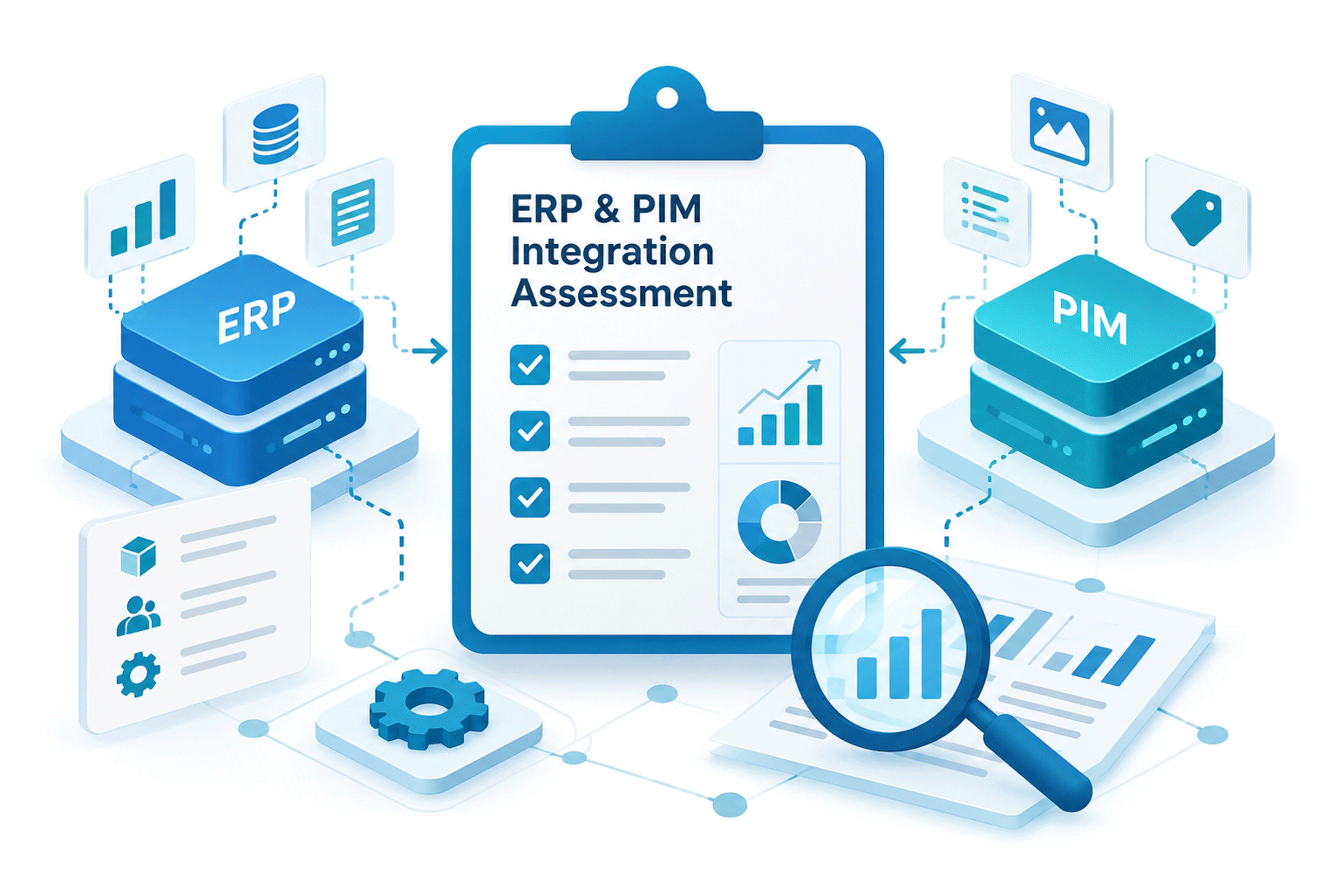
Current-State Review
Spreadsheets, ERP fields and your existing PIM.
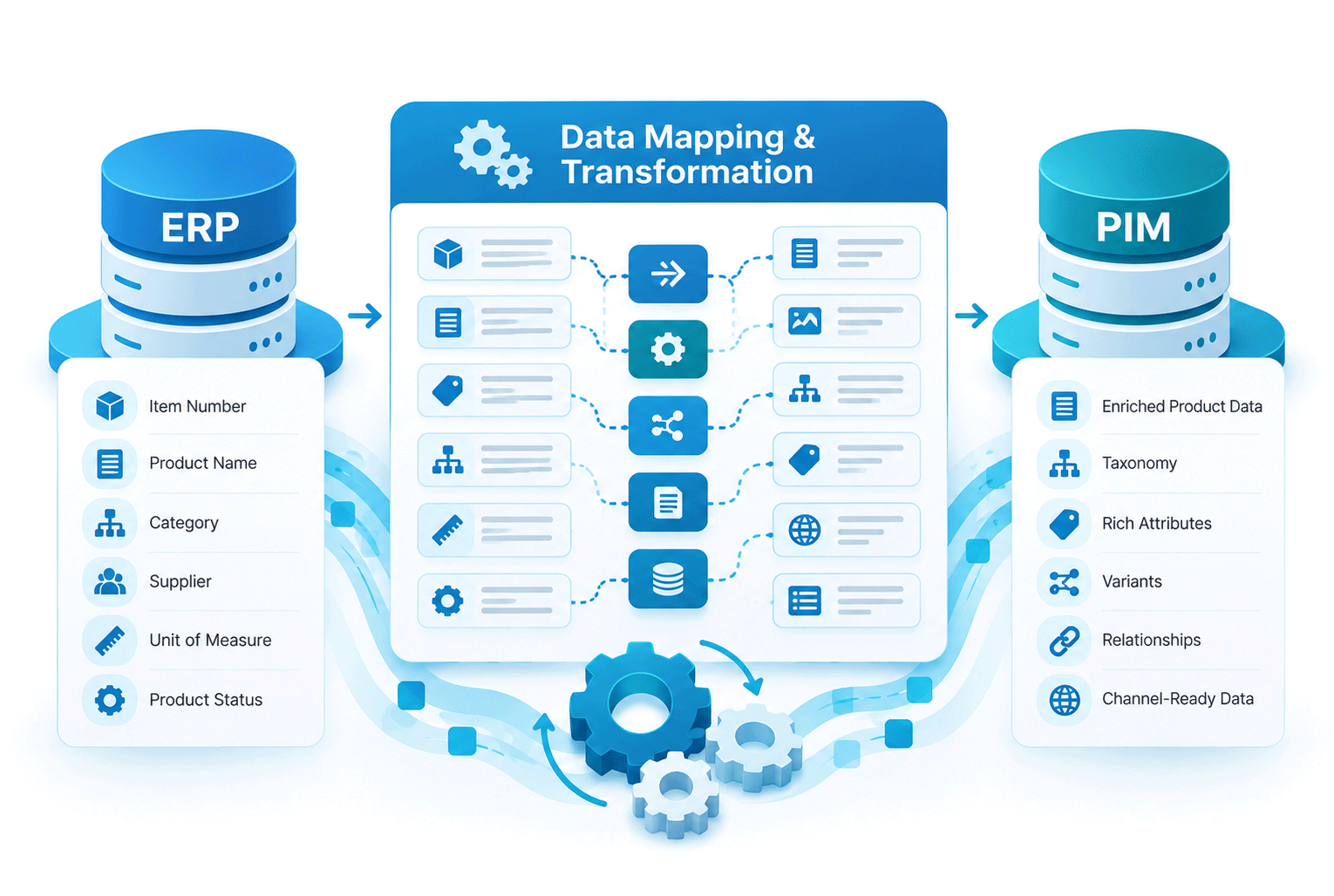
Data Model Design
Families, attributes, variants, relationships and validation.
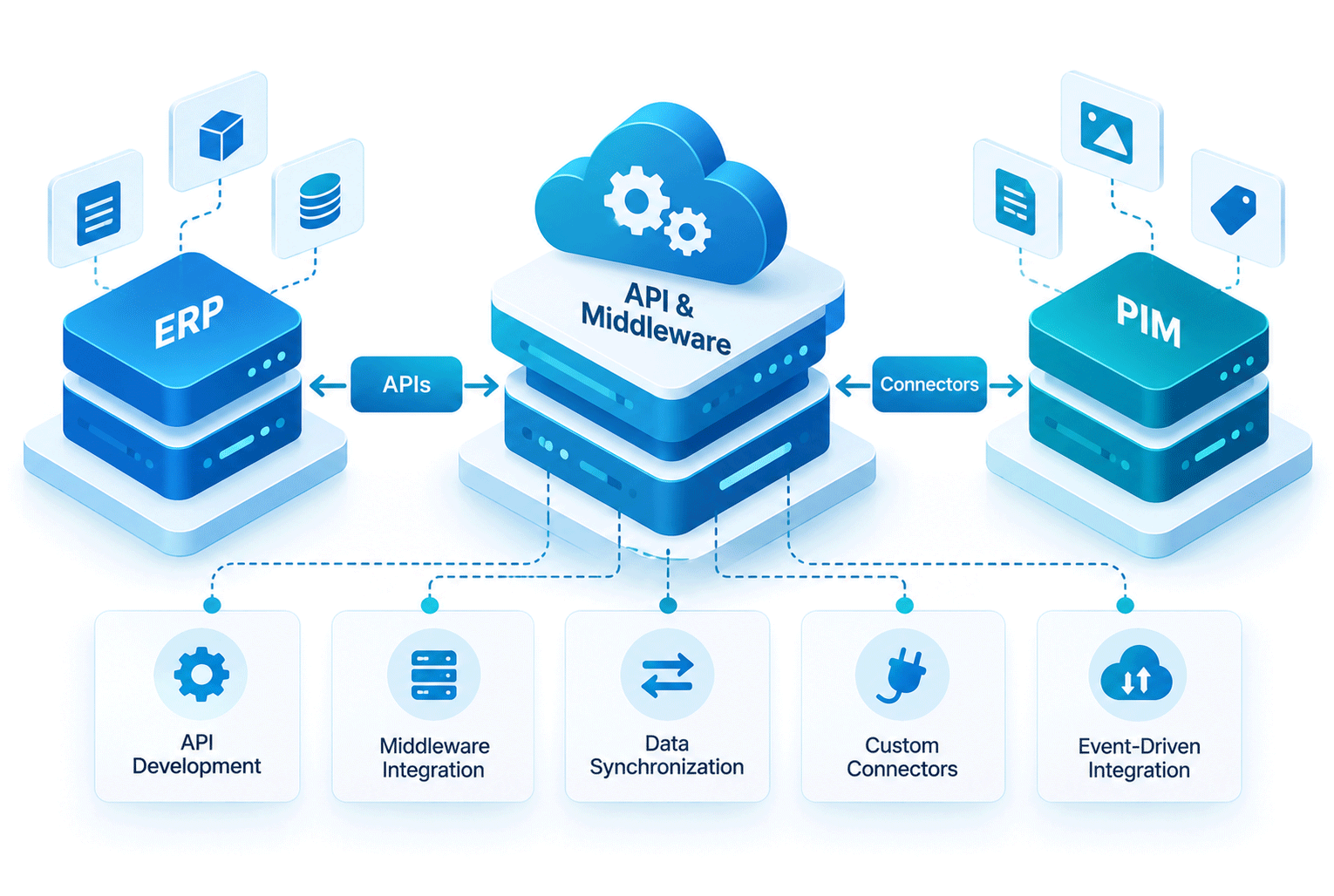
Classification Standards
ETIM, ECLASS, GS1, UNSPSC or your own taxonomy.
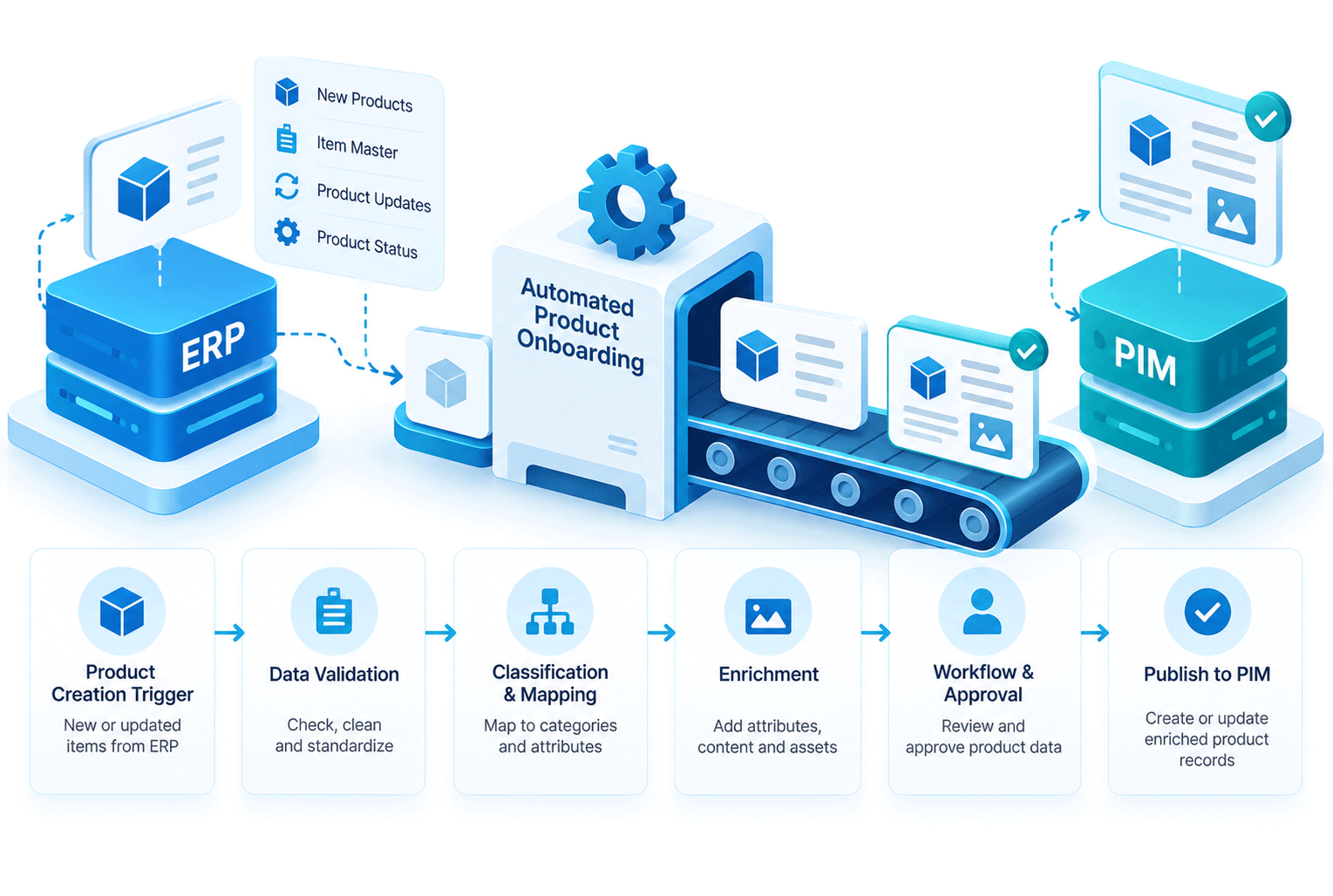
Migration Mapping
From old fields to the new model, ready for data migration.
Implementation
In Pimcore classes, Syndigo or your PIM.
Model Governance
How attributes are added or changed safely over time.
How a Data Modeling Project Runs
A focused first release typically takes 3 to 6 months; larger programmes run in phases over 6 to 12 months or more.
01 Free Assessment
A 30-minute call about your products, channels, systems and goals.
02 Discovery
A few weeks: current-state review, requirements and a phased plan.
03 Build
The data model built and tested in your PIM with real products.
04 Test and Go-Live
Tested with real data and real users, then launched.
05 Improve
Monitoring, training and the next set of improvements.
Planning Your PIM Data Model?
Get a free 30-minute review of your products, attributes and categories.
Book a Free ConsultationWhy Leading Enterprises Choose Credencys for PIM Data Modeling

Product Data Expertise
We combine PIM, MDM, data quality, taxonomy, product modeling, workflow, and syndication expertise to address the complete product-data lifecycle—not just the technical connection between two applications.

Enterprise Integration Experience
We design integrations around complex enterprise environments involving ERP, PIM, DAM, commerce, marketplaces, supplier systems, APIs, middleware, and legacy applications.

End-to-End PIM Capabilities
From product-data assessment and modeling to implementation, integration, migration, governance, syndication, and optimization, Credencys supports the broader PIM transformation around your integration.

Governance-First Architecture
We establish ownership, mappings, validation, synchronization rules, workflows, and exception management so integration improves product-data quality instead of simply moving inconsistent data faster.
50+
Enterprise Clients
100%
Certified Consultants
15+
Years Experience
4.9/5
Client Satisfaction
Frequently Asked Questions
The structure that defines how products are stored in a PIM: product families, attributes, variants, relationships and classification.
The two examples on this page show the pattern for retail and industrial products. In a workshop, we model your own categories.
Values set on a parent product, such as brand or material, flow down to its variants, so they are entered once.
The one your customers and channels use: ETIM or ECLASS in technical B2B, GS1 for retail and GDSN, or your own taxonomy for eCommerce navigation.
Usually it is part of discovery: a few weeks for the core model, refined during the first release.
Trusted by Best
Choosing Credencys means partnering with a team that’s deeply committed to unlocking the true value of your data. Here’s why industry leaders trust us:
Our Valued Clientele


Send us a Message
