How to improve app engagement with your mobile app – 10 best tips to know?

Developing a mobile app is quite a tough task if it involves complexity, but it is tougher to increase app engagement more than the idea you invest in creating that app. To make an app successful, adding more spices to it in terms of design and features alone is not sufficient.

You need certain proven strategies that support you to improve app engagement. If you are able to identify loopholes in your app with user engagement tips and tricks recommended by experts, on-time, then it leads to your app success. Today, in this blog, you will learn how to increase users on the app and promote brand management.

Before that let us see how user engagement is important in mobile app development and taking your business to the next level. User engagement in a mobile app is required to know whether the user is able to find your app valuable.

It includes design, content and relevant searches as well. There are five levels of user engagement to be taken into consideration–discovery, research, shopping, loyalty and advocate. To increase app engagement, you definitely require a clear strategic plan that drives through successfully until you reach your determined target. It could be sales, customers, reach, etc.

10 best tips for increasing app engagement with your mobile app

Here are the top tips you can follow and implement to increase app engagement and ensure you make the required changes according to feedback or meet your customer expectations.

#1: Create a list with splendid categories for your app store

This is the first step that you should be able to focus on your users before they install the app and make them install it. You should display the benefits of using your app rather than what features it contains.

Anyhow when users install your app, they get all necessary features inside the app itself. But to make them interact with your app during installation leads to successful app downloads.

Give useful information to users on how to use the app, and what problems have been addressed in the app, which users were expecting in other similar apps, but they failed to address.

Also, place screenshots of the main pages of your app so that by looking at it, you should instill your users to install the app.

#2: Make users know more about your app while on-boarding

We have discussed gaining user’s attention while performing onboarding, and it is one of the best ways to increase app engagement. You can use animated presentations or nice pictorial representation of your app benefits rather than educating users about your app usage.

No user likes to listen to you while creating an account because they expect the on-boarding process to be completed soon.

#3: Provide space for users to try your product before they buy it in real

If your app requires a paid subscription or memberships, then making them go through and understand your app completely before they sign up works well. Many users will come forward to use your app as they know about your app information prior to registration, and whenever they wish to utilize the services in your app then they will go for account creation. This approach will sure to improve user engagement with your app and install it effortlessly.

#4: Apply best practices for implementing app permission requests

It is necessary that you implement app permission requests in your app before its launch; otherwise, there are high chances that users may uninstall your app without a second thought. You should consider factors such as time, context, tone, messaging and language while displaying permission requests. You should also have things ready to deal with users who reject permission requests accidentally or purposefully.

#5: Make quick delivery a mandated feature in your app

Many apps provide the same day delivery or quick delivery, which could be the prominent reason as to why users may prefer your app. If it is not fast and does not meet user expectations, it is just a matter of time that users may delete your app and may not use it forever. So making speed as a definite feature can help increase app engagement.

#6: Include push notifications

You should keenly keep track of the user’s browsing behavior and send relevant push notifications according to their shopping history. This helps to retain users and get them back to the app. You can create push notifications in a tailored and customized manner. Customization can be enforced based on devices, platforms and users you target.

#7: Create great link chains

Deep linking is something you should think of investing in. Push notifications or bulk SMS becomes effective if you have deep linking implemented in your app. It helps in inviting other users to install and use your app.

#8: Develop a streamlined communication

This is one of the best ways to improve app engagement among users because only user feedback helps you raise your app milestone. Help users with providing more frequently asked questions and give them sufficient time to go through them and clarify their doubts.

Allow them to ask questions whichever is not available in the FAQs. You can allow them to provide feedback in the comment box, but you should have someone to track it down because negative feedback may get your app installed. Still, you can allow users writing negative feedback but make sure you respond back to their problems with appropriate solutions.

#9: Update your app as in when it is required

It is necessary that you make at least 1 to 4 updates per month for your app and notify them on-time as a reminder to your users. If you fail to maintain your app properly, it leads users to search for alternates. Your app updates should make users realize that you are committed towards your app wellness.

#10: Provide flawless user experience

User experience is an important factor that supports improved app engagement. Your app should have a design that is very appealing to users and the background or colour you choose should not be offending or bothering to users. People have started using apps as a part of their lives, and it is a necessity for you to provide an excellent interface to use your app.

Conclusion:

If you can understand and incorporate these factors in your mobile app, definitely there is a huge chance to increase app engagement and make your app popular across users.

If you are looking for successful mobile app development or looking for the continuous support of a developed app, you can get technical advice from our expert team by dropping us a simple email with a detailed query. We are here to help you and address your mobile app concerns rigorously.

Frequently asked questions on  improve app engagement

1. How to increase app engagement within a short period?

It all depends on your app features and the flexibility it provides to users. If your app has a good number of downloads but lacks user engagement, you can follow the factors mentioned in this blog.

But if your app is new to the market and requires user engagement, then there are several paid promotions you can implement and then apply those tips for effectiveness. But without proper effort, no wonder can happen overnight.

2. Is user engagement a feature of an app?

No, user engagement is not a feature; it is a metric that you use to monitor the performance of an app. It is considered important because without people using your app, you cannot make your business successful.

So it is a common and mandated metric that requires certain features or options to be added to your app.

3. What key performance indicators and goals to be set for improving user engagement?

Return is the foremost key performance indicator of user engagement. Though it is not likely to drive the entire scenario, you should always behold a return on investment.

User engagement also requires an app that provides a great experience, good information and timely delivery of what they are looking for. So these are also considered as KPIs and commercial sales are considered as your end goal of achievement.

4. What type of content and offers can engage the different audience to my app?

You should make use of eye-catchy digital content, which is simple to read and understand and ensure such content is placed in the right geographical locations for the right target audience.

You can effectively and efficiently make use of social media platforms such as Facebook, Twitter, LinkedIn, and Google+ as powerful channels for your app publicity. Moreover, you can engage users by publishing product-related blogs or information that your users have been searching for and somehow try relating it to your business.

You have digital signage that allows you to create amazing and splendid content, which you can display on multiple screens from anywhere rigorously. It is the hottest trend used by most of the businesses for app promotion, in recent days, and showing good improvement in app engagement.


Why Should You Consider Angular.js for Web App Development?

This article briefs several popular web application frameworks that suit your web app development in a great manner. Today, we are going to look at one more such dynamic web application framework Angular.js and eventful reasons why Angular.js should be considered for your web app development. You would have come across React.js and how it uses JavaScript for developing dynamic web applications.

Similarly, Angular.js also uses a hybrid HTML/JavaScript framework that provides simplified enterprise solutions for developing dynamic web applications against RESTful web services. Let us see what Angular.js is in detail and the benefits of Angular.js for web app development.

How Popular Angular.js around the World?

Here are the statistics that show how popular Angular.js is across industry verticals. According to an expert’s opinion poll survey, Angular.js is widely used at 3.91% in computers electronics and technology, 2.50% in arts and entertainment, 2.16% in news and media, 1.86% in finance and 89.57% in several other industries.

More than 500,000 websites are using Angular.js and if you consider demography, the United States of America has the highest number of Angular.js, which is 74,287, second comes Russia, which has 57,131 websites and Taiwan comes the third with 23,129 websites. Likewise, other countries such as India, the United Kingdom, China, France, Germany, Brazil and Japan have close to 10,000 websites.

Benefits of Angular.js

The following points provide you with an overview of how angular.js can be helpful for web application development.

  • It allows you to create single-page applications effortlessly and provides you with proper guidelines to maintain those applications.
  • It offers a rich look and responsive experience to users by providing data binding functionality to HTML.
  • The code is unit-testable and makes an easy way for developers.
  • It uses dependency injection along with the separation of concerns.
  • It allows developers to write short codes and let them achieve more functionality within the scope.
    Angular.js can be run on all types of browsers, Smartphone and Android/iOS-based tablets.

6 best reasons why Angular Js should be used for web app development

Angular.js is an adaptable technology and provides an easy learning curve to developers. Here are the top reasons why you should consider Angular.js for developing dynamic web applications.

1. Security

If you look at enterprise enhancement or introducing a new leading technology framework into the existing system, we all think of the security aspect, which becomes mandatory. Angular.js can be a great technology and the best solution to security concerns that enterprises arise because their focus has turned majorly towards data security and require convenient access to their internal and promotional teams’ data.

Enterprises to streamline their entire web app processes and take the business to the next level should look out for options such as Angular.js.

2. Critical user interface

If you expect your user interface code to be simple but specific and strong, you can just define what you need in the application, and the rest will be dealt with by Angular.js. It is that flexible and effective when it comes to defining your web application’s user interface because it uses HTML, which is a simple language to learn and apply. It is easily demonstrable and less-complicated that offers spontaneous output.

It is considered to be an effective web app framework in defining UI when compared to defining an interface in JavaScript. You invest less effort and achieve more from using Angular.js.

3. Integration

Angular.js allows easy integration of third-party features into web applications or it comes inbuilt with frameworks such as Famo.us, Wijmo, Telerik’s Kendo UI, Ionic and several other frameworks. Integration of various tools and frameworks is something very important for developing a dynamic web app; otherwise, you may not be able to develop an adaptive and attractive website for your users.

4. Data binding

Angular.js comes with two-way binding, which is the smartest feature available. One of the best benefits of data binding is it automatically stores the app data, and no restriction towards data storage is considered too. The moment data is stored, the user interface also gets updated automatically. This reduces the effort of monitoring whether every process in the web app development is intact.

If coding seems to be complicated, you can easily remove it from the front-end display, especially when you propose a declarative approach to UI presentation. You can avoid unnecessary complexity in coding and beginning from scratch. Although it throws some unexpected problems with respect to the design of the web app architecture, yet it is one of the best reasons to consider Angular.js for simplifying complex data manipulations and calculations.

5. Minimal coding

Angular.js is a great opportunity for developers to code because it does not involve much coding. Even if you write complex code, it converts them into easy short codes, making the web app development simple and quick. Therefore coders need not spend more time on thinking and implementing codes. Here are certain criteria that Angular.js expects an in-depth/strong coding:

  • It is not required to incorporate a separate pipeline for Angular.js developer’s community.
  • You need not go for customization of any setter functions as Angular.js has a simple data model.
  • It generates an automated view of data with granting excellent features, data binding, to developers.
  • It is all-time defined using HTML and makes the view more specific and simplified.
  • Other coding teams involved in web app development may find it easy to write codes without confusion in the integration of any applications or tools used because directives are not combined with app code.
  • Without changing any controller, developers can easily manipulate data on the view level itself by using filters.
  • Angular.js makes testing easier with the availability of inbuilt dependency injection subsystems.

6. Quick testing

As mentioned earlier, the testing process is quick and simple with Angular.js as it uses JavaScript that definitely requires a bunch of tests. You should know that JavaScript is interpreted and dynamic but not compiled and hence requires frequent and effective testing.

Conclusion:

Hoping you all have received a good piece of knowledge about why Angular.js for your enterprise in streamlining dynamic web app development. It is somehow familiar among developers and most commonly adopted by enterprises. You get the best output out of writing simple and short codes with Angular.js and hence developers attract to its implementation effortlessly.

If you want to develop a fabulous web app using Angular.js and require support, contact our Angular JS expert team for quick and instant assistance.

Frequently asked questions on Angular.js for Web App Development?

1. What is Angular.js? How can it be used?

Angular.js is the best framework, and many get confused with it as a library because it is extremely light to use when compared to a typical framework. It uses JavaScript for coding and goes well with client-side applications of both desktop and mobile browsers, and so it is not a plugin too.

You find it easy to work with Angular.js and also learn a plethora of things that help you deal with your web app development.

2. Does Angular.js follow a template system?

Angular.js appears like a template system but it is different from other template systems. It provides a two-way data binding system that brings a very good fit for web application development.

Moreover, the template collates in the browser, and the steps involved for performing the collation to create a new step. Therefore, it reduces the need of developers to write code consistently in sync with the existing view model and several other models with unique template systems.

3. Does Angular.js provide authenticated security and how should I consider it?

Angular.js is not least to any other technology when it comes to security. Yet, Angular.js provides tightened safety to data from basic security holes that comprise cross-site scripting and HTML injection attacks.

It offers XSRF protection for enabling server-side communication and easily skips all types of attacks that occur in the due course. It is also compatible with other security measures such as content security policy (CSP), HTTPS and server-side authentication and authorization. It is highly recommended for usage as it avoids your data from being exposed to possible attacks.

4. How can I analysis Angular.js Performance?

Certain factors decide the performance of your web app built using Angular.js. You should have a proper network connection, observe the state of the cache, use a high-end browser that supports Angular.js and check hardware availability. At the same time, you can measure bootstrap time in the lowest unit of milliseconds such as tens or hundreds. However, if your web app development includes more complex data bindings on the page, then the runtime performance of your app may vary accordingly, and the speed of your backend applications may also depend on the same.

Anyhow, the loading speed may vary according to the number of pages you add as well.

But you should also remember that Angular.js simplifies any complex code and makes it compatible with the architecture and convenient to developers. Hence measuring the performance of Angular.js should not be that tough for you.


15 Best Fintech Apps that Every Fintech Startups Should Know

Mobility has impacted every aspect of human life and businesses, regardless of industry domains, and the Finance industry is not an excretion.

In fact, the way financial companies are adopting mobile solutions, it seems like soon the entire world will go cashless.

Fintech apps are the game-changer in disrupting the finance and banking industry. They connect banks/financial institutes with the customers to make digital payments easier than ever before.

People are using Fintech apps for different purposes such as personal finance, crowdfunding, money lending, investment, money transfer, P2P (peer-to-peer) lending, and more. Different types of Fintech apps are developed by financial startup and well-established financial institutes to address the varied requirements.

This post will introduce 15 best Fintech apps that are extensively used across the world. Here you explore the list.

    1. Nubank
    2. Planto
    3. Prism
    4. Chime
    5. Acorns
    6. Revolut
    7. Mint
    8. Coinbase
    9. MoneyLion
    10. Robinhood
    11. Finch
    12. Monobank
    13. Earnin
    14. TransferWise
    15. N26

If you are planning to develop a mobile solution for your Fintech startup, do not miss to explore the above-mentioned apps. It helps you to get a better understanding of

  • What people are expecting from a Fintech app?
  • Which features do they look for in a Fintech mobile app?
  • What are the gaps between customer expectations and apps’ offerings?
  • How can you fill the gaps through your Fintech app to deliver value to users?

15 Best Fintech Apps to Pay Attention to Before Developing One for You

1. Nubank

Nubank

Type of Fintech: Online Banking
Platforms: iOS & Android
Country: Brazil

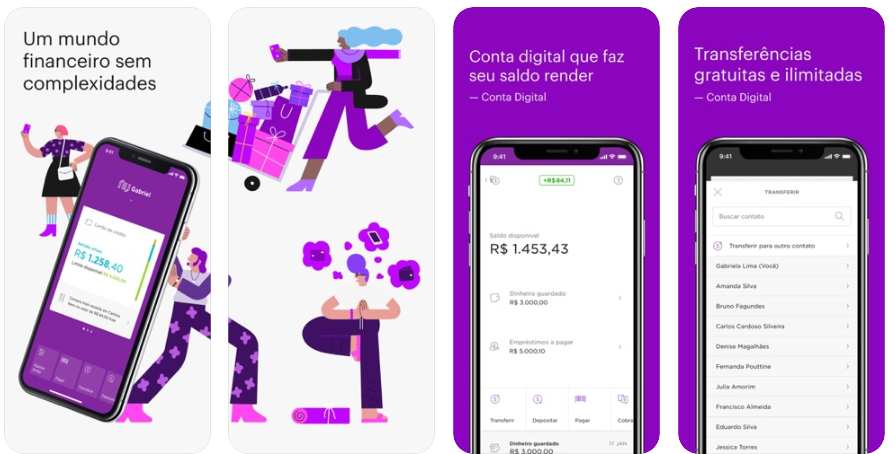
Nubank is one of the best fintech apps that allows users to track payments and invoices. Uses can classify the spendings by applying categorization. Leveraging Nubnk reward points, users can cover some of the expenses.

The app enables users with real-time information about Nubak rewards, saving balance, and credit cards. Nubank is considered as the sixth-largest financial institution across the globe with a secured valuation of over $10billion and 12millon users (from Brazil only).

The best features of Nubank are rewarding pint program, saving at user disposal, informative blogs, no annuity credit card accepted worldwide, and more.

2. Planto

Planto

Type of Fintech: Finance Management
Platforms: iOS & Android
Country: Hong Kong

Management of personal finance becomes quite easier than ever with Planto. The app allows users to automate their personal finance such as set goals, define the budget, track your expenses, money, and investment progress anytime.

The app allows you to create a financial profile in one place. You can set and achieve your financial goals and help you stat on the top of your spending and budget. Plano is the best finance app in 2022 to manage your personal finance.

It provides amazing features to plan and organize your money following the best money management practices. Thus, this is the best solution for you if you are looking for a personal finance management app.

3. Prism

Prism

Type of Fintech: Personal Finance
Platforms: iOS & Android
Country: United States

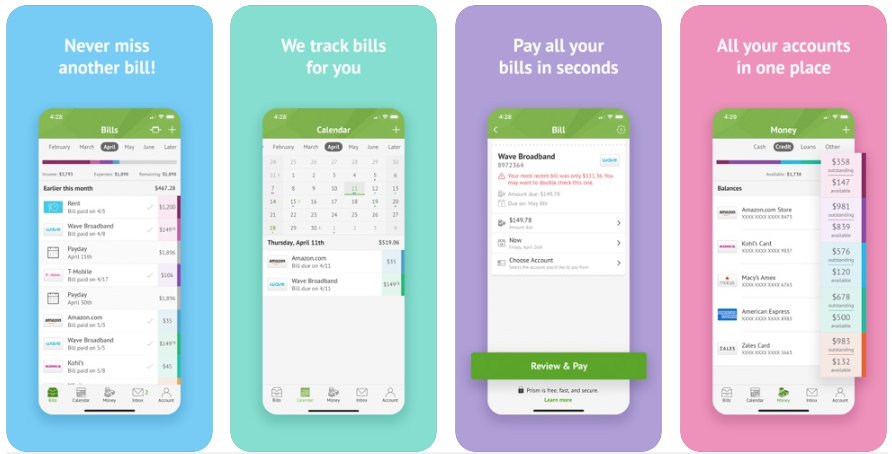
Prism is the best finance app for personal finance management. It automatically tracks all your bills and sends bill pay reminders. The app allows users to manage money action, bills, and debt within no time.

The app allows users to track bills and money at a glace, effortlessly. Prism also offers advanced features to manage all your personal accounts from a single platform.

The key benefit of the app is users do not need to waste time logging into multiple websites to check and save the account balance, pay bills statements, and check due dates. The app also displays your account balance, income, and monthly spending and expenses together so you can pay bills in a few seconds.

4. Chime

Chim

Type of Fintech: Mobile Banking
Platforms: iOS & Android
Country: United States

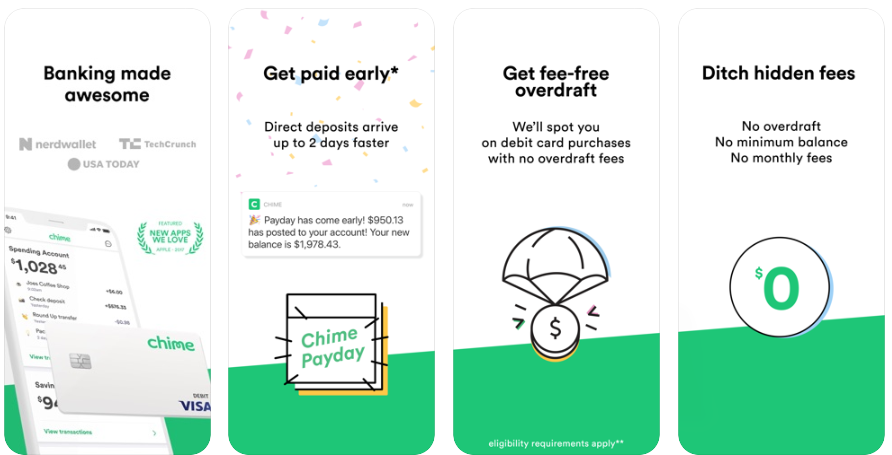
Chime is one of the highly used and fasted growing fintech apps in the USA. Users can manage their saving accounts and expenses with no hidden transaction fee. If you want to access multiple automatic saving options, then this is the best tool.

The app helps users to focus on saving by deducting 10% of the payback automatically. Later on, the user will receive the amount in their account directly.

Being one of the top fintech apps, the mobile app enables users with all the baking facilities such as no overdraft, real-time transaction notification, sending money to friends and family, and no minimum balance.

The unique features of Chime consist of deposit instant checks, no hidden fees or monthly fees, support mobile payment apps, send money to relatives with a free fee mobile payments, and more.

5. Acorns

Acorns

Type of Fintech: Investment
Platforms: iOS & Android
Country: United States

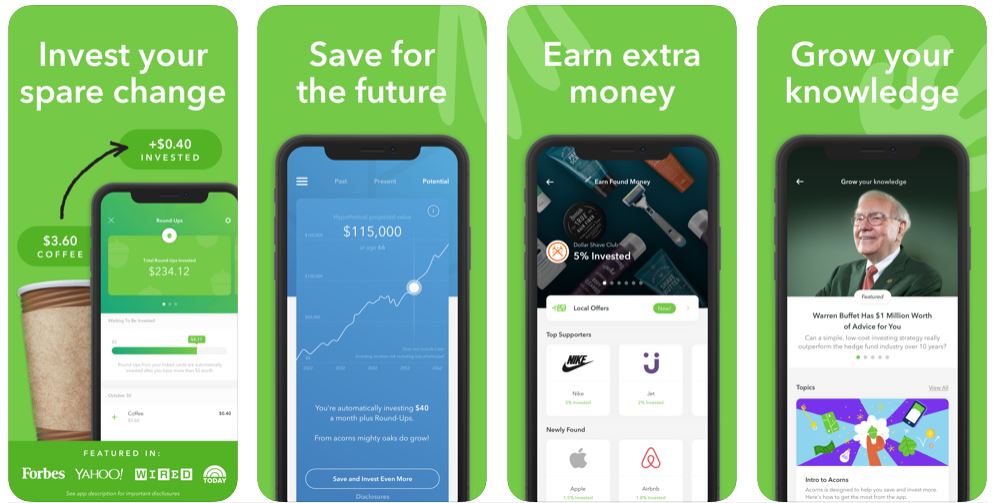
It is a financial wellness app that guides users about how to get more return on the invested money by offering videos and articles of financial advisors/experts. It allows customers to deposit and withdraw money whenever they want.

Acorns teaches investors how to spend smartly at no overdraft fees, using nationwide ATMs. It also guides how to earn an investment bonus up to 10% from the selected local businesses.

The app is supported by leading innovators, press, and investors such as PayPal, CNBC, BlackRock, and Ashton Kutcher.

6. Revolut

Revolut

Type of Fintech: Personal Finance
Platforms: iOS & Android
Country: United States

Manage your money wisely using the Revolut. It sends instant notifications for the money paid through the card. The app allows users to set up a monthly budget and track how much they spend each month on certain products or services.

The app supports more than 150 currencies so that users can easily transfer money abroad at the real exchange rate.

Moreover, Revolut is one of the best fintech apps when it comes to buy, sell, and hold cryptocurrency as it is the trending technology of the Fintech domain. It also supports Litecoin, Bitcoin, Bitcoin Cash, Ethereum, and XRP.

7. Mint

Mint

Type of Fintech: Personal Finance
Platforms: iOS & Android
Country: United States

Mint is a finance tracker and money manager app that allows users to manage all the finance with ease. It is the top fintech app that provides information about how much money the user has spent and the best ways to save money.

The app manages the money of user’s credit cards, investments, credit cards, and bills. It allows to manage money and bills together to make the user’s budgeting practices better. Ultimately, it saves time and money of the users.

8. Coinbase

Coinbase

Type of Fintech: Cryptocurrency Wallet
Platforms: iOS & Android
Country: United States

The app focuses on the cryptocurrency exchange. It provides information about the relevant tools and introduces the world of cryptocurrency to newbies. Coinbase helps all the beginners and experts of crypto investors to build and manage their crypt portfolio.

Sell, buy, and store the cryptocurrency securely on the Fintech stock of Coinbase. If you are interested in the crypto investment, then the app enables you with bitcoin mining, bitcoin cash games, bitcoin games, bitcoin trading, litecoin games, blockchain, and ethereal games.

9. MoneyLion

MoneyLion

Type of Fintech: Mobile Banking
Platforms: iOS & Android
Country: United States

Using this app, users get access to loans and financial advice. It allows for personal finance, wealth management, money-saving, and money lending.

Users can access zero-fee checking account, fully managed investment account, no interest instacash advance, Low ARP Loan Credit Builder Plus, and up to 12% cashback reward.

Being one of the best fintech apps, MoneyLine provides efficient online banking services across 55000 fee-free ATMs. Moreover, the app helps users to keep a track of savings. The tracking features are accessible to MoneyLion Plus members only.

10. Robinhood

Robinhood

Type of Fintech: Investment
Platforms: iOS & Android
Country: United States

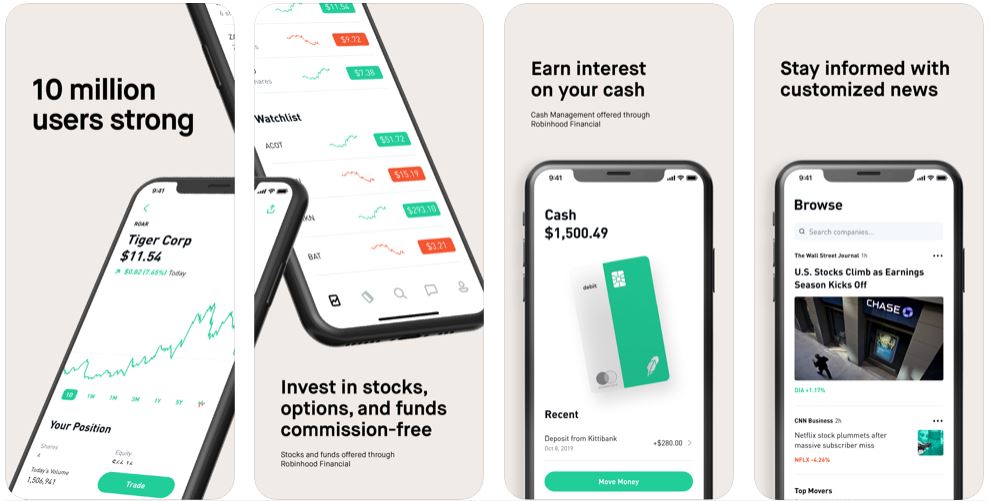
Start investing in cryptocurrencies, stocks, and other options using the Robinhood app. The app uses advanced technologies that cut the percentage to win the cut-throat competition with the other financial institutions.

Users can save money at no commission trading. Robinhood allows to invest money in cryptocurrencies (Bitcoin & Ethereum), stock, shares, and options without any commission fee. Thus, the app allows users to invest money in markets responsibly.

Read the information available for investment portfolio before buying a coin, stock or other investment options. The app enables users with the real-time market data for the particular cryptos, coin or options and keeps the user notified about the changes.

11. Finch

Finch

Type of Fintech: Personal Finance
Platforms: iOS & Android
Country: Australia

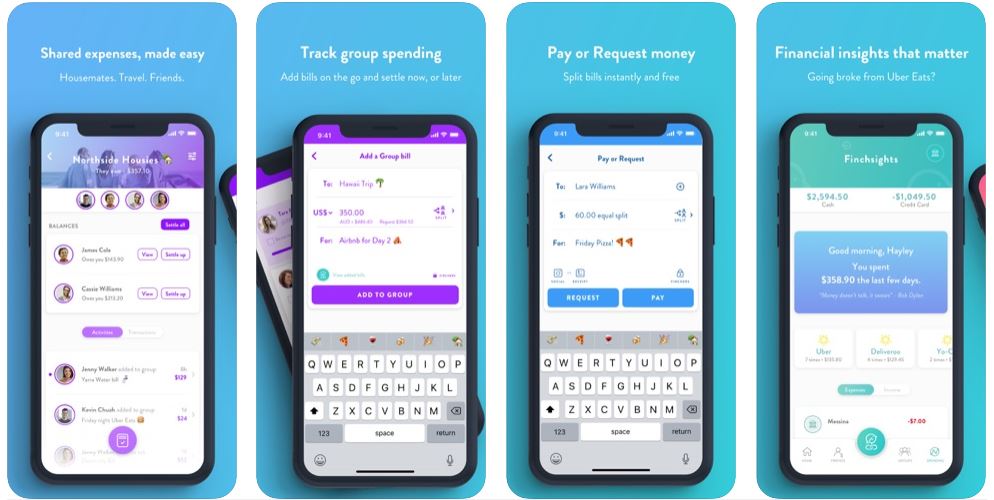
Finch is the best fintech app that simplifies personal finance for users. It allows people to share group bills, pay money to friends, and track their budget.

To access the app, the user needs to sign up and select the pay friends option. The app spits the bills, pays to friends instantly, create groups, and share the link with your friends.

It helps users track the spending by enabling them with the details of how frequently they have visited the shop, how much they have spent in the last 30 days. Moreover, it compares the user’s spending with other finchers and helps users to track how they stack up.

12. Monobank Monobank

Type of Fintech: Mobile Banking
Platforms: iOS & Android
Country: Ukraine

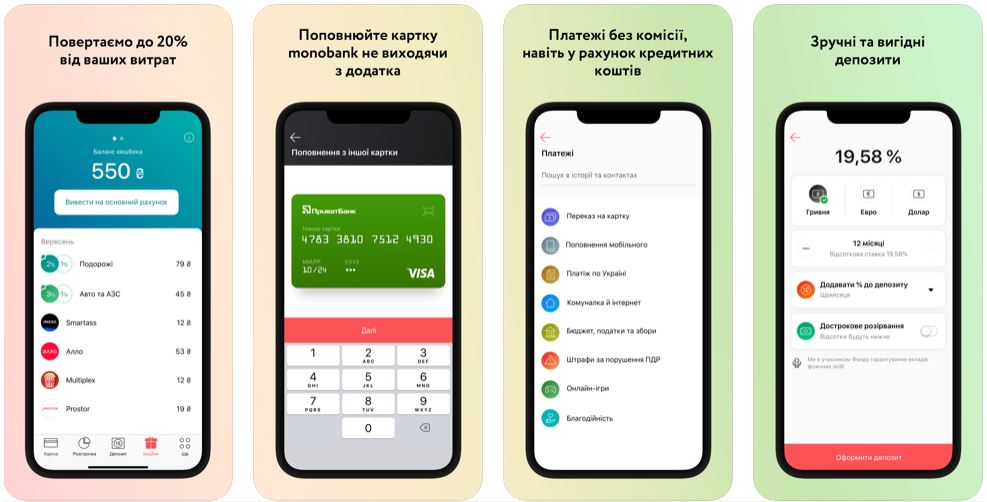
It is the first fully mobile bank in Ukraine that does not have any mobile brand across the country. It allows users to pay money to friends, replenish your mobile phone, or pay a communal apartment for free and just with a few clicks on your smartphone.

Monobank allows users to make payments, free replenishment, installment purchase, cashback up to 20%, and expense & currency accounting online.

The app is considered as one of the top fintech apps that allow users to track expenses for all goods of each category, analyze what the users spend the most on, and make well-informed decisions about the budget.

13. Earnin

Earnin

Type of Fintech: PayDay Loan
Platforms: iOS & Android
Country: United States

The app allows users to access up to $500 between paychecks, earn cashback on your purchases, avoid unnecessary overdraft fees, and explore saving options on medical bills.

The app uses four tools such as cash out, health aid, balance shield, and cashback rewards to simplify the financial system for the users.

Other important features of Monobank are live chat support, lightning speed, 256-bit bank-level data encryption, and financial calendar.

14. TransferWise

TransferWise

Type of Fintech: Money Management
Platforms: iOS & Android
Country: United States

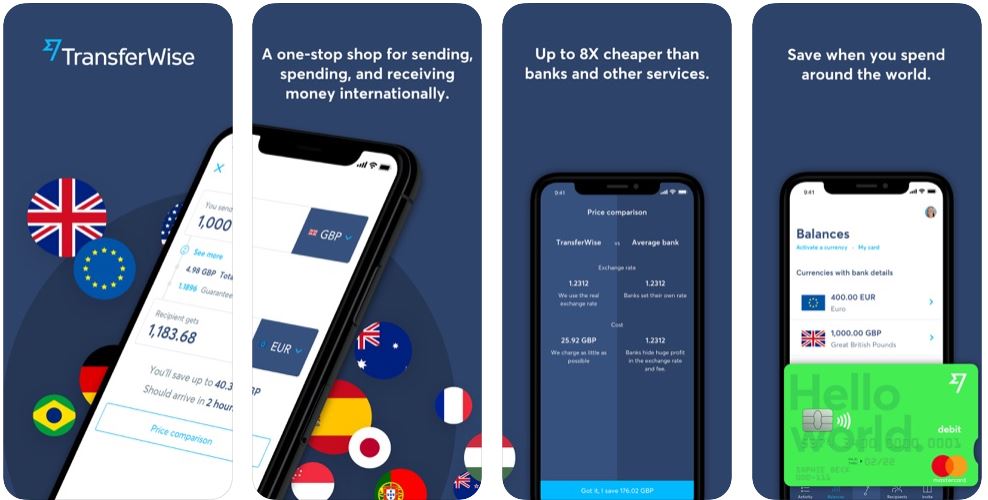
TransferWise is the best money management app if you want to transfer money abroad. It allows to send money overseas easily and quickly at the cheapest rate. The supports 28 currencies and uses real exchange rate to help foreign businesses and students.

Using the app, users can send money abroad at the 8X cheaper rate than the high street banks and at the real exchange rate.

Being one of the best fintech apps, TransferWire allows users to send money to friends and family, pay off your loan or mortgage abroad, get paid in multiple currencies, pay bills in another currency, and more.

15. N26

N26

Type of Fintech: Finance Management
Platforms: iOS & Android
Country: Berlin

N26 is a Berlin-based finance management app that enables users with flexible, transparent, and fast money management tools to help them control finances. It can be a perfect online bank as it allows you to control your finances using a few taps.

The company has raised $300million in venture capital and now valued at a total of $3billion. Due to such a strong financial condition, the app overtook Revolut which holds a prime position as the most valuable mobile bank in Europe.

N26 allows users to organize and achieve financial goals with Spaces, automatic generation for spending statistics, instant money transfer with MOneyBean, account security with fingertips and face recognition.

How much does it cost to develop a Fintech app?

It is quite tough to define the exact cost of Fintech app development as it completely depends on the features and functionality you want to add in the app. If the Fintech apps require integration of different APIs then it charges more than any simple app.

A simple Fintech app with basic features costs you around $30000 to $50000. If you want to consider advanced and complex functionality development and integration then it would cost more than $100000.

How Credencys Helped Anand Rathi in a Fintech App Development?

Being a premier iOS and Android app development services company, Credencys has successfully developed and delivered the mobile apps for the varied industry domain and Fintech is no exception. We excel in developing the cutting edge mobility solutions by embracing the latest Fintech trends.

We have deployed a digital wealth management app for Anand Rathi, India’s leading financial company. The app is live on iOS and Android platforms and highly admired by the users for its user-friendliness and smooth flow.
Do you want to skyrocket your Fintech business through a Fintech app? Let’s connect.

Frequently Asked Questions about Fintech Apps

How to monetize a Fintech app?

To earn money out of the Fintech app, you can consider in-app purchases, subscriptions, advertising, P2P lending, and Robo-advisors. How to Generate Revenue Through Fintech Apps? (5 Proven Strategies) will explain how to monetize your Fintech app.

What are the important features of a Fintech app?

The most important features of a Fintech app are real-time processing, batch processing, fast & secure transactions, integration with other applications (baking & financial apps and backend of web applications), multi-tier functionality, etc.

How much time it will take to develop a Fintech app?

The development time of the Fintech app is based on how many features and functionality you want to add in the app. The more features you consider, the app development will take more time. A simple app can be developed within 6-8 months. An app with all the advanced features takes up to 12 months.

What are the best Fintech app ideas to invest in?

If you want to start a financial venture, you can consider a lot of fintech app ideas such as crowdfunding, investment and trading, equity, money transfer, personal finance, P2P lending, regtech, mobile baning, insuretechP2P payment, and payday loan.


Alternatives to React JS: Top 11 Frameworks You Can Use (Instead of React)

React JS is an incredibly popular JavaScript library. The USP of this library is that it has a Virtual DOM, which allows the information to process faster.

React is one of the most preferred frameworks when it comes to building single-page web applications. Since most of the websites are not SPA, one of the USPs of React dies here.

One of the biggest problems while choosing the alternatives to React JS is to find a framework that offers flexibility and easiness as React. At times, developers get so much attached to the framework that they don’t want to leave it.

However, choosing the right alternatives to React JS can be difficult. You need to consider several points such as stability, support of the ecosystem, API, performance, and package size.

Essential Characteristics of Ideal Alternatives to React JS

  • Supply a slim compatible layer, which can be used for your running React JS development project.
  • Have an API compatible with React, which means you can replace React DOM with any import that the library provides.
  • Support JSX. Most alternatives to React JS do not support PropTypes, which is okay for most of the projects.

11 Best Alternatives to React JS

1. Inferno JS

Inferno is one of the most high-profile alternatives to React JS. Clocking at 9k, Inferno JS is one of the quickest JavaScript libraries out there. It has been under active development since its first release in 2016.

It supports hyperscript, JSX, and Vanilla createElement method. Moreover, it provides support for several popular state management libraries such as Redux, MobX, and Cerebral JS.

If you’re looking forward to building a high performing web app, then Inferno will be an amazing choice for you since it specializes in performance.

2. Preact

Clocked at 3k gzipped, Preact can be an excellent choice to build websites if performance is not the most profound concern for you. It is one of the smallest alternatives to React JS out there.

It supports most of the modern-day browsers and IE9+. However, if you’re looking forward to a library that supports Facebook synthetic events system, then this is not the right choice.

Preact offers several other features nifty features such as the rendering of both props and states, linked state, and the utilization of ‘class’ instead of className.

3. React-Lite

The sole reason to create this library was to introduce the lighter version of React JS. Unlike Inferno and Preact, there is no compatibility package require. One can use it directly via webpack alias.

Its compatibility level with other React components is much greater than the other two frameworks mentioned above. However, it is neither the fastest nor the smallest among all libraries.

Neither does it supports server-side rendering, nor does it supports client-side hydration. Despite using React DOM servers for those functions, developers haven’t seen any seamless transitions.

4. Backbone JS

Backbone JS can be considered as the right alternative to React JS as it offers a structure to JS heavy applications by providing models with value-binding and custom events, collections with a rich API of various functions, views with declarative event handling, and connects all of them with your existing apps over a RESTful JSON interface.

5. Aurelia

Aurelia is written using ES2016. Without any external dependencies except polyfills, it seamlessly integrates with web components.

Aurelia is made of smaller and more focused environments rather than following the monolithic framework approach. You can create applications using all or selected modules.

It also offers two-way data binding to any object. Its extensible HTML compiler allows you to create custom HTML elements, control template generation, and attach new behaviors to the existing HTML elements.

6. Ember JS

It holds a strong position in top alternatives to React JS. Ember’s handlebars integrated templates allow you to do more by writing less code. This template updates automatically when the underlying data changes.

It is designed to increase the productivity of a developer. It is API-friendly and helps one to enhance the development speed since it incorporates all the common idioms.

7. Riot JS

Riot JS allows us to create user interfaces with custom tags using simple and intriguing syntax. It also has a virtual DOM which is similar yet faster than React.

If you’re looking for a small-sized UI library, then Riot is the right choice for you. It’s custom tags let you build complex views using HTML. Moreover, it does not require any extra HTML root elements, fancy custom attributes, or data attributes.

8. Mithril

Mithril is a modern-day client-side JS framework for developing Single Page Applications. It is fast, small (less than 10kb gzip), and offers routing and XHR utility out-of-the-box.

9. Vue JS

Vue is a progressive javascript framework that is used to create web user interfaces. The framework is entirely cerated and maintained by the community. Though it does have the backing of any tech giants, it is one of the best alternatives to React JS.

Vue.js is flexible, handy conventions, developer-friendly, and considered as a trendiest JavaScript Frontend Framework. When it comes to performance, Vue.js is faster than React. Moreover, Vue makes the app development easy and smooth.

The framework has a smooth learning curve so it is quite easy for developers to adopt it. Vue is a modular, high performant, and lightweight technology compared to React JS.

10. AngularJS

AngularJS is the best React JS alternative to build highly dynamic web, desktop, and mobile applications. It is an opensource front-ed JavaScript framework that helps in simplifying and structuring the JavaScrpt Code.

The technology allows building SInglePageApplcaiotn (SPA) in a very maintainable and clean way. The SPA could be an application or website that interacts with users not by loading entire new pages from a server, but by rewriting the current page dynamically.

Invented by Google, it allows to build the fastest SPA that works 100% perfectly. Moreover, AngularJS is used by brands like Gooogle, Amazon, Udemy, and more.

Another reason that makes AngualrJS as the best alternative to React JS is it empowers developers with a set of advanced AngularJS frameworks and AngularJS tools to build robust applications.

11. Cycle.js

Cycle.js is a reactive and functional JavaScript framework. It offers functional programming where the technology makes sure the functions should have only inputs and outputs, without any bug or side effect.

With the help of Cycle.js, you can write clear asynchronous logic. The framework contains an API in its core. Apart from that Cycel.js contains streams, drivers, and functions.

A Cycel.js app always covers three important components in it such as main (), driver, and run ().

Are you Struggling to Choose the Right Alternative to React JS?

So, how would you choose the most appropriate alternatives to React JS for your web application? The answer depends on your priority.

If you’re developing a full-fledge SPA or single page application, then you might require a stable and growing library like React. However, if the performance of the application is your biggest concern, then Inferno or Preact can be a better choice for you.

Similarly, every JavaScript frameworks/libraries have their own unique ability which you should keep in mind while choosing an appropriate library for building applications.

Still, if you feel you are not able to make the right choice for your project that which JavaScript framework you need to consider instead of React, feel free to connect with our experts. We would provide you a free consultation for your project.

Frequently Asked Questions on Alternatives to React JS

1) Is Angular better than React?

Both frameworks have their benefits. Angular is a full-fledge framework, whereas React is a JavaScript Library. Angular is helpful when you want to build an application from scratch, whereas React is used when you want to scale existing applications. To learn more, read React JS vs Angular: Which Framework Should you Choose (and Why).

2) Should I use React JS?

If you’re planning to build a single page application or you’re planning to scale your existing web application, then React is the ideal choice for you.

3) Why Vue JS better than React?

Both Vue and React have tools that help you build interactive user interfaces. However, because of its simple templating syntax and use of components, migrating or integrating existing projects to Vue is faster and smoother. To learn more, read Vue JS vs React: A Battle for the Best Front-End Framework (with Latest Updates).

4) Is Preact better than React?

Preact stands for performance-optimized React. It is highly compatible with React and is used whenever there is a need to enhance the performance of an existing React application.


Why to Use React for Web Development and How Using React JS Can Add Value to Your Website?

With the increase in the demand of web app development, the need for developing a great frontend is also increasing. But choosing the best front-end technology is not that easy as you think, and it requires complete analysis. We could see quite a few latest technologies evolving in the web development market.

In such technologies, React is one of the best preferred by many companies. Several questions may arise in your mind: why use React for web app development and why using React JS can change your perception towards web apps. You can find answers for those questions in the following sections of this blog.

How web development has got a new look with React?

If you look at the technology changes over the past 20 years, many things have been brought into the limelight. It started providing solutions for the movement of server-side to client-side challenges step-by-step. Initially, Angular took its opportunity to bring the client-side revolution and now, we have a react web that helps in bringing back the server-side revolution.

This can be easily understood if you look at the changes in web app development based on the timeline. Websites developed in previous days were mostly static by including HTML pages in some folders and rendering them using PHP. It was so easy to develop such websites because there was no complexity involved.

Yet, the communication between the client-side and the server-side was so strong due to server-side rendering. But when react for web development with JavaScript libraries came into existence, it turned the entire process upside-down and showed a great improvement.

Why use React development-benefits of React JS?

You now know React JS makes use of JavaScript libraries to get amazing output, let us take a look at the benefits of using react development for your web app.

1. The great learning curve for developers

Developers generally struggle in choosing a library or framework to learn and implement easily. They get one such privilege through React JS because it is easy to learn and build knowledge. If you are well-versed with JavaScript, then React JS is the best suit for your web app. Even if you are not aware of JS, you can very well start working with React JS as it is simple and quick to learn.

2. Enables reusing of components

On using React, you can implement several components such as buttons, checkboxes, menus, drop-downs, etc. along with wrapper components covering these small components. Finally, you will have a single root and multiple hierarchical components in your application.

The best part is you can reuse all these components anywhere in the project again. For example, if you have used a button on the home page, the same button can be used on the product page as well. React JS gives you the flexibility of reusing the developed components.

3. Offers a unique abstraction layer

React JS allows you to design your app architecture in the way you want. Also, it creates an abstraction layer between the internal coding and the outline view of the app so that your end-users do not touch the complex parts of the internal coding. Only developers should be aware of some basics and keep away from analysing the internal functionalities.

4. Provides a perfect dynamic ecosystem of developer tools

React JS makes it easy for developers in every stage of web app development. It contains and gives instant access to abundant user-defined charts, graphics, documentation tools and several other components that allow developers to build a web app within no time.

Use-case Examples of React JS

Though ReactJs was introduced by Facebook, later it was made an open-source, and it is not only Facebook that uses React JS but several other established companies as well. In this section, you will learn where to use ReactJS across project areas.

1. Dashboard visualization tools

Using React in creating a dashboard of your choice for your web app does not happen simply. The general purpose of dashboards in a web app development is to analyse and summarise the data format quickly. Though you can find some instantly accessible dashboards on the web, it is super costly to afford.

Moreover, you cannot integrate such templates easily into the web application you develop. So it is recommended to build your dashboard using React, but it requires using some additional tools such as Ant. design or Airframe React.

  • Using React JS makes your app development more effective and fast with component reusing facilities.
  • It contains a virtual document object model (DOM), in other words, we can call a framework, which enables quick and efficient UI updates.
    It possesses isomorphic JS, which allows superfast rendering of web pages.

With isomorphic JavaScript, you can use the same code at both the client-side and server-side of the dashboard app, which, in turn, reduces the timeframe that you invest in the same.

2. Social networking apps

Another project where you can predominantly find apps using React JS is social networking apps. Social networking apps such as Facebook initially started as a dynamic website that did not contain so many options and user interface design, but it gradually transformed into a single page app.

React JS allows your code specific to the requirement. Single page application is closely associated with React JS. For example, in Facebook, you have Thumbs up for sharing likes, the heart symbol for sharing love and more. When you try clicking a button, only the respective button enables and the other buttons just appear.

Similarly, when the user clicks a web page in a single page application, only a part of the page opens without refreshing the entire page.

React JS provides you with the freedom to use the server-side rendering. Instead of using JavaScript on your browser for rendering the client and server-side, you can render the information straight from the webpage.

Once the first page is rendered, the rest of the pages automatically renders and fetches the required information.
Another best thing with React JS is search engine optimization. Now you have GoogleBot that provides you with a new approach towards SEO, giving access to a plethora of SEO tools.

React JS enables real-time data processing in social networking apps easier than you expect. With the help of WebSockets, the communication between a client and the server becomes simple and fantastic.

3. ReactJS in eCommerce retail business

It is easy to use ReactJS as a User Interface Library in the eCommerce web application. Also, the process of inheriting ReactJS in an application can be done quickly. It ensures that every single component is not dependent on each other; hence, the app functionality is not interrupted even on multiple attempts to open the same page number of times.

Reusing components provides an easier way to maintain eCommerce codes, which is only possible through React JS.
You get in-depth performance details of your web app such as data viewers, information type that your app brings, displaying the right URL to the user and list of items selected inside the page or shopping cart.

Helps develop single-page applications for any type of industry in a sophisticated manner.

4. Cross-platform mobile apps using React Native

This is a popular one in mobile app development where you can create apps on both Android and iOS simultaneously. React Native may not help you build a new app by utilizing the components of your existing app, but it can grasp the architecture and revamp your existing app completely.

Apart from these areas, you can use React JS in blogs, business websites, portfolios, forums, e-learning modules, rating websites, forums, galleries, membership sites, business directories, question-answer based websites such as Quora, auction and coupon sites, etc.

Conclusion:

Hoping you might have got the clarity of why to use React and where to use React JS, through this blog. Using React JS is worth and an excellent inclusion to your projects that reuses components prominently. If you have any queries regarding web app development with React JS, feel free to reach out to our technical expert.

Frequently asked questions – Why to Use React

1. Can I reuse React components of one app in another app?

No, you can use only React components anywhere within the same app. Only you can make use of the architecture of your existing app in another app.

2. How much do I need to spend on developing a web app using React JS?

Generally, the cost of an app depends on the complexity involved in every stage of its development. But when it comes to using React JS, again it raises the question of complexity involved but cheaper than building traditional apps from scratch.

3. How React Native and React JS are used for web app development?

React Native is a cross-platform application used to develop mobile apps on multiple platforms, whereas React JS is a JavaScript library used for providing a better UI design to web apps.

4. Which software goes well with React JS?

Few examples of apps that use ReactJS are Facebook, Instagram, Netflix, New York Times, Yahoo Mail, WhatsApp, etc. You can choose to develop an app under any category.


Golang Web Framework: 11 Best Golang Frameworks

Golang is Google’s latest development environment and programming language for web app development. Since its launch, developers started using the varied Golang web frameworks to write APIs and web services immediately.

Golang was designed by the tech giant in 2007 but it is publicly launched in November 2009. Since it’s public appearance, it has been one of the top programming languages for web API development.

A survey conducted in November 2016 on Golang. 3595 respondents participated in the survey. 89% of the respondents responded that they would prefer Golang at work and outside of work.

Let’s understand the Golang first before moving ahead to know about how it helps in web app development, pros and cons of the technology, and the best collection Golang frameworks.

What is Golang?

Golang is an open-source programming language that is specifically designed to improve accuracy and concurrency that make the web application optimized. The technology allows developers to build reliable, simple, and effective digital solutions for businesses.

Golang is also popular as ‘Go’.

Go Language compiles to quick running native code. This feature has attracted many web app developers to go for Go because it’s easy to use.

Go is basically the evolved version of popular programming languages C and C++. It is designed for scalability and concurrency, which makes optimization of applications possible.

Developers love Golang because it’s an efficient, lean, and powerful programming language. Moreover, it offers many different Go web frameworks for the development of APIs.

How Does the Golang Web Frameworks Help in Web Development?

Golang is launched by Google in 2009. Apart from web development, the platform offers Golang ERP systems, Golang microservices, Golang mobile development, and more.

Golang is a kind of docker technology that has been one of the important principles behind DevOps. The main advantage of Golang concurrency has the open-source nature and cross-platform approach to rite clear, user-friendly, and efficient code.

To leverage all these benefits man brads have adopted the Golang technology such as DropBox, Apple, The Economist, Twitter, IBM, BBC, Docker, The New York Times, and more.

What are the Pros and Cons of Considering Golang Frameworks?

Pros

Speed and Efficiency: Go is a very fast language. Complied to Machine Code, Golang later for the languages that have virtual runtime and are interpreted.

Easy to Learn: The syntax of Golang are quire small and easy to learn compared to other programming languages. You do not need to invest a lot of time to find and learn the things Non Go programmers can easily understand whats going on.

Interface Types: The platform has an interface that can be satisfied by any struct by implementing its methods. It allows developers to decouple the dependencies in their code. Leveraging advanced functionality if the Go, developers can write the code with more functional styles.

Static Typing: It has structs and primitive types that allow programmers to detect bugs easily. It has in-built maps and lists that can be used by developers while integrating the web application.

Cons

Generics: Goalnf lacks generics. Moreover, developers cannot reuse the code that eventually takes a lot of time to write new code for the same function. Another major drawback of the platform is functionality that developers wrote for one type would not be usable again for the collection f another type.

Zero Community Support: The Golang community does not provide proficient support to the developers’ concerns or queries. Neither they respond to their problems nor offer support.

In this blog post, we have collected 11 Golang web frameworks for you. YOu can use these frameworks to build your website or web portal.

Now that you know why people love Golang let’s have a look at the best web development frameworks that it offers.

11 Best Golang Web Frameworks

    1. Revel
    2. Web.go
    3. Goji
    4. Gocraft
    5. Gorilla
    6. Mango
    7. Buffalo
    8. Net/HTTP
    9. Beego
    10. Gin Gonic
    11. Martini

1. Revel

Revel

Revel is one of the first and fully featured Go web frameworks. Revel comes with a host of out of the box features that are pre-configured and installed for optimum usage.

Unlike many other frameworks, Revel does not require any configuration or setup. Also, it does not require any third-party plugins or middleware as it is self-sufficient.

The reason why developers love Revel is that it is a one-stop-shop for API development regardless of the complex task. On the other hand, other Golang web frameworks require some sort of middleware or third-party plugins to carry out complex tasks.

Important Features of Revel:

  • No third-party middleware, configuration, plugin, and setup
  • Full-fledged framework
  • Huge and active community

2. Web.go

Web.go is a lightweight and one of the easiest Go web frameworks. Despite being lightweight, over Go, it offers additional functionality because of a tree-routing system.

This type of routing is much more efficient compared to simple list routing, which offers to route via relationships rather than the usage or purpose.

Therefore, if you’re working on a project that requires you to do a lot of routing, then Web.go is the ultimate framework you should be looking for. It is quite basic and simple to learn.

Important Features of Web.go:

  • Bolster tree routing
  • Simple and understandable
  • Restricted to necessary features
  • Lightweight Golang web framework

3. Goji

Goji

Goji is a lightweight Golang web framework that is known for its simplicity and ability to compose. It is a traditionalistic HTTP request multiplexer that incorporates Einhorn assistance.

One of the extra features of Goji is that it incorporates graceful, re-configurable middleware stack, shutdown, URL patterns, and more.

Important Features of Goji:

  • URL pattern
  • Web Socket support
  • Lightweight
  • Compatible with lean API
  • Integrate middleware stack

4. Gocraft 

Gocraft is a conservative yet strong Golang web framework that offers a quick and scalable routing facility. One can add routing via a net package from a standard library or HTTP.

As it is a Go mux custom middleware package, it boasts casting capacities and reflection so one can statically type their code.

Along with the built-in middleware, a developer can also add extra functionality. Go craft is also an amazing option for the developers who gives the highest priority to the performance of the API.

Important Features of Gocraft:

  • Go middleware and mux packages
  • Quick routing
  • Simple to understand and easy to write
  • Perfect Go web platform for high performance application

5. Gorilla 

Gorilla

Gorilla is one of the largest and longest-running Golang frameworks. The reason why it is one of the best frameworks to work with is that its components can be reused directly with HTTP/Net library.

Gorilla is a framework that is used mostly by English speaking countries and communities. Moreover, it has robust web sockets, which allows you to attach a similar code precisely to REST endpoints as the web sockets with no or little use of a third-party service.

Important Features of Gorilla:

  • Bolster WebSockets
  • Minimalistic frameworks
  • Large community
  • Highly efficient Golang framework for web app development
  • Modularity and scalability

6. Mango

Mango is a framework created by an individual creator named Paul Bellamy. The Golang framework is popular even though there is no active community that releases regular updates and maintains it.

It is popular because of its modularity. It allows you to choose from a plethora of libraries and add them to your web development project.

The Golang framework also allows you to build reusable modules of HTTP functionality as fast and easily as possible. Moreover, it includes a list of middleware and apps into one HTTP server object to keep your code autonomous.

Important Features of Mango:

  • Straightforward Golang web framework
  • Mango is popular for its modularity
  • It doesn’t have a community but a large group of users is using it

7. Buffalo

Buffalo

If you want to develop web applications faster, then Buffalo is the Go web framework you should look for. From back-end to front-end, Buffalo sets everything up for you to begin your web development journey.

The Hot Reloading feature of Buffalo helps you to observe .html and .go files automatically. If you run the dev command, you will observe some transformations go live right in front of you.

We can consider Buffalo beyond merely a Golang web framework. It is instead a holistic web developing eco-system that helps you go instantly for developing your web app.

Important Features of Buffalo:

  • Live changes
  • Hot reloading
  • Bolster data migration
  • Fast and quick web app development
  • Large community
  • Keeps close eyes on .go and .HTML files

8. Net/HTTP

The Go mailing list features this framework as a “must-have” framework. Developers usually build the whole XMPP server with only Net/HTTP, and it performs properly.

Everyone understands that complex web applications usually need a middleware. Some attractive projects let you mix and match middleware with the standard Net/HTTP.

Its community is massive because of the number of reusable components it provides. However, it’s not that great for routing purposes.

Important Features of Net/HTTP:

  • Open for integration
  • Hube and active community support
  • Mandatory support for developing the apps

9. Beego

Beego

Beego is the best Golang web framework in 2022 and it is similar to the Django website framework for Python. It offers a plethora of features that are common to the web application.

Apart from the general MVC elements, it moreover incorporates an ORM (Object-Relationship Map) to access session handling tools, data, an in-built cache handler, logging systems, and libraries for general operations with HTTP components.

Beego is familiar to Django in terms of CL (Command Line) Tools. A programmer can use bee command for developing Beego apps from the beginning or deal with the existing ones.

Important Features of Beego:

  • Saves a lot of time
  • Faster wen app development
  • Integrates ORM, built-in cache handler
  • No need for third party library

10. Gin Gonic

Gin Gonic

Gin Gonic is a Golang framework that is known for developing high-performing APIs. It is also one of the simplest frameworks to learn. It takes around 10 minutes to get used to it.

The conservative Gin Gonic web framework incorporates just the essential features and libraries, which makes it ideal for building highly-performing REST APIs.

The performance won’t decline if you add JSON validation, rendering, middleware, and nested groups. The Go web framework leverages HTTP router, which is one of the fastest HTTP routers for the Golang.

Important Features of Gin Gonic:

  • Performs REST API
  • Allows for quick app development using HTTP router
  • Martini like API

11. Martini

Martini is a lightweight Golang web framework. It performs slightly lower than Gin Gonic. It deals with some basic things like routing, exception dealing, and typical tricks to do middleware.

The Golang framework can do some uncommon things like inserting various data sets into handlers dynamically, depending on types. This is common in frameworks like Ruby but has gained much reputation in the Golang community.

Although Martini has a small community, it’s quite active, and there are 20 or above active plugins. Since it’s a miniature framework, you get many things that need add-ons.

Important Features of Martini:

  • Easy to integrate with third-party software and no need for installation
  • Small yet active and updated community
  • Supports documentation
  • Include middlewares and handlers

Credencys Helps You Choose the Right Golang Web Framework

Frameworks mentioned above have particular benefits and drawbacks. Your requirements, project timeline, and budget will help you identify the right Go web framework.

For example, if you want to develop an enterprise-grade application, then Revel is a recommended framework for you. It is easy to learn, has a strong community, and can handle heavy apps.

However, if you want to build smaller web applications, Beego is recommended for you because it will reduce the chattiness.

We would recommend Gin, Martini, Web.go, or Gorilla if you want to build a smaller but mature system. Whereas, Goji is for implementing web sockets via Einhorn in a lean way.

Finally, if you don’t want to go through all these hassles, and build an eye-catchy, robust, and secure web applications, you can contact our experts to set an appointment for a free 30-min Skype call.

Golang Web Framework – General FAQs

1) How to become a Golang developer?

A Golang developer must know the tools and programming languages like Python, Linux, Java, and opensource configuration. He/She should have knowledge of idioms, channel patterns, paradigms, and common structures.

2) What is Golang used for?

Golang specializes in concurrency. It has been made for projects that involve cloud services, distributed networks, and other sophisticated back-end technologies.

3) Which companies use Golang?

Companies and websites like Uber, Google, Dailymotion, Twitch, Fabric, Sendgrid, Medium, etc. use Golang as their primary or secondary programming language.

4) How much does it cost to hire a Golang Developer?

If you want to hire a Golang developer from Credencys, a top web app development company in Los Angeles, then it’ll cost you around $20-$60 per hour, depending on your requirements.


How Innovative Technologies Help Brands to Operate Efficiently in New Normal?

COVID-19 is affecting the physical and financial health of every individual.

During this pandemic outage, social distancing is the key to stay healthy and fit. To maintain social distancing, the governments of affected countries are shutting down the cities and states. The leaders request people to stay in their home, in isolation.

But, social distancing is devastating the global economy and causes to create financial crises.

After Effect of Pandemic on Businesses

All types and sizes of businesses are impacted by the pandemic. Companies from different industries are facing different challenges to stay competitive and grow during this tough time.

Small to large scale organizations are making harsh decisions such as reducing manpower, shutting down manufacturing units, reducing the production capacity, and more in order to survive.

So many small businesses and startups that facing the cash flow issues while mid-sized and large scale organizations are struggling to sustain their growth.

How to Adapt Your Business to The New Normal?

To address the new normal situation, organizations can adopt innovative technologies as an integral part of the business strategy. With the help of technologies, the brands can leverage

PIMCore is one of the latest technology that enables businesses with an end to end digital solutions to run your online business seamlessly. It helps companies to manage tons of business data in a centralized place.

Moreover, it also allows you to deliver a personalized and omnichannel experience to the customers.

How PIMCore Helps Your Business to Stay Competitive?

PIMCore helps your different teams to streamline and simplify their respective operations. With effective data management, your eCommerce managers/product data managers, marketing teams, and sales teams can improve their operational efficiency.

Do you want to how?

Offering experience management and data management capabilities, PIMCore allows your different business units such as operations, marketing, sales, customer service, digital commerce, and supply chain to act as one. They work together to achieve profitability goals and collaborative effectiveness.

The digital experience platform allows you to deliver personalized customer experience across multiple devices and channels. So, it allows you to connect efficiently with internal and external resources.

How PIMCore Helps Your Teams to Drive Efficiency in Their Performance?

Product Data Manager: They can manage millions of your products with its thousands of attributes

eCommerce Manager: They can manage product data accurately for online sales.

Marketing Team: They can create and deliver a consistent omnichannel product experience to the customers.

Sales Teams: They can access up-to-date and accurate product data and material on the go at all times.

How To Cope With The New Normal Effectively by Leveraging PIMCore?

Save A Lot of Time of Your Teams

Product Data Managers

Data Managers need to manage millions of SKUs with thousands of attributes along with eCommerce, customer, digital asset, and vendor details. When they manage all these data in different systems, data liking and data matching will become a headache.

Using PIMCore, you can manage all your data in a centralized platform. The digital experience platform enables you with varied frameworks that consist of Product Information Management, Master Data Management, Customer Data Platforms, and eCommerce.

eCommerce Data Managers

Due to the eCommerce abilities of PIMCore, the managers can manage pricing, shipping, invoice, and other details in a centralized platform. The eCommerce managers can have a consolidated view of all your B2B and B2C orders.

They need to collect the data from different systems to get a unified view of all the online orders from a single platform. They can track the order status from a single screen with all the required details.

PIMCore is flexible enough to be synchronized with any of your existing enterprise systems such as ERP, CRM, and accounting. Thus, the managers can have access to the complete data across all the systems. PIMCore allows your marketing teams to create and publish the content on multiple channels to deliver an omnichannel experience to the customers.

They can expand their market reach by providing the content to the target audience in their native languages by leveraging multi-lingual support of PIMCore.

Furthermore, it allows the marketing teams to publish the content on their intended platforms in the format that is accepted by the respective platforms.

Marketing Teams

Marketing teams create content for the organization’s products and services, they need to promote product-related content on different sales and marketing channels such as website, eCommerce platform, social media, marketplace, mobile app, and more.

Sales Teams

As the product managers keep the product data updated, sales executives have access to accurate product information. They can show accurate product data to the customers. The more accurate information they provide to the customers, the more chances of conversion.

Help Your Business to Grow with Speed and Agility

To stay competitive, you need to adapt your business as per the changing market needs. PIMCore helps you to stay ahead in the competition by enabling you with a single view of business information, offering omnichannel selling, and improved operational efficiency.

PIMCore offers Master Data Management framework where businesses can manage all the information related to products, customers, and vendors.

By allowing you to update the product data quickly and publishing it across the different sales channels in real-time, the digital experience platform improves the time-to-market of your products.

It also helps you to meet newer business demands by developing and integrating advanced features and functionality with the help of a large community.

Meet the Unique Business Needs with Innovative Features

To meet the changing market demands, you need to update your business solution with advanced functionality. With PIMCore, it is quite easy to develop new features and integrate them into your business solution. You can scale your software without incurring a huge cost.

Apart from that, PIMCore can be integrated with your existing enterprise systems and allows you to fetch data from other systems and send data from PIMCore to other systems. Thus, you can have updated data on every system.

Simplify the Data Management Workflow

PIMCore allows you to manage your business data regardless of volume and variety. You can collect the data from different sources and manage them in a single location to maintain data accuracy and consistency.

The technology permits companies to harness the potential of data modeling engine, workflows, and business rules. You do not need to write code to utilize these capabilities of PIMCore, all you need to do is just configure them.
Leverage the smarter mechanism of PIMCore to use your product data across the multiple channels in a consistent way.

Improve Time-to-market of Your Product

To stay competitive, it is very essential to launch your product with the correct data within a short time period. The earlier you launch your product, the more responses you are supposed to get from customers.

PIMCore helps companies to drive operational efficiency along with improved time-to-market by meeting the compliance requirements, risk management, and governance standards.

Allowing to manage millions of product data and other business information under a single roof, the digital platform helps your sales and marketing teams to deliver a better customer experience.

Conclusion

To adopt the new normal situation, companies look for technologies that help them to increase operational excellence, improve customer experience, expand across new sales and marketing channels, and so on and so forth.

PIMCore helps you to address all your requirements that are changed due to the effect of the pandemic. It helps you to boost operational efficiency by reliving your teams from manual product data management, expanding across new channels by allowing you to push your content on multiple channels.

Being a Strategic Partner of PIMCore, Credencys helps brands to startups to make their business more efficient by leveraging PIMCore development services and utilizing different frameworks and capabilities of the digital platforms to build robust business solutions.

We have a dedicated team of PIMCore developers who have helped organizations belong from different industry domains in implementing the custom business solutions as per their specific business needs.

Are you ready to come out as a stronger business in this new normal situation? Connect with our experts to get personalized consultation for your business challenges.

Top 10 trends you must know about future of eCommerce

Online selling has become the hottest trend in plenty of businesses. Right from manufacturing, textile, food and groceries, fashion and accessories, etc. try reaching their customers through eCommerce, which is essential now to manage the overwhelming competition.

This blog elaborates on the impact of the future of eCommerce and the latest eCommerce trends that could help them boost business online.

Future of eCommerce

What is the future of eCommerce?

Why do entrepreneurs need to know and act wisely?

These could be the questions running in the minds of many businessmen around the world. Well, customers prefer shopping online because it gives them the pleasure of shopping at their own time without any restrictions. Some customers walk into your store by seeing your website, so eCommerce is everywhere now.

One best example of a successful eCommerce trend is Amazon. It becomes necessary for you to know the future of eCommerce technology and future shopping trends of your customers, which is explained clearly in the following sections.

In a recent survey, it has been predicted that by 2022, the global eCommerce market is expected to reach revenue of $5879.1 billion, which is a very good number.

To get onto the market, from now you should work on some smart eCommerce strategies based on technology. Here you go with the top eCommerce trends you should implement, which again decides the future of eCommerce.

Top 10 trends that influence the future of eCommerce

1. Providing user experience through AR/VR

Several statistical reports have stated that 40% of customers are likely to pay more for providing enhanced shopping experience with augmented reality. Increasing interaction through creating more videos and images can help you get ahead of competitors. With AR, you can allow your customers to try before they buy and deliver a world-class user experience.

You can improve brand popularity with augmented reality, and it also helps in increasing the product value. The future of eCommerce trends is seriously heading to the AR/VR way, and if you are not ready yet to adapt to the technology, then it is time for you to understand, adapt and implement right away in your business.

2. Boosting sales through implementing AI

A recent survey states that by 2025, only AI manages 95% of customer interactions. So knowing the trend, implementing some basic AI trend from now should help boost your brand and business as well. With implementing Big Data and Machine Learning, you can improve efficiency and reduce your operation costs.

Use predictive analytics to develop smarter strategies, which will definitely turn out as a fruitful eCommerce technology and considered as one of the best future trends of eCommerce. AI suits all types of businesses and can be customized as per the need.

3. Introducing multiple payment methods

This is a crucial and mandated eCommerce trend you should have because after all with all effort, your customer comes to the payment page and if they do not find more payment options, there are chances that these customers may not visit your site again. We already have payment through credit card/debit card/Internet banking, but now we also have to pay options through UPI methods such as Google Pay, Phone Pe, Amazon Pay, Paytm, etc.

This should definitely help in boosting your sales and takes away as many cart abandonments due to failing payment pages.

4. Enabling the hands-free voice search option

Customers find it interesting and effortless with using the hands-free voice search option. We already have existing technologies such as Google Assistant, Alexa, Siri and Cortana, which have seen success.

As your eCommerce website is integrated with Google, you can apply the same technology in your site as well, enabling users to search their favourite products through the voice search option.

5. Incorporate chatbots for interactions with customers

When there is huge traffic for your website, you may not be able to employ many people to answer their queries. There might be some commonly asked questions that your customers may want to know. Program those questions with relevant answers and introduce chatbots to handle it.

This will act as an attraction to your website at the same time, making your customers stay on your website for a long time. You can even send direct links to customers through chatbots of what they are looking for.

6. Make your online store available through mCommerce

ECommerce through web platforms is just not enough in this toughest technologically moulded world. You should have a mobile app for your eCommerce business and make it viral.

Almost 90% of users have a smartphone and they prefer shopping through mobile. So releasing a mobile app without any delay can lead you to success and your business to the next level.

7. Create a headless eCommerce architecture platform

Headless eCommerce is a new eCommerce platform that keeps you playing wisely in the present marketplace. It is not easy to run in the eCommerce race without technology upgrade and support. Keep changing your website’s frontend and backend and make customers attracted to your website.

To stay on top in the eCommerce market, you should adapt yourselves to technology at the quick. Rather than considering this as only a future eCommerce trend, making it a practice might help you perform better.

8. Various eCommerce platforms and frameworks

You have three leading eCommerce platforms that can help you with reaching all your customer expectations by leveraging technology-WooCommerce, Shopify and Magento. A recent statistical report shows that 26% of businesses prefer developing a WooCommerce site, 20% prefer Shopify and 9% prefer Magento.

Except for the current trend on the requirement, you cannot find much difference using all these three platforms. Also, the majority of eCommerce websites use NodeJS or Spring at the backend, but in case you expect more traffic to your website then Magento would be the best choice. For the frontend, you have JavaScript and HTML, which are giants in their fields.

9. Concentrate more on UI/UX for better customer retention

None of the aforementioned technologies can take credits if your website design is not appealing and up to the mark. 94% of eCommerce websites succeed only by creating the first impression. There are several proven examples of companies achieving success by providing the best user interface design and experience to customers.

To name a few, we have companies such as Airbnb, Mint, Google, Apple, Uber, and more. Likewise, Amazon concentrated more on UX designs than promotions because of offering a wide range of products and customers not to get confused. A Research by Forrester says that an effortless UX design can improve conversion rates around 400%, which is an unexpected number.

10. Make social media as your weapon

Almost 87% of online buyers strongly believe that social media plays an important role in making their purchase decision. You should efficiently leverage social media platforms to boost your eCommerce business. Consider positive reviews of customers and showcase it as your plus point.

Another reason to consider social media as a top eCommerce trend is along with your online business, it even boosts in-store shopping experience. In other terms, we call it an omnichannel shopping experience.

Conclusion:

You never know what wonders technology can bring in, and so, the top trends provided in this blog are currently the future of eCommerce, but it may even add up more. Hoping this blog was informative and you had good learning. If you have any queries about eCommerce platform development, get in touch with any of our customer support agents to guide you through the process.

You can reach us through phone, e-mail or you can chat with our agents for instant response, as well. Our team works around the clock to address your queries and provide you with compelling solutions to ensure customer satisfaction.

Frequently asked questions on Future of eCommerce

1. Is mCommerce the future of eCommerce?

ECommerce is an online web platform to buy or sell products/services online, whereas mCommerce is mobile eCommerce i.e. you develop an app for your eCommerce website and allow your customers to shop using their smartphone or tablet. This is again introducing a mobile app for you and your customer benefit.

2. Which platform is the best for a start-up company to develop an eCommerce site?

It depends on your requirement to choose among multiple platforms available. You have Magento, WordPress, Woocommerce, Shopify and more for developing an eCommerce website as a start-up.

3. How should I monitor my eCommerce website’s trends?

You require a digital marketing expert with SEO knowledge, who can dig deep into your strategies and pull out reports using a plethora of SEO tools available, to track and let you know the performance of your eCommerce site. You can apply any of the eCommerce trends specified in this blog if you think your website is not up to the mark.

4. Does it cost much to implement AR/VR on my eCommerce website?

When you compare the traditional promotional methods, augmented or virtual reality costs you less. But at the same time, it is not available for the cheapest prices well because technology development takes that cost. Using AR/VR definitely gets you back the investment you put in it very quickly.


Why Code Quality is Important in Custom Software Development?

For any app to be successful, code quality is more important because it provides the flexibility of customizing your app according to the current trend. Through this blog, you will know why code quality is important in app development and how to measure code quality.

According to the user, the quality of an app relies on providing a high-end user interface, but at the same time, you must maintain code quality to make your custom software reliable. To dig into the details, let us go through this blog till the end.

Let us assume that you have an existing app with good functionality, but you wish to improve its user interface design and experience overall.

So you approach a developer or an app development company for accomplishing the same. But after analyzing and running through your app, the developer says that it cannot be performed because the code quality is not supportive, and by doing so, it may crash the entire app functionality.

At this stage, you will be pushed to a situation where you may have to change your app from scratch or leave it as it is. Therefore, focusing on code quality is more important as you give preference to UI/UX. You require the best code quality to be followed in custom software development rather than in ready-to-use software.

In the following sections, you will learn what code quality is, the importance of code quality, and how code quality and testing impacts your app development in a great manner.

What is code quality?

Code quality ensures the sustainability and conceivability of your app in the long-run. It talks about both good and bad code qualities, which act as the best coding practices and working style maintained by developers’ team.

It easily narrates the insight of an app to project managers and allows them to streamline the app/software development process quickly. It does not need to show the same meaning to all types of technological developments because we have different types of software used cross-functionally.

Why should you emphasize on code quality?

We saw what code quality is, but to know why code quality is important, here are the key points.

  • If you want your app to be successful, code quality should be considered as a priority.
  • It is a mandate key performance indicator(s) that evaluates the efficacy and potentiality of the app.
  • Quality coding is a good investment and yields you quicker results.
  • In case you face any technical ditches here and there, with good code quality, you can cover up everything in the future as well.
  • You cannot carry out proper testing if you have a bad code quality; at the same time, bad code quality is prone to errors/bugs.
  • If you have good coding quality, you can apply any technology and allow experts to review and provide feedback.

Now let us take a look at what factors measure a good quality code.

Features of good quality code

To validate the aforementioned points as to why code quality is important, here are the good quality code characteristics that support app development extensively. Here comes efficiency, readable, maintainability, reliability, robustness and portable, which we will see in detail below.

1. Efficiency

Efficiency relates to the performance and speed of the app or software you develop. The booting time of your app or software confirms how efficiently it can function. Every app owner or developer may look forward to an app that loads super fast and not an app that takes a lifetime to load.

So your software should be efficient enough so that it tops on performance and functionality. In case you have written unnecessary or non-reliable codes that may not help you at all, remove them and rewrite with the right code.

2. Authenticity

Your software should ensure appropriate functioning every time it is run. In case it breaks down without throwing any errors frequently, your software may become completely unusable and your purpose may not be served. This again creates a negative impression among users.

To make sure that you have developed your software with good quality code and it is reliable, you can take experts’ opinion to test and see the drawbacks with the software. With this, you can immediately make the necessary changes before many use it.

3. Robustness

This is an essential part to be considered when talking about good quality code. Here the importance of good code quality relies on irrespective of any conditions your software will run hassle-free and provides expected output. You should write robust code that keeps your software unaffected by external factors.

This can be achieved by testing the software in every usual and unusual aspect with proper documentation for future references.

4. Portability

If your software does not possess the portability factor then you may incur so much loss in terms of time and energy in writing code. Portability refers to the software’s ability to run on multiple operating systems extensively.

Instead of performing testing at the end of software development, it is good to test it prior and frequently to check how it is responding on multiple platforms.

5. Maintainability

This again provides you with the answer to why code quality is important. If you wish to make any modifications in your existing software, want to add on more features or wish to fix bugs/errors with minimum efforts, good quality code is very important.

6. Readability

This is something dealt technically between developers and reviewers. If you are a developer and developed an app and go in a no-contact mode for some reason, and the app owner goes to another developer for further additions or changes to the app, the new developer should be able to clearly understand what you have done to the app. Similarly, if the software is sent for testing, the same rules should go good with the reviewer as well.

Best ways to ensure good code quality

Here are a few points that you can consider to maintain good code quality for your software development to be successful.

1. System architecture

You should create an appropriate architecture that aligns inside the development rules so that you will not be confused in between. The coding part should be in a manner that it can be extended anytime in the future.

2. Follow a naming convention

Your software should be developed using naming convention programming that allows you to form a set of rules for selecting the character sequence, which denotes the software features, functions, variables and more in both the source code and documentation.

3. Test coverage

Cover at least up to 90% of testing cases because it is not possible to identify all errors in the testing stage.

Sometimes, this may make the software crash and down your app credibility as well. You need experienced developers who can sort this out easily and send your software an accomplished one by the time it is launched.

Conclusion:

Hoping we were able to give you a good piece of information on why code quality is important. There are some best practices that you can follow for improving the code such as perfect architecture planning, optimization and readability, and reviewing code effectively and frequently.

For any queries on developing quality code, you can get in touch with our expert team of developers anytime.

Frequently asked questions on Code Quality

1. Why is code quality important for software/app development?

If everyone is aware of the time and effort you and your developers spend on developing software/apps, you will also get to know why code quality is important. If you have already built an app and want to make some changes, if there is no proper coding done, then it becomes difficult for the new one to start from scratch.

2. How do I know whether my software has good quality code?

While your app is in the development stage, send it for testing and collect the reviewer’s feedback. If there are not many unusual errors and without the developer explaining to you or your reviewer if the app is understandable, then the coding part is of good quality development.

3. Whom should I approach for quality code development?

If you have a clear architecture of your software, then it is easy for your developers to understand and keep a track of. You should approach a developer who has immense experience in developing various types of coding or a software development company that has great developing talents.

4. Why are coding standards almost similar in the software development process?

Coding standards are necessary to ensure that developers work on your software development without following their own techniques or methods. Moreover, to avoid security concerns and performance issues, developers or a development team should have and follow a universal coding standard to achieve the desired output.

It will help you understand what you should bring into the coding part and what you are not supposed to. Firstly, make sure that your coding is easy to read and adaptive to multiple changes as well.


Things to consider for a Successful eCommerce Mobile App Development

In today’s market, eCommerce Mobile App development seems to be found everywhere because the modern lifestyle of the younger generation is so entangled with the eCommerce mobile apps. We can even say as eCommerce Mobile Apps are people’s second favorite falls right after the social media apps. Over the years, the eCommerce business evolved in so many sectors including jaw-dropping protection.

According to the recent survey report from a trustable source, we found that the eCommerce business is highly expected to reach around 4.5 trillion USD by the end of 2021. If you are thinking about stepping into the mobile app development business then it’s the right time to develop an eCommerce Mobile App.

However, before getting deeper into the eCommerce business it would be wise to consider various aspects of eCommerce mobile app development features and how to develop it more efficiently. Here in this article, we have elaborated on all those aspects of eCommerce Mobile App Development in all dimensions.

Developing a Successful eCommerce Mobile App

To succeed in eCommerce Mobile App Development you need to get pass through the cutthroat competition that eventually narrows your success path. You need to be very precise and focused to travel in the right path to build a competitive and successful mobile app.

There is a significant difference between developing just an eCommerce mobile app and building a successful and highly competitive eCommerce mobile app. So many business owners prefer to approach a highly reputed eCommerce Mobile App Development Company for developing a successful mobile application for their eCommerce business.

Why eCommerce Mobile App Development?

Apart from global eCommerce sales swelling in trillion by the year 2021, it is predicted that within the next 2 decades near about 95% of purchases are more likely to happen online. And in the next 3 years, the total sales of eCommerce business might go beyond 600 billion only in the United States of America alone.

Besides, recently conducted survey reports highlight as nearly 43% of people have made online shopping while lying in bed. It states people are loved to utilize the convenience of doing online shopping from eCommerce mobile apps.

Types of eCommerce Mobile Apps

To develop a successful eCommerce Mobile app for your business, you need to be aware of the available eCommerce Mobile App Types. Those widely used eCommerce Mobile App types are listed below for your knowledge.

  • Online Shopping Mobile App
  • B2B eCommerce Mobile App
  • B2C eCommerce Mobile App
  • eCommerce Aggregators Mobile App
  • Auction/Bidding eCommerce App
  • Ticketing & Booking eCommerce Mobile App

By understanding those types, you are able to choose the better and sustainable eCommerce app model for your eCommerce business. With the apt model, you are able to attract target audiences with an effective approach and it will ensure the growth of your eCommerce business.

Essential Things to Consider before Involving eCommerce Mobile App Development

1. Budget

Before I start questing how to develop an eCommerce mobile app? You need to focus on the most crucial thing of eCommerce Mobile App Development ‘Budget’. Yes! The budget plays a vital role in determining your business model and eCommerce types of your eCommerce business.

Besides, the budget also makes the app development process stretch and shrink. But, the budget should not be a factor that your app is going to be a just ordinary eCommerce mobile app or a successful eCommerce mobile app. In general, the eCommerce mobile app development cost lies in the below-listed factors.

  • App Features
  • Developer’s Cost

So be wise on choosing features and selecting apt developers as your app development partner.

2. Market Analysis

It is the step where you can shape your business idea according to the trends, risk factors, opportunities, expansion possibilities, and so. A careful market analysis will give you reliable data that can be used to predict the future of the business based on the audience/consumer’s behavior. Here are the things you are supposed to do while analyzing the market.

  • Selecting a suitable domain name for your business
  • Identifying potential market risks
  • Understanding demands and supply
  • Learn to do business based on demographic data
  • Understanding consumer’s behavior
  • Setting realistic business goals

3. Finding Competitors

It is one of the important steps that determine the challenges your eCommerce business is going to face in the practical world. Besides, it could be a learning curve for building your eCommerce app by analyzing your competitor’s apps and its performance in the market. By doing so, you can easily fill those gaps which are left by your competitors and grab the top position easily.

4. Selecting Platforms and Technologies

The hardware and software technologies are evolving rapidly on daily basics. So it is essential to keep your eCommerce mobile app meeting the demands of modern-day consumers. However, in general, a proper understanding of your eCommerce ins and outs is essential before selecting platforms and other technologies.

Currently, Android and iOS are the two platforms that drive consumers towards your eCommerce apps. So, selecting hybrid technology for your eCommerce app development would be the best and wise if you are confident about staying in the eCommerce business.

Also, you need to focus on developing your eCommerce mobile apps suitable for wearable gadgets instead of concentrating only on Smartphone compatibility.

5. Listing Essential Features

Well, in this step you are supposed to list all those essential features of your eCommerce mobile apps. Be cautious while picking features for your eCommerce because it drives your app performance and also it keeps you on the edge from your competitors.

Apart from the basic features like secured login page, product catalog, easy cart, secure checkout page, payment option, and so, you need to be peculiar on other features that can attract consumers towards your apps. Take a look over such innovative features you can implement on your eCommerce app.

  • Advanced Search Option
  • Push Notification
  • QR/Barcode Scanner
  • AR & AI
  • Google Analytics
  • Product Reviews and Ratings, and so

6. UI/UX Design

The User Interface (UI) and User Experience (UX) tend to increase the customer interaction with our business and it directly leads to the sales increase. Utilization of UI/UX has been in practice for the past few years. They play a vital role in delivering soothing colors for your applications and by doing so it simply enhances your app visual appearance.

Besides, they drive more customers towards your eCommerce mobile apps by letting them experience the smooth transitions from one page to another. Also, as an owner, you can have the option of optimizing your LOGO and other leverages that can be your identity to your business.

7. Incorporating AI and AR

Artificial Intelligence (AI) and Artificial Argument (AR) are been in the trend for a while, and they provide various benefits to eCommerce mobile apps. The unique and cool abilities of the AI and AR have completely changed the eCommerce industry to level. With the aid of AI, eCommerce mobile apps can avail the below-listed benefits.

  • Voice Support
  • Image Search
  • AI-Powered Chatbot
  • Customer Behavior Tracking
  • Advanced Searching

Besides, the power of AR explores various opportunities for customers to select a particular product in a much more interactive and immersive way like picking dresses after trying out virtually, purchasing eyewear after testing on your face virtually.

Bottom Line

Well, the above-mentioned factors need to take under serious consideration for developing a successful eCommerce mobile app. Meanwhile, eCommerce mobile app development cost might be lesser in the southern Asian countries when compared with app development in the USA, Australia, UK, and other developed western countries.

However, you should be aware of checking credentials and reputation factor of the app development partner before engaging.

Frequently Answered Questions on eCommerce Mobile App Development

1. Which platform should I choose for developing an eCommerce Mobile app, Native or Cross-platform?

Depending upon your project requirement and target audiences, the decision of choosing a platform for eCommerce mobile app development must be taken.

In general, developing apps in the Native platform would cost more as it requires highly skilled developers and it will be a time-consuming thing. On the other hand, developing a hybrid eCommerce mobile app under the cross-platform would cost much lesser, easy, and quick to develop.

2. Is it possible to carry out eCommerce Mobile App Development without Coding?

Yes! There are several platforms on which you can build eCommerce Mobile Apps without coding. Here are the lists of top 5 platforms which allow you to create an eCommerce app without coding.

  • GoodBarber
  • IBuildApp
  • Appypie
  • BuildFire
  • AppMachine

However, there may be a high chance of getting a security breach on developing eCommerce mobile apps without coding.

3. How much would it cost me for developing a successful eCommerce Mobile App?

Roughly, it would cost somewhere within $30,000 and $170,000. However, the exact amount would depend upon your requirements and features you are likely to provide for your customers on your eCommerce Mobile App.

4. How long will it take for developing a successful eCommerce Mobile app?

Most professionals would complete the eCommerce mobile app development within 3 to 6 weeks. However, depending upon your requirements and features it may take longer or even shorter to complete the app development process.