


Pimcore Shopify Connector: How Pimcore and Shopify Work Together
Short answer: A Pimcore Shopify connector is the link that keeps the two systems in step: Pimcore holds your product information and assets, Shopify sells the products, and the connector sends products, variants, images and translations from Pimcore into Shopify, with prices and stock usually coming from your ERP. You need one when your catalog, stores or channels have grown past what Shopify’s own product admin handles well. Most growing catalogs do not have to choose between Pimcore and Shopify.
Updated November 2026
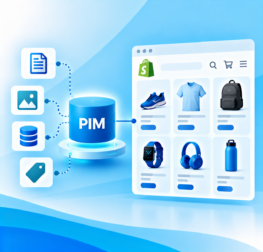
Pimcore and Shopify are often described as rivals, but they do different jobs. Pimcore is a data management platform best known for product information management (PIM) and digital asset management (DAM): it is where your team builds, checks and approves product information. Shopify is a hosted commerce platform: it runs the storefront, checkout, payments and orders. Many brands, manufacturers and retailers run both, with Pimcore in front of one or more Shopify stores.
This article explains when that setup makes sense, how a Pimcore Shopify connector moves the data, which system should own which field, and what to check before you build. It also covers what each platform does on its own. If you came for a straight comparison of the two, read Pimcore vs Shopify.
When You Need a Pimcore Shopify Connector
You need a Pimcore Shopify connector when Shopify’s own product admin can no longer keep up with your catalog, your stores or your other sales channels. Teams usually start looking for one in these setups:
- You sell thousands of SKUs with many sizes, colors or fitments, and product information lives in spreadsheets that someone copies into Shopify by hand.
- Your products carry more specs than Shopify’s standard product fields hold, so the extra detail sits in metafields that nobody keeps up to date.
- You run more than one Shopify store or market, for example a US and an EU store or a B2B store next to the retail one, and each store slowly drifts from the others.
- Your ERP owns item numbers, prices and stock, and Shopify needs them without a second round of typing.
- You also sell on Amazon, eBay or retailer portals, and every channel needs the same product information in its own format.
A powersports parts retailer that contacted Credencys put it simply: it needed a PIM to create and improve its Shopify and eBay listings faster.
How a Pimcore Shopify Connector Works
A Pimcore Shopify connector reads approved products from Pimcore, maps each Pimcore field to a Shopify field, and creates or updates the matching products, variants, images and collections in Shopify, either on a schedule or when a product changes. Product data usually flows one way, from Pimcore to Shopify. Orders flow from Shopify to the ERP, not to Pimcore.
The rule that keeps a Pimcore and Shopify setup clean is that each piece of data has one owner:
| Data | Owned in Pimcore | Owned in Shopify | Owned in ERP |
|---|---|---|---|
| Titles, descriptions, specs | Yes, created and approved | Receives them | No |
| Variants and options | Yes, full variant model | Receives them within its limits | Item numbers |
| Images, videos, documents | Yes, in Pimcore DAM | Receives the renditions | No |
| Categories and collections | Category tree | Collections and merchandising | No |
| Translations and SEO fields | Yes | Receives them per market | No |
| Prices and stock | No | Discounts and promotions | Yes, list prices and stock |
| Orders, payments, customers | No | Yes | Receives orders |
Our Shopify PIM integration page describes how Credencys plans this mapping for a live store.
Pimcore Shopify Connector Options
You can connect Pimcore to Shopify in two main ways, a ready-made connector or a custom integration on Shopify’s Admin API:
- A ready-made connector. Third-party developers offer ready-made connectors, such as Pimcore bundles, that sync products, variants and images without much custom code. Check which fields, stores and languages a connector covers before you choose it. This is the quickest start when your product model is close to Shopify’s.
- A custom integration. Your team or a partner builds the sync on Shopify’s GraphQL Admin API and Pimcore’s own data model. This fits complex variant structures, several stores, specs stored in metafields, or an ERP in the loop.
Many projects start with a ready-made connector and extend it with custom mapping. Credencys is a PIM consulting and implementation firm and a Pimcore Strategic Partner; its Pimcore implementation team connects Pimcore to stores such as Shopify, Adobe Commerce and BigCommerce.
What to Check Before You Build a Pimcore Shopify Connector
Settle these seven points before anyone writes mapping code:
- Field ownership. Write down which system owns each field: product content and assets in Pimcore, prices and stock in the ERP, orders and promotions in Shopify.
- Variant structure. Shopify limits the number of options and variants per product. Check the current limits in Shopify’s documentation and decide how large Pimcore variant families are split.
- Extra specs. Decide which Pimcore attributes become Shopify metafields and which of them appear on the product page.
- Categories and collections. Map Pimcore categories to Shopify collections and agree who owns merchandising.
- Images. Choose the renditions and sizes Shopify receives, and where alt text is written.
- Stores and languages. Plan one feed per store or market, with its translations, units and currencies.
- Sync and errors. Set how often the sync runs, how the first full load of a large catalog fits within Shopify’s API rate limits, what happens when Shopify rejects a product, and who sees the error. Shopify releases a new Admin API version every quarter, so agree who keeps the connector current.
What Should You Know About Pimcore?
Pimcore is a data management platform built on PHP and the Symfony framework. It has the potential to build a suitable digital platform that will satisfy all kinds of business needs. Pimcore offers a Community Edition under its own license, which sets who may use it free of charge, and paid editions with more features and support. The Pimcore platform comes with an arsenal of features and functions that help eCommerce businesses overcome the challenges they face in the virtual market.
The Pimcore platform offers a complete solution that supports and takes e-commerce activities to the next level. The excellent features of Pimcore allow eCommerce businesses to excel in driving data optimization, content optimization, data management, omnichannel strategies, optimizing sales channels, personalization, easing complex workflows, and executing well-optimized marketing strategies.
If you are excited to explore more about Pimcore, visit What is Pimcore and the Benefits of Pimcore. It unveils essential benefits of Pimcore that ensure consistent growth and success for your online business.
What is the significance of Pimcore in eCommerce?
Pimcore is the system where product information is prepared before any channel, Shopify included, receives it. The solution provided by Pimcore allows all types of modern B2B and B2C businesses to tackle their challenges easily. Pimcore is highly beneficial for medium and large-scale e-commerce businesses.
Here are the lists of aspects that make Pimcore so important for eCommerce businesses.
- Digitizing & Optimizing Product Catalogs.
- It brings automation to workflows.
- It allows businesses to create and deliver personalized content.
- Supports the marketing and sales teams with ready-to-use, optimized content.
- Pimcore provides a centralized data storage repository for storing all collected data.
- The centralized storage offered by Pimcore helps businesses share optimized data across multiple channels easily and quickly.
Don’t miss reading Why Pimcore Is Essential for Modern eCommerce Business to get insights into the potential of Pimcore for your eCommerce business.

Do you want to understand Pimcore’s potential in the context of your specific business domains and use cases? We would love to introduce Pimcore’s capabilities to you.
What Should You Know About Shopify?
Shopify is a hosted eCommerce platform that runs your online store: storefront, checkout, payments, orders and a large app ecosystem. The eCommerce platform, Shopify, comes with a user-friendly interface that allows anyone to use it easily and design a professional website.
Shopify serves merchants of every size, from new stores to large brands on Shopify Plus.
Unlike self-hosted platforms, the installation process of Shopify is much simpler, and you can get step-by-step tutorials along with excellent support from the Shopify team.
What is the significance of Shopify in eCommerce?
Shopify suits businesses of many sizes, and the platform offers a wide range of features and functions. The upcoming section will elaborate on the myriad reasons why the Shopify platform is the most preferred digital eCommerce solution for many businesses around the world.
- The Shopify platform comes with a cloud-based hosted solution that works easily.
- The platform includes various built-in marketing tools that help start-up companies a lot in terms of cost-wise promotion of their products.
- Shopify provides technical support from its own team.
- Hosting, speed and security are handled by Shopify, so merchants do not run their own servers.
- The Shopify App Store adds third-party apps, including connectors to PIM platforms.
Are you interested in exploring more about the Shopify platform and understanding how it contributes to the concrete progress of your eCommerce business?
Where Pimcore and Shopify Overlap, and Where They Don’t
Both platforms touch product content, which is why they get compared. In practice, the overlap is small:
- Both handle product content and translations. Pimcore is where it is created and approved; Shopify is where it is shown.
- Both support SEO fields. In a connected setup, Pimcore usually owns SEO titles and descriptions and the connector sends them.
- Both integrate with third-party systems.
- In a Pimcore and Shopify setup, Shopify runs the storefront, cart, checkout, discounts and payments.
- Only Pimcore is built to model complex product data, approval workflows and assets for many channels.
Well, let’s take a look at the difference between these two eCommerce platforms in terms of features.
Pimcore and Shopify: Comparison Based on Features
Notable features of the Shopify platform
- It’s easy to install and set up the Shopify eCommerce platform.
- Effective handling of various user experience activities (promotions, discounts, campaigns, and so on).
- This allows business owners to take appropriate steps to reduce cart abandonment by end-users.
- It allows you to provide introductions for product reviews.
- Easy payment and shipping configuration.
- Supports personalized in-store marketing campaigns.
- Mobile optimization of an eCommerce site.
- Hosting and security handled by Shopify.
- Enhances site performance.
- It offers free web eCommerce templates
Unique features of Pimcore
- Enhanced feed management systems
- It is easy to integrate into marketplaces.
- It allows the integration of any number of external systems.
- Data importing from data sources is so simple.
- Digital asset management with automatic image renditions for each channel.
- Supports creating and managing complex workflows.
- It supports on-site customization
Do you want to discuss the customized features that you need to develop and integrate into a Pimcore-based tailored eCommerce solution?
When to Put Pimcore in Front of Shopify
Put Pimcore in front of Shopify when several people create product information, when it goes to several Shopify stores or other channels, or when it holds more detail than Shopify’s product fields. Keep Shopify alone for one store with a small catalog.
Before finalizing the eCommerce platform for your business, make sure you are aware of all those trends and customer expectations, along with the market demands. Based on those aspects, you need to pick a suitable platform that can allow you to face and overcome all those eCommerce challenges your company may face.
Here are the lists of factors that determine why and when you should use the Pimcore platform.
- Engaged in a business that deals with a high volume of data and requires efficient data management, data maintenance, data enrichment, and data sharing across multiple channels, choosing Pimcore would be the best option.
- Seeking a single and complete solution for your product data and its challenges, Pimcore is a strong fit.
- Looking for a digital eCommerce platform that offers a wide range of features along with a variety of functions like providing high-quality data, content personalization, and omnichannel data sharing means, Pimcore would be the right solution.
- If you are a business owner who is looking for a platform that optimizes your business results and allows you to take control over the projects you are handling, then opting for this Pimcore platform is the right choice.
- Are you one of the many businessmen running small businesses and looking to start eCommerce activities? Then Shopify is the best option.
- If you are new to the eCommerce business and seek assistance in handling your eCommerce platform, then Shopify is the ideal solution.
- If you are looking for a simple-to-use digital platform without any professional assistance for implementation and maintenance means, Shopify is the right option.
- If you run one Shopify store with a small catalog and a few people editing products, Shopify’s own product admin is usually enough and you do not need Pimcore yet.
Pimcore or Shopify? Usually Both, Joined by a Connector
Pimcore and Shopify are not competing for the same job, so most growing catalogs do not need to pick a winner. The Shopify platform suits businesses seeking one registration with multiple options, easy-to-use drop-shipping features, and more support. Pimcore is the better choice for preparing product information for Shopify and every other channel.
Where Shopify’s product model runs out of room, Pimcore holds the full detail and a connector sends each Shopify store what it needs.
Pimcore and Shopify: What’s the Right Choice?
Whatever platform you choose, must be a strong foundation for your business. You should consider all aspects of your company along with the features provided by the platform before choosing it.
The eCommerce platform you are going to pick should ease your work and provide you with an enjoyable environment to work in instead of creating more complex problems. Who can choose what platform depends on the size of the store and of the catalog. Shopify on its own suits a new or small store, and Pimcore is added when product information outgrows Shopify’s product admin. Both Pimcore and Shopify offer an eCommerce solution for businesses to grow online sales.
Who Should Use Shopify?
If you are a small business owner and looking for a perfect platform to start selling products or services online then choosing Shopify would be the right choice.
In terms of small businesses, the business idea should be tested in the most basic way possible so that they can manage it if any mishaps occur. Seeking a solution that allows small business owners to start selling their products/services without spending much would be the wisest and most recommended method.
In such cases, opting for Shopify would be best. Shopify is a ready-made hosted platform that comes with a subscription model.
Have you made your choice between Pimcore and Shopify? If not, connect with Credencys’s tech experts who suggest the right platform based on the analysis of your eCommerce needs.
Who Should Use Pimcore?
If you are a businessman who already owns a well-established business selling products or services successfully online, you need to choose the most reliable platform that allows you to expand your business to the next level. In this scenario, preferring the Pimcore digital platform would be the ideal solution.
For a well-developed and established profitable business, having a solid foundation would be the right choice. A solid foundation helps businesses by providing the desired scalability along with a complete set of digital products to boost all kinds of online activities.
When it comes to a strong foundation along with a complete set of digital products, Pimcore is a strong option. It offers a complete package for more demanding organizations, and it can sit in front of Shopify and every other sales channel.
In most cases, companies looking to expand on a large scale prefer the Pimcore platform; however, this digital platform also supports slightly smaller businesses.
Here are the product areas Pimcore covers, each linked to our page on it.
- Product Information Management (PIM)
- Master Data Management (MDM)
- Digital Asset Management (DAM)
- Customer Data Platform (CDP)
- Digital Experience Platform (DXP)
- Digital Commerce Platform
Together, these areas cover product, customer and content data around the store. Apart from supporting eCommerce activities, the Pimcore platform helps businesses in many other aspects as well. Most businesses still run their storefront on a commerce platform such as Shopify and use Pimcore to feed it.
Pimcore supports eCommerce operations with a wide range of features and functionality. Don’t miss reading Pimcore Offers Unprecedented Push to Your eCommerce Strategy to understand Pimcore better from an eCommerce perspective.
Do you want to discover more about Pimcore and its frameworks to build an eCommerce platform that drives better customer engagement and conversion and increases sales and ROI?
Pimcore and Shopify: The Short Version
Pimcore and Shopify work best together when your catalog, stores or channels have outgrown manual product updates. Shopify runs the store. Pimcore holds the product information and assets. A Pimcore Shopify connector, ready-made or custom, keeps Shopify in step with Pimcore, while your ERP keeps prices and stock.
If you are still choosing a PIM for Shopify, read Best PIM for Shopify. More guides on PIM selection, integration and product data are in the PIM resources hub.
Pimcore Shopify Connector FAQ
Is there a Pimcore Shopify connector?
Yes. Pimcore can serve as the PIM behind one or more Shopify stores, and third-party developers offer ready-made Pimcore Shopify connectors, for example as Pimcore bundles, that send products, variants, images and translations from Pimcore to Shopify. Teams with complex catalogs, several stores or an ERP in the loop often build a custom integration on Shopify’s GraphQL Admin API instead, or extend a ready-made connector.
Should I use Pimcore or Shopify?
Most businesses with a large catalog use both Pimcore and Shopify: Shopify runs the online store and Pimcore manages the product information that feeds it. Shopify alone is usually enough for one store with a small catalog. For a side-by-side look at features and fit, read Pimcore vs Shopify.
Which PIM platforms integrate with Shopify?
Pimcore, Akeneo, Salsify, inRiver and Syndigo can all feed Shopify, either through a ready-made connector or through a custom integration on Shopify’s Admin API. Some lighter PIM tools are sold as Shopify apps and suit a single store, while Pimcore, Akeneo, Salsify and inRiver are built for larger catalogs and several channels. The better question is which PIM fits your catalog, channels and team. The guide Best PIM for Shopify compares the options.
What product data does a Pimcore Shopify connector sync?
A Pimcore Shopify connector typically syncs product titles, descriptions, specs (often as Shopify metafields), variants and options, images, collections, SEO fields and translations. Prices and stock usually come from the ERP, and orders go from Shopify to the ERP rather than back to Pimcore.
Do I need a PIM if I only sell on Shopify?
A business that sells only on Shopify needs a PIM when product information has become hard to manage there: thousands of SKUs, many variants, specs that do not fit Shopify’s fields, several stores or markets, or several people editing products in spreadsheets. With one store, a small catalog and one editor, Shopify’s own product admin is usually enough.





Tags: