What is the Future of React Native? Here is everything that you should Know

In the last few years, the mobile application market has shown some unprecedented growth that was never experienced earlier. The emergence of relatively cheaper and capable smartphones is said to be the biggest reason behind the growing popularity of the mobile app market. In recent days, React Native has emerged as one of the frontline frameworks to develop mobile applications. But, many people ask the question like what is the Future of React Native? Is it going to sustain for a long period or collapse like most other JavaScript frameworks? Let’s try to find a genuine answer for such valid questions. Here, you will know the future of React Native from every possible perspective. But, before rushing to the theme of this article, here are some basic details about the React Native.

A Brief Introduction about React Native

If you are new to the mobile application building, it is genuine to ask questions like what is react native & how does react native work. React Native is an open-source JavaScript framework that helps to build the User Interface (UI) for the mobile application. The framework can be effectively used for both Android and iOS app making. It was in 2015 when the popular JavaScript framework introduced to the highly competitive market, and later it turned out to be a game-changer. In today’s market, several popular industry leaders choose to React Native for building their mobile apps.

Here is a list of market leaders who are using React Native for building their application.

React Native is here to stay!

There are two major reasons to back the future of React Native. In the last decade, smartphones replaced the computer to become the primary computing device for the majority of the users. The evolution of the smartphone market can be seen in the growth of revenues generated by applications. In the first half of 2019, Apple’s App Store and Google Play Store generated a combining revenue of whopping $39 billion, which is around 15% higher than that of 2018. Thanks to the growing demand, you can expect a similar or even higher growth rate in the near future. The growing demand for the mobile application is going to help all the app making frameworks, including the React Native.

If you are following the app making industry, you must have noticed that several such popular platforms experience sudden fall due to their inability to adopt the continuously changing technology. But, the same cannot be the case with React Native, as the platform is backed by none other than Facebook. Besides, React Native has a significantly broader developer community.

Besides, there are multiple unique aspects of this JavaScript framework that makes it a future-proof solution.

What is the future of React Native? Here are the factors that will drive the growth

Here are some unique advantages of using React Native that help the app makers to stay one step ahead of the competition.

Improved Performance

React Native offers improved performance, especially through native control and modules. The open-source framework uses a different thread for native APIs and User Interface; therefore, you can expect a significant improvement in performance in comparison to its rivals like WebView. More often than not, React Native-based applications load relatively quicker, and feels smooth while using.

Reusability of Code makes it a Great Value for Money Option

Generally, mobile app developers required to develop separate applications for the Android and iOS platforms. But, by going with the React Native, you can develop as many as 90% of the framework for both the operating systems using the same code. However, initially, it was meant for iOS application making, but, after looking at the reception, Facebook decided to open it for cross-platform usage.

Such a unique reusability feature makes the app develop a cost-effective solution. Besides, it also helps to save a huge amount of time for the app developing company. In fact, a recent study suggests that the React Native saves around 50%-80% of the total time required for the app making for different platforms. Such effective features assure a bright future of React Native.

Incorporation with Existing Application

React Native development is capable of incorporating its components in existing mobile applications, as well. Besides, you can use the Cordova-based code by taking the help of the plugin. However, the existing application must be created by using Cordova and Ionic code.

Only JavaScript can do the Job for You

React Native only demands expertise in JavaScript. Therefore, you can develop applications both for Android and iOS, without knowing Android Specific Java or Swift, respectively.

Compatibility

Thanks to its open-source framework, in the future, you can see the React Native will be compatible with all the existing platforms, such as iOS, Android, Windows, Virtual Reality helmets, and headsets, tvOS, etc. Such diverse compatibility options will help the framework to grow further in the near future.

Web Applications

Even though smartphone usage is gradually shadowing the use of the computer, for a universal presence, it is always recommended to build a web application. React Native web offers you a full-fledged web application without maintaining multiple code lists.

Fabric: An Evolution is on the Way

React Native is currently working on an ambitious large-scale project, and they are calling it Fabric. Under the Fabric program, they are planning to re-architecture the JavaScript framework. The project aims to make the React Native more flexible. Besides, Fabric will help the React Native framework to integrate with hybrid JavaScript-based infrastructure. Under the project, they are planning three major internal changes which can help the React Native to grow further in the coming future.

1. New threading model

The recent threading model allows each User Interface (UI) update to work on three separate threads. But, the ongoing Fabric project will completely change the existing mechanism, and it enables to call synchronously into JavaScript on any given thread. As a result, the stress on the main thread is going to be reduced considerably without compromising responsiveness.

2. Async rendering capabilities

Under this change, the React Native will have async rendering capabilities. Therefore, it will be easier to handle asynchronous data, and further, allow multiple rendering priorities

3. Simplified bridge

They are planning to build a fresh simplified bridge, which will improve the direct calling between JavaScript and native. Besides, it will further simplify in building various debugging tools.

One of the experts who is currently working on the Fabric project revealed that they are implementing the lessons that they have learned in their last five years. When it is implemented properly, the framework will be more efficient and modern. However, the existing React Native-based applications are going to be functional with no or few changes, which is indeed a piece of good news.

Conclusion

If you were one among those who were asking what is the future of React Native, hopefully, you got your answer. From the recent position, the future of React Native looks good. A large number of developers and reusability of code played an important role in the growing popularity of the React Native. Over the last five years, the framework has emerged as the favourite option for mobile application developers across the platforms. Besides, the ongoing Fabric project is going to be massive for the overall framework.

Frequently asked questions

1. What are the important features of React Native?

There are a number of unique features on the React Native. However, the reuse of code for multiple operating systems, such as the Android and iOS seems to be the most important feature of the framework. It helps the application developer to save money and time. Besides, its top-notch performance will always drive footfall to the framework.

2. Can I run my React Native application on the web, and React app work on a smartphone?

Sadly, No. You cannot run. The code for the React Native web relies on Web browsers. Similarly, the code designed for the React Native is dependent on the features given in the mobile platforms. Therefore, it is not practical to run the web application on smartphone and vice versa. However, you can use some of the React Native codes while making the React Native web.

3. What is the Future of React Native?

The future looks bright from here. The ongoing Fabric project is capable of changing the face of the framework. Besides, its large number of developers and multi-platform support is going to drive more users in the future, as well.

4. Do the React Native applications for iOS and Android look the same?

As both the platforms offer completely different sets of features, in most occasions, the applications look different. Though it is quite possible, developers prefer to follow the guidelines mentioned for the UI by the platform.

8 Must Have Features of Product Information Management System

Businesses use Product Information Management (PIM) solutions not only to manage the crucial product information in a consolidated way but also to deliver groundbreaking customer experiences.

Robust PIM systems allow organizations to manage product information easily and effectively as well as deliver accurate, multichannel, rich and complete product content to the customers anytime, anywhere.

It simplifies your life by allowing sorting the important product data in one platform. You can also have detailed insights into other sensitive data that goes along with product information.

Enabling companies with a centralized view of extensive product information, PIM helps them to gain value out of amplifying the volume of suppliers, assents and material and part data is crucial.

Well, to manage the product content and deliver the improved experiences to the customers, PIM consists of many advanced features.

This blog post unveils the essential features that you have to consider while choosing a ready to use the Product Information Management solution or developing a custom PIM system for your business.

Top 8 Important Features to Consider in Product Information Management Solution

1. Bulk Editing

Editing the product information that is available on multiple distribution channels is a very vital task. If you follow manual or traditional ways for product data editing, then you need to invest a lot of time and effort into information editing across all the distribution platforms, one after another.

PIM system allows businesses to edit the product data cumulatively. It helps launch the product information on different channels and platforms, with better consistency.

The solution saves a lot of time that your team spends on manual data editing so that your team can focus on more creative, productive and complex tasks.

2. Catalog Management

Product Information Management system allows you to create new catalogs, define promotions, offers, and discounts, and determine the catalog specific pricing parameters with just a few clicks.

The multi-tenant enterprises can create and share the catalog across subsites, commerce teams, and multiple vendors. Leverage the streamlined catalog management and merchandising using a robust PIM solution for your online business.

3. Product Content Localization

The best PIM solution allows you to present your product content across the globe with a high level of localization. It helps you publish your product information in the preferred language, currency, and dialect of your target audience.

To enable you with the location facility, the PIM system contains globalization tools that apply localization depending on the region of the viewer. If you want to expand your business across the globe, then do not underestimate the location feature.

4. Product Data Modeling

With the help of this feature, you can create a custom product data model quickly and easily.

A product data model is related to the product information, its characteristics and attributes, and how it relates to other data. While designing a custom product data model for your organization, you need to understand how it addresses the frequently changing market demand.

Go for a PIM system that enables you with highly flexible data modeling that can be scalable as your business grows. The important aspects of product data modeling are multilingual data management, Object relation, classification standards, digital asset management, and data inheritance.

5. Data Distribution & Syndication

Product Information Management system allows you to share your product data consistently and seamlessly across all offline and digital sales channels, consumer-facing apps, and business systems.

It syndicates your product information automatically, regardless of language, location, currency and format using advanced connectors. Thus, you do not need to integrate and use unnecessary data distribution tools.

6. Digital Asset Management

Integrate powerful Digital Asset Management (DAM) software in your PIM solution to manage all your digital media such as images, videos, graphics, documents, and other media content in a centralized location.

With DAM software you can create a better digital experience for your customers by integrating, consolidating, and managing any amount and any type of digital assets.

When you associate digital content with the product page, it increases your conversion rate. Moreover, implementation of DAM allows to establish an additional relationship with the digital assets using location, brand ad supplier information.

7. Collaborative Workflow

Embracing the integrated workflow management, you can orchestrate, collaborate and automate your business process based on actions, decisions, and notifications.

To speed up the product time-to-market, the PIM solution allows multiple users to create and edit the product information parallel. Integration of a graphical workflow editor, users can access relevant tasks and content depending on the rule and role-based configurations.

8. User and Right based Management

PIM platform enables businesses with advanced rights management. You can create a fine-tuned and customized interface for each use case and individual users.

You can control who has access to which asset or content and who has the right to edit, delete or download product data. The users can have a personalized and actionable dashboard based on the rules and responsibilities at the module level.

Users are allowed to manage access privileges at the attribute and record level. The PIM system allows to create, delegate, approve and complete the tasks as per user’s privileges and roles.

Credencys Builds Powerful Product Information Management Solution using Pimcore

Credencys uses Pimcore, an open-source platform, to build a custom Product Information Management solution as per the specific business needs of the client. We consider all the above-mentioned features while developing a PIM system.

Offering a complete range of Pimcore development services, our skilled developers build PIM software by integrating required third-party tools, software, and APIs.

We make sure the system does not only allow you to manage your product data seamlessly but also helps you in delivering better customer experience. While developing a PIM solution, we ensure you can publish your product information on a wide variety of platforms such as eCommerce, in-store signage, and print catalog.

Are you ready to invest in a robust PIM solution that contains all these features to enable you with lucrative benefits?

Frequently Asked Questions about Product Data Management

What is a PIM platform?

PIM is a set of tools and processes that manage product information in a centralized repository for your eCommerce business. It ensures you have an accurate and consolidated view of product information. Product Information Management system provides a centralized platform to manage your eCommerce products and services data in a cost-effective way.

What is product content?

Product content is a simple text, images, and other information that a retailer or brand presents to the customer to describe its products ad services. It consists of a product name, description, prices, dimensions, and all the attributes that help consumers to get a better understanding of the item they are viewing.

What is the product information management system?

Product Information Management (PIM) system manages the massive product data that are required to promote and sell the items via distribution channels. The advanced PIM solution supports multilingual data, multiple geographical locations, as well as modification and maintenance of product data within a centralized product catalog.

What does a PIM do?

Product Information Management (PIM) allows businesses to handle all product elated data, content and other material in a centralized repository. It is very essential to market and sell products effectively. PIM also makes sure to create high-quality data that you use for internal purpose or multichannel distribution.

Key Considerations a Healthcare Mobile App Developer Must Keep in Mind

In recent days, the demand and usage of healthcare mobile apps have been increasing along with the growing trend. The latest research by GMC states that in previous days only 30% of doctors were using mobile apps, but now more than 80% of doctors have been using mobile apps as a habitat. The trend has always been growing because the health- care app development streamlines the regular process that happens between a doctor and a patient in terms of managing appointments, creating online medical history, references, digital medication if either or both patients or doctors are unavailable.

If your doctors are busy with other schedules for the day, you get suggestions from him to consult another doctor of the same specialization for temporary treatment if the problem is not that serious. This ensures that you do not miss the rapport between you and your doctor, and at the same time, you get your health problem sorted out. So, there are multiple benefits of having a healthcare mobile app.

But there are certain factors you need to consider before developing a mobile app. Patients do not wish to see glitches in your mobile app; hence you need to do certain analysis before you intend to develop a health care app independently. There are many ways to choose a healthcare app development. You can hire a mobile app developer or outsource it to a healthcare mobile app development company. In the following section, we will see how to develop a healthcare app and factors that you should consider.

Key factors to keep in mind for a healthcare mobile app development

#1: Hardware

Hardware as in devices compatibility is the most essential factor that as a developer you should keep in mind because healthcare mobile apps are mostly used by people who use tablets, smartphones or desktops.
But the major focus goes on tablets according to the statistical data. So you must design and develop your healthcare app compatible with smartphones, which likely to function well on tablets too. You should create features that accommodate a tablet but should be good to go with your smartphones as well. Similarly, apps designed for iPhones work fine on iPads if they are not any control-based apps.

#2: Interoperability

Interoperability plays an important role in healthcare app development because the app you develop should satisfy all the features or activities that the hospital is currently taking care of. Most hospitals prefer standalone software and transforming that into a mobile app because they consider that their everyday activities should resemble the app and the patients who use their app should not find it indifferent.

Hence hospitals do not opt for cloud hosting and hang on to traditional hosting that helps them save huge money spent on cloud and also maintain their everyday process. So make sure that your app should be able to overwrite this interoperability and provide hospitals the best product.

#3: UI/UX demands

The user experience design and the user interface design play a crucial role in deciding the success of your healthcare mobile app. This highly influences both doctors and patients with respect to app design and navigation interface. Make sure that the app you develop is user-friendly and has options that make patients fill in the required details hassle-free and for doctors to go through their patient’s records on/off the appointments.

Many times, you may overlook the patient’s aspect of looking at the mobile app. They use healthcare mobile app in vulnerable situations; so you should be more careful with the font style and size, text pattern, colors, negative picture posting, etc. which could worry them from using the app. Be it the doctor or the patient, if they get into your app, they should read through and enjoy multiple options you have come up with and explore the app.

#4: Application programming interface components

An application programming interface (API) is a tool that acts as a medium to execute a specific task with the software or in other terms, carries out interaction with the software module you have designed for your dedicated healthcare mobile app. If you have noticed in any social networking apps or advertisements, when you log in for the first time, it asks for your authentication to access some files from your device. The same module is required for a healthcare mobile app as well to connect your device to a remote server that accesses the central patient’s repository, particularly for patients engaging solutions.

Also, APIs are required to allow vendors and suppliers to get in touch with you for business expansion. So you may require more APIs depending on the complexity of your mobile app design. However, not all APIs have the same functionality and you need not allow all of them.

#5: Repeated process development

Your app development should have the quality of carrying out iterations in processes, which is expected by many users because most popular applications and software have been developed using iterations. It is recommended that you follow an agile program to deliver software codes in an iterative manner. Usually, a healthcare app development company for its users performs this process.

#6: Information security

Many app developers do not follow the habit of storing their app data in the device for some security reasons. It should be stored on the app server, which is generally managed by the hospital system administrator. As they do not allow more APIs into their application, it becomes easy for hackers or other third-party or even developers to access their data. Hence while you code, ensure the entire data is encrypted so that you need not experience a security or data breach.

#7: Minimum viable product

It is the most basic factor that relates to work in a production setting. Your customers are more concerned about the cost they invest in developing a healthcare mobile app. When investing all your capital in the MVP, you should be more aware of the additions and outcomes of the app you develop. Your customers may send you frequent feedback which you should consider as priority and important as well and work on those things to deliver an exceptional product. At any stage, you should not get stuck anywhere when the app is in the development stage.

#8: Platform Security

Android developers demonstrate that though Android is a good platform to work on when it comes to security, it is quite vulnerable. When compared to iOS, Android does not provide the required security to the data of users. Not many lawyers are favored towards developers launching an application for Android users. But you cannot help with it because more than iOS phones, we have more Android smartphones in usage, and Android smartphone manufacturers are also trying to fill the hole and make it safe. So try to code it in a manner that at least sensitive information of patients does not go out.

#9: App testing

You should develop a framework that can be tested again and again before you give your customers a finished product. Several technologies have come into existence that allows you to change the required coding part alone without revamping the entire app design and development. So you can opt for such applications or software and perform multiple app testing to find bugs and errors at the beginning itself.

Conclusion:

The need for developing a healthcare mobile app is growing. As a developer, I hope this blog has offered you sufficient information on how to proceed with mobile app development. You shall write to us or reach us for any queries on app development if required.

Frequently asked questions

1. Which platforms can I develop a healthcare mobile app?

There are two to three platforms that you can rely upon. As most of the smartphone users have Android followed by iOS and then a very few Windows, you can develop a great healthcare mobile app for Android, iOS and Windows smartphone users.

2. What would be the average duration to develop a healthcare mobile app?

The average time it may take to create an enterprise-level app would be at least 2 to 3 weeks, but the actual time to develop a healthcare app depends on the complexity of features and user design experience.

3. How many stages does a healthcare mobile app development include?

Mobile app development consists of three stages. The first stage would be planning that involves understanding your business and your motive behind developing a mobile app and developing a wireframe solution. In the second stage, the design and development cycle of the app will be carried out wherein you bring in images, sound effects, videos, etc. In the same stage, you carry out testing of the app before the launch. The final stage of the app has its launching followed by its marketing and promotion.

4. How much will it cost for developing a Healthcare mobile app?

As mentioned previously, the cost of an app depends on the app preferences, choosing the backend and front end application and software usage, manpower and complexity of features you would like to bring in.


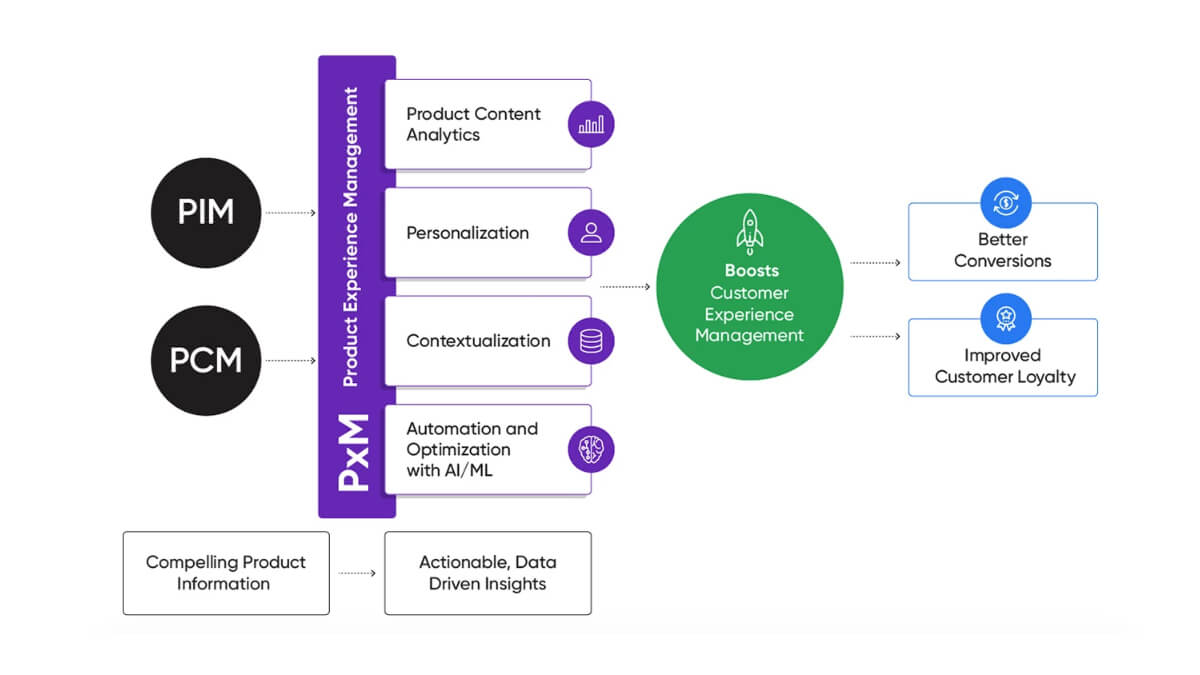
What Is Product Experience Management (PxM)? Explore Everything About PxM

Gone are the days when customers make a purchase just by going through a product catalog available on your eCommerce store. You cannot satisfy them by addressing their requirements. Instead of just products, they have started considering experiences delivered by your brand.

The eCommerce space is getting more and more challenging as the customers constantly demand a compelling experience. They want easy, personalized, and contextualized experiences for your eCommerce platform while making a buying decision.

And, Product Experience Management helps you enable your customers with a delightful shopping experience. Shoppers look for ample information about products to make sure whether the product is what they intended to buy.

Retailers can offer superior experiences to the consumers by embracing Product Information Management solutions that eventually help them to achieve stronger brand loyalty, increased conversions, improved customer satisfaction, and reduced return.

Now, you might have many questions about the Product Experience Management. This post will offer you almost every information that is essential for you to consider PxM for your business.

Let’s start the journey together to unveil all essentials of PxM.

What Is Product Experience Management (PxM)?

Product Experience Management is a modern multi-channel strategy that focuses on customer interaction to enable them with delightful buying experience they are opting for. It ensures your product information is complete, relevant, and accurate and available to your customers on time at their preferred channels and touchpoints.

In simple words, Product Experience Management is a process to deliver the right product information to the right customer at the right moment via the right device or touchpoint.

The foundation of Product Experience Management is to deliver a great customer experience. It enables organizations with the offer the right data and insights about the type of product experience that buyers are looking for.

Additionally, PxM helps you to leverage omnichannel eCommerce by allowing customers to shop online and pick the product from the store.

In short, PxM provides you all the information relayed to your products and customer that allows you to deliver personalized, social powered, omnichannel or multichannel, customer-centric, and search guided experiences that engage and convert the shoppers.

3 Core Ingredients of Product Experience Management

To enable customers with the exact information they are looking for, you need to define the below listed three areas.

Content

Create your product content in such a way that helps buyers find your products and understand exactly what they will receive while they make a purchase. In product information, you need to display the right product information, material, videos, photos, colors, dimensions, shipping details, and more.

Context

This is the key Crux of PxM that helps you in creating and delivering relevant and personalized experience about your product. You need to explore all the different ways your shoppers are searching for your product. Also, you have to optimize all the assets that might affect their experience across all different touchpoints, devices, and channels.

Optimization

Keep track of your product performance and continuously apply A/B testing in order to improve your customer experience on an ongoing basis.

What capabilities you should consider in the Product Experience Management solution?

Data Collection

You can collect product data from the different internal and external sources of your organization. But, to access this data, you need to use PxM with different connectors or APIs that have import capabilities t collect the data from various applications. The robust PxM solutions trace product content from trusted sources.

If you want to have a Product Experience Management solution for your retail business, then find out the one with inbuilt capabilities of data collection. It helps to on-board product data from your supplier and improves time to market of your product.

Data Standardization

Once you collect the data from different touchpoints or channels, you need to standardize it and create a single record. A consolidated view of the data enables you with profound insight into your product performance and customer behavior.

Select a PxM solution that allows you to populate product attributes based on the standardized data using business rules. Also, make sure the solution contains a validation workflow to deliver accurate data.

Data Enrichment

Data enrichment is the key part of any powerful PxM system where not only text attributes but also images of the product also get enriched. The solution should be capable to enrich the product by location, by channel, and in the correct context.

Data Contextualization

Contextualization is all about making your product information relevant to the buyers. To enable customers with the correct context, you need to ask below questions to yourself.

  • Where will your customers interact to access the product information?
  • What languages do they prefer to read?
  • Are all the images or videos relevant to all the markets you are targeting or you need to use different images and videos for different countries or markets?

If you really care about customer experience, then you cannot underestimate to populate contextual and relevant product data for each channel and each location. It is very essential to deliver a compelling product experience to the customers. In fact, it helps you establish an emotional connection with your buyers.

Data Distribution

Well, after performing the above listed four processes, your product information is accurate, complete and in context. Now, your PxM solution can deploy your product catalog on different channels.

Integrated APIs, connectors, and export profiles make the Product Experience Management a complete solution to build a catalog that works for all channels such as marketplaces, eCommerce store, vocal assistance, POS, print, and more.

How to Make Product Experience Management Significant for Your Business?

Contextualization and personalization become mainstream

Personalization is key.

Without getting a detailed understanding of customers’ buying journey and consumer behavior, it’s quite impossible to address their unpredictable needs in real-time. To inspire customers to take action, it is very essential to deliver them valuable and relevant product information.

To enable shoppers with contextual product information, you can use the PxM solution that helps you to measure, optimize and deliver personalized experiences.

To deliver better product experience, you need to understand the context in which customer product interaction. If the product holds emotional significance for the customers in the context of their problems or challenges, then you can quickly grab their attention.

Marketers are using different contextual technologies to identify customer interests and desires and use the data to get customer attention.

Integration of AI & ML help understand customer interests

Artificial Intelligence (AI) and Machine Learning (ML) are the hottest technologies these days.

Artificial Intelligence

If we talk about AI, Product Experience Management solutions are also using these technologies to fetch a lot of information about your product and learn about how the customers repeatedly engage with the site searches.

Till the time PIM receives data with the help of AI, PIM continuously collection information about products based on the criteria and relationship set within the solution.

Leveraging smart search, AI provides you more insights about customer preferences and choices. Consumer inputs help you to bring up a more specific product and allow you to offer what is being asked by them.

Thus, PxM helps you establish a relationship between product and customer. But, to make AI work effectively, you need to fetch information from the PxM in a highly organized manner.

Machine Learning

ML enables you with the contextual knowledge for product categories. This data could be related to a particular customer segment or an individual buyer. The technology majorly helps you to predict possible buying scenarios and keep updating the predictions as and when the new data is available.

Product Experience Management starts with Product Information Management

Technically, PIM is the base of PxM. Without product information, it is not possible to establish a relation between products and customers. But, PxM solutions are completely different from PIM systems.

PxM allows retailers to respond effectively to the challenging needs of all customers and different channels. Eventually, it allows you to deliver a great product experience that adds new customers and retains the existing one.

With the help of API led connectivity and personalization engine, PxM can deliver the product content whenever and wherever customers demand it. Product Experience Management solutions improve customer’s trust and boost sales.

Furthermore, the solutions help your digital marketing and eCommerce teams to achieve improved time to market and better business growth.

Drive customer loyalty by offering emotional experiences

Appealing to user’s needs is no more helping you to grow your business. Retailers have to deliver emotional experiences.

When there are a lot of options available for the same product, the customers become more choosey. They browse the product information for hours before making a buying decision. But, when they do not get satisfactory information, they buy nothing.

Before buying a product, customers tend to analyze the product quality and worth as per the standards defined by them. Thus, every single Stock Keeping Unit (SKU) impacts their purchasing decision.

When the time of discovery turns into a moment of buying, along with revenue, it improves buyers’ perception of your brand and boosts brand recall. If the customers face disappointment during the phase of product discovery, there are high chances of losing the prospect.

The fact is, the market is highly competitive as many brands offer the same products to the customers. So, if you miss a customer touchpoint or product content, it directly costs you to lose a buyer along with the customer lifetime value.

Benefits of Product Experience Management Solution

Connecting customer data and product data, Product Experience Management helps you to understand your customers in a better way so that you can personalize your services, interactions, and communication on an individual level. Here are a few most essential benefits of PxM.

  • Offering the right product information to the right customer at the right moment through the right channel, you can improve the omnichannel experience for the buyers.
  • PxM solution allows you to target product information more effectively and precisely by providing information about where your customer is and what device they are using to explore the product information.
  • You can provide more meaningful and relevant purchase recommendations as you know about what your customers are looking for and which product can address their needs.
  • Improve your relationship with suppliers as you can connect information about the suppliers with information about the products delivered by them.
  • Suggesting relevant products to the customers, you can earn a good volume of discounts from suppliers and/or drive up a good price margin. It helps you to make the products available in the stock.

Why Retailers Should Consider Product Experience Management of Pimcore?

Consider Product Experience Management of Pimcore

Pimcore is all in one solution that consists of multiple solutions under one roof. You can use its different solutions separately as per your requirement as well as you can use them together to build a complete business solution.

To deliver an excellent product Experience, the open-source platform allows you to utilize its different solutions including PIM, DAM, MDM, CMS, Customer Data Platform, and Digital Commerce Platform.

Connecting all these different components of Pimcore, you can build an experience manger that enables you to provide the right product information to the right customer at the right time through the preferred channels and devices.

How Credencys Can Help Retailers develop a Product Experience Management Solution Using Pimcore?

Being a strategic partner of Pimcore, Credencys has proven expertise in developing robust solutions by using the different components of Pimcore separately and together. We have a team of skilled developers who are trained by Pimcore and offer you end-to-end Pimcore development services to develop and deliver a robust web and mobile solutions as per your specific business needs.

Let’s work together to build a product experience management solution that helps you attain all your business objectives by enabling you will all product data and customer data.

All You Need to Know About Web Application Architecture

Web application architecture is a web framework that comprises the network relationships and interactions between application components such as middleware systems, user interfaces, databases, servers, and the browser. Altogether it appears as a web page for users on their system to view and understand information.

If you look at the process of progressive web application architecture, it starts with the user entering the URL address on the address bar or in the browser’s search bar. Once the browser fetches the required URL, it displays information on the screen. Now if you look at the manner how a web application architecture works, succeeding in the search, the network transmits data to the browser through the search, and the browser broadcasts the page that has been requested.

The same process is applicable even with a web app development as it has several categories of pages similar to a website. So web application framework architecture is customizable according to your web design and development needs, but the mode it considers to display data on the page remains the same. In the next section, we will discuss how to design database architecture for web applications in detail.

How To Apply Web Application Architecture in Real-Time?

Web applications consist of two different sets of programs that run individually and deliver harmonious solutions simultaneously. These two sets of programs include a code in the browser and the server, which functions according to the user’s inputs and as per the request received from HTTPS protocols, respectively. It all depends on developers to decide which set of the program can be used for web application architecture.

Types of web application architecture for a successful web app development

Three types of web application architecture are involved in web app development and play an important role in the outcome of application architecture—Single page applications, Microservices, and serverless architecture.

  • Single-page applications: Single page web application is popular among web developers and users. It does not require much application support during development except including only the required elements of content. If you expect your web app to be great and offer an interactive user experience, then choosing single page web apps is ideal because the interaction between the web app and the user remains dynamic and flawless.
  • Microservices: Microservices architecture framework lets developers execute applications faster and with greater efficiency based on the execution of a single and any other functionality. With using multiple coding languages to develop components, you have the privilege and flexibility of choosing the technology of your choice.
  • Serverless architectures: Architectures without servers can be implemented on applications without the need for correlating with tasks referring to infrastructure. It does not involve managing the backend servers and developers can have reduced effort when working on other infrastructures.

List of Web Application Architecture Components cater to Web App Development?

Web application architecture is one of the best web development solutions for developers who want to create amazing results using unique programming languages. Two categories of web application architecture components can be used in web app development–user interface app components and structural components.

1. User interface app components

These components talk about the display, settings, and configuration of a web page. We all know what is UI/UX–user interface design and user experience design and it is more related to the web app interface/experience than the development, and additionally, it deals with display dashboards, configuration settings, notifications, logs, etc.

2. Structural components

Structural components determine the functionality of the web application that allows a user to interact, control and maintain databases. It deals with structural aspects of architecture and comprises the web browser, the web application server, and the database server. Users communicate with the web browser using the web app functions, and you can develop the backend coding for the web browser using languages such as HTML, CSS, and JavaScript.

The web application server can be created using effective programming languages such as Python, PHP, Java, .NET, Ruby and Node.js, and supports many applications. The database server offers relevant data and business logic that can be stored and maintained by the web server application.

Different types of web application architecture

The optimal framework of a web server facilitates the design, development, and implementation of connection of the web server using different coding languages such as Java, Python, Angular JS, PHP, .NET, Node.js, cloud-based and Laravel.

Web servers satisfy the basic needs of creating and using web apps, confirming the need for enhanced prominence of web server architecture that involves the storage ability of the server along with memory, CPU computing power and performance.

This could be available and used anywhere in the framework that you choose to build your web app with. Let us see in detail what types of web application architecture can be used where for excellent reliability.

  • Java web application architecture: Java is the most wanted web application architecture with which you can create any type of simple and complex web pages but with comfort, reality, and great user experience. Java is a very flexible programming language where you can turn down your web app into an effective tool of communication to talk about business. One of the best advantages of using Java web application architecture is the capability of combining and relying on the Java native tools, and frameworks for developing from any simple to complex web applications.
  • Cloud-based web application architecture: Migrating to cloud-based web application architecture has become more essential rather than just being a choice. It creates huge opportunities and benefits across all parameters. The development of cloud-based web application architecture results in the decoupling of data by functioning cloud-based apps and storing information on local servers and the cloud. Cloud works well on the security aspect of your web application architecture and the information you have provided on it for display.
  • Node.js web application architecture: As we all know that Node.js functions utilizing the strongest web development programming language JavaScript. It works on a simple pattern such as the model-view-controller, the model-view-view model and the model-view-presenter. Web applications built on Node.js ensure that the application runs seamlessly, with the help of data systematization, breaking logic into modules, dividing the code and processing valuable insights from logs.
  • .NET web application architecture: .NET is an extremely beautiful framework that supports multi-functional platforms, microservices, dockhand containers and creating app versions simultaneously. It can store any data without the need for applying database code. ASP.NET and .NET core are the best applications on which .NET web architecture works well
  • Laravel web application architecture: It is a PHP web framework that gets convenient with the model-view-controller architectural pattern and its core syntax remains artistic, innovative and classic. The web development process offered by Laravel web application architecture through clear routing, sessions, caching and authentication and takes lesser time for accomplishing projects.

Conclusion:

Web application architecture is imperative for giving any business the brand weightage and flexibility of changing design and content through applying effective programming languages that may vary according to the web app design and development complexity. Without proper web application architecture, you cannot run a business successfully online. Reach our technical support team for any help or support required on web application architecture through email, chat or phone call.

Frequently asked questions

1. Why is web application architecture important before building a website?

Web application architecture is an essential factor for developing a web application be it a website or an eCommerce site. Your website can be simple or even more complex than expected, but web application architecture is the first stage of website development. Without a web application framework, the designing and development of a web app become more difficult and hefty as well.

2. Is Web Application Architecture Flexible for Web App Development?

Yes! You can anytime change the architecture framework of your web app before you build your original design and begin with development. Moreover, it helps you in impressing clients by producing a web architecture framework using various programming languages and gives more options to your client to close the business deal.

3. In Web App Development, What Role is Played by Web Application Architecture?

Web application architecture is not a wonder that you may not know, at the same time, it is not an easy one to leave it light. Without web application architecture, you or your developers can’t bring your web app development ideas into the limelight. Moreover, you have free websites that let you develop a framework of your website for further feedback and development.

4. How web application architecture works perfectly?

You have two different codes client-side-code and server-side-code that runs next-to-next in all web applications. The client-side-code is present in the browser and responds to any user input, and the server-side-code is available on the server and responds only to HTTP requests.

Only a web developer can decide on exactly what code works on the browser and the server for developing a web application. For writing these server codes, you require a programming language that you are comfortable with such as C#, Java, JavaScript, Python, PHP, Ruby, etc. Only the code that responds well to HTTP requests contains the ability to run on a server as well. For creating the page upon user requested and for data protection the server code plays a vital role.


LAMP STACK vs MEAN STACK – How Mean Stack is better than Lamp

Being a business owner or a web developer you might be searching for a reliable platform for your next web development project. Looking at the multiple technologies available for web development, you might get confused between LAMP stack development vs. MEAN stack development. LAMP is the abbreviation for Linux, Apache, MySQL, and PHP whereas MongoDB, ExpressJS, AngularJS, and Node.js are the four platforms that combine to form MEAN.

MongoDB is a NoSQL database that offers versatile storage layers for the data, and Node.js continues to run the server. It exploits the capacity of a quicker network of computers. Express.js helps in the creation of web applications and Angular.js enables collaborative web applications to operate. Jointly they make up the MEAN stack as the most innovative and useful platform.

LAMP stack developers who have built the LAMP stack (Linux, Apache, MySQL, and PHP) will eventually shift toward the MEAN stack and will become the MEAN stack developer to fulfill their work. You might be doing the same because it’s high time to shift towards a better and efficient platform.

If you compare LAMP stack vs. MEAN stack, the MEAN stack provides versatility and clarity which is absent from the LAMP platform. As you know WordPress meant web creation not too long ago. But the time has changed so does web development technology. It is very important to choose the right technology for your next web development project. You need to choose the best technology for example MEAN stack which saves cost and time while delivering the best output.

For example, consider AngularJS which helps to solve the HTML limitations in one-page application creation, using a Google-backed web development platform. Furthermore, some frameworks are also available which are suited to small applications development.

LAMP Stack vs MEAN Stack: Choosing the Right Stack

LAMP stack vs MEAN stack - Choose the right Stack

MEAN STACK

To enable processing of maximum engagement of users developers need to select the most workable technologies and frameworks. The MEAN stack is a blueprint for creating modern web apps among the various technologies available in the market. The way web development is carried out was changed in the year 2014 by MEAN stack developers.

There are four major components of MEAN stack

  • Mongo DB – Mongo DB is a document database which is used to save the data as JavaScript Object Notation documents by your backend applications
  • Express.js – Express.js is a web application framework. It runs on the background on Node.js’s top.
  • Angular JS – Angular JS is a web application system for the front-end; which runs the JavaScript code of your program in the browser of a user to create a dynamic UI for your application.
  • Node.js – Node.js is a runtime environment of JavaScript that helps you to deploy your JavaScript application backend.

For all components of backend and front-end development, the MEAN Stack uses JavaScript as the only programming language. Database access is done through the idiomatic driver of MongoDB. Callback or promises functions are used for interaction with drivers along with the usage of commonplace concepts of JavaScript such as objects and execution of async.

MONGO DB-DATABASE SYSTEM

MongoDB has got the advantage of both worlds. It has the speedy, extensible NoSQL key-value stores and a strong relationship database functionality. In the group of active architectures, MongoDB, as opposed to relational databases, stores BSON records.

MySQL as a relational database keeps data in particular rows and columns whereas the data model in the MongoDB document stores data irrespective of its structure and does not override existing authentication rules, access to data, or indexing features. Without interruption, you can actively change the template as a MEAN stack developer.

EXPRESS.JS-BACKEND WEB FRAMEWORK

Express is a platform for a web application that runs the code of a backend (JavaScript) program. Express being a Node.js module operates under it.

Express manages request allocation to various portions of an application, or to different applications running in the matching environment.

Express performs its function in the portion of the business logic of a mobile app and returned an HTML file for a web browser to be compiled. In most cases, RESTful APIs are typically given by Express which can be accessed by a single line code by the front end applications.

ANGULAR JS-FRONT END FRAMEWORK

Angular gives JavaScript code to make room for a reactive user interface (UI) in the web browser context. In the static web forms, the LAMP stack developer has to fill in the information and then submit the same. Whereas the reactive user interface represents a user’s feedback by updating only the key components without updating the entire web page.

As a MEAN stack developer, you use a collection of modules to create the web app front-end. The HTML template’s JavaScript code includes hooks which are used to execute and to use the results of the JavaScript execution. Many simple or nested components may create multi-faceted application front-ends.

The code can be compiled as a native desktop or Smartphone program in the backend server instead of on the front-end client in the Angular js applications.

NODE.JS-BACKEND RUNTIME ENVIRONMENT

Node.js is built on the Google-based V8 JavaScript engine that supports Chrome and the open-source Chromium browsers. Node.js supports the runtime of JavaScript for running the backend application using the Express framework. Many of its modules-like HTTP-are important to the deployment of MEAN stack Web applications. You can install third-party modules using npm as a MEAN stack developer.

Node.js are both event oriented and asynchronous. In other words, a submission does not test a submission acknowledgment. Meanwhile, it takes on other activities. A callback request will notify the application and will enable it to start additional tasks to maximize the use of resources, allowing several parallel processes while scaling. MongoDB can also operate asynchronously and can fit well in applications of Node.js.

In case you are still confused between LAMP stack vs. MEAN stack, the following points will help you to take a call on behalf of MEAN stack for any upcoming web development project

JAVASCRIPT- SINGLE LANGUAGE FOR MULTIPLE TASKS

MEAN stack is having only JavaScript as the programming language. Whereas the server-side of the LAMP stack is coded in PHP, JavaScript is used for client-side and MySQL are used for sending queries. MongoDB enables you to work with JavaScript in MEAN which is a JSON binary version. In short, both the client and server side function works on the same language in MEAN stack development.

QUICK AND COST-EFFECTIVE APPLICATIONS

In the MEAN stack, developers with JavaScript knowledge can code both for the server and the client-side. So no separate development teams have to be recruited. The same MEAN stack developer will turn from the front-end to the back-end. You’re going to save a lot of time and money because of the multiple roles of the same developer. A full stack developer needs to learn only one language which has never happened before in the web development history.

NODE.JS AND ITS UNIQUE BENEFITS

Node.js, an extremely scalable and versatile frame, is an integral part of the MEAN stack. Node.js is the platform for runtime and complies with the input and output that are not interrupted. A new query is thus decisively handled. The client had to order the query to be generated in the LAMP stack development. All this occurs with Node.js automatically and doesn’t require additional input from the MEAN stack developer.

THE VALUE OF MONGODB

MongoDB is the database manager that is expected to handle vast quantities of data and used frequently by MEAN stack developers while handling such a large amount of data. It functions like an OOP, making it easy and effective to handle.

OPEN SOURCE PLATFORMS- FREE EDITING, COMPILING AND UPLOADING

In the MEAN stack, the technologies are all open source which supports free editing, compiling and uploading. In other words, MEAN stack developers can access and change the code for any technology to fulfill their needs. The innovations will not cost you anything even if you use or distribute it. It is having a unique advantage of using it for personal use as well as in the coworkers’ system.

HEALTHY SUPPORT FROM THE COMMUNITIES

The technology in the MEAN stack is sponsored by a wide group of individual and corporate participants and sponsors. There are people to help if you cannot patch a bad piece of code in MEAN stack development.

THE CONCLUSION

Choosing a stack is decided based on several factors. The above aspects will help you take a call on behalf of the MEAN stack platform for your next project on website development.

Frequently Asked Questions about LAMP Stack vs MEAN Stack

What is LAMP STACK?

LAMP is a web development platform that is based on open-source technologies. LAMP is the short form for Linux, Apache, MySQL, and PHP.

What is MEAN STACK?

MongoDB, ExpressJS, AngularJS, and Node.js are the four platforms that combine to form MEAN which is one of the leading web development technologies.

Which is the language used for MEAN stack development?

JavaScript is the single language used for both client-side and server-side applications in MEAN stack development.

How does the MEAN stack help to save costs?

In MEAN stack, the same developer can develop both front end and back end applications which essentially helps to reduce the cost of development.


The Future of Web Development: 9 Predictions / Forecasts

Ecommerce websites and mobile apps are so-called as the future of web development because online purchase has become a habitat to your target customers. If you look at platforms that decide the future of web application development, we already have something in the past, such as the introduction of iPad in 2010, which can never be denied by Apple lovers, and we also have certain coding predictions of future of web development languages for 2022, which have already been implemented in few web development services.

This blog provides you the contour of such coding predictions of 2022 crisply and clearly. Before getting into detail, it is a must that you understand the importance of web application development.

What is the future of web development?

Web development is a social phenomenon, and it is not an easy task unless you have enough programming and excellent user interface and user experience design expertise and relevancy. Creativity is something that plays an important role in developing web applications. It completely becomes the responsibility of software developers to crack the appropriate code and provide a fine-tuned and functioning application.

Businesses depend on mobile apps because of the growing trend of online purchase behavior of consumers. Hence, the future of web development not only depends on what your customers think but also expects web developers to stay in tune with the latest web development trends.

What are the possible predictions of web development and coding in 2022?

The future of web development and coding relies on the following platforms that you can expect to operate successfully in reality. These technologies are not new but radically users should understand the difference it brings on usage.

  • Artificial intelligence
  • Programming languages
  • Frameworks
  • Interactivity
  • Voice commands
  • Adaptability
  • Chatbots
  • One-page websites
  • Practical content

#1: Artificial Intelligence

Artificial intelligence (AI) is similar to people having a high IQ. You will code and it functions as per your coding by delivering wonderful performance reducing the burden of manual intervention in your business in the form of automated applications. This is truly called the future of web development, as it holds the entire functionality of various development areas.

It divides technology into two wings and caters automation in multiple platforms such as autonomous systems, machine learning, deep learning, neural networks, pattern recognition, natural language processing, and chatbots; real-time emotion analytics which again correlates with virtual companions, real-time universal translation and thought-controlled gaming; neuromorphic computing and cognitive cybersecurity, robotic personal assistants, autonomous surgical robotics and next-gen cloud robotics.

Few other crystal clear examples of AI are smart home, home cleaning robots, autopilot, voice search, etc. AI supports in improving user experience multiple times than you expect, and it is the core of all future of web development.

#2: Programming Languages

This particular point is for web developers who wish to set a benchmark in the development of web applications and show the best programming language for the future of web /development. JavaScript, Python, and PHP are the best programming language options for developers to choose, depending on what customers expect out of web apps or mobile apps.

Moreover, these are the most popularly used apps as per the recent survey on the future of web development languages. Developers should understand the framework of an app and then select the suitable and reliable programming language on which the app can function efficiently. For example, most of the mobile-based applications are developed using JavaScript because it provides the best user experience and interface design for many apps developed and in existence.

#3: Frameworks

A framework is a primary and important aspect that decides how the app appears to users and how the future of web development will be. As a web app developer, you should be able to create the app framework and put your customer ideas as a pre-design to make your customers understand that this is how the app looks like if they do not have much exposure technically.

Now as a user, before you approach a developer for your mobile or web app development, you can bring in your ideas into the limelight by creating a framework by using certain free online websites. Individual developers if they wish to market their app to business users, a framework is something very important before providing your customers with the finished product.

#4: Interactivity

Interactivity enrolls user’s interaction with the application without the need of scrolling down the text and chooses their preference with an understandable, attractive and simple click to button or purchase in one single click. Based on your app design and future, you can set any kind of technology to attract users, in the app design or coding.
For example, if you take any classified website, apart from having your preferred listing, you can just click on the image or icon that takes you to the last section before purchase. This definitely saves your time by avoiding scroll up and down the number of pages that the web or mobile app has.

#5: Voice commands

This is not a recent technology but the most popularly used one throughout the world. If your business requires voice technology that could make the search options simple to all your app users, then choose the right developer who well experienced in that technology. If you have noticed, Siri in the iPhone was the first integration of voice search service that provided automatic functioning of your phone through voice commands.

#6: Adaptability

Adaptability decides not only the future of web development but also its success. In previous days, websites or web apps were only limited to be viewed in computers, but nowadays, with responsive functionality, they can be viewed on smartphones and tablets as well, comfortably. This is where the adaptability of platforms comes into place. If you are developing a mobile app, along with native platforms, it should cover compatibility for both Android and iOS platforms.

#7: Chatbots

Implementation of chatbots in every web or mobile app is a mandatory service, as it helps to enhance the customer satisfaction rate of using your product or service. The chatbot is another effective establishment of AI through incorporating neural networks on your web app development.

#8: One-page websites

One-page websites are popular and preferred by many business users and recommended by app developers, which provide modernity and great ambiance to your web app users. If you are an entrepreneur, a one-page website lets your users explore all your products or services, about your company and its values all in a single page at the narrowed view. It takes them to the relevant page if they click on the dedicated link.

#9: Practical content

The future of web development includes design, coding, and content you provide on the site. Ensure that your website content is unique and not duplicated from anywhere or anyone so that it maintains ranking in search engines even if you perform a basic search engine optimization. Make sure that your website content is real and speaks only the truth that you offer in terms of product or service.

Conclusion:

The future of web development is not restricted or limited to the aforementioned factors. As a developer, you can implement creativity and set a new trend of your designs and application development among your direct and indirect app users. All you have to do is implement every single present feature in your app and also introduce new features to compete with your opponent.

Frequently Asked Questions Web Development Predictions in 2022

1. What are the current web technologies as a developer should I be aware of?

There are several criteria and technologies that you should consider before developing an app and ensuring your mobile or web app compatibility.

  • Browsers compatibility
  • HTML
  • CSS
  • Effective programming language or platform
  • Framework
  • Libraries
  • Databases
  • Client-side
  • Server
  • Front-end
  • Back-end
  • Protocols
  • API
  • Data formats

2. How much does it cost to develop a website or mobile app?

First, you need to understand the difference between developing a website and a mobile app. Both are not going to be the same as customization plays a major role in developing a mobile app and the future of web development is all on mobile apps now. Hence, if you develop a website, make sure it is mobile-friendly, and if you want to market your product or service online, then mobile application development comes into the picture.

3. How much investment should I have to develop a mobile app?

A mobile app involves several features that keep changing according to the increasing trend. Few are mandatory and a few are to be kept for attracting users. Hence, the cost of developing a mobile app depends on every single new feature you wish to add, frontend and backend platforms you choose, etc.

4. Which is the best programming language to develop a mobile application?

It again depends on the complexity of bringing in your ideas into the app. But the most popularly used programming language is JavaScript and the best platform to use is HTML, CSS or Drupal.


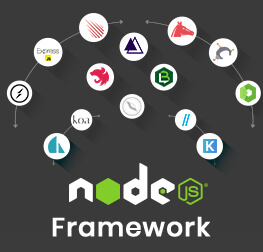
14 Best Node JS Frameworks 2023 to Bring your Website Appearance on Top

Node JS is one of the richest frameworks preferred by most developers. It uses JavaScript language for scripting server-side coding requirements. When you look at the aspect of what a Node JS framework offers you a collection of libraries, needful tools, and helpers to create web applications and help them function. Developing a web or mobile application using native language may not yield you a good result when compared to the support you receive from creating applications using the best Node JS framework.

This blog takes you through 14 top Node JS frameworks, which you can involve to establish a strong and appealing web or mobile application.

14 Best Node JS Frameworks Trending in 2022

There are many Node JS frameworks in use but using popular and effective ones provides the best benefit out of your expected outcome. Using any of the following Node JS frameworks, you can develop wonderful applications.

#1: Socket.io

Socket.io is a web-socket architecture that can not only be used by Node.JS but also by other programming languages. You can build application features such as dashboard APIs, score tickets, chatbots, etc.

Features of Socket.io

  • Supports multiplexing, auto-correction, anomaly detection and more
  • Allows binary streaming and provides real-time analytics
  • Offers manageable servers without assisting HTTP 1.1 and smooth socket authentication
  • Creates the facility of simple socket handling and auto-creation of identifiers for all sockets
  • Compatible for creating customized URL routing for web sockets

#2: Express.JS

Node JS Express framework is a popular one among the Node JS framework types and it is unique too. It increases the scalability of your business by allowing you to create web and mobile applications at an unexpected speed.

Features of Express.JS

  • Allows you to work on 14 different templates and delivers extended performance
  • A less-weight framework works well with numerous modules
  • Supports in responding to HTTP requests seamlessly
  • Helps in developing eccentric apps by featuring Model-View-Controller
  • Easily understandable and very much customizable

#3: Meteor.JS

Meteor.JS is an easy full-stack Node JS framework that supports developing mobile and web applications, which is also compatible with desktop and web, iOS and Android platforms. It is quite similar to JavaScript language; hence developers love using this framework.

Features of Meteor.JS

  • Does not require frequent updates for mobile applications developed
  • Supports synching of catchphrases and provides continuous integration with other programming tools such as Mongo, Vue, Angular, React, etc.
  • Uses the same code for different devices and requires only a simple coding
  • Provides a light-weight look and appeal to entire application and development
  • Helps in sharing of similar API codes both on the client and server-side components

#4: Koa.JS

Koa.JS is another popular but major Node JS framework that helps you develop less space –occupying web applications, stronger and more expressive framework for creating more fine-tuned APIs and web applications.

Features of Koa.JS

  • Keeps your app clean from generating messy codes and supports you perform quicker coding
  • Effectively manages errors by restricting the usage of callbacks
  • Numerous options in customization
  • Provides appealing light-weight app design and enhanced coding experience

#5:Nest.JS

If you are looking to develop a web or mobile application that requires incredible scalability, reliability, and streamlined server app, then Nest.JS acts as a highly increasing and anytime modifiable Node.JS REST API framework.

Features of Nest.JS

  • Comprises several features and helps you unlock potential great features
  • Resembles a few features of Express.JS Node framework
  • Deploys easy frontend Angular JS development as both Angular and Nest uses TypeScript
  • Provides a modern structure for arranging codes as per existing methods

#6: Sails.JS

This Node JS framework utilizes the Express Node JS framework theme that works well in real-time. It is capable of developing an API bookstore similar to blueprints that do not require any codes. It is compatible with working on platforms such as Windows Phone, Java or Android, Angular, React, etc.

Features of Sails.JS

  • Effective HTTP requests management and supports Socket.io JS
  • Superb compatible with frontend web applications building platform
  • Provides facility to use all databases through object rational mapping
  • Executes smooth integration of middleware and fast object modules development by using the front end
  • Allows you to create simple project templates

#7: Loopback.JS

This is one more famous Node JS framework that presents a dynamic API explorer and an easy-to-use CLI. You can create your own schema and develop a web application using Loopback.JS. It allows web and mobile application development using a native browser and mobile SDKs for multiple clients like browser, iOS, and Android/JavaScript Angular.

Features of Loopback.JS

  • Allows a huge number of database inputs and features model-relation-support
  • Provides add-ons for file management and third-party login
  • Runs a cloud if required and connects devices and browsers to data
  • Develops applications in a structured code and clear documentation for faster development

#8: Hapi.JS

It is a trustworthy and secure Node JS REST framework that can build a great server with features such as onPreHandler on a dedicated IP. Also, it is considered to be the most favorable option for the Node JS server framework.

Features of Hapi.JS

  • Does not require any external programming tool assistance for developing a web application
  • Flexibility to develop real-time chat apps
  • Handles effective error management and lightweight in structure
  • Provides access to plug-ins such as travelogue, boom, yar, tv, catbox, and joi
  • Allows scaling of architecture through specific plugins and takes seamless control on managing HTTP requests

#9: Adonis.JS

This is one among the high on demand– Node JS framework that goes well with perfect syntax. Moreover, the stable coding system can be incorporated on server-side and web apps from the inception.

Features of Adonis.JS

  • Allows you to develop effective SQL queries and is simple to learn and adapt
  • Possesses a similar structure to Laravel and allows seamless data handling from databases such as Postgres and SQLite
  • Provides a stable ecosystem and saves your development time

#10: Derby.JS

It is a full-stack free source Node JS web app framework that follows an MVC structure. If you have a huge requirement of developing apps then Derby.JS suits your requirement best.

Features of Derby.JS

  • Provides auto-conflict resolution and focuses on real-time customized web development
  • Perfectly functions on both client and server-side apps
  • Comprises multiple editing options and provides an improved usage of multi-users in the same app

#11: Total.JS

This is a faster Node JS framework that requires little support. If you are looking for a JavaScript language-type framework that provides constant upscale progress and incredible performance in application development, the Total.JS framework is the suitable one.

Features of Total.JS

  • Offers intra-community chat option and supports multiple database structures
  • Comprises predefined codes and plug-ins for quick completion
  • Enables fast prototyping and allows front-end development on certain tools
  • Produces real-time advancement applications

#12: Flatiron.JS

This is again a full-stack framework that lets developers create or update mobile and desktop applications with reusable elements. It provides an integrated library for managing all your login details for security reasons.

Features of Flatiron.JS

  • Provides lightweight app extensibility through a plugin manager that comes within
  • Impacts traffic based on URLs that can be found on the server and the receiver
  • It is an easy-to-use, restrained and DSL-free templating tool

#13: Keystone.JS

It is another full-stack open-source Node JS framework that offers flexible, lightweight and extensible structure and is designed on MongoDB and Express Node.JS framework platforms.

Features of Keystone.JS

  • Supports the functioning of other applications and frameworks such as ASP.NET, JSP, etc.
  • Progresses continuously and monitors effectively
  • It allows seamless integration with on-demand platforms such as Google Places, Mandrill, Cloudinary, etc.

#14: Diet.JS

It is one of the smallest Node JS modules that support developing scalable and quick APIs and applications. It produces extremely light in weight app architecture that makes your application’s look and appeals great.

Features of Diet.JS

  • Very small JS framework that does not occupy huge app development space
  • Never brings in 404 routings with an app missing.
  • Offers MVC and middleware assistance
  • Supports virtual hosting to a great extent ensures non-parallel error management

Conclusion:

Expecting this blog has given you a great piece of information about the best Node JS framework(s), and for more updates or information on this blog, you can write to us back or call us for action.

Frequently asked questions on Node Js Framework

1. Is Node.JS a framework?

No, Node.JS is not a framework; it is called to be a runtime environment that runs JavaScript only on the server-side. It is considered to be a package that contains both interpreter and compiler.

2. What is the Express framework in Node JS?

It is one of the Node.JS application frameworks that are flexible and lightweight to use. It works well on node-based applications if you run any.

3. How Node.JS is beneficial?

The best Node.JS framework provides extreme app scalability, easy to handle behavior, high performance and lets you interact with a similar community for technical updates.

4. How to choose the best Node.JS for my application?

Depending on what you want to develop, you can choose any Node.JS platform built framework from the aforementioned list; else you can also take expert guidance from forums and consider the suitable one.

How to Create an App for your Business – Best and Simple Ways to Develop an App

When you hear the word app, what comes to your mind? Definitely, it is a mobile right. Do you know how to create an app in a mobile-friendly interface, how much does it cost to create an app or how to develop an app that best suits your business? You need not be technically savvy to create an app because you can always hire developers or approach any mobile app development company for the same. This blog provides you simple steps to create an app for your business.

How mobile app development is a rising trend in the world?

There are more than 2.7 billion smartphone users in the world where 1.35 billion people are tablet users who have been doubled in the past six years. People spend 90% of the time using their mobile phones. This shows that irrespective of whatever it is people are spending time using an app for that case.

If you look at the statistics, mobile apps are looking to generate $189 billion revenue in 2020, where 21% of the young group open apps more than 50 times a day, 49% of people open apps at least more than 11 times a day and 57% of digital media usage clicks from mobile apps. This shows the increase in demand to create an app ever.

How to develop an app?

There are several steps involved in creating an app. You might have numerous ideas to develop your business and want the same to be incorporated into the app. To bring all your ideas into the limelight and create an app as per your preference, these are the following steps you should follow, as an entrepreneur or developer.

Step 1: Determine your app goal

Before you develop an app, you must understand why you are doing it. To determine what should be your app output is and how appealing you are going to present it to users. Also, your app should serve a specific or common purpose for the target customers of your product/service. Another important factor that you should think of is how to market your app. If you have a clear goal of your app output, then you can proceed to step 2.

Step 2: Write down your ideas

You may not know if you can clearly explain all your ideas to create an app, to the developer. To not miss even a simple thing that adds value to your app, sketch your ideas on a white paper. Sometimes, it helps you shape up ideas that you have missed remembering as well. It may not act as a wireframe for your app, but definitely, it works like a flowchart before you begin with.

Step 3: Brainstorm your ideas

Discuss app ideas with your friends or experts and take feedback. Have a deep brainstorming session that helps you bring out other ideas into your app development, and sometimes, it may bring success to your app among your target audience. Rather than appreciation, criticism is more important for a product or service to achieve success. Accept criticism from your friends or relatives about your app ideas and try to frame up a strong ideology and then plan for app development.

Step 4: Design your app wireframe

Many applications give you access to get your own app wireframe within minutes. Do intensive research for adapting the best app for building wireframe design and design your ideas in the web application accordingly, to get an overview of how your app appears in public. You can search in Google for the best websites that offer you wireframe design for free or cost.

Depending on your flexibility, you can choose the best one and get the wireframe design work complete. In case you do not have any idea of it, you can leave it to the developer to provide you the wireframe of your app.

Step 5: Decide the backend framework of your app

This step determines the functionality of your app according to the framework. You can choose which platform you would like to develop your app and what features you would like to add on to it that decides the density of the app and its usage among your target audience. Many websites help you to run your wireframe on it and see if there are any technical difficulties attached to it. Check any of them to make sure that you are on the right path.

Step 6: Certify your app model

Once the wireframe and backend framework has been completed, show the app model to your friends and collect feedback–be it positive or negative. Note that before your app goes into the real-time development stage, it should be fine-tuned at the framework level and then sent. Make the necessary corrections and restructure the wireframe accordingly.

Step 7: Start your app development

Now it is your developer’s turn, to begin with, app development and shaping it as a fine-tuned and complete product. Keep checking every single stage of your app development and let your developer(s) know your views or feedback on your preferences.

Step 8: Finalize a perfect app design

It is time for your designers to create your user interface, which is a very important aspect of your app for people to get attracted and how things look after implementing user interface and user experience designs. You can implement user interface elements according to your design.

Step 9: Perform design retesting

Check your app design and functionality by performing testing again. This will ensure that your app is perfect in terms of design, functionality and backend platforms as well.

Step 10: Conduct Beta testing and launch your app

Upload your app API in the Android or iOS platform or any other platform that you are planning to launch it on and check how the user interface and user experience look like. After successful completion of Beta testing, you can very well launch your app on your desired platforms.

How much does it cost to create an app for your business?

The cost for developing an app may vary according to features, geography and developer’s hourly rate. All you have to do is figure out what features you are adding to your app and what platforms you are implementing in the frontend and backend. Depending on all these factors, the cost of developing an app may range from $40,000 to $60,000.

You can also create an app with a local developer or outsource it to a developing company, but the cost variation is high if you outsource the same to a developing company rather than choosing a development company in local.

Conclusion:

From the aforementioned sections, I hope this blog has provided you a clear idea of how to develop an app and how to create an app for your business. Be firm with your app ideas and ensure you protect those ideas before others steal or think of it because the competition is huge in the present technological market. You can always approach us for any app development ideas or suggestions on how to proceed with your app development furthermore through call, e-mail or chat.

Frequently asked questions

1. What factors may affect or influence app development cost?

There might be several factors involved in the cost of app development, but the following are considered to be the most important ones–features, the complexity of product design, number of platforms, backend infrastructure, app administration and location and structure of a team. These are considered to be primary because they may affect mobile functionality to a great extent if not designed and set properly.

2. What are the common features should I consider to create an app?

To create an app, you require general features to be incorporated, such as login, file uploading, profile completion, profile editing, search, basic messaging, push notifications, basic admin panel for user management, payment management, push notifications, etc. and more.

There are some complex features to be added to your apps such as maps, payments, streaming, and calls, depending on your app wireframe, which may take more time to develop an app compared to the general features aforementioned.

3. How do I structure a team for my app development?

App development is not an easy task. It requires more of your employees’ time to achieve the desired output. So you must be lavish in spending for your employees in the form of salary and perks to get your work completed. When it comes to the team, you require a business analyst, UI/UX designer, mobile app engineer, quality/testing engineer, and a project manager.

4. What would be my app maintenance cost if I am hiring only an app developer?

If you are not outsourcing your app development to a company, then you will be paying your developer for the following activities on your app, as maintenance cost—continuous bug fixing, improving stability and performance, code optimization, adding support for latest operating system versions, developing new features and supporting latest versions of third-party services.


Apple iOS 14 Features You Must Know

Apple is a favorite brand for its existing users and a dream for many who love the brand. Anything like Corona, recently, can stop the world from working or leading a regular life, but even in such conditions, Apple does not seem to stop releasing iOS14 and iPad OS14. The basic tendency of Apple updates ensures easy-to-use interface and great user experience. No one can wait for iOS 14 features to be revealed until this June. This blog brings you wonderful Apple iOS 14 features that you cannot deny wanting to know.

How iPhone users are crazy knowing about iOS 14 features?

Apple updates its iOS software once a year with the creative implementation of drastic features. With iOS 13’s troubled launch, Apple lovers have huge expectations towards iOS 14. According to a recent survey conducted in the USA, from 2014, the usage of smartphones in the iOS platform has increased from 42.3% and expected to be 45.4% by 2021. Roughly 80% of the US population has access to a smartphone and treats having iPhones a prestige.

List of iOS 14 features

The following features are only a rough list of what iOS 14 caters during the launch date, but there are several other features that you will be experiencing completely after the further release of iOS 14.

1. iOS 14 apps

Apple’s app library will be a new augmented reality app that provides access to all information about the world around with user experience. It has also termed that Apple will be partnering with Starbucks as it does similar to Apple Pay and Apple Card. iOS 14 is about to release a new fitness app from which users can download fitness-related videos that cater to a wide range of multiple workout options and activities and also enables guidance to those activities via Apple Watch. iOS 14 allows its users to take back a message that was sent accidentally.

2. iOS 14 UI and navigation

The previous version of iPad OS has a smart keyboard with Trackpad and the current iOS version update might have Mac-style cursors for Apple tablets with classic arrow pointer and sleek hand icons that let you experience a great user interface design. It might also be introducing new trackpad gestures that let you switch between apps and reports. Additionally, the Home screen also might be getting a new structure. The iPhone might get an iPad-style multitasking screen named Grid Switcher, i.e. when you swipe up on the Home screen, you can see two rows of recent apps used along with some split functionality as well.

3. iOS 14 Apple Pencil

You can experience new optical character recognition for Apple Pencil that converts your handwritten notes into text, which reduces your time of typing. iOS 14 compatibility extends to messages, notes, reminders, calendar, mail, etc. with the PencilKit feature. You can even work it out with other third-party apps after the release of this iOS 14 feature. This feature attracts users explicitly and looks for further enhancements.

4. iOS 14 Home Kit

Previous versions of Apple failed in providing smart-home support where Amazon and Google Home were dominating. Now, with the release of iOS 14, the gap also seems to be closed. Similar to HomePod, Apple might bring in the AirPlay audio option built-in and connects to the same speaker when you turn it on. Along with these features, lights and cameras will also get some new capabilities of auto-adjustment throughout the day and night.

5. iOS 14 Accessibility

A new feature that can detect new sounds such as fire alarms, sirens, alarm clocks, door knocks, doorbells and sounds of crying babies sometimes to alert people who have hearing problems and also act as hearing aid for normal and impaired people as well. AirPods are seeming to get new accessibility features such as detecting hand gestures.

6. iOS 14 Compatibility

iOS developers have designed iOS 14 in such a way that it is compatible with every device that was working well on iOS 13. Devices that are likely to be compatible with iOS 14 are iPhone SE, iPhone 6S and higher, 5th generation iPad and more and the latest iPad mini and iPad Air, etc.

All the aforementioned features are just minimally explained, but there are few other great features on the way with iOS 14.

List of iPhones Models going to get iOS 14

There are several versions of the iPhone for which iOS compatibility supports and extends. The following is the list of iPhones that is compatible with iOS 14.

  • iPhone XS
  • iPhone XS Max
  • iPhone XR
  • iPhone X
  • iPhone 8
  • iPhone 8 Plus
  • iPhone 7
  • iPhone 7 Plus
  • iPhone 6s
  • iPhone 6s Plus
  • iPhone SE
  • iPod touch (seventh generation)

When will iOS 14 be released?

iOS 14 is likely to be launched by September Month of 2020, but the glance of its features have been leaked out for Apple fans to increase curiosity and knowledge of using them prior it is released.

Conclusion:

iOS 14 features are amazing and definitely thrill its users more than expected. Once iOS 14 is released, if you have the compatible iPhone as mentioned in the previous list, you can enjoy the benefits of each feature. Sometimes you may not be able to use certain features due to not updating any updates provided by Apple. In such cases, complete the previous update and then get your iPhone with iOS 14.

You can visit our blog site for more techie updates on iOS 14 or Apple devices and accessories. Stay in tune with the on-going trend and reach us for any technical queries if you have.

Frequently Asked Questions on Upcoming iOS 14 Features

1. What are the main features of iOS 14?

Apple will release iOS 14 with upgraded features such as new multitasking interface, set default apps, new list view for apps, new fitness app, messages update, 5G support, augmented reality support and better mouse support.

Multitasking interface ensures access to split-screen functionality where you can use multiple apps in one single window and perform your desired activities. Setting default apps gives you the accessibility to display the recently used apps up to two rows so that if there are any regularly used apps, you need not open it every time from your iPhone window.

New listing view of apps makes sure that app listing is aligned as per your priorities and preferences, so you do not get confused while searching. The new fitness app is an existing app on the iPhone, but iOS 14 makes it more real and enhanced for fitness freaks. Messaging update ensures that any sort of written messages turn automatically into text and reduces the time consumed for messaging manually.

Augmented reality support is something that every app requires for providing great user interface and user experience design for user flexibility, in which iOS 14 is not the least. These are minimal iOS 14 features that Apple is likely to offer to its fans. Upgrade your iPhone such that it supports iOS 14 features and enjoy using your iPhone until Apple releases another version of iOS.

2. Does iOS 14 require downloading the public beta?

Apple’s public beta program might attract you to join and tempt you to use its new features but incurs a few risks. Sometimes your favorite apps may not work well if you have installed the public beta program. Hence, understand the pros and cons of an update or software before you install and then use iOS 14 vigorously.

3. What features should we consider the success of iOS 14?

Apple is planning for the following iOS 14 features between now and June 2020 as a final cut.

  • More multitasking improvements: Apple provides a multitasking interface which is a welcome addition to iOS14. Split-screen support is one more added feature already present in Apple tablets, especially when iPhones get larger.
  • Better call screening: Call screening is something that most of us always wanted to avoid spam or unwanted calls. Unknown Callers setting in iOS 14 helps you block calls from unwanted callers, callers not in your contact list or among recent outgoing calls.
  • Keep improving built-in apps: Apple always fine-tunes its existing apps and tweaks features here and there for better user interface and navigation. It provides a better search experience in the News app and the Photos app.
  • Better stability all around: iOS 13 was a great improvement to Apple’s mobile operating system, but it has quite a good number of bugs that require fixing. To overcome such bugs and present it to users as a fine-tuned version of iOS, Apple is looking to introduce iOS 14.

4. When iOS 14 is expected to be released?

Apple tends not to release any plans in advance–be it product announcement or iOS version updates. But it always releases a glimpse of features that the product or iOS versions may have. Some forums say that Apple may release iOS 14 during June 2020 and some say that it can happen in August or September 2020.