Customer Data Platform for eCommerce: How CDP Empowers Your Online Business?

These days, marketing has become one of the most complex activities as modern consumers have a plethora of options to reach companies. Marketers need to concentrate on various channels and platforms to gain the attention of their target audience. Above all, the modern consumer expects more from companies; they expect tailored solutions to meet their requirements. Considering a proven customer data platform for eCommerce, brands can empower their varied marketing activities.

To sustain and beat the market competition, companies around the world are taking innovative measures and steps to meet consumers’ demands and expectations. Companies that fail would face difficulties in their growth and sustainability.

To gain actionable insights, businesses are forced to deliver a consistent customer experience across multiple channels and touchpoints. Also, marketers need unified consumer data to build more effective and personalized marketing campaigns.

This is where customer data platforms (CDPs) become essential for businesses. Let’s see how CDPs help eCommerce businesses fuel their sales and drive better customer experiences in upcoming sections.

What Is a Customer Data Platform?

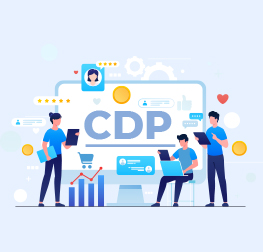
It is a kind of software that enables businesses to track and collect their auspicious customer data from various sources and customer touch points. From the gathered customer information, the CDP platform manages to build an accurate customer profile by merging all the related data.

The newly created customer profile by the CDP platform will be easily accessible to all the team members and other tools. This results in companies delivering better customer experiences and gaining the benefits of having better customer relationship management.

For today’s e-commerce companies, customer data is the primary weapon to increase their sales and for business expansion. The CDP platform delivers the exact solution that companies are looking for to meet the growing expectations of modern consumers.

This makes the customer data platform for eCommerce the must-have solution for all modern businesses, particularly those involved in commerce activities.

If you are interested in unveiling the advanced capabilities of customer data that empower your varied business operations, don’t miss visiting Customer Data Platform: The Ultimate Guide. It introduces every aspect of CDP and explains how it helps gain business success.

Why Do You Need Customer Data Platform for eCommerce Business?

To run a successful eCommerce business, companies should have a better customer experience. For that, CDP is the best solution. However, before getting into the core importance of CDP for a business, let’s quickly wrap up with the roadblocks an organization faces with bad data.

  • While collecting data across multiple channels, it is hard for companies to spot the presence of data silos. When businesses start expanding with more and more channels for customer engagement, more silos appear.
  • If companies fail to track the customer journey across their digital platforms, it will be difficult to get a complete picture of a customer and how they interact with the company. This is costing businesses that miss out on personalized customer service.
  • Without proper data analysis and data insight, it would be hard for an organization to roll out a successful campaign by predicting customer behavior.
  • Without a proper platform, the speed of data processing and action will be low when compared with the level of market competition.

Those are the roadblocks faced by companies with bad data. Having a good customer data platform will get rid of those hassles caused by bad data. Here are the other reasons that trigger businesses to make use of CDP.

  • CDP helps businesses to meet the modern demands and expectations of their customers. It also plays a key role in delivering a personalized experience along with providing quality products and services.
  • CDP makes the customer interactions much closer with the brands during online shopping sessions and also in post-purchase interactions.
  • The customer data platform helps businesses to comply with strict customer data privacy regulations.

To get better insights into the customer data platform’s potential, you must visit Customer Data Platform For eCommerce Business – A Brief

When Do I Need to Invest in a Customer Data Platform (CDP)?

Investment in a customer data platform becomes inevitable for eCommerce businesses in this competitive market. Utilizing customer data to deliver more personalized services would be the best choice for businesses to gain a competitive edge.

Also, data personalization improves content and business performance significantly when compared with companies that opt out of implementing CDP.

At the same time, collecting, managing, and optimizing customer data wouldn’t be that much easier for many eCommerce businesses. In particular, enterprise-level businesses involved in eCommerce activities would face a lot of challenges. Take a look at the key challenges they face.

  • Data transparency on how they collect data.
  • Managing the high volume of data, they collect.
  • The speed at which they collect, manage and process the data.
  • Data transformation is based on market conditions.
  • Data Security

To tackle those challenges, enterprise-level eCommerce businesses would need a CDP solution. Many companies prefer to use Pimcore eCommerce for managing their customer data, which plays an apt role in handling all those challenges.

PIM for eCommerce is a critical component when it comes to driving a perfect digital commerce strategy. It helps businesses to manage all the information collected from various channels and sources and store it in a single location. This helps various departments of a business to access it easily whenever they need it.

How Does a Customer Data Platform Work?

The ultimate goal of a customer data platform is to collect and unify customer data in a single location. This enables companies to build an accurate profile of the people who do business with their company. The customer profile will help businesses to get a detailed image of their consumers and how they engage with the company.

With a clear picture of customer data, companies can deliver effective and personalized services across all channels to their consumers. The entire process carried out by the CDP is termed customer identity resolution.

The information collected by the CDP platform includes a consumer’s email address, physical location, and other relevant cookies across various systems. All that collected information is stored in a unified database and made available to the users in real-time.

Apart from data collection and creating a unified database for customer data, a customer data platform does two more primary functions, which are discussed below. Take a look.

Customer Data Management (CDM)

The CDP tool can gain full control over the data flow. This allows various departments of an organization to have better utilization of data, particularly the marketers, allowing them to create effective marketing campaigns.

Apart from that, with full control over consumer data, businesses can manage their data efficiently. Even the management of first-party data, consumer data privacy, and compliance with data rights regulations become easy.

Activation of Customer Data

It is the process of taking necessary and insightful action on a customer’s data. With such insightful action, businesses can be able to utilize the data gathered from customer interaction to create more targeted marketing campaigns.

In addition, the CDP comes with the ability to update the databases automatically from various data sources. Also, it structures the collected data and creates accurate customer profiles to identify engaging customers. This helps businesses deliver more personalized services to target customers.

How to Use Customer Data Platform for eCommerce to Leverage Customer-Driven Marketing?

Without any doubt, one can easily say that CDP too helps various departments of an organization achieve their goals by offering reliable and accurate customer data. The CDP tool plays a straight role in gathering significant amounts of customer data, which are generated throughout the buyer’s journey.

The tool allows businesses to leverage all the consumer data and turn it into actionable insights. It empowers businesses to deliver a better and more engaging experience to their consumers by understanding their consumers and their needs.

Here are the lists of some key capabilities that promote organizations involved in commerce activities to deliver customer-driven marketing campaigns.

  • Unified view of customer data
  • Data segmentation
  • Insights and Data Analytics
  • Creating target advertising/marketing campaign
  • Real-time personalization
  • Cost savings through automation

With those capabilities, CDP helps departments achieve their goals easily. However, companies involved in commercial activity need to be more accurate in deciding what their business objectives and goals are before investing in the right CDP tool.

Advantages of Customer Data Platform for eCommerce Businesses

Managing huge amounts of data will be an overwhelming task, particularly when a business starts expanding. In such a situation, analyzing the customer data manually becomes a daunting task. So, opting for software or tools like a customer data platform to manage customer data becomes inevitable for modern-age eCommerce businesses.

Customer data platforms (CDP) help companies predict customer acquisition and retention. Also, it helps businesses communicate with consumers in real-time. In addition, here are the lists of some key benefits offered by CDP to e-commerce companies. Take a look.

1. Streamlines Customer Data Management Operations

The CDP tool streamlines the entire operation of consumer data collection, organizing and utilizing the process with perfection. Furthermore, the CDP tool provides great flexibility and agility by performing automatic updates whenever new data becomes available. This ensures that the customer data gathered is up to date and accurate.

Apart from that, the customer data platform also offers more efficiency by allowing businesses to utilize multiple data sources in real-time. The automation process eliminates the hassles involved in manual data management, manual data verification, and removing data duplicates manually.

2. Offers a Unique Source of Truth in Customer Data

The customer data platform tool offers a single view of the customer data in a unified and comprehensive way. The capability of the CDP tool allows business authorities to eliminate all the data silos and make sure all the data stored in the database is accurate.

The platform acts as a unique source of truth and allows businesses to share accurate data across multiple channels and touchpoints.

This enables various departments of a business, like marketing and sales, to access high-quality consumer data to create a seamless customer experience.

3. Compliance with Regulations

The customer data platform allows businesses to gain full control over their consumer data. This empowers eCommerce businesses to comply with the privacy regulations set by GDPR, CCPA, and other privacy laws. This gets the needed trust factor from the regulators.

In addition to that, the CDP tool provides the option to track the history of data, like how and when the data was collected and from where. Also, the tool offers essential suggestions to its users on how to utilize the collected data effectively.

4. Allows Businesses to Take Insightful Decisions

The CDP tool gives you a holistic and complete view of the customer journey as it is. It also provides the full details of all the consumer interactions held both in-store and post-purchase with the company.

This allows businesses to track and build an accurate consumer profile. With an accurate consumer profile, teams can do data analysis and easily predict what consumers are looking for and provide the same.

Also, business stakeholders can take insightful decisions on the consumer profile data to initiate business expansion or to improve business sales.

5. Easy integration with other platforms

The CDP tool allows business stakeholders to integrate with other platforms like ERP and so on. With such easy integrations, businesses can easily communicate with other departments in real-time. This enables companies to handle customer queries more effectively and quickly.

In general, eCommerce businesses that have an ecosystem of real-time response with consumers will generate a high customer satisfaction level. With such effectiveness in solving consumers’ queries along with a higher customer satisfaction level, consumers will shop again and again.

6. Data Unification & Retargeting

As discussed above, the CDP tool can unify all relevant consumer data, which is collected both offline and online. This allows eCommerce companies to build a unified customer identity across multiple channels.

With such accurate customer identification, they can easily predict target customer behavior. This allows eCommerce businesses to create unique strategies to cover loyal consumers and focus on new consumers.

Visit How Does Customer Data Platform for eCommerce Benefit Your Online Business? to explore more benefits of considering customer data platform for eCommerce.

How to Select the Best Customer Data Platform for Your Company?

As mentioned earlier, maintaining big data and creating good relationships with customers is not an easy task for eCommerce businesses. This is where the customer data platform comes into play. However, in today’s market you can find numerous CDP tools, and picking the right one isn’t easy.

Here are the expert tips on choosing the right customer data platform. Take a look.

Budget

Developing your budget before investing in any new system is highly appreciated because the new system will be a minefield when it gets integrated with the business. Just like that, you need to be sure of how much you are going to invest in CDP. Investing a lot of money that your business can’t afford will be a waste of money and time.

Determine The Cause

Just like the budget factor, you need to determine the exact needs of your business for the CDP tool. so that you can be pretty straight about picking the right CDP tool for your business. In many cases, the sales and marketing teams will find it difficult to manage and pick accurate data to yield a better customer experience.

Be Clear About CDP Requirements

Unifying customer data and de-siloing data is the basic feature of almost every CDP tool. Apart from that, you need to be more specific in picking your CDP requirements. so that you can be able to spot the right tool for your business. In many cases, businesses would need a CDP tool offering a single customer view, better management of data, and data security.

Consider ROI

In terms of financial measures, the CDP tool that you are going to choose needs to deliver value that should meet your business requirements and objectives. Picking a CDP tool with detailed documentation will help you make ROI projections easily.

You should consider spending on the CDP tool as one of the investments for your business. In general, customer data platforms should reduce operational costs and increase business revenue by improving efficiency.

Choose potential vendors

Once you are determined with the CDP requirements and the benefits you are going to yield from it, you need to be more cautious in picking the right vendors. You need to shop around and research potential CDP vendors who offer seamless CDP that meets your requirements along with other essential services.

Here, services include system integration, setting customer view, aftercare support, and so on. Always prefer experienced vendors who have high ratings, good reviews, and excellent reputations among customers.

Keep an eye on your additional tools

Having a CDP tool will always deliver benefits to your eCommerce business. However, you need to make sure whether the chosen CDP can be integrated seamlessly with the existing vital tools your business has.

So, you can easily optimize your business workflow. Picking a CDP tool that can be easily integrated with both internal and third-party tools is essential. This determines how efficient choosing a CDP tool would be for your business operation.

Conclusion

The goals and objectives of e-commerce businesses differ, and so does the data collection process. However, the benefits and capabilities of a customer data platform like PIM for eCommerce will do wonders. All they need is to have a clear vision of their goals and to choose the right CDP tool for their business according to their needs and requirements.

Customer Data Platform: The Ultimate Guide

The growth and development of any business depend mainly on its customers and their feedback. The organization had to manage different types of data for their smooth functioning. Customer data is one of the crucial types of data that helps in product development and targeting. So, having a customer data platform becomes essential for companies these days. Through the customer data platform guide, you can explore the advanced capabilities of CDP.

Every customer is represented with the help of the magnitude of data points. These include the parameters like their age, personal taste, geographical location, basic demographic traits, browsing history, previous purchase details, social media interactions, etc.

These customers are complex individuals and it is essential for building a well-rounded customer profile with all essential data points, thus there is a need for a customer data platform.

What is a Customer Data Platform (CDP)?

The customer data platform allows for customer data management which is the process of acquiring, organizing, and utilizing customer-related data for understanding their customers, increasing conversations with them, enhancing customer retention, and providing them with the most relevant customer experience.

CDP allows for the collection and analysis of this customer data, data security measures, ethics of customer data acquisition, etc.

First-party Customer Data

The customer data includes the first-party data that is directly collected by the company from the customers based on their interests and behavior. It helps in creating a trail for tracking where the data came from. The other type of customer data includes the zero-party data that the customer proactively and intentionally shared.

Second-party Customer Data

The second-party data includes the data collected by other companies and sold or shared with the non-competitive partner. The third-party data includes data gathered by the data collection company and usually has low-quality data. The customer data platform helps in collecting the data and enriching its quality.

Why Should Companies Give Importance to Customer Data Platforms?

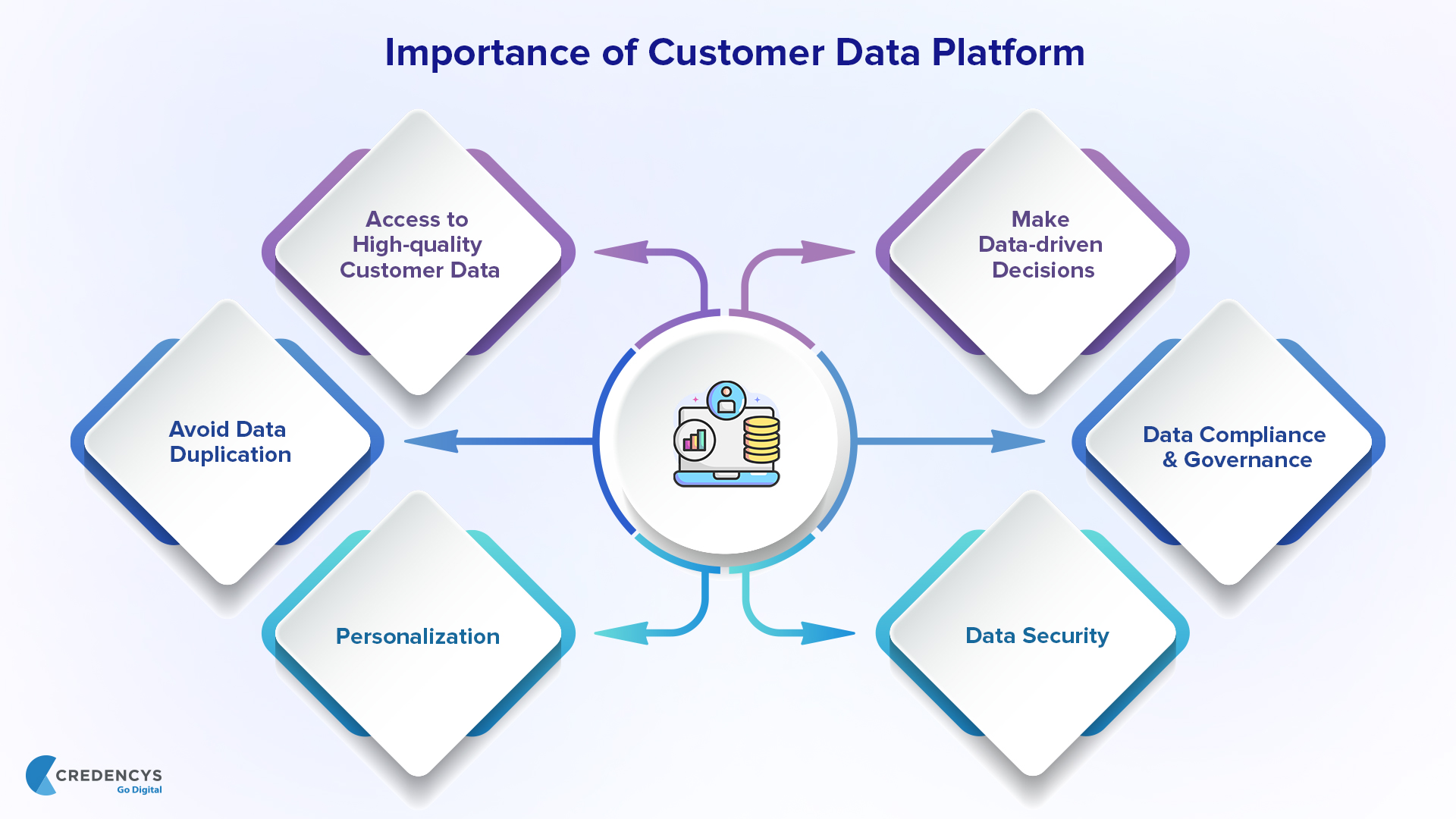
Importance_of_Customer_Data_Platform

The main reasons for any organization to give importance to customer data platforms are the benefits gained by its implementation. The key benefits of implementing customer data platforms include:

  • It provides high-quality customer data that is useful and maintains the accuracy and cleanliness of data.
  • It avoids data duplication thus reducing the wastage of cost and time involved in rectification.
  • Improves personalization and targeting that will help in boosting customer engagement and customer retention.
  • Empowers businesses by enabling them to make data-driven decisions.
  • It helps the business to stay compliant with data regulations.
  • It enables the protection of the business from data loss, theft, breaches, etc.

Business Benefits of Managing Customer Data in Customer Data Platform

Customer data helps businesses in many ways, particularly in building effective marketing and sales campaigns. Managing the customer data with a perfect management strategy will help companies to improve their overall processes, services, and products.

Here are the lists of a few valuable benefits a company can get through an effective customer data platform.

  • Helps to increase customer acquisition.
  • Offers more opportunities to do up-sell and cross-sell across multiple channels.
  • Builds customer loyalty, customer lifetime, and customer retention.
  • Helps marketers to create effective marketing campaigns.
  • Better customer satisfaction.
  • Offer a competitive edge through personalization.

When Do You Need Customer Data Platform (CDP)?

Signs_that_You_Need_Customer_Data_Platform

If you are running a business, then you should be aware of when to have a customer data platform. Directors and business decision-makers who are aware of advanced technology would well know when to introduce a CDP.

Having a good CDP will act as a one-stop solution for a business to improve customer experience, improve marketing efficiency along by improving sales campaign effectiveness.

Here are the lists of some key indicators that tell your business needs the right customer data platform.

Having Exceptionally Large & Siloed Data

In general, when a business dealing with direct customers (B2C) will always have a large volume of data vertically. On the other hand, business-to-business (B2B) will have a large volume of data horizontally.

It doesn’t matter whether it’s B2B or B2C, once the business starts to expand, managing those data gathering and data storage would be a daunting task especially in making it error-free. This will have a direct negative impact on the marketing and sales team. If your business is experiencing such issues, then it’s time to go for CDP.

Personalization

Businesses around the world are forced to be innovative and do something attractive to gain the attention of the target audience. Also, such initiatives will help businesses to sustain themselves in the competitive market.

Companies worldwide strongly believe delivering personalized content will attract more customers and increase the sales ratio significantly. Also, personalization will increase the customer lifecycle and improve customer experience with the brand; this will eventually increase the up-selling and revenues.

At the same time, the quality of personalization strongly depends upon the data quality. So, it becomes essential for companies to bring CDP into their business operation.

Omnichannel Experience

Modern consumers around the world are seeking more from the brands to keep them engaged. They would prefer brands that allow them to reach from multiple channels. So, companies need to deliver an omnichannel experience to their consumers.

At the same time, they should be aware of being fully equipped with the right data and technology to deliver quality content consistently across multiple channels. Having a good customer data platform will make things easier for companies in this area. Also, the CDP makes sure all the channels receive quality data uniformly without any siloed data.

Types of Customer Data & Customer Data Collection

A customer data platform involves the use of different tools and strategies for the collection of data and it depends on the type of data. There are different types of customer data and data collection and these include:

1. Top-of-funnel customer data

The data collected by using this top-of-funnel lead includes low-effort and low-consequence information like email, name, etc. It allows for collecting general information mainly the unqualified and irrelevant leads. This data collection is performed in the following ways:

Implementing the inline or embedded webpage buttons

This data is useful for testing the effectiveness of downloadable resources, email campaigns, etc. This data collected helps in encouraging the website visitors for signing up for free product trials, newsletter subscriptions, downloading templates, e-books, and other digital resources, etc., Speak with representation for more details, watching of product demos, etc.

Pop-up or slide-in lead-generation forms

This is an aggressive method for customer data collection and is automated by customized triggers like:

Time of page

When a visitor stays on the web page for at least one minute,

Exit

When a visitor initiated the process of leaving the web page by hovering over the close button of the browser.

Entrance

The minute the visitor lands on the webpage, this data can be used for identifying potential customers.

2. Bottom-of-funnel customer data

This type of customer data is valuable for qualifying and converting prospects as there are customers that are already interested in the products or services. For maximum utilization of data, it includes the use of landing page forms.

These are used for promoting the product or service by describing what it includes and what the customer has to expect from it. The customer data is directly exported into the CRM for safekeeping and future reference.

3. Current customer data

This data is useful in improving existing products, developing new ones, and providing better customer services. This is high-value data and leads to an increase in revenue, enhanced customer understanding, improved customer retention, etc. This can be done by using questionnaires, feedback forms, follow-up phone calls, etc.

Key Elements of Customer Data Platform

Key_Elements_of_Customer_Data_Platform

Marketing is always customer-centric, which is why marketers are building their campaigns to deliver a personalized experience to their customers. At the same time, to build an effective marketing campaign, marketers would need robust and reliable data at every customer touchpoint. This is where the customer data platform framework comes to play.

Having a well-defined CDP framework will always help companies by acting as a single source of truth for data. It delivers well-optimized quality content to multiple channels consistently. In addition, the elements CDP framework helps businesses to offer real-time and data-driven responses to their customers.

In this customer data platform guide, we have provided you with a list of 4 key elements of the CDP framework.

1. Data Collection & Integration

Data collection and data integration is the first and foremost step of the CDP strategy. A new age business receives millions of data from thousands of data touchpoints from various channels/devices/platforms.

All that data needs to be collected and transformed into a uniform format with perfection. This is where the customer data platform strategy plays a key role in handling those large amounts of data effectively.

2. Data Management

It is a phase in which the CDP connects all the dots of the related data which are collected from various sources. In data management, CDP systems undergo processes such as probabilistic identity resolutions, filling all the gaps in data identity graphs, offering sufficient data to create a 360-degree customer profile, and so.

All the processes involved in the data management segment of CDP make sure all the customer data complies with the rules.

3. Data Analysis

It is a stage where CDP offers the data which can be ready to use. Using the data provided by CDP will help marketers to build a look-like customer profile, and to run predictive analyses.

For analysis, the data intelligent system can also be used to assist in data customization for customer interactions and experiences.

4. Data Activation

Even though all data are collected and stored in a unified place, that doesn’t mean that those data are activated enough to be used for marketing campaigns. This is the final stage where the CDP strategy will tell how data to be used or run in data-driven marketing campaigns.

Visit How Does A Customer Data Platform Help to Transform Your Business? to understand the essence of CDP. It helps companies drive operational efficiency and customer engagement in our business.

Customer Data Platform (CDP) – Best Practices

Best_Practices_of_Customer_Data_Platform

Effective CDP has great potential for maximizing the business in many ways. The best practices for customer data platforms include:

Training of employees

The organization should consider providing training for their employees for effective handling of the data. The employees should have practical experience in data analysis.

This will help them better understand the concept data on a comprehensive level and lead to the creation of a complete analytical report. It will help in creating data-centric strategies for the growth of the business through effective data management.

Use of validation tools

The customer database includes vast data and it is essential for using validation tools. The best results are obtained when the organization implements the integration of the leading validation software with the popular CRM and ERM systems for efficient functioning.

Appoint data control

The organization should divide the analysis into several departments providing full administrative privileges to a handful of employees. Taking utmost precautions will lead to running into a lesser risk of dealing with non-common data.

Data monitoring

Customer data is always changing thus it is important to employ solid data monitoring principles. Implementing various techniques will help in maintaining the overall quality of the data and establishing security policies for keeping the data organized.

Performing the bi-weekly scans will help in the detection of incomplete and erroneous records for data optimization. Implementing the use of an online report generator will reduce the time involved and also enhance the quality of the data monitoring process.

Focus on relevant data for relevant results

Customer data includes large data and sometimes it is important to use all the available customer data for making sound decisions.

If the data is required for addressing the sales of the product, the analytical team can focus on the sales report to avoid data overload. This will help in providing better quality information over the data quantity.

Avoid data fragmentation

It is necessary for using a wide selection of customer data through the implementation of a cohesive information collection process. Using smaller tools and platforms will lead to the collection of less effective and fragmented data.

Thus, it is essential for ensuring cohesion and fluidity to access larger data coverage for collecting the most valuable details.

Data visualization

Visualizing the customer data with the help of online data visualization tools will help in getting insights from the overall information. It will help in providing a real-world perspective for enhancing the customer experience leading to increased commercial success.

How To Choose the Right Customer Data Platform (CDP)?

How_to_Choose_Customer_Data_Platform

In the customer data platform guide, we have covered key points to consider while choosing the right CDP. It includes

1. Establishing a working team

It is important to understand the stakeholders. The working team should include the team that already collects the customer data. It will also include data from the CRM system, and DMP and also involves working with the internal IT team.

For the proper functioning of the CDP, it is essential to have improved communication and coordination with the different teams within the organization.

2. Defining the needs

Understanding the need for CDP is very essential thus it is important to discuss with the stakeholders for knowing the needs and then delivering the details will make it easier for getting compliance.

Focus on model cases like the personalization of the digital customer experience, provided enhanced loyalty, concern over data privacy management, etc.

3. Gathering requirements

The use case will help in defining the required features and functionalities in the CDP for achieving the goals and objectives. One can define the requirements during the process set up to ensure addressing the use case without requiring extensive modifications.

Incorporating cross-organizational projects will help in including the more relevant groups for enhancing the process.

4. Understanding vendor

The selected CDP use cases and requirements will allow in providing the roadmap for the types of vendors to look for. It is necessary to understand that not all the CDP vendors will provide all purpose-built for managing the central data management platform.

It is important to check for the purpose-built enterprise-grade use cases that will have enhanced functionalities. The CDP should be future-proof to ensure it will evolve with the tech stack and thus it should be built from the ground up.

5. Roles, skills, and processes

Along with the deployment of the CDP, the organization can identify the right people with the required skills and processes. The main requirements include digital marketing with the marketing technology professionals for running the CDP and using its insights for optimized campaigns.

The organization will also need a data analyst and data scientist for the evaluation, integration, and management of the data. The team will also need the IT professionals for initial setups and integrations and further continued support for the ongoing campaign customizations and integrations.

In a nutshell of Customer Data Platform Guide

Customers are the key players in any business and it is essential to place them in the center and front. Every organization needs to implement a customer data platform for data accuracy and uniformity that will help in aligning the essential data for business growth, inspiring the marketing team, and engaging the customers for the development and growth of the brand and business.

Master Data Management – An Ultimate Guide

Every enterprise generates lots of data related to its products, services, processes, operations, applications, customers, enterprise data, performance metrics, etc. This data keeps on increasing and it is important to handle this data efficiently. Through the master data management guide, we will explain to you how MDM paves the path to success for your business.

The organization needs to implement different applications for managing data like Enterprise Resource Planning (ERP), Business Intelligence (BI), Customer Relationship Management (CRM), Marketing automation, etc. This is where Master Data Management comes to play.

Master Data Management (MDM) allows for data synchronization. It acts as a single source of data across multiple systems for managing the ever-increasing volumes of data.

What is Master Data Management (MDM)?

Every organization implements a business-led program for the Master Data Management (MDM) that enables ensuring data accuracy, and consistency while sharing the data. MDM helps in creating a single master record for every person, asset, and place involved in the business across the data systems and sources available internally as well as externally.

Master Data Management (MDM) System enables the organization to handle the data from different departments like R&D, manufacturing, operations, information technology, sales and marketing, regulatory affairs, costing and finances, etc.

It involves the people, technology, tools, systems, and processes used for establishing a single unified source of true details. Master Data Management (MDM) System serves as a single trusted source for managing and sharing the data across the organization.

It enables keeping the data free from inconsistency, duplication, redundancy, and errors. It allows for sharing accurate and real-time data helping the stakeholders in making smarter business decisions.

MDM relies on the principles of data governance for the automation of data management and sharing. It leverages different techniques for data integration, enrichment, and quality for creating master records.

If you are new to Master Data Management frameworks, then How To Succeed Master Data Management (MDM) – A Beginner’s Guide helps you delve into the exceptional abilities of master data management.

List of Key Components of the Master Data Management Framework

To manage, optimize, and transform the data of an organization, every Master Data Management (MDM) System must have a defined framework. However, the framework of an Master Data Management (MDM) System may vary depending upon the business requirements. In this master data management guide, we have provided a list of common components which are essential to delivering efficient outcomes.

Discovery to Identify Challenges

The discovery phase is before initiating any tools and technology investment. The phase will scan all of your business landscape and identify all the scopes and challenges. This will help you to set and prioritize your steps.

Connecting Disparate Data Sources

Data organization from all data sources of an organization and forming a centralized data repository is essential. This will help an organization to have a consolidated view of all data.

Preparing & Cleaning Data

Profiling data for errors and data cleansing must be done according to the standards. So that data reliability and data accuracy will be maintained on a consistent basis.

Data Matching & Removing Data Duplicates

Data matching should be done if a third-party data source is connected with the organization’s database. By doing so, data duplicates will be easily identified and removed.

Data Merging

After removing data duplicates from the centralized data repository, data should merge or be linked to create accurate data reports and to deliver a consolidated view to every user of an organization.

Building Data Relevance & Connectivity

To provide a true 360-degree view of the data, Master Data Management (MDM) System needs to build relevant and connected data by relating all the data points which include the information gathered from marketers, sales team, production team, and so.

Delivery of MDM source with Security

The ultimate goal of an MDM system is to safeguard the master data of an organization from unauthorized access. So, MDM should define a security policy to ensure data reliability while transforming or delivering.

To explore more advanced features of the Master data management platform, check out Essential Features of a Robust Master Data Management (MDM) Solution. Ensure integrating these features in your bespoke digital solution to leverage the maximum return on investment on MDM.

Operation of A Good Master Data Management

Without proper MDM plans project abandonment may happen. However, having a good MDM plan will always ensure your business’s success. In this master data management guide, we have portrayed certain notable aspects entailed by a good MDM. Take a look.

  • Apart from just playing a handy role in the effective management of data, having a good MDM will always solve all the issues involved in data, data quality, team collaboration, and so in real-time.
  • Good MDM follows and complies with all the standards & regulations on data quality. Also, it makes sure the data is complete, accurate, consistent, and duplicate-free before turning them into ‘master data’.
  • MDM deals only with the data which are directly tied to or have an impact on the organization/business outcomes.
  • It delivers a 360-degree view of the KPIs and data that support business objectives.
  • A good Master Data Management (MDM) System ensures the data cleaning and consistency operations are carried out for a long time instead of focusing on the short-term.
  • Error occurrences due to manual entry are reduced significantly. Also, data silos are eliminated by the MDM system to make sure all data remains quality and consistent.

Why Should Businesses Consider Master Data Management?

As the business grows, the products and services provided also grow generating a tremendous amount of data. The organization needs to handle the data from several sources and related to multiple divisions and departments within it.

As the data increases, there are more chances of data silos, data duplication, incomplete data, conflicting data, etc. that might affect the data quality.

As the business scales, the complexities involved in it also increase. The increase in the volume of data leads to an increase in the variety and veracity of critical data. Manual handling of this vast data becomes tedious and challenging.

Handling a larger volume of data can increase the cost associated with it. Implementing the Master Data Management enables efficient handling of the ever-increasing amount of data across different channels.

The different concerns addressed by implementing MDM include manual data entry, data duplication, outdated details, etc. For this, it includes different applications for data handling like CRMs, ERPs, Web Portals, Invoicing Systems, Shipping systems, etc.

Interested in exploring the key aspects to consider for successful master data management implementation? Check out How to Implement Master Data Management? [7 Best Practices]. It helps you gain remarkable success by managing multi-domain business data on a single platform in a well-structured and well-organized way.

Advanced Capabilities of Master Data Management

Flexibility and a multi-domain

A robust Master data repository equipped with flexible data modeling features helps in providing a complete centralized view of available data, its type, and the relationship between them. This enables simplifying the complexities of cross-domain relationships. Master Data Management (MDM) System provides the solution for efficient handling of multi-domains with enhanced flexibility.

Real-time secured data

MDM enables the enterprise to subscribe and publish the data on demand. It provides real-time accurate data to the applications and systems without compromising data security. Providing updated real-time details to the end-users and stakeholders allows the organization to extract actionable insights and make smarter and faster business decisions.

Data and workflow visualization

The robust data management system is equipped with the feature of data visualization for easy identification of the issues and timely fixing of these issues. This data and workflow visualization allows for efficient collaboration based on the data and creates attractive visualizations and dashboards for enhanced decision making.

Customizable user interface

The MDM solution is user-friendly as it includes a no-code visual design-time environment. It also includes the drag-and-drop functionality for creating customized user interfaces. It allows for creating simple, clean, and flexible role-based user interfaces for handling the MDM solution.

Read How to Get Started with Master Data Management? 9 Steps to Consider for the successful implementation of master data management that drives efficiency in your business operations and helps you share accurate, updated, and complete information across the internal and external stakeholders.

12 Business Benefits of Master Data Management Solution

There are several reasons for which the organization should opt for incorporating MDM solutions into their systems. We have covered twelve benefits in this master data management guide that helps you drive tremendous business opportunities. The business benefits gained by implementing the MDM system include:

1. Business Agility

For any type of business, it is essential to stay ahead in the competitive world. The business should provide reliable, true, accurate, and real-time data that will help in having improved visibility. MDM allows for controlling the exact source of disruptions along the supply chain or can focus on any particular customer segment at any specific location in real-time.

Having the details of the real-time data will enable the organization to handle the risks and deal with the threats before they grow. Implementing the MDM provides the advantage of incorporating innovations.

2. Using Digital Innovation

The MDM platform helps in making use of the unstructured data through calls, chats, and videos that can act as the new frontier for customer-centric development. The MDM platform helps in building the big data architecture for capturing the different interactions and transactions.

3. Business Process Efficiency

As the data increases, the data complexity and its unstructured nature also increase. Implementing the MDM incorporated the use of artificial intelligence for managing the data. This involves the inclusion of the upfront cost for the MDM platform but considering the long-term usability, it helps in saving time, money, effort, and untold cost involved in manual processing of the master data.

4. Use of Real-time Insights

Implementing MDM allows for providing direct access to the end-users and stakeholders within and outside the organization to interact with the real-time data. It enables providing a rich single view of the details related to the product, customer, supplier data, etc.

This helps in deciding the new business process, product, target, or customer segment. It provides the insights that will help in taking improved decisions for the development of products and the growth of the business.

5. Informed Strategic Decision-making

MDM system provides access to the different teams to the master data and this helps in enhancing the speed of decision making. The details are shared with the different teams thus enabling making the informed decision based on consistent data.

6. Reduced Compliance & Security Risk

Implementing the MDM system allows for secure sharing of the master data with the different users within and outside the organization. It follows sophisticated and strict regulations that prevent the hacking of data. It also makes the process of tracking compliance and backing records easier.

7. Using Privacy & Consent

MDM allows for meeting the regulatory as well as the customer expectations. This MDM system is agile and ensures continuous updates to newer privacy regulations. It ensures that all the best practices for master data management are taken care of. This will lead to enhanced compliance and security with decreased risk and threats.

8. Breaking Down Silos

MDM provides a centralized single source of master data providing true, accurate, and real-time data to the different teams helping in efficient decision making. It also leads to increased operational efficiency, reduced time to market, enhanced organizational culture, continuous improvement of the process, increased profits, etc.

9. Supply Chain Visibility

A robust MDM enables the organization to compile the details from the suppliers and vendors for visualization of the supply chain without affecting the security of the data. It helps in determining the disruptions in the supply chain that can be constrained at an early stage and provides a quick response.

10. Customer Centricity

Customer expectations keep on increasing and the enterprise needs to provide the best product to them to gain their loyalty. MDM helps in supporting customer centricity by executing loyalty programs and gaining insight into customer needs and demands to get a 360-degree customer view. MDM enables easy tracking of orders, purchases, product returns, etc.

11. Using Hyper-personalization

MDM helps the marketing teams in targeting specific customer segments with the help of data integration using unstructured data from social media. This provides a newer level of hyper-personalization that allows for effective connection with the customers.

12. Discover New Markets

MDM helps in curating the data from the different areas and provides a new perspective. This solution can provide innovative methods by implementing the machine learning technique for understanding the relationship between the customers, products, vendors, locations, etc.

With the help of a master data management guide, you can build an MDM system that allows for identifying the top-performing and potential customers and market segments. It helps in the identification of the products that will have the best margins, which product will have enhanced performance, and how its growth will be anticipated.

Don’t miss reading What is Master Data Management & How Can It Benefit Your Business? to get insights into the benefits of considering master data management solution for your brand.

Top 6 Master Data Management Strategies to Follow In 2023

1. The groundwork for the discovery

Groundwork is essential for making the complete enterprise data landscape accessible. This includes providing permissions to the MDM team for complete access and flagging any obscure sources of data that will not be available for access directly.

Implementing the MDM system includes giving significant time for data profiling and usage patterns. This will help in taking only the relevant details of information into the master data repository. The MDM team can consult with the subject matter experts within the business to consider the data’s relevance.

2. Multi-domain approach

Taking a multi-domain approach is better than creating and managing the entire data on a single domain. This multi-domain approach will help the enterprise in connecting to the hidden data points across the different functions like product development and supply chain management.

This approach will enable us to provide a holistic view of all the available information and drive towards getting enhanced results.

3. Implement with transparency

Once the enterprise decides to implement the master data management system, it is important to inform all the members within the organization who are involved in using the master data about the changes that will be incorporated into the system. The implementation of the MDM system should not be sudden and the users handling and using the master data should be provided with sufficient time for adjusting to the changes made in the system.

The organization can arrange for the sharing of the user’s options and feedback and ask questions to identify and resolve any gaps in the smooth functioning of the MDM system.

4. Provide training

MDM system implementation enables providing data transparency across the various users. The different teams within the organization getting access to the relevant master data repository must be trained and retrained for various aspects.

These aspects include data importing, formatting, and use. The enterprise can organize workshops and training sessions for educating the personnel for understanding how they can leverage the master data and achieve their set business goals.

5. Observation and measurement

The organization should consider implementing the master data management system in different phases as compared to all at once. As the process gets completed, the project managers can work with the employees, management, and other stakeholders to discuss the process and get feedback and suggestions that will help in improving the system for enhanced business outcomes.

This should also consider the ROI for the complete process that starts from business case formulation till post-implementation. This includes critically auditing the various aspects like installation, configuration, data modeling, alert queues, etc. to avoid systemic delays.

6. Triage data issues and prioritize

Performing the audits enables running into one or many data issues. The project managers can look into the audit details and should be prepared for the handling of the issues. This can be done by implementing any suitable process for triage. It is essential to define and assess the issue based on its urgency.

With the help of the master data management guide, the smaller issues are addressed immediately while the longer manual work gets pushed till the launch. The organization should implement a set structure for addressing data quality and governance issues.

Visit How to Create Master Data Management Strategy to explore more MDM strategies that empower your business growth and success.

Leverage Successful MDM Implementation with This Master Data Management Guide

The MDM solution has become mandatory for any enterprise aiming for efficient growth and development of the business. This MDM solution includes the people, technology, processes, and tools essential for data management and sharing across the enterprise.

MDM solution provides a centralized data storing system with a unified master data service for providing updated, error-free, consistent, and accurate data across the organization. Considering the several benefits provided by the implementation of the MDM system, the organization can select any of the MDM strategies for handling their data efficiently based on their requirements.

Digital Commerce Development: Everything You Need to know (2023)

Competition in the business world is growing continuously and it is becoming essential for enterprises to implement several new techniques like digital commerce development for staying ahead in the competition.

Today’s era is the digital one and the enterprise needs to use the digital eCommerce platform for marketing different features like product promotion, analytics, pricing, customer acquisition and retention, content development, etc.

Implementing a digital commerce platform allows for understanding the current trends, determining customer demands, monitoring high-level metrics, etc. for enhancing the business. Digitalization will help in better understanding of the audience thus increasing sales by enhancing customer satisfaction.

What is Digital Commerce?

Digital commerce suggests using digital tools and techniques for eCommerce like buying and selling in the online store usually through the website. This process involves the buying and selling of products and services without any human intervention. It enables full automation of the process starting from the marketing and sales to the product delivery.

Digital commerce includes the information regarding the online channels and allows for seamless connection of the different applications, devices, or data sources. It also manages and stores real-time data and is useful in order management. It stores the store or location information and allows the customers to get unified data for better access, trust, and control.

The different aspects of digital commerce include content marketing, product description, images, statistics, and other details, promotional campaigns, social media engagement, analytics, user experience mapping, customer services, order fulfillment and supply chain management, etc.

Visit A Brief About Digital Commerce & Trends to Watch to get exclusive insights into every aspect of digital commerce and the latest trends in digital commerce. It explains the essence of a digital commerce platform in the success of your online business.

Fascinating statistics of Digital Commerce

The interesting details for the digital commerce predictions for 2023 based on recent reports are listed below, take a look.

  • Around 80% of the companies implement the use of Artificial Intelligence as the active tool for designing digital commerce strategies. This will allow for accessing and improving the key performance indicators like customer satisfaction, revenue, cost reduction, etc. by 25%.
  • About 15% of big digital commerce product brands will launch their marketplace
  • Digital commerce vendors will rule the market by the faster release of features, providing extensive Application Platform-as-a-Service (PaaS), a vast ecosystem, etc
  • US B2B market will reach 1.8 trillion USD by 2023
  • Around 89% of buyers will prefer online search in the B2B purchase process
  • Ecommerce will facilitate more than 95% of purchases by 2040

What are all the aspects of Digital Commerce?

Digital commerce considers all the elements involved in the purchase decision. The digital strategists help in mapping the complete consumer journey for the product or services. It defines the level of importance for each purchase milestone and enables providing a seamless experience to all their end-users.

Several aspects involved in digital commerce include:

  • Creating marketing content
  • Enriching the product details like description, technical specification, images, videos, other media, etc.
  • Marketing features include promotional campaigns, social media engagement, mobile marketing, email marketing, video marketing, etc.
  • Analytics to understand the inventory, demands, and sales of the products
  • Mapping user experience to understand the customers and implement changes to enhance their shopping experience
  • Search engine optimization
  • Provide customer services with help of reviews, feedback, etc.
  • Tracking of the material shipment
  • Order fulfillment and supply chain management, etc.

Why Should Companies Go for Digital Commerce?

Digitalization has a greater impact on increasing the B2B and B2C strategies. There are extreme changes in customer behavior, expectations, shopping trends, demands, etc. The customers tend to search for the product of their choice across the different channels and then compare these products based on the available product information like description, technical specifications, costs, etc.

1. Better Customer Experience

Customers prefer online shopping as compared to purchasing the products from the physical store after an online search. Digital commerce enables providing a better customer experience by:

  • Customers shop online while relaxing in their homes
  • Do not have to deal with the salespersons that try to upsell their products
  • It leads to an easy process for exchanges and returns
  • It is easy for the customers to browse, search, and order the products of their choice
  • Digital commerce allows in providing support to their customers using live chats round the clock for resolving their issues and queries, etc.

2. Easy Business Expansion

Digital commerce is for online store expansion as compared to brick-and-mortar businesses as there are no limitations involved like the availability of the location. The physical market expansion involves the different facets involved like the selection of the location, hiring the in-premise personnel, and investment of time, money, and energy. The expansion of the digital commerce business is comparatively simple and straightforward.

3. Excellent Customer Data Insights

Digital commerce makes the collection of customer data and its storage. As the customers browse through the website, many customer-related details get saved including browsing details, customer behavior, etc. It also allows for monitoring customer interactions, buying frequencies, etc. The details regarding the items viewed by the customer but not purchased also assist the business in gaining insights and allows in organizing the customer experience.

4. Keep Up with Evolving Competition

The competition in business is always increasing and the enterprise needs to keep their business ahead by providing the best to their customers. For this, the enterprise needs to stay ahead of its schedule for providing improved products to its customers. The enterprise should understand the needs of its customers. The happy customer will recommend the brand experience to their friends, family, relatives, neighbors, etc. Enhanced customer interaction will help in maintaining brand loyalty.

5 Advertising & Marketing at An Affordable Price

Digital commerce involves several approaches to the advertising and marketing of products. Visual channels have a significant way of marketing in eCommerce marketplaces. Several advertising tools assist in making products attractive by providing them with aesthetically good and pleasing quality images. This helps in visualizing minute details to the customers, helping them to connect with the product and make their purchases.

6. High-focus On Target Audience

Having better customer insights will help in providing better products to the customers with the help of targeting or personalization. It is observed that the customers are willing to pay more for personalized products as compared to normal products. Digital commerce allows for tracking the purchase habits of their customers thus giving insights for better promotional campaigns.

7. Improves Business Processes

Customers browse on the internet searching for the products of their choice, this digital commerce helps in understanding the customer’s needs and providing them recommendations based on their previous search history. This helps in improving the buying process for the customers and business.

8. Cost-Effective

Digital commerce helps in saving a lot of money on several aspects like the lower cost for human resources, space allocation, rent on office space, etc.

9. Better Customer Experience

Customers make their purchases based on the product reviews and descriptions provided to them, adopting digital commerce allows for reaching out to a larger crowd compared to the marketplace and makes the purchase process easier.

10. Attracts New Customers

Digital commerce allows reaching more buyers as compared to the physical store owners. Digital commerce allows for reaching global customers at a lower cost. It also allows us to reach the customers based on the details of demographics and accordingly targets several segments.

How Does Digital Commerce Work?

The main added advantage of digital commerce is the process of automation as it allows for easy processing of the data and makes it available to the customers for initiating the purchase. For reaching the global market, the supply chain and timely deliveries are affected by several factors like weather, pandemic situation, political unrest, etc. In such cases, digital commerce helps in providing the data by predictive analysis and helps the retailers to foresee the adverse events in advance.

Digital commerce is a complex process and depends on the availability of the vastness of the data and the specialized analytics capabilities. This digital commerce can reach all the places where there are customers for the business. It can reach any location with the support of various teams that can control the various processes like inventory movement to customer satisfaction.

While making the online purchase, the customers do not think about the location from where their product is coming. They are not concerned about how it will be packed or shipped. These customers are concerned about the quality of the product, the monetary value for what they are paying, the timely delivery of the product, and the product relevance that the product should match the expectations of the customers as observed while making the purchase.

To reach out to global customers, the enterprise should fulfill the purchase orders and this can be done by implementing the automated process at the supply chain and warehouse levels. This will help with faster and timely delivery of the products to the customers.

Difference Between Digital Commerce & eCommerce

Several aspects can be considered when differentiating digital commerce (D-commerce) from Ecommerce. Take a look over the few listed below.

  • In digital commerce, the products are intangible which means they are present only in the digital format for the customers to view on their digital devices. In e-commerce, the products can be digital, tangible, or services.
  • On the digital commerce platform, the product available in the digital format can be used repeatedly by providing the same link for its online store and in the case of eCommerce, the product is involved in a single transaction.
  • The products involved in digital commerce include eBooks, photography, learning courses, multimedia content, themes, digital assets, templates, software and software components, extensions, digital arts, mobile application development, etc. The products included in the eCommerce include any type of product that is available in any brick-and-mortar store.
  • For digital commerce, the services and products are delivered online. These products are uploaded on hosting platforms like mobile applications, websites, etc., and thus do not require any warehouse for their storage, inventory, and shipment management. In the case of eCommerce, all these requirements are essential and include a higher overhead expense.
  • In D-commerce there are no product-related issues like damage, perishing, wear and tear, etc. eCommerce has to face the issues related to refunds, returns, etc.
  • The disadvantage of D-commerce includes that it requires extensive customization based on the audience’s needs depending on the user interface, functionality, and features.
  • The main reason that led to shifting from the eCommerce business to D-commerce is the change in consumer behavior. As the competition in the market is increasing tremendously, the demands of the customers are also changing drastically. To meet the needs of the customers that prefer buying the products from the platform that provides them with better products, and fulfills their demands.

Challenges of Digital Commerce

The several potential obstacles or challenges faced by digital commerce, take a look over the few listed below.

1. Delivering consistent customer experiences

The demands and the expectations of the customers are dynamic and it keeps changing constantly. The retailers should adopt a strategy that will help in monitoring the customer data for identifying the areas that need improvement. It is important to understand customer behavior for providing a personalized experience.

Implementing advanced technology will help in better understanding. The several analyzing tools and algorithms will assist in tweaking the digital commerce platform and ensure consistency across the different areas of the online shopping experience. This will help in improvising on the factors like search options, shipping preferences, product types, etc.

2. Meeting new technology expectations

Meeting the expectations of the customers has been a tricky task due to the different ongoing digital marketing trends. Due to digitalization, several devices have been used for shopping; as the devices are constantly upgraded there is a need for updating the digital commerce campaign for efficient service to tech-savvy customers.

The customers tend to check the product of their choice on several different channels and compare it based on all the available product information like specification, costing, etc. Customer behavior is difficult to predict in the fast-changing technological era thus it is necessary to provide a seamless purchase experience to the customers.

For this, the enterprise should implement the use of advanced tools and techniques like artificial intelligence, personalization, conversational marketing, visual search, video marketing, etc.

3. Generating enough traffic

In the traditional shopping experience, retailers used to depend on a single source of traffic coming to their eCommerce websites. In this digital commerce era, they are tapping different techniques for targeting the traffic to the website and these include PPC, SEO, display ads, mobile applications, retargeting, shopping engines, emails, etc.

The different ways of generating traffic for the eCommerce business through the digital channel include hosting social media prize gateways, creating Instagram galleries, optimizing product images for Google search, securing influencer collaborations, etc.

The best and the easiest way for overcoming these hurdles include investing in a software solution for merging all the essential elements of digital commerce development.

4. Converting and retaining customers

The implementation of marketing automation strategies has helped in converting potential buyers into customers. It is important in retaining these valuable customers by focusing on keeping their interest. It is essential to provide the best services to the customers to gain their confidence.

Digital commerce should make efforts to retain its customers. This can be done by re-engaging the existing customers by adopting several digital commerce tools like education webinars, feedback, survey, etc.

5. Expanding business with technology

For consistent growth sing digital commerce development, there should be a firm foundation for development. This includes the integration with several advanced features including analytics, email software, shopping cart solution, inventory management software, CRM system, etc.

Integrating the digital commerce development store with new technology and getting feedback from the customers can help in growth and development.

5 Effective Strategies for Shifting to Digital Commerce Development

The five- most effective strategies for shifting to digital commerce development for business growth include:

1. Channel Blurring

It is important to get beyond the dual-channel capabilities for eliminating the idea of rigid channels. The purchase process involves various steps like awareness of the product, selection of the product by comparing it with similar ones across the different channels based on its properties or descriptions, and completion of the purchase.

It involves different touchpoints across different channels. The customers do not view these as distinct channels. It is important to focus on customer engagement and enhancing the customer experience.

2. Predictive Engagement

Predictive engagement involves providing relevant and personalized interactions between the prospective customer and the business. The customer should be provided with all the necessary information that includes the full contextual awareness of location, inventory, real-time behavior, comparative pricing with past purchase records, etc.

3. Experienced-based Commerce

It is important to incorporate experience-based commerce with digitalization. The involvement of the hybrid experience will help in emerging as one of the most dominant characteristics.

4. Seamless Ecosystems

The customer’s demands for the products and services will always be dynamic and keep changing. Thus, a combination of insight of availability and location of the inventory will provide the ability for seamless connection for delivering products and services to the customers.

This will help in creating a longer-term digital commerce development ecosystem benefiting the customers as well as the business.

5. Demand-driven Supply

It is important to have a balance between the investments in the supply with the customer demands. Digital commerce requires a higher level of availability of the items in combination with a more sophisticated ability for the personalization of the merchandise.

Digital Commerce Development Trends in 2023

There are several digital commerce development trends that the enterprise can incorporate in the future for the growth of the business and these include:

1. Omnichannel Content and Commerce

Digital commerce professionals need to create meaningful engagement opportunities for the customers across all the channels. Development and providing the right content at the right time and place help in creating brand awareness.

Providing consistent data across the different channels enables us to gain customer confidence thus enhancing the customer experience across all the channels. It also leads to improving customer understanding based on the details gathered from cross-channel analytics.

2. Personalization

Personalization is one of the leading techniques that helps in enhancing the customer experience. At first, it is important to understand the customer based on their behavior and then provide relevant recommendations to the customers and increase their engagement.

This personalization can extend to cross-channels, onsite, application-based, etc., resulting in improving brand awareness. Also, it leads to an enhanced customer journey. Personalization is possible by understanding customer interaction with different touchpoints.

Details like site search, product recommendations, browsing data, landing pages, etc., help in building a complete picture of visitors across their journey.

3. API-based Commerce

The different factors that hold back enterprises from building a unique experience include the legacy, content solution, and inflexible commerce. API-based commerce will help in solving these issues through the easy transmission of data between the systems.

This includes data like product details, customer information, financial details, etc. Retained can gain the advantage of omnichannel design and deliver relevant and consistent products to their customers across all the sites, applications, and any touchpoints for interaction.

4. Artificial Intelligence

Artificial intelligence will be helpful for advanced analytics, event interpretation, logic-based techniques, support, automated decision, etc. This technique will help in site search optimization, shopping journey personalization, adequate product recommendation, etc.

5. Customer Analytics

For enhancing the customer experience, it is important to understand their requirements, and these various details are collected from the customers like their browsing history, previous logs, etc. Along with providing good service, it is important to protect the customer’s privacy.

6. Enterprise Marketplace

The service providers and vendors use customer data and analytics for fine-tuning their services. It is important to understand the customer’s priorities and preferences for providing the best possible services.

Conclusion

In this growing competition, it is important to understand the behaviors of the target audiences and make sure that their needs are fulfilled. Digital commerce development has the power of reaching a larger crowd on a global scale and fulfilling the requirements of digital consumers of the modern age.

Implementing the right digital software will help the enterprise to connect to potential customers through several distinct touchpoints. The different modern techniques like personalization, artificial intelligence, and budget optimization will help in enhancing the digital commerce development journey.

Digital Asset Management Development Boosts Customer & Employee Experiences 

The relationship between customer and employee is mainly based on word-of-mouth communication. The understanding between customers and employees can be dependent on how a customer values employee competence. Employee experience is about understanding the work culture, and values of the organization and aligning with the mission and purpose of the organization. Knowing that, companies prefer Digital Asset Management development for delivering better customer and employee experience.

The employees shouldn’t have a passive check-the-box mentality but should show a positive approach to every activity. It helps in generating interest in the minds of customers and it helps in building a strong relationship between the employees and customers, which is very fruitful for business across industries.

Customer Experience & Employee Experience: The New Normal for Modern Industries

In the past couple of years, businesses across industries have suffered a lot due to the pandemic and are forced to undergo digital transformation. Consumers all over the world are forced to witness the myriad of experimental ways taken by businesses across industries.

Here are the few things consumers are forced to witness in the myriad ways of business.

  • Clothing brands launched virtual try-on services for their consumers.
  • Doctors became accessible in virtual mode through telehealth appointments.
  • Governments worldwide launched apps for creating a connection between their citizens.

Now, in the post-pandemic business landscape, the employees and consumers are considered digital interactions. The experts have predicted the effect set off by the pandemic will stick around for years among businesses across the industries.

The pandemic has forced businesses to invest in emerging technologies for market sustainability and growth. And it urged businesses to undergo the digital transformation of customer and employee experiences.

Business decision-makers and executives are now starting to realize that siloed strategies won’t work here after. A proportionate employee experience (EX) metric should be implemented first for receiving engaging customer experience (CX), by doing so they can able to achieve ‘total experience’.

A Brief About Employee Experience & Its Importance

Employee experience is based on the customers and the course of their actions while doing the business. Most organizations look for investments in the customer experience. And also do business and gain the profit best on customer experience. But organizations have recognized the need for investments in the employee experience.

1. Business management skills

The ways of business management are changing, as a society and the economy are also changing. Employee experience has become an important aspect of business today. Every organization faces a critical moment when the capability of the organization to navigate gets disrupted, business transformation starts taking place, and even economic uncertainty prevails.

But employees of the organization with the help of their understanding and experience manage every crisis well. According to a recent study by Deloitte, 9% percent of business managers trust employees for better business management and problem-solving skills.

2. Influence of employees on customers

There has been a shift in the rules of employees in recent years. The employee experience has enhanced customer relationships, business engagements, and business performance. It is observed that the employees while dealing with customers efficiently, can generate 25% higher profit in the business.

The employee’s experience can bring significant changes by overcoming critical situations. The organizations have understood the importance of employee influence on the customers and also on the business prospects.

The employee experience can affect various business areas which are discussed below.

Engagement

Employee engagement built stronger interactions between the employees. Employee engagement is directly related to the turnover of the organization.

Job opportunities

Candidates who look for job opportunities always want to know more about the organization and employee experience.

Retention

According to the research organizations having a 10% retention rate will always have a problem in getting suitable candidates for the job.

250 global organizations were analyzed to find that nearly 40% of the organizations get higher profit only due to strong employee experience.

A Brief about Customer Experience & Its Importance

To run the business successfully in the business, managers have to focus mainly on customer experience. Customers can be considered a major aspect of the business without a home the business cannot be done.

Customer acquisition

Business cannot be done using the concept of word of mouth alone. The latest techniques of digital marketing and social media networks have changed the concepts of the business completely. These powerful marketing tools can attract more customers and can help in expanding the customer network.

The study conducted by Nielsen, which involves 56 countries, has concluded that 92% of customers that organizations get are dependent on recommendations from family members or friends. Social media marketing platforms are also effective in getting customer responses.

Customer engagement

The customers get involved in the business they know very well and help others to get engaged in the business. The organizations offer value-added proposals to the existing customers I just buy contacting on social media or by sending emails.

Customer conversions

Customer experience helps in selling new products to already existing customers. It will help to increase the conversion rate of the customers and help in having strong relationships.

Customer-centric approach

The traditional marketing technique allows the company to offer new products to existing consumers. The customer-centric approach offers appropriate checkpoints that can help in marketing the products.

Crisis management technique

Organizations having strong customer experience will always trust the customers for a better business understanding. A strong customer base always helps an organization to have a brand reputation.

Customer loyalty and retention

Customer experience built a stronger relationship with the business managers and employees. It certainly helps in rewarding long-term loyalty and it also improves customer retention. Customers are always ready to pay extra for the special services offered.

Having a better customer experience will boost business sales and lay a strong foundation for business growth/expansion.

The link between Employee & Customer Experience

The working style and system of organizations have changed tremendously today. There are new ways of working that were invented and have offered technological advancements either for maintaining or improving the work culture during difficult times. Employee creativity has helped in improving the employee experience and has contributed positively to having a better customer experience.

According to a survey by IDC, 85% of the respondents have agreed to have a better employee experience that has helped to enhance customer satisfaction and to have improved customer experience. Nearly 58% of respondents have found that customer satisfaction is the main factor in higher employee productivity.

An IDC survey also indicates nearly 30% of respondents identified customer experience as the most useful factor in the process of work transformation and it offers major initiative in the business activities of the organization.

Several factors are having a major impact on employee experience and these factors are:

  • Effective communication, transparent processes, and trustworthy employees
  • The collaborative work environment enables frictionless work having a digital experience.
  • The work culture in the organization shows belongingness and inclusiveness.
  • Management offers space for employees to express their views.
  • Management also recognizes and evaluates employee performance.

The organization offers immense work opportunities to employees for career development. It always involves every member of the organization to have social responsibility.

Employee experience and employee engagement have become major parts of the robust methodology. And these are adjusted daily while managing the customer experience programs which have become a part of business management.

The important factors that can help the business to grow by extending the customer network can be defined as the health, happiness, and satisfaction of the employees. It is also dependent on the inclusive index and the digital investments along with employee behavior.

It is observed that excellent employee experience can always offer opportunities to enhance higher working skills and retention. It has become a part of the organizations to get adjusted according to the newly invented hybrid work culture. It has certainly overcome the limitations of geographic areas while offering competition in the work area.

Employee experience is directly related to customer experience and it can be seen in the working of the organization. Employee experience plays a major role in the working of an organization and all different levels. When the links between employee experience and customer experience remain stronger, it makes the business successful.

Strategies to Follow for Improving Employees Experience (EX)

Employee experience remains highly significant when the organization improves rapidly and runs successfully.

Here are the lists of strategies to be followed for improving employee experience.

Excellent communication required

It is one of the major requirements to have an excellent employee experience that can enhance the employee experience to a higher level. To communicate with the stakeholders and also with the media, the employees should have effective communication skills. To improve communication, the employees can make use of various communication tools.

Read and respond to feedback

Reading the feedback given by the customers and adjusting according to the requirements will help in improving performance and offering satisfaction to the customers. There are several survey tools available that can be utilized to get feedback from the parties concerned. Feedback helps to understand the changing requirements and it also helps to have a better understanding.

Managing the employees

To enhance the employee experience, the organization should focus on the employees. Understand the employee life cycle. Having interactions with the employees always help in creating a positive atmosphere in the organization.

Employees should be given equal opportunities for developing their skills and allowing them to grow. Make sure that the employee hiring process remains fair.

Diversity and inclusion

According to a study conducted by Russell & Reynolds Association, improved human behavior helps to enhance the workforce. The well-established D&I strategies ensure higher development in the organization. Employees feel confident when you support and promote diversity in the organization.

Offering meaningful work

The employees should be given the freedom to work as they wish and to give their best performance to the organization. Never overreact when they make mistakes. Always welcome new ideas and encourage the employees to improve their performance. Create independent teams while assigning tasks.

Create a management supportive atmosphere

Always offer clear and easy-going methods while setting the targets. Game flights should also give required training when required. Feedback should be given to the employees to evaluate their performance and behavior. It also helps in having an excellent employee experience.

Offer a positive work environment

A positive work environment always brings lots of positivity to the employees. It also encourages employees to have higher flexibility, diversity, and inclusivity. It certainly maintains a motivating atmosphere and allows strong relations between the employees and the management.

The employees find it beneficial to work in a positive environment while using the latest techniques and tools. It certainly brings the best out of employees.

Growth and higher opportunities

It was found that 43% of employees feel happy about the employees for offering better opportunities and growth in the organization. It also helps in achieving higher productivity while facing challenges during work. The organization also helps the employees to grow in terms of income, area of work, designations, and advanced training.

Believe in the leadership

The employees should be trained in understanding the vision and mission of the organization and should completely trust the managers and the leaders of the organization. The top managers of the organization remain transparent, motivating, and impartial when dealing with employees. Managers should trust employees, offer rewards and recognition to the employees and also involve employees in making decisions.

Useful tools should be preferred

The organization offers a variety of tools that can be used to improve employee performance and employee experience. Make use of advanced technology and the most useful tools in terms of software and apps.

The tools not only make work- procedures simple but also offer excellent work experience to the employees as well as to the customers. There are a variety of tools available. Every tool is designed as per the business requirement and can be customized as per the business needs and understanding.

Just like the employee experience (EX), improving Customer Experience (CX) will have a major impact on the bottom line of your business. Investing in improving Customer Experience (CX) sets the customer relationship to a higher level and improves your business sales. Issues and problems relating to customer satisfaction will be reduced dramatically.

Also pushes the reputation of the organization higher and attracts more target audiences towards business.

Strategies to Follow for Boosting Customer Experience (CX)

Here are the lists of strategies to be followed for improving Customer Experience (CX).

Value Your Employee Ideas

In any business, employees would always be at the front for interacting with customers. They have a better opportunity to understand what exactly a customer looks for and what to provide them with to match the needs of customers. So, get ad hoc feedback from your employees and implement valuable insight to achieve a better customer experience.

Use Advanced Tech to Create Breakthrough

The emerging tech-like AI-based chat box is specifically designed to understand the customer’s needs and provide information on what they look for. Such advanced tech will reduce the customer’s time and provides better satisfaction in getting the right details fast.

Step Ahead with Omnichannel Mindset

Modern consumers prefer more options to engage with brands or businesses. They prefer a multi-device digital journey to reach their favorite brands or businesses. So, businesses should be ready to embrace the changes due to the omnichannel strategy. It gives plenty of customer touchpoints to reach a brand/business easily.

More Personalization

Personalized interactions have now become the number one priority for the consumers of businesses across industries. So, business needs to be more precious in understanding consumers through surveys and predicting their shopping behavior. With that, they can easily predict when to and when not to approach consumers with dynamic content.

Adopt The Top-Down Business Model

To run a successful customer-centric organization, you should start working from the top. Business stakeholders should give importance to the consumer model and start working on customer–centricity, this will encourage employees to do the same.

This kind of approach will surely develop a customer-first culture within an organization.   Both employee experience (EX) and customer experience (CX) enhance the business growth & sales significantly. By following the above-listed factors, businesses can definitely enhance their overall experience and leverage its full benefits in various areas.

How Customer & Employee Experience Evolve Through Digital Asset Management Development?

Digital Asset Management (DAM) is a useful tool in the field of marketing and media. Digital Asset Management has become significant during the crucial period when digital content is growing rapidly in most industries. Most organizations have started using the top digital assets in various areas of work in the organization.

Visit An Ultimate Guide to Digital Asset Management (DAM) to explore every aspect and ability of the Digital Asset Management platform that optimizes your organization’s performance and paves the path to consistent growth.

Digital Asset Management development tools are appropriately used in the fields of customer engagement, optimization processes, and while offering quality assurance to various products.

With the help of Digital Asset Management solutions, the employees make use of images, videos, and audio, easily without any difficulty or delay. It does not disturb the workflow while using these assets. It helps to integrate key areas of the business.

The most common marketing fields are that can handle digital content and can easily handle large quantities of data by managing the challenge. It is required to understand the customer’s expectations and it is required to create interactive content that can be easily accessible on a variety of channels.

It is also required to follow the rules, regulations, and government policies. It is required to keep track of rights and permission which can have a huge influence on the outcome of the process.

Business leaders always find such propositions highly daunting. It is required to have basic management features and data required for digital media. Productivity can be affected due to fragmented storage and low accessibility.

It frustrates employees due to the slow content distribution and the increasing inconsistency in the overall work. It also makes the customers unhappy and dissatisfied.

But the integration of Digital Asset Management into the business processes can bring change to the business environment. Digital assets will have maximum value and complete visibility. Digital Asset Management allows the entire process to work smoothly. Read How Digital Asset Management System Ensures the Success for Your Brand to understand the significance of the Digital Asset Management platform in the success of your brand.

Digital assets can be linked with the products and to the customers with the help of customized applications. It offers useful opportunities to the employees to create, identify and distribute the content which can be re-used also.

The entire digital content can be integrated using a hub. The entire system is based on web content management, content delivery networks, product information management along with graphic design tools.

The use of the Digital Asset Management solution is available at a feasible cost and it can work effectively by minimizing the searches which are costly and time-consuming. If you are excited to explore the advanced capabilities of Digital Asset Management, don’t miss reading Digital Asset Management In – All You Need To Know.

Digital Asset Management development also offers limited access to filters and other security features. The employees, managers, and customers can make use of certain assets available in Digital Asset Management directly without any manual request.

  • Digital Asset Management 3.0 is available though it is still under development and it can be capable of
  • Identify the assets by testing performance metrics and usages.
  • Manage potential assets which include 3D models, security systems, and drone apps.
  • Store the components in terms of website sections and other elements.
  • Integrate social media platforms along with WCM, CCM, and CRM services.

DAM has also offered advanced and powerful solutions that can help in managing areas such as sales, production, security operations & maintenance.  Digital Asset Management development works effectively and manages the assets perfectly well.

To implement reliable digital asset management, you should select the platform that suits your tailored business needs. Visit 11 Best Digital Asset Management that You Shouldn’t Miss to Use that introduces top Digital Asset Management platforms to you. You can compare them and choose the right one for your business.

Conclusion

According to recent research, it is clear that the organizations that perform well in the market are mainly based on the metrics of employee experience. It is clearly understood that employee improvement and employee satisfaction indefinitely help in stronger customer relations and customer satisfaction.

Employees working in any industry can be considered valuable resources. The employee experience resonates with the factors involved in the business and the working of the organization.

Magento PIM Integration: The Perfect Solution for Your Store

A product-based enterprise must focus on providing the best and most accurate product details to their end-users to assist them in making their selection. The shopping trend has changed drastically, and customers compare the products before purchasing based on the available product details, technical specifications, visual graphics, cost, reviews, etc. To tackle all the hassles of modern challenges eCommerce business prefers Magento PIM Integration.

There are several applications useful for the management of these vast product details. The enterprise expands its business by implementing several platforms that allow them to reach its potential customers through various touch points.

The efficient integration of this product’s information management with the eCommerce platform will help in expanding the brand and the business.

What is Product Information Management (PIM)?

A product information management (PIM) system is software that enables the organization to manage the data collection, management, organization, enrichment, storage, and secure sharing of product information within and outside the organization.

It helps to share the details effectively through various touchpoints across various channels with the end-users, collaborators, partners, etc. The Magento PIM Integration can collect data from several sources in different formats.

Every organization, for its smooth functioning of processes and operations, needs to implement several other applications of software. PIM systems can easily integrate with these other applications or platforms like Magento, ERP, CRM, etc., leading to increased productivity and incorporating the data generated from these platforms.

Credencys has helped the brands by providing exclusive insights into what is PIM? and introducing the advanced PIM capabilities to help them justify their decision of considering a PIM for their online business.

Visit A Brief about The Role Of Product Information Management (PIM) For Enterprise to explore the contribution of PIM to the success of your online business.

Why should you use Product Information Management (PIM)?

Product information is available from several sources and in different formats, so it is important to have all the data in one location. PIM allows for collecting and managing this vast product information at a single centralized location.

The different teams within the organization have authorized access to the PIM for updating the details. Using the PIM system, the different teams can have improved communication as they all have access to the same updated information and performance increases.

PIM enables storing information like images, videos, graphics, text documents, presentations, etc. PIM enables providing complete and accurate product details. It ensures that accurate and high-quality product details are provided across all the eCommerce channels.

PIM allows for incorporating the automation of several processes within the organization enabling us to make the processes faster and more accurate. This helps in bringing the product to market faster, meeting the customer’s needs, and increasing sales.

If you are looking for more reasons for considering PIM for your online business. You should visit Why Your Business Should Have a Product Information Management System In 2022? Getting clarity on PIM is not just a stool. It’s an integral and quite essential part of your online business strategy.

How Can PIM Software Help Your eCommerce Company?

Product information is very important for the eCommerce business of a product-oriented enterprise. The enterprise must maintain high-quality and accurate product information across all the eCommerce channels while managing thousands of orders. Accurate product details form the foundation of effective content for marketing.

It is essential to focus on product content as a multifunctional tool and utilize it for building customer trust, confidence, and loyalty. The quality of product content will enhance communication with the customers, leading to increased sales.

PIM enables the management of product information directly on the various eCommerce platforms.

Eager to explore how PIM helps eCommerce brands to gain a competitive edge, read Product Information Management- PIM eCommerce? It provides all the details related to PIM capabilities that can be utilized by eCommerce companies to beat the competition,

What are the benefits of PIM software?

The several benefits gained by implementing the PIM software in the organization for the success of its eCommerce business include:

Completeness of information

There is a vast amount of data available for the product, and it is important to present only the important and relevant details of the product across the various channels. PIM allows for providing the product information that will help in providing the complete product details; it also provides the graphical details essential for the product visualization.

Automates Data Sharing

Every channel has its own requirements for product information. Manually handling the needs of the different channels may become tedious and time-consuming. PIM organizes the data with respect to several attributes, and this enables it to provide the data to the different channels based on their requirements.

This helps in saving time, money, resources, and effort. The organization can utilize these resources for other important tasks.

Transparency and ownership

It is essential to provide accurate and true product data across the different channels for the eCommerce business. While providing these details on the different platforms, it is essential to take the responsibility of providing accurate details.

Diversifying the workflow tools and creating the ownership for increased data transparency enables PIM. PIM enables streamlining of interdepartmental collaboration and the employees in the different teams can access the relevant data. It provides authorized access to the team leaders to edit the details, thus retaining transparency and ownership.

Better catalog structure

PIM enables aggregating the details in a different format for designing the catalog. Different eCommerce platforms have different demands regarding the attachments required for the catalog structure for enhanced customer experience.

The PIM system automatically sends the product information in the required format. It also ensures providing quality reports of the content and keeping track of the changes made in the details.

Data centralization

PIM enables categorizing the data into various fields and attributes. This makes it easy to search for any data without any waste of time. The different attributes help the different channels identify the data and auto-populate the essential fields.

The data centralization enables the catalog printers and design connectors to select the required data with good quality and resolution.

Expanding global reach

For expanding business, enterprises use different touchpoints across different channels to reach their potential customers. PIM has a feature that allows for automated translation of the product details into several languages.

This enables providing the product details in several languages while targeting the global market. Foreign customers can easily access the details in their local language and currency, making it easier to purchase.

Better customer experience

PIM allows the customer to access the product details and their relevant information. It helps the customer in making the right choice while making their purchase based on accurate details, product visualization, etc.

These clear details about the product reduce the chances of product returns, complaints, and abandonment of carts. It also provides the stock details to the customers and shipping details, thus enhancing the customer’s shopping experience.

Enhanced time management

Implementation of PIM helps in saving time by reducing unnecessary repetitive tasks. It eliminates the process of manual data entry and updates. The time saved on this task can be utilized in other important tasks to enhance productivity.

Cost-effective

PIM can easily integrate with the online eCommerce store, thus having a significant impact on the costs involved. It reduces the operational and the cost of the supply chain. It helps in efficient inventory management, thus preventing situations like out-of-stock and overstock.

Ease of integration

The organization needs to implement several other applications for different processes and operations. PIM can easily integrate with these different applications or platforms and provide complete access to several product reports and other necessary information.

To explore the benefits of PIM development, don’t miss visiting What Are the Benefits of PIM (Product Information Management) Systems? It ensures PIM implementation drives tremendous value to your business by improving customer engagement and sales and revenue immensely.

Why does your Magento store require the right Magento PIM integration for an online solution?

There are several teams in the Magento store that need the PIM system for efficient management of product details. These teams that need the PIM in the Magento store include the marketers that seek to deliver a consistent omnichannel product experience, the retailers that help in strengthening the relationship with the suppliers, and the eCommerce managers that understand the impact of the quality of product data on online sales and the data governance team that keeps track of meeting the compliance.

The benefits gained by the Magento store by implementing the PIM solution include:

  • It provides a centralized storage area for managing product information. The information can be easily accessed by the different sales channels within the business network with ease.
  • It enables tracking of the catalog details and inventory data with real-time details. It also provides accurate details to the buyers, thus enhancing their accurate shopping experience.
  • The PIM enables providing automated distribution details, and the store operators do not have to manually enter the details into the system. It is distributed throughout the system.
  • PIM enables content validation before the details are released onto the public channels.
  • It allows for strengthening the omnichannel strategy as it covers a wide range of products, industries, etc.

How Does PIM Work in Magento PIM integration?

PIM collects, compiles, and stores all the details related to the product. It allows you to make changes to the details across all channels at once. The different platforms that utilize these details from the PIM, like websites, marketplaces, etc., get the details exported from the PIM.

1. Loading product information

This is the first step involved in getting the product information into the system. These details can come from within the organization if it is the manufacturer of the product or taken directly from the internal information system linked with production. The retailers get the information provided by the manufacturers and suppliers.

This data should be verified before it is provided to the retailers. PIM is intricately linked with different information systems like ERP, CRM, etc. Mapping of the data is very important and tracking of the details entered into the system is very important as the source of information might keep changing constantly with the change in retailer.

2. Validation of product information

Once the information is entered into the system, it is important to verify these details. The system checks for all the attributes and if they are filled in, these checks can be performed manually as well as automatically.

The PIM systems generally perform automated searches to check if any of the attributes are missing in the filled details. If any of the details are missing, the tasks are sent to the different departments to fill in the missing details or correct any errors.

It is important to place the product properly into the correct category based on the hierarchy. There are several categories available, so the important and difficult task is the selection of the proper one.

The website can show the different classifications based on the nomenclature tree and based on which category is selected. Each of the marketplaces has its own set hierarchy. The product should be classified as per the system requirements.

The PIM system should be able to handle the different types of hierarchies and should be able to import data and verify it. All the available product details must be put into the different attributes and set into appropriate categories.

These attributes might change depending on the business needs as they are very dynamic. It is important to save additional information.

Different people can access the data at different stages of its development. At the saturation stage, it is important to provide the support workflow that will allow the employees to understand what is important to them. PIM enables automated checks using different shared access given to the selected authorities.

3. Uploading product information

Once all the product information is made available and verified, the next step involves the export of these details. This process of the data export is not easy as it needs to export the details in different formats.

Each channel will require the details in a different format that is convenient for their function. This process of data upload may take place in batch mode or in real-time as the data gets changed or updated. This information gets transformed into the other systems.

The requirements of the sales channels are different and may require a different set of attributes for a printed catalog or website. They store these details in a format that is convenient for them and needs to be transformed when shared with another system. This includes conversion of units of measurement, currency, etc.

If you want to establish a powerful PIM that helps you attain all the business goals and expected operational and strategic output, you must visit 15 Best Practices for Successful Product Information Management (PIM) Solutions that help companies perform all the above-mentioned processes seamlessly.

Why Does Your eCommerce Business Require Magento 2 PIM Integration?

The eCommerce business requirements for implementing the Magento PIM integration include:

Having a professional Magento expert

The enterprise needs to have a Magento expert included in its technical team. As the PIM Magento integration is done and the platform is operational, many doubts and delays are arising that may be due to a lack of knowledge about the platform.

Also, there must be an expert who can deal with the maintenance and other issues that might arise in the day-to-day use of the platform. Having the expert in-house will reduce the dependency on other technical services.

Proper data organization

The product data available is very vast and available in various formats. The data must be allotted the right attributes and fields for the product and variants. Based on these details, the product gets viewed by the customers through different channels. This is governed by the number of channels connected with Magento PIM integration.

Time for integration

PIM enables easy integration with the different platforms, but it is essential to provide sufficient time for this integration. It takes around a week for the setup of the integration and the next 2 or 3 weeks for its testing. This also depends on the volume of the data connected from Magento PIM Integration.

Check on all the data that should be connected to Magento, like the products, digital assets, configurable products, marketing materials, etc.

How to Magento PIM Integration beneficial to eCommerce companies?

The PIM can be integrated with Magento using two techniques. One technique involves the use of extensions, while the other uses the API. The extension technique is used when it is implemented by the merchant and only if the third-party extension meets the business requirements.

The API technique is more complicated and requires basic technical knowledge for the installation of the connector and the implementation of the solution. The use of extensions is the most commonly used technique for  the Magento PIM integration.

The steps involved in integrating the PIM solution with the Magento store include:

  • Importing the product and category details into the PIM system,
  • Testing the Magento object to make sure that the required PIM database fields exist in the Magento
  • Creating the PIM connection channel with the field names the same in the PIM system and Magento,
  • Installation of the third-party extension
  • Performing the initial tests for a few selected products to check that everything is working properly,
  • Making sure all the product content is appropriately synchronized, special attention is given to the custom attributes and images that are prone to create a problem,
  • Checking the results for satisfaction to see if the results are good, the other products are added till the catalog is complete.

To understand the potential of Magento 2 PIM and its capabilities that facilitate the eCommerce brands with a feature-rich and avant-garde online commence platform, don’t forget to visit Importance of Magento 2 PIM Systems and its Integrations.

List of Top 5 PIM Software for Magneto PIM Integration

There are different PIM software packages available for the management of product information. The top 5 PIM software for integration with Magento include:

1. Pimcore

Pimcore

Pimcore is one of the leading PIM systems used in most enterprises. It is one of the most convenient, user-friendly, and cost-effective PIM systems available on the market. Pimcore is open-source software that has in-built capabilities for data management and management. Read What is Pimcore and How It Boosts Business Growth to explore more about Pimcore.

Pimcore implementation allows for easy maintenance of the product information and enables multi-channel publishing. Pimcore development allows for editing, management, secure sharing, publishing, and editing of data information, as well as the creation of catalogs and price sheets, among other things.

Pimcore stores the data at a centralized location. It can easily integrate with other systems like ERP, CMS, etc. It includes features like the drag and drops feature that makes the process faster and enhances it.

2. Akeneo

Akeneo

This system is one of the easiest PIM systems that allows for easy optimization of all processes. It stores the data centrally and allows for the fluent process of data collection, spread, and enrichment.

It allows for easy integration with the tools and systems and supports all types of catalogs. Integration of Akeneo with an online eCommerce store results in enhanced customer experience, decreased returns, a faster process to market, higher conversion rates, etc.

It includes all the basic features like data import/export, classifying products, translation, and editing of data, product asset manager, etc.

3. inRiver

inriver

This software allows for optimizing the product experience and efficiently connecting with the sales channels. It helps the business owners to cut down on unnecessary expenses and allows them to have firm control over their expenses, inventory, and supply chain.

It provides the best quality product information to the users by using plugins, APIs, connectors, etc. It also includes other features like product creation templates, APIs and connectors, catalog management, content planning, backend integration, publication, etc.

4. Bluestone

Bluestone

This PIM software has a multitude of capabilities and features. The centralized storage of data makes it convenient for all business owners to manage the product information across different eCommerce channels, ERP systems, media, trading partners, print catalogs, etc.

It provides an omnichannel strategy for displaying and distributing product information across different channels. It also includes the DAM facilities that allow you to have complete control over the graphical data like images, videos, audio clips, documents, spreadsheets, etc.

The other features include webhooks, APIs, bulk editing, permission, dashboards, staging, analytics, market support, etc.

5. Oracle

Oracle

Oracle is a PIM system that enables store owners to manage vital product information. It allows for sharing product information across the enterprise. It allows for getting the data from disparate systems like different third-party applications, duplicate data in global locations, legacy applications, vendor or supplier item data, etc.

It enables maintaining product information in the form of items, bundles, SKUs, etc. Oracle PIM provides improved controls to the retailers for enriching the information and sharing it across the different channels with the end-users, partners, collaborators, etc.

Many product information management platforms are there in the market to help eCommerce companies with streamlined and automated product data-related processes. To explore more PIM platforms, visit Top 11 Product Information Management (PIM) Platforms to Consider.

Pimcore – The Right Choice for Magento PIM integration

As there are a lot of PIM platforms available in the market so it is quite challenging for eCommerce companies to choose the best one for their business.

Being a Pimcore Gold Certified Partner, Credencys has explored all the advanced offerings of Pimcore. We have helped multiple brands in making the perfect choice for their business needs by explaining to them the difference between Pimcore and other PIM platforms. Here are the exclusive comparisons of Pimcore with 14 leading PIM platforms.

Conclusion

The competition in the market is increasing, and enterprises need to stay ahead in this competitive business world by providing the best quality product to their customers. With the ever-changing market demands, online merchants need to implement different eCommerce systems that facilitate the different daily businesses like ERP, PIM, CRM, etc.

PIM is one of the leading and proven technologies that allow the enterprise to efficiently manage product information. It also supports global business expansion and deployment. Integration of the PIM system with Magento stores allows for magnification of the effect and thus grows the business to new heights.

Pimcore vs. Salsify: Choose the Best Fit for Your Business

For the expansion of the business, the enterprise needs to implement various techniques to expand its reach to its potential customers and to enhance the quality of product details across different touchpoints. Several PIM platforms enable the enterprise to manage its product information. In Pimcore vs. Salsify, you are going to unveil the two leading PIM platforms that have been successfully deployed by varied organizations.

Different platforms have different features, and the organization can use the best-suited one based on its needs. Pimcore and Salsify are two such platforms that are useful for the management of product data. The different applications like PIM, DAM, and MDM are useful for managing the different types of data in the organization.

A Quick Overview of Pimcore

Pimcore is an open-source digital platform for data and experience management. It consists of six different systems that each has a standalone working capability as a single platform. Combining these 6 systems provides a large number of features, making Pimcore more efficient for data management.

The six different systems included in the Pimcore platform include Product Information Management (PIM), Digital Asset Management (DAM), Master Data Management (MDM), Customer Data Platform (CDP), and Digital Experience Platform (DXP/CMS), and Digital Commerce Platform. Pimcore enables the establishment of efficient workflows and strategies for personalization and provides full support for varied actions.

Don’t miss to visit What is Pimcore and How It Boosts Business Growth to explore the platform in detail. It introduces Pimcore’s powerful components and its potential that help you expand your business consistently and immensely. It provides you with the use cases of the brands who have developed digital solutions using Pimcore and gaining benefits from it.

Why Should You Consider Using Pimcore PIM?

The enterprise gains several benefits by implementing the Pimcore platform for product data management. Several reasons for considering the Pimcore system include:

  • Pimcore PIM software allows for the collection of the true product details from various sources; management, enrichment, storing, and dissemination of the information to the different sales channels, including online or traditional ones.
  • Centralized storage of data enables keeping all the teams within and outside the organization at par, thus leading to enhanced communication and increased performance.
  • It provides access to the different teams, like product managers, marketers, and sales personnel, to collaborate and create product-specific information. This ensures that all teams have access to the updated content.
  • Implementation of the PIM system allows for automation. This leads to saving time in performing repetitive tasks. It makes the product development process faster. Automation also leads to easy identification and correction of errors.
  • Pimcore’s PIM development allows for easy integration with several eCommerce software like Magento, Shopify, WooCommerce, BigCommerce, and so on. This integration ensures the dissemination of standard and accurate details across the sales channels.
  • It allows for integration through the API that enables the data flow from one system to another. This helps in reducing repeated data entry, decreases errors, and ensures the accuracy of data.
  • Pimcore PIM enables integration with backend applications like ERP, eCommerce applications, inventory management modules, etc. This allows for keeping track of the stock levels and automatically synchronizing them with the ERP.

To explore more benefits of considering Pimcore for the growth of your online business, you must read 16 Reasons Why Enterprises Need a Robust Pimcore Platform. It leaves no confusion for implementing a Pimcore-based platform for your brands.

A Quick Overview of Salsify

Salsify is a software-as-a-service (SaaS) based platform that enables the enterprise to control their products by using several applications like product information management, digital asset management, and many other applications. This application enables us to keep the product data under control and leads to an increase in agility. It helps in reducing bottlenecks as it allows easy access to several users.

Salsify enables the making of changes in the core source and the changes are reflected across the different distribution channels even if their product data requirements are different. It provides a comprehensive solution for controlling the digital shelves and handling all the product information.

Why Should You Consider Using Salsify?

The different reasons for implementing the Salsify system in the enterprise include:

Increase control and agility

Salsify allows for quick import of the data and supports multiple data domains. It makes the data search function handy, leading to the quick finding of the details within the platform.

Reduces bottleneck

There are several departments involved in the organization for efficient functioning. Every team needs different details through PIM for their work. Salsify governs and provides controlled access to the different teams to utilize and update the relevant details. This helps in reducing the bottleneck during efficient working.

Design workflows

Salsify allows for designing specific workflows accessible to different teams like sales, marketing, trade teams, etc.

DAM functionality

The Salsify DAM function helps in enhancing the quality of the digital assets. This leads to enhanced customer experience as they can have a better imagination and visualization of the product based on the details provided.

Enhanced digital assets

It allows for the automated transformation of the assets like resizing, reformatting, renaming, etc. It can include internal tags that help with easy searching.

Optimization of product content

While using the different channels, the data shared on each channel varies based on its requirements. Salsify allows for creating channel-specific product content and meeting the changing needs of individual channels.

Unification of workflows

It enables the unified platform for managing and syndicating all the product information from one location to another thus empowering the different teams to drive the product to market at a faster pace.

Pimcore vs. Salsify: Things You Need to Know

1. Pimcore vs. Salsify: Features Comparison

Common Features of Pimcore and Salsify

Pimcore and Salsify are both strong platforms for product data management and thus have several features in common that include:

  • Access control
  • Audit trails
  • Categorization
  • Content management features
  • Content Library
  • Content creation feature
  • Data modeling
  • Data quality control
  • Digital asset management
  • Document management
  • Inventory management
  • Multi-channel marketing enablement
  • Pricing management
  • Product lifecycle management, etc.

Pimcore Features

The features that are exclusive to the Pimcore implementation include:

  • Activity dashboard
  • Activity tracking
  • System of internal notification
  • Asset lifecycle management
  • Built-in database
  • Channel management
  • Configuration management
  • Customizable branding, forms, and templates
  • Customizable categories
  • Dashboard creation
  • Data connectors
  • Data migration, etc.

Salsify Features

The several features included specifically in Salsify include:

  • Product experience management
  • Supplier experience management
  • Product content activation
  • Global data synchronization network
  • Enhanced product content
  • Marketplace commerce
  • Social commerce and insights, etc.

2. Pimcore vs. Salsify: Benefits Comparison

Pimcore and Salsify both have their pros and cons. The different benefits gained by implementing each of these platforms include:

Benefits of Pimcore

Credencys offers a complete range of Pimcore development services to enable the brands with lucrative benefits of Pimcore’s PIM system. It includes

  • It includes a superior data management feature as it can handle different product details in different formats.
  • It helps in storing all the product information at a centralized location and thus gives access to the different teams to the single unified details.
  • It makes data sharing across the different channels easy and swift. It delivers the right information at the right time to the different end-users.
  • Pimcore PIM enables the easy integration of several applications used within the organization for the smooth functioning of all the processes and operations.
  • It allows for seamless delivery of product information as required by the different channels and business systems.

If you are interested in exploring more benefits of Pimcore, you should visit Why is Pimcore the Right Platform to Ensure the Success of Your Online Business? It helps you meet all your ultimate organizational goals.

Benefits of Salsify 

The different benefits gained by implementing the Salsify platform include:

  • It includes all the features of product information management (PIM), digital asset management (DAM), product content synchronization, product content enhancement, global data synchronization, etc.
  • It can be built by updating the product details.
  • It helps in calculating the properties that are crucial for the workflow and are easy to build.
  • It has improved features for importing and exporting data.
  • It enables increasing control and agility,
  • It helps in reducing the bottleneck in the process of product development and reaching the market.
  • It provides transparency while controlling the data.
  • Performs in-depth data analytics to provide future insights, etc.

3. Pimcore vs. Salsify: Cost & Price Comparison

Pimcore and Salsify both provide a free trial before making the actual purchase to understand the workings of these platforms. The cost comparison results include:

Pimcore Pricing & Cost 

Pimcore PIM has different editions available in the market based on the features and it governs its pricing.

Community edition

It is the basic free edition that has some limited features however it is more than sufficient for running a company. This open-source free edition comes with a wide range of features sufficient for providing optimum results for any business environment. It has 6 components in it, those components perform the data management process completely.

Enterprise edition

The cost of this edition starts at 19200 euros per year. There are some additional features available as compared to the community edition.

This edition has access to certain enterprise-only features like enterprise print publishing, product experience portal, product data syndication, complete access to the service level agreement (SLA), long-term support (LTS), consultation, community license, community support, etc.

The Cloud edition

There is an additional edition of the Pimcore system in which the organization can ask for customized features, and the cost of this edition will depend on the features included in the system. Meanwhile, if you need an annual subscription, you can raise a ticket to their customer support.

Salsify Pricing & Cost 

The pricing of Salsify is not transparent and available only upon request. Also, enterprises can point to their requirements and ask for a quotation from the vendors of Salsify.  According to the users, the Salsify platform has a minimum price tag of 35,000 USD per year.

4. Pimcore vs. Salsify: Why & When to Use?

Pimcore and Salsify are two different systems efficiently handling and managing product information. These platforms include the features of PIM and DAM that are very important for managing different types of data within the organization for the growth of its brand and business.

When it comes to Pimcore vs Salsify both have their pros and cons. The enterprise can consider the overall performance of these platforms along with their requirements. They can select the most suitable platform for the type of data they have. These comparative parameters include:

Integration

Pimcore delivers seamless integration with many 3rd party software like Shopify, Netsuite, Adobe Commerce, and so. On the other hand, Salsify accepts only the system integrators like Widen Collective, Bynder, Clear Spider, Exenta, etc.

Languages supported

Salsify supports only the English language, whereas Pimcore supports many foreign languages across the globe, like English, German, French, Dutch, Polish, etc. Thus, when the enterprise wants to reach a larger crowd across the globe, it can implement the Pimcore system for data management and efficient sharing across the different channels.

Pimcore allows for automated translation of the details into the desired language. It also provides the cost details in the local language for ease of transaction.

Desktop Platforms

Salsify supports only Web applications, whereas Pimcore supports Web applications, Windows, and Macintosh.

Used by

Salsify is used by start-ups, SMEs, and enterprises, whereas Pimcore is used by SMEs, agencies, and enterprises.

Support

Salsify provides support in the form of email, help desk, FAQs, forums, knowledge base, phone support, and chat. Pimcore has a very wide community base, thus it can provide support in various forms like email, help desk, FAQs, forums, knowledge base, phone support, chat, 24×7 live support, and training.

Considering the above features, Pimcore has the upper hand and can be used with ease and support. It also allows you to reach out to global customers.

5. Pimcore vs. Salsify: Who Wins?

Pimcore and Salsify are both string data management systems with comparable features. Considering all the differentiating parameters, Pimcore PIM has the upper hand. Pimcore also has a free community edition, which is suitable for companies having a low budget or funds for managing their product information.

Also, Pimcore leads in having a global reach as it supports several language translations and currency conversions. This helps to connect to several potential customers across the globe.

The digital platform Pimcore has a larger user community group that helps by providing support and services in the form of business consultation, solution consultation, implementation and integration, enterprise support plans, training, etc.

This support helps in providing efficient troubleshooting and problem-solving capabilities. Considering all these factors, the Pimcore system is superior in comparison to Salsify.

Pimcore vs Salsify: A Tabular Comparison

Key AspectsPimcoreSalsify

Data Governance

Pimcore emphasizes granular data governance controls, allowing administrators to define access rights, approval workflows, and data ownership for improved data stewardship.

Salsify’s data governance features enable fine-grained control over data access and modification, facilitating compliance with industry regulations and internal data policies.

Localization & Translation

Pimcore provides robust localization features, enabling businesses to manage content and product data in multiple languages, making it suitable for global expansion.

Salsify supports seamless content translation and localization, aiding international businesses in maintaining consistent messaging across diverse markets.

Customer Data Integration

Pimcore offers integrations with Customer Relationship Management (CRM) systems, facilitating the synchronization of customer data for enhanced personalization and marketing efforts.

Salsify enables integration with CRM platforms, enhancing the alignment of product data with customer insights to deliver more targeted and relevant experiences.

API Capabilities

Pimcore boasts a versatile API framework, allowing businesses to build custom integrations and connect external systems to ensure a cohesive data ecosystem.

Salsify offers comprehensive APIs for smooth integration with existing systems, enabling data flow between Salsify and various other tools for seamless data management.

Analytics & Reporting

Pimcore provides advanced analytics and reporting capabilities, enabling users to generate custom reports and derive insights from product and content performance data.

Salsify offers robust analytics features to monitor product performance, track user engagement, and gather actionable insights for data-driven decision-making.

Workflow Automation

Pimcore supports workflow automation, allowing businesses to streamline data processes, trigger notifications, and automate repetitive tasks for improved efficiency.

Salsify’s workflow automation capabilities help businesses orchestrate complex data processes, reducing manual effort and ensuring consistent data quality across the board.

Catalog Customization

Pimcore offers extensive customization options for product catalogs, enabling businesses to tailor catalog structures, layouts, and attributes according to their unique requirements.

Salsify provides catalog customization features that empower businesses to design user-friendly product layouts and catalog hierarchies, enhancing customer browsing experiences.

Digital Experience Management

Pimcore’s integrated Digital Experience Management (DXM) capabilities allow businesses to create and manage engaging digital experiences alongside product data.

Salsify focuses on optimizing digital experiences by enriching product data with digital assets, ensuring consistent and appealing brand experiences for online shoppers.

SEO Optimization

Pimcore’s SEO tools enable businesses to optimize product content for search engines, enhancing visibility and driving organic traffic to their online stores.

Salsify helps businesses optimize product data for SEO, improving product discoverability and search engine ranking to attract potential customers effectively.

AI-Powered Content Enrichment

Pimcore leverages AI-driven content enrichment, enabling businesses to automate data enrichment processes and enhance product information with AI-generated insights.

Salsify integrates AI-powered enrichment features to automate the identification and enhancement of product attributes, saving time and ensuring data accuracy.

Marketplace Integrations

Pimcore facilitates integration with various online marketplaces, allowing businesses to seamlessly manage product data and listings across multiple e-commerce platforms.

Salsify supports integrations with popular online marketplaces, enabling businesses to efficiently synchronize product data with different platforms to expand their market reach.

Mobile-Optimized Experiences

Pimcore enables the creation of mobile-responsive product content, ensuring consistent and engaging experiences for mobile shoppers.

Salsify empowers businesses to deliver mobile-optimized content, catering to the growing number of mobile shoppers and providing a seamless browsing experience.

Customer Support

Pimcore offers a dedicated support network, including community forums, documentation, and professional assistance, ensuring users have access to resources and expert help.

Salsify provides comprehensive customer support, including proactive assistance, training, and a knowledge base to empower users in maximizing the platform’s capabilities.

Conclusion

Pimcore and Salsify are comparable platforms in terms of various parameters like features, support, usability, etc. The organization can select either of these platforms for efficient product data management based on their needs and requirements.
Considering all the above-mentioned comparative parameters for Pimcore vs. Salsify, it is observed that Pimcore has a higher ranking as compared to Salsify due to its added features, editions, cost, user-friendliness, etc.


Pimcore vs. Competitors

Do you want to compare Pimcore with other similar technology platforms and get insights into how Pimcore outperforms its competitors?

Credencys provides you with exclusive blog posts on a detailed comparison of Pimcore with other technology platforms. By visiting these posts, you can get clarity on Pimcore’s outstanding capabilities that help startups to Fortune 500 companies amplify their business by delivering better customer experiences, increasing ROI, and improving organizational productivity.

Pimcore vs. EnterWorks – Select the Best for Your Business Expansion

Running a business in today’s highly competitive world is not as easy as many think. In this digital era, data has become everything, so proper data management is mandatory for any business to sustain and succeed. Pimcore vs. EnterWorks helps you understand which platforms address your pain points effectively.

There are numerous data management platforms available online that provide excellent solutions, but selecting the right one can be a difficult and daunting task. This article briefs you about picking the best and most suitable data management platforms between Pimcore and EnterWorks.

For that, you need to be aware of the difference these platforms pose in various aspects. So, judge the winner of the contest Pimcore vs. EnterWorks. This article elaborates on all the differences between these two platforms in detail. Take a look.

A Quick Overview of Pimcore

Pimcore is an open-source digital platform that comes with built-in data management and experience management capabilities. Offering a complete range of Pimcore development, Credencys provides a future-proof solution to businesses and also acts as a single source for connecting all types of customer touchpoints.

The Pimcore platform offers four different modules for data management, which are listed below, take a look.

Apart from those, the platform provides 2 different modules for experience management, which are listed below, take a look.

The combination of data management and experience management capabilities provided by the Pimcore platform enables businesses to experience better operational efficiency along with seamless connectivity with other external software for boosting business performance.

To get better insights into the Pimcore technology platform, don’t miss reading What is Pimcore and How It Boosts Business Growth. Proving PIM case studies, it helps brands to understand how Pimcore has helped businesses from versatile industries.

Why Should You Consider Using Pimcore PIM?

The Pimcore platform provides a complete solution for running a successful business in today’s evolving marketplace. It is the ideal solution for many e-commerce businesses across the globe.

Here is the list of a few key benefits offered by the Pimcore platform.

  • The open-source digital platform Pimcore offers immense benefits to product managers, marketing teams, sales teams, and others by providing high-quality, accurate product information.
  • The Pimcore platform is designed to handle any data type and carry out seamless integrations across multiple internal and external systems.
  • The platform provides a centralized and consolidated setup for collecting, managing, and enriching product data.
  • The centralized data repository provided by the Pimcore platform helps businesses deliver an excellent product experience across multiple channels.
  • Pimcore provides a highly flexible platform that will speed up the new products’ reach in the marketplace.
  • The PIM solution provided by the Pimcore platform is a reliable and perfect solution to cater to all the needs of your business.

If you are excited to explore more reasons for considering PIM development for your business, you must read Why is Pimcore the Right Platform to Ensure the Success of Your Online Business? to understand the potential of Pimcore in making brands popular and reliable.

A Quick Overview of EnterWorks

The EnterWorks platform helps any business to increase its sales and supports marginal growth through its excellent MDM and PIM solutions. Just like Pimcore, the EnterWorks offers a single view of content to all touch points like suppliers, customers, partners, and marketplaces.

In addition, the EnterWorks platform does offer customer experiences across various physical and digital channels through effective collaboration and a unified data view. The platform supports seamless integration. This enables businesses to import data from various internal and external sources.

Why Should You Consider Using EnterWorks?

EnterWorks, one of the popular platforms mostly preferred by enterprises that rely on data practices, uses it. The solution provided by EnterWorks through MDM and PIM systems helps all types of businesses increase their sales and experience growth.

In addition, here are a few more key benefits offered by EnterWorks that are listed below. Take a look.

  • The PIM solution provided by EnterWorks has the capabilities of the architecture of dynamic and flexible data modeling. This drives more sales and increases productivity.
  • EnterWorks empowers businesses with its centralized content repository that supports unlimited data attributes and complex data relationships.
  • EnterWorks ensures the product’s content accuracy by applying business rules across data attributes, assets, and facets.
  • The platform offers a single source of truth for data through its MDM functionalities. also offers dynamic data modeling and data management as XML entities.
  • It enables businesses to create a customized view of the product content that can be easily carried out for PIM and MDM tasks.
  • The EnterWorks platform offers a robust set of workflow management tools that will smooth the data flow across multiple sources.

Pimcore vs. EnterWorks – Things You Need to Know

When it comes to picking the best result on Pimcore vs. EnterWorks, you need to analyze every aspect of both platforms. Both Pimcore and EnterWorks have their own set of features and functions that can efficiently perform the data management operation. At the same time, both Pimcore and EnterWorks have their own unique set of advantages and disadvantages.

So, it’s upon organizations to pick the right platform based on their requirements and needs. This section goes into detail about the differences between Pimcore and EnterWorks. The information provided in the upcoming sections will make things easier for you to find a suitable platform for your business.

1. Pimcore vs. EnterWorks: Features Comparison

Both Pimcore and EnterWorks empower an organization by allowing them to collect essential data across various sources. In addition, they offer a centralized location to store and manage that collected data. Because of that, both platforms do share some lists of common features.

However, each platform has its own set of unique features that make them stand out.

Pimcore Features

Here are the lists of features that can be seen only with Pimcore.

  • Separate dashboard for activity tracking
  • Custom notification alerts for internal systems
  • Lifecycle management for assets
  • Easy master data management
  • Data modeling
  • Pre-defined database
  • Separate management system for sales channels
  • Easy configuration management
  • Option to customize brands, forms, and templates
  • East to customize product categories
  • Creating and managing dashboards is so easy
  • Data connectors
  • Easy to migrate data between systems

EnterWorks Features

On the other hand, the data management platform EnterWorks also has its own set of unique features. Take a look over the set of features that trigger several organizations to prefer the EnterWorks platform.

  • It offers a dynamic data modeling system
  • It’s easy to manage master data
  • An efficient PIM solution
  • Delivers an optimized business workflow
  • Supports a collaborative workforce
  • Supports data syndication and fast publishing
  • Data localization based on geographic
  • Supports partial content exchange
  • Accelerators for digital channels

2. Pimcore vs. EnterWorks: Benefits Comparison

When it comes to picking a platform by comparing Pimcore and EnterWorks based on the benefits, you need to be very cautious about identifying the right one. Both platforms offer significant benefits to organizations when it comes to managing data.

Benefits of Pimcore

Here are the lists of key benefits offered by the digital platform Pimcore, by which an organization can grow to a new height.

  • The Pimcore platform ensures quality data is shared to various channels from a centralized database on a consistent basis.
  • Pimcore enables business stakeholders to take over full control of master data. This eliminates the headaches of several business leaders who rely on others to manage master data.
  • The digital platform Pimcore delivers a centralized database to store and manage all the product’s digital assets. This allows stores to create more engaging stories and campaigns to attract more audiences.
  • Through the personalization feature, organizations can be able to create a more attractive prospect to gain the attention of their target audience.
  • The Pimcore platform supports businesses to predict customer behavior and perform data analysis. This allows businesses to provide custom-tailored services to individual customers and gain a better customer experience.

Visit 16 Reasons Why Enterprises Need a Robust Pimcore Platform, to unveil lucrative benefits of the popular data and experience platform. Transform your online presence and thrive in your digital space with Pimcore implementation.

Benefits of EnterWorks

On the other hand, the EnterWorks platform too offers significant benefits to organizations. Take a look at why many companies prefer using EnterWorks for managing their business data.

  • The EnterWorks platform delivers all the features offered by systems like PIM, MDM, and DAM to an organization.
  • The data management software EnterWorks helps businesses to speed up their business processes in many ways.
  • The EnterWorks platform drives better customer experiences through personalization and custom services.
  • The centralized data repository offered by EnterWorks enables businesses to enhance their data quality and compliance with regulatory requirements. Also, it supports data distribution to multiple channels consistently.
  • The platform empowers organizations to be more agile. and helps businesses undergo digital transformation.

3. Pimcore vs. EnterWorks: Price & Cost Comparison

Both the Pimcore and EnterWorks platforms are so popular in today’s market. With unique features and functionalities, both platforms deliver exceptional services to their users. The pricing and cost of the platforms play a key role in making the final decision on choosing the suitable platform for many organizations.

Pimcore Platform Pricing & Cost

Well, the digital platform Pimcore is available in 3 different editions. The pricing of those 3 editions is discussed briefly in the below paragraphs.

Free Community Edition 

As an open-source platform for Pimcore, it offers a free-to-use edition with all essential features. This free edition gets full community support; there is no license fee to use this free edition.

Enterprise Edition 

This edition of the Pimcore platform includes certain enterprise-level features and functionalities. However, to access this edition, businesses must pay around 19k euros per year. At the same time, the value-added features and functions of the enterprise edition of Pimcore offer robust data management capabilities.

Custom Edition

The solution partners of the Pimcore platform offer a customized Pimcore edition based on the requirements of individual clients. The price for this edition is fully based on the requirements; you can simply raise a free quote directly from the solution partners by mentioning your requirements.

EnterWorkd Pricing & Cost

On the other hand, the pricing details of the data management platform EnterWorks are not publicly available. Unlike Pimcore, the makers of the EnterWorks platform do not offer any free trials or free versions. Organizations that prefer to utilize EnterWorks need to raise a ticket seeking a quotation from the vendor.

4. Pimcore vs. EnterWorks: Why & When to Use?

To make a final decision on why and when to use these two platforms, you need to be more specific in analyzing several parameters like integration, supporting device, user satisfaction, language supported, supported device, customer support, and so on.

Both Pimcore and EnterWorks are capable of producing better results for medium and large-scale businesses. However, in general, the Pimcore platform suits well for companies handling large amounts of data and products.

Companies preferring an annual subscription can simply go for Pimcore. On the other hand, EnterWorks supports only quote-based plans. Also, the deployment of the Pimcore platform can be cloud-hosted, on-premise, or open API. However, when it comes to EnterWorks, the platform deployment supports only cloud and on-premises.

So, consider these factors and be sure to pick the right platform that suits your business needs.

5. Pimcore vs. EnterWorks: Who Wins?

Well, the above-mentioned details will help you predict the best result for Pimcore vs. EnterWorks. Without any second option, anyone who understands the above-mentioned comparison can strongly point out that both platforms offer significant benefits to an organization. At the same time, if you are familiar with data management techniques, you can quickly make a decision and identify the best one between these two platforms.

But for others, others need to know that the digital platform Pimcore delivers a complete solution for an organization’s smooth operation. It also provides continuous support for the organization’s growth. Taking this into account, the Pimcore platform emerges victorious in the Pimcore vs. EnterWorks contest.

However, every organization has its own set of requirements and protocols to follow. So, based on the needs and business environment, picking the right platform between Pimcore and EnterWorks will enable organizations to leverage its full benefits.

Pimcore vs EnterWorks: A Tabular Comparison

Key AspectsPimcoreEnterWorks

Data Modeling & Architecture

Pimcore features a flexible and extensible data modeling approach, allowing businesses to define custom data structures to suit their unique requirements.

EnterWorks emphasizes a structured data model for consistent data representation, making it ideal for industries with complex product hierarchies and attributes.

Data Quality Management

Pimcore offers data validation rules, attribute completeness checks, and integration with external data sources to enhance the overall quality of stored data.

EnterWorks places a strong focus on data quality by providing features like data validation, enrichment, and validation workflows for maintaining accurate and consistent data.

Multi-Domain Capabilities

Pimcore supports multi-domain data management, enabling businesses to manage various data types such as products, assets, customers, and more within a single platform.

EnterWorks specializes in multi-domain data management, particularly in areas like product information and master data, ensuring consistent data across diverse domains.

AI-Powered Insights

Pimcore offers AI-driven features such as content recommendations, personalization, and data analysis to derive valuable insights for improving customer experiences.

EnterWorks leverages AI and machine learning to enhance data quality, identify trends, and provide insights into customer preferences, enabling data-driven decision-making.

Complex Data Relationships

Pimcore allows businesses to establish complex relationships between various data entities, enabling better data visualization and comprehensive understanding.

EnterWorks excels in managing intricate relationships between products, their attributes, and associated metadata, crucial for industries with complex product structures.

Cloud Integration

Pimcore offers cloud deployment options and integrations with popular cloud services, facilitating scalability and accessibility for businesses of all sizes.

EnterWorks provides cloud compatibility, allowing businesses to leverage cloud infrastructure for seamless data management and accessibility from anywhere.

Scalability

Pimcore’s architecture supports horizontal scalability, making it suitable for enterprises experiencing growth and requiring additional resources as demands increase.

EnterWorks is designed to handle large-scale data management needs, ensuring consistent performance even as the volume of data and users grows.

E-commerce Integration

Pimcore’s e-commerce capabilities enable businesses to create integrated online shopping experiences, managing products, content, and digital assets seamlessly.

EnterWorks provides specialized e-commerce integrations, focusing on product data enrichment and optimization for improved customer shopping experiences.

Real-time Collaboration

Pimcore facilitates real-time collaboration among cross-functional teams, allowing simultaneous data updates and content creation for efficient workflows.

EnterWorks supports collaborative data management, enabling teams to work together on data enrichment, quality assurance, and compliance-related tasks in real time.

Custom Data Workflows

Pimcore offers customizable workflows to streamline data processes, ensuring data goes through appropriate approval stages and maintaining consistency.

EnterWorks provides configurable workflows designed for product data management, enabling structured data enrichment and validation processes tailored to industry requirements.

Integration with ERP & CRM

Pimcore integrates with popular ERP and CRM systems, allowing seamless data exchange and synchronization between different business functions.

EnterWorks specializes in integrating with ERP and CRM solutions, enabling synchronized and accurate data flow across various systems for better decision-making.

Industry-Specific Solutions

Pimcore caters to a wide range of industries, offering adaptable solutions that can be tailored to meet specific industry needs and requirements.

EnterWorks focuses on industry-specific solutions for sectors like manufacturing, distribution, and retail, addressing challenges unique to these industries.

Learning Curve

Pimcore’s user-friendly interface and intuitive navigation make it relatively easy for users to learn and adapt to the platform’s functionalities.

EnterWorks provides user-friendly interfaces and extensive training resources to help users quickly familiarize themselves with the system’s capabilities.

Customer Support

Pimcore offers comprehensive customer support, including documentation, training, and a global network of partners for implementation and assistance.

EnterWorks provides robust customer support and services, ensuring timely assistance and expert guidance for seamless platform deployment and operation.

Conclusion

Pimcore and EnterWorks, both platforms, offer exceptional benefits to an organization. However, considering the evolving market conditions and trends, product-based enterprises should be more cautious about picking the right software/platform. Depending upon the requirements and rising demands of modern consumers, selecting the suitable platform from the contest Pimcore vs. EnterWorks will allow organizations to enjoy a competitive edge.


Pimcore vs. Competitors

Do you want to understand how Pimcore is better than its competitors?

Credencys has created varied blog posts that enable you with an exclusive comparison of Pimcore with other technology platforms. Reading these blogs helps you select the right technology to build the award-winning digital solution for your brand.

Pimcore development assures immense success for your digital business by managing organizational operations seamlessly, improving productivity, and increasing ROI.

Pimcore vs. Stylelabs: An Exclusive Comparison to Pick the Right One

Are you looking for a better Content Management System (CMS) platform for your business? Well, then you should seriously consider picking one between Pimcore and Stylelabs. Both platforms offer excellent support in terms of handling product content effectively.
However, when it comes to picking the best in the contest of Pimcore vs. Stylelabs, it wouldn’t be that easy for all.

To find the winner between these two platforms, you need to analyze the platform in its entirety and compare every feature and functionality provided by those two platforms.

This article briefs you about such comparisons in all aspects of those two platforms. Those who are serious about picking the best can go on reading the full article.

A Quick Overview of Pimcore

Pimcore, one of the popular open-source data management and experience management platforms, offers various features and functionalities that will boost business performance. The platform also delivers various systems that ensure smooth business operations by distributing well-optimized content to various channels consistently.

The Pimcore platform offers 6 different systems. Each of those systems has the capability to act as a standalone system and improve business operations. So, in simple terms, the digital platform Pimcore can be referred to as the complete solution for an organization.

Offering end-to-end Pimcore development services, Credencys builds avant-garde digital platforms for companies and helps them meet specific business needs and challenges seamlessly.

One of the extremely popular and highly used components of Pimcore is a Digital Experience Platform (DXP) also known as Pimcore’s content management system. It enables organizations with the next level of flexibility for adding, editing, and removing content at any time.

If you are excited to explore Pimcore with more insights, don’t miss visiting What is Pimcore and How It Boosts Business Growth. It helps you to understand Pimcore’s capabilities and its practical implementation through business cases.

Why is Pimcore Considered Important?

Unlike other platforms, Pimcore offers a wide range of benefits to each and every department of an organization. Also, it introduces a collaborative workspace between the sales team, marketing team, and product managers. This helps to deliver a far better product with accurate product information to the end users.

Apart from that, here are the few aspects that make Pimcore the preferred platform for all organizations.

  • The platform allows businesses to share accurate and well-optimized product content across various customer touch points.
  • The platform enables businesses to deliver custom-tailored content to individual customers based on their shopping behavior through the personalized engine of Pimcore.
  • The Pimcore platform acts as a framework that allows businesses to build custom solutions for their requirements.

Do you want to discover more reasons for considering Pimcore for your online business? Visit Why is Pimcore the Right Platform to Ensure the Success of Your Online Business? and learn about how Pimcore is useful for your business.

A Quick Overview of Stylelabs

For those who don’t know, Stylelabs is considered a paradise for marketers. It is an integrated platform of Marketing Resource Management (MRM), Product Information Management (PIM), and Digital Asset Management (DAM). With this platform, marketers can create, manage, and deliver highly optimized and attractive content suitable for buyers across all available sales channels.

In addition to that, the integration of Sitecore with Stylelabs enables businesses to combine their product digital assets with their content to create a better marketing strategy.

Why Is Stylelabs Considered Important?

Here are lists of a few key strategic aspects of using Stylelabs by an organization. This makes the inclusion of Stylelabs very important among businesses.

  • It offers unification of web content with the product’s digital assets.
  • The acquisition of Stylelabs by Sitecore helps businesses to create an efficient digital strategy and improve operational efficiency.
  • The platform provides a complete content lifecycle that includes intelligent, personalized data and so on.
  • The presence of DAM, MRM, and PIM systems in the Stylelabs platform helps businesses to outpace the competition.

Pimcore vs. Stylelabs – Things You Need to Know

Pimcore and Stylelabs are both platforms that help the enterprise with managing different types of content. The basic functioning of these two platforms will be similar, and each of them will have its own pros and cons based on various parameters.

The enterprises can compare these platforms based on the parameters and correlate them with their requirements to select the best possible platform for their desired purpose. The different parameters for comparison of these two platforms include:

1. Pimcore vs. Stylelabs: Features Comparison

Common Features

Certain features are common in these two platforms for the management of content, and these include:

  • Digital asset management
  • Workflow management
  • Data quality control
  • Centralized data storage
  • Document management, etc.

Pimcore Features

Here are the lists of a few main and unique features that are specifically offered by the digital platform Pimcore to the organizations, take a look.

  • Activity dashboard
  • Activity tracking
  • Internal notifications system
  • Asset lifecycle management
  • Built-in database
  • Channel management
  • Configuration management
  • Customizable branding, forms, and templates
  • Customizable categories
  • Dashboard creation
  • Data connectors
  • Data migration
  • Inventory management
  • Multi-channel marketing enablement,
  • Pricing management,
  • Product lifecycle management, etc.

Stylelabs Features

Here are the lists of a few unique features provided by the Stylelabs platform to organizations, take a look.

  • The Experience Editor
  • Versioning: creating new versions of content,
  • Personalization of content
  • A/B and multivariate testing.
  • Campaigns, goals, and events
  • Marketing automation
  • Email Experience Manager
  • Marketing taxonomies
  • Content profiling
  • Creating Forms
  • Cortex: marketing feature for digital strategy and marketing outcomes.
  • Commerce: creating a personalized shopping experience
  • Advanced Reporting Tools
  • Publishing service
  • Horizon: Advanced page editing capabilities

2. Pimcore vs. Stylelabs: Benefits Comparison

Both platforms Pimcore and Stylelabs offer significant benefits to an organization in terms of collecting, organizing, and manipulating the product content according to the desired requirements.

However, when it comes to finding the best one in a Pimcore vs. Stylelabs contest, the benefits of these two platforms need to be analyzed and compared.

Benefits offered by Pimcore

  • It enables superior data management and can handle the vast amount of product information available in different formats.
  • It enables storing the product information at a centralized location and is accessible to the different teams within and outside the organization.
  • It provides selective access to the authorized members, thus maintaining the security of the quality data.
  • It shared the updated and accurate details with all the teams within and outside the organization, thus keeping all the teams well-coordinated and thus enhancing their performance.
  • Pimcore allows for the easy bulk edition of the details that are reflected immediately across the different channels.
  • It enables us to translate the details into several languages at a faster pace, thus enabling us to reach out to global customers by providing details in their local language and currency.
  • It enables easy integration with several applications used within the organization for the smooth functioning of all the processes and operations.
  • It allows for seamless delivery of product information as required by the different channels for e-commerce.

Read 16 Reasons Why Enterprises Need a Robust Pimcore platform to delve into more benefits of Pimcore and its essence for your business growth and expansion.

Benefits offered by Stylelabs

  • It allows for easy integration with the common software used for data handling, like customer relationship management, Salesforce, etc.,
  • It enables handling the design and content separately and efficiently.
  • It allows for easy and flexible configuration based on needs.
  • It enables importing of the customized functionality from other projects for data incorporation,
  • It enables rapid development with the use of external tools.
  • It enables developers to manage and deploy unlimited code across different sites.
  • It provides an extensive support system for development and troubleshooting, etc.

3. Pimcore vs. Stylelabs: Price & Cost Comparison

The cost of the platform depends on the features included in it. The cost also varies depending on the edition of the platform. Each platform has a different pricing system.

Pimcore Pricing & Cost

The Pimcore platform is available on the market in 3 different editions. This section will elaborate on all those 3 different editions along with their price rates.

Community edition

This is the basic and free version of Pimcore. It includes the basic features essential for data management. This edition includes a wide range of features sufficient for providing optimum data management and can be successfully incorporated into any business environment.

It includes all six key components essential for data management. The features in this edition include experience manager, data manager, open-source GPLv3 license, community support, and self-hosting.

Enterprise Edition

This is Pimcore’s configured edition, and it starts at 19200 Euros per year. This edition includes some additional features in comparison to the community edition.

It provides access to certain enterprise-only features like enterprise print publishing, product data syndication, product experience portal, complete access to the service level agreement (SLA), long-term support (LTS), consultation, community license, community support, etc.

Cloud edition

This is an additional Pimcore edition that enterprises can customize based on their needs. The enterprise can ask for customized features, and the cost of this edition will depend on the features included in the system.

Stylelabs Pricing & Cost

The Stylelabs platform does not allow any free trials or the freemium version for any organization. The pricing for this platform can be obtained only on request.

The enterprise can directly contact the company and ask for a quotation based on the features required for their organization. Considering the selected features, the requirements of the organization, the budget allotted, etc., the organization can make the best selection of the platform.

4. Pimcore vs. Stylelabs: Why & When to Use?

Pimcore and Stylelabs are used for the management of different types of content and their application.

Pimcore

The Pimcore platform is useful for the management of all types of product information. It enables the collection, organization, management, updating, storing, and sharing of real-time information regarding the product in different formats.

With Pimcore implementation, companies provide product information to the different teams like the product development team, IT team, sales and marketing team, partners and collaborators, etc.

Stylelabs

This platform is useful for the management of content, especially from the marketing and distribution perspective. It enables the organization to make the content ready for reaching out to potential customers through campaigning, advertising, publishing, and other such methods.

Considering the expertise or specialization of these two platforms for content management, when the organization needs a platform for the management of the product details right from its development stage till its marketing, then the organization needs to implement the Pimcore platform.

The digital platform Pimcore will help in the overall management of data at all stages of the product’s life cycle. If the enterprise needs to manage only the content during its marketing and distribution stage by improving its quality and reach, then the organization can implement the Stylelabs platform.

5. Pimcore vs. Stylelabs: Who Wins?

Pimcore and Stylelabs are both good platforms for content management and differ in the type of data they handle. Both these platforms allow for product data management and enable improvement in the quality of data reaching the end-users. The type of data and the intent of data management play a crucial role.

If the organization is looking for data management for the overall product development process, then the Pimcore Product Information Management platform is the best option. If the enterprise wants to implement the platform at the later stage of product marketing and distribution, then Stylelabs is the preferred option.

In the overall comparison of Pimcore vs. Stylelabs platforms, Pimcore has an upper hand for global reach as it provides the details in the local language and currency for gaining customer attention.

Pimcore also has various editions, so cost options are available and also suitable for the enterprise budget. If the organization has a low budget, it can opt for the community edition that is free of cost. Stylelabs does not have a free trial, so you have to purchase it to use it.

Pimcore has a larger user community, so the support provided by this team is huge for solving an issue and providing support and training. Considering all this, Pimcore is the winner in the Pimcore vs. Stylelabs comparison.

Pimcore vs Stylelabs: A Tabular Comparison

Key AspectsPimcoreStylelabs
Platform FocusPimcore offers an all-in-one platform that combines PIM, DAM, CMS, and more, providing a comprehensive solution for digital experience and data management.Stylelabs primarily focuses on Digital Asset Management (DAM) and Marketing Resource Management (MRM), catering to marketing and creative teams’ needs.
Product Information Management (PIM)Pimcore provides robust PIM capabilities, allowing businesses to manage product data, attributes, relationships, and provide consistent and accurate product information across channels.While Stylelabs offers DAM capabilities, its focus is on digital asset management rather than comprehensive PIM functionalities for managing product data.
Content Management System (CMS)Pimcore offers a versatile CMS that enables businesses to create and manage websites, landing pages, and content-driven experiences in addition to managing product data.Stylelabs doesn’t have the same level of CMS functionalities as Pimcore, as its main focus is on DAM and MRM for marketing asset management.
Digital Asset Management (DAM)Pimcore includes DAM capabilities to manage rich media assets such as images, videos, and documents, seamlessly integrating them with product data and other digital experiences.Stylelabs specializes in DAM with a focus on marketing assets, allowing teams to organize, collaborate on, and distribute digital assets effectively.
Data Integration & APIsPimcore provides extensive data integration capabilities through APIs, enabling seamless connections with various systems, applications, and third-party tools.Stylelabs also offers APIs for integration, primarily focusing on connecting with marketing and content-related systems, complementing its DAM and MRM offerings.
Customization & FlexibilityPimcore is known for its flexibility and extensibility, allowing businesses to customize the platform according to their unique requirements and scale as needed.Stylelabs provides customization options, but its primary focus is on catering to marketing and creative teams’ needs within the DAM domains.
User Interface & ExperiencePimcore offers a user-friendly interface that combines PIM, DAM, and CMS functionalities within a single platform, providing a unified user experience.Stylelabs emphasizes a user-friendly interface for marketers and creatives, with a focus on DAM functionalities tailored to their specific needs.
Target AudiencePimcore caters to a wide range of industries and businesses, from SMEs to large enterprises, offering a comprehensive solution for various digital experience and data management needs.Stylelabs primarily targets marketing and creative teams, providing specialized solutions for DAM, which are crucial for these teams’ content-driven initiatives.
Ecosystem & CommunityPimcore boasts a strong global community and marketplace with a wide range of extensions, plugins, and integrations available to extend the platform’s capabilities.Stylelabs has a focus on serving marketing and creative teams and may have a more niche ecosystem compared to Pimcore’s broader offerings.
Data Governance & CompliancePimcore includes features for data governance, allowing businesses to enforce data quality, security, and compliance with regulations such as GDPR.Stylelabs, while providing DAM and MRM solutions, may not have the same level of focus on data governance and compliance as Pimcore.
Pricing ModelPimcore offers both open-source and enterprise editions, allowing businesses to choose the model that best fits their needs and budget.Stylelabs’ pricing model is tailored to marketing and creative teams, with pricing structures aligned with DAM offerings.
Global PresencePimcore has a global presence and is used by businesses around the world across various industries, serving diverse digital experience and data management needs.Stylelabs may have a narrower focus in terms of industry presence, with a primary focus on marketing and creative teams’ needs.

Conclusion

Both Pimcore and Stylelabs offer a wide range of benefits to organizations in optimizing the product content to a supreme level. However, when it comes to picking the most suitable one between Pimcore and Stylelabs, the above-discussed comparison is essential.

The winner of the contest between Pimcore and Stylelabs would be Pimcore in terms of offering a complete solution. However, finding a suitable platform can be done only based on the business requirements.

There is no doubt that both platforms are highly beneficial in terms of managing and optimizing product content. But Pimcore has the advantage of delivering a complete solution to an organization apart from just a content management system.


Pimcore vs. Competitors

Do you want to understand how Pimcore outperforms its competitors?

We have created many posts where you can have a detailed comparison of Pimcore with other technology platforms. Check out the posts to make the right choice to build the best digital solution for your organization.

Pimcore implementation ensures significant growth for your online business by streamlining operations and increasing sales and revenue.

Pimcore vs. Syndigo- Which PIM System Should You Choose?

To run a business in today’s business world, a Product Information Management (PIM) system becomes necessary. It doesn’t matter what kind of business you are running; a PIM system offers a wide range of benefits.

There are so many platforms offering PIM solutions, but picking the right one that suits your business needs will be beneficial. In this Pimcore vs. Syndigo post, you are going to explore the advanced capabilities of two leading PIM platforms.

Both platforms offer PIM solutions to all business types. However, when it comes to which is best, you need to compare and review each and every aspect of both platforms.

This is what this article is about. Both the Pimcore and Syndigo platforms are compared based on their features, benefits, cost, usage, and so on.

A Quick Overview of Pimcore

Well, before getting into the core topic, let’s brush up with some basics. Pimcore is an open-source platform that offers a wide range of features and functions that are necessary to run a business in this modern world.

The Pimcore platform consolidates all the business data and stores it in a centralized location. From that centralized repository, the Product Information Management system enriches and manages data effectively.

Distribute data across all the output channels by meeting the specific needs of each channel with robust PIM development. Whatever type and amount of data your company handles, Credencys develop PIM systems by offering end-to-end Pimcore development services capable of managing, consolidating, and integrating data in digital form.

The Pimcore digital platform offers multi-domain and multi-vector capabilities that maximize the business’s growth in a short time. If you are excited to explore more about the Pimcore platform along with an overview of its capabilities and benefits, you must read What is Pimcore and How It Boosts Business Growth.

Why should you consider using Pimcore PIM?

The award-winning data management platform Pimcore is an excellent alternative to expensive digital experience platforms. Pimcore offers a complete solution for an enterprise seeking success in the digital world.

Here are the lists of aspects that business stakeholders while considering Pimcore implementation.

  • Pimcore acts as an integrated platform with the capability of handling all types of digital data. The platform offers seamless integration with other systems.
  • The presence of an API-driven and service-oriented architecture enables easy connection with other 3rd party systems like ERP, CRM, and so on.
  • The centralized data repository acts as a single and “trusted view” of product information. This ensures your business and consumers get high-quality data consistency.
  • With zero license cost, the Pimcore platform offers a highly flexible solution that caters to all the needs of modern businesses.
  • Pimcore’s PIM platform supports multiple languages.

To unveil more benefits of the Pimcore platform for your business, don’t miss reading 16 Reasons Why Enterprises Need a Robust Pimcore Platform. It provides all the major benefits that your business can experience after implementing a Pimcore-based digital solution.

A Quick Overview of Syndigo

The Syndigo platform is considered one of the most powerful business platforms which eases all the struggles and hassles an organization faces in content and commerce activities. The support provided by the Syndigo platform for the PIM system will benefit both consumers and businesses.

The Syndigo platform facilitates the PIM system to deliver robust, comprehensive, up-to-date, accurate information and details of the products. The Syndigo software comes with a variety of beneficial features and functionalities for organizations.

The software comes with a highly user-friendly interface, enabling end-users or business stakeholders to access the PIM system simply and fast. Apart from that, the Syndigo platform uses modern technologies and innovative methods to boost business productivity.

Why Should You Consider Using Syndigo?

Unlike in the past, in today’s business world, businesses need to be innovative and smart to sustain and be successful. Content management and commerce activities have become hand in hand for modern businesses across the world.

This is where the Syndigo platform plays a handy role. Modern consumers seek more information about products in a user-friendly environment before making a purchase.

Syndigo offers a feature-rich and user-friendly PIM platform that makes product information highly accessible, accurate, and relevant. Apart from that, here are a few lists of aspects that will trigger you to consider the Syndigo platform for your business.

  • Syndigo empowers the PIM system to deliver feature-rich content and act as a bridge between content and commerce with precise data.
  • Companies can easily reach the market with their new products and catalogs using the Syndigo business platform.
  • The platform accelerates the supplier data onboarding process.
  • The platform removes all the data complexity and brings more transparency to business operations.
  • The Syndigo platform helps end-users and consumers find needed products quickly by simplifying the search and navigation systems.
  • The platform enhances the business workflow and makes the integration process simpler and faster.

Pimcore vs. Syndigo – Things You Need to Know

Both Pimcore and Syndigo are essential platforms for businesses. In today’s highly competitive business environment, commerce and content have become highly relative, which leads companies to necessarily make use of the PIM (Product Information Management) platform.

Businesses that use a PIM system effectively can easily manage their decision-making sense and take critical actions to improve business processes or operations. However, when it comes to picking Pimcore vs. Syndigo, you need to analyze every aspect in detail.

The upcoming sections will show you how to find differences between Pimcore and Syndigo and how to determine the best between Pimcore and Syndigo.

1. Pimcore vs. Syndigo: Features Comparison

PimcoreSyndigo

Take a look over the 6 separate systems offered by Pimcore. That makes it a complete solution for an organization.

  • PIM (Product Information Management).
  • DAM (Digital Asset Management).
  • MDM (Master Data Management).
  • CDP (Customer Data Platform).
  • CMS (Content Management System).
  • Digital Commerce Platform

Each of these six systems has its own set of features that enable an organization to take immediate action in a typical situation. Also, it helps organizations improve their workflow efficiency and leverage the advantages of the workflow engine.

The Pimcore platform offers a platform where businesses can build their custom solutions according to their requirements.

On the other hand, the robust business platform Syndigo assists businesses in making better business decisions. Here are some attractive features offered by Syndigo to businesses.

  • Digital data can be effectively differentiated.
  • Optimization and streamlining of new products
  • Publishing catalogs, web content, data sheets, and so through desktop integration.
  • Effective supplier and item master maintenance.
  • It offers a robust data quality and approval engine.
  • Synchronization of product information across multiple enterprise systems.
  • Dynamic governance for product updates.
  • Workflow updates whenever a new product is introduced or a product update happens.

2. Pimcore vs. Syndigo: Benefits Comparison

PimcoreSyndigo

Well, everybody knows Pimcore is an open-source consolidated platform that empowers enterprises and all kinds of businesses through the effective management of data. The platform simply aggregates data from all the inherited systems, enriches them, and allows enterprises to manage them with perfection.

The Pimcore platform provides up-to-date information or details of the products consistently. Moreover, it provides a centralized solution to businesses involved in digital commerce activities. These are the few additional benefits offered by Pimcore to enterprises.

  • The centralized data repository helps enterprises to share high-quality content across all available channels in a consistent manner.
  • Pimcore helps enterprises take control of their master data by eliminating all possible headaches.
  • The presence of a centralized data library helps enterprises to create more engaging brand stories for end-users or target audiences.
  • Effective management of data helps enterprises create more attractive prospects to cover more target audiences.
  • Data enrichment helps enterprises achieve a personalized digital experience.
  • The Pimcore platform assists eCommerce stores to deliver exceptional shopping experiences to their shoppers.

On the other hand, Syndigo accelerates the workflow and business operation of the businesses. In addition, it helps consumers find out the product information that they seek in a quick time.

Apart from that, here is a list of some key benefits offered by the Syndigo platform to businesses. Take a look.

  • Syndigo helps consumers engage with the right product information quickly and easily.
  • Syndigo is a user-friendly and feature-rich platform that allows businesses to manage their product information easily.
  • The Syndigo platform acts as a bridge between eCommerce and content by delivering highly accurate, complete, and enriched data.
  • Syndigo’s PIM tool enables businesses to bring new products to market much more quickly, as well as catalogs.
  • Syndigo eliminates all the complexity of data and helps businesses improve their transparency.
  • Integrations between systems become simpler and faster with the Syndigo PIM.
  • Syndigo reduces the significant amount of time taken by the end-user to search for relevant product information.

Visit Why is Pimcore the Right Platform to Ensure the Success of Your Online Business? to unlock the more lucrative benefits of the Pimcore platform that transforms the digital space of a business.

3. Pimcore vs. Syndigo: Price & Cost Comparison

Though both platforms offer significant features and benefits to businesses, when it comes to Pimcore vs. Syndigo, pricing plays a key role in determining the buyer’s interest.

PimcoreSyndigo

Pimcore pricing is organized into 3 different editions.

Pimcore Free Edition

It is an open-source edition, which means it costs nothing to license. Buyers can avail themselves of excellent support from the Pimcore community.

However, buyers need to pay fees for the implementation process carried out by the developers.

Pimcore’s Enterprise Edition

Unlike the free edition, this enterprise edition of Pimcore costs 19,200 euros per year. This edition gives you access to all enterprise-only features.

This edition comes with various tools, including SLA (Service Level Agreement), and LTS (Long Term Support), along with direct support from the Pimcore team.

Pimcore’s Unlimited Edition

Well, this is a special edition provided by the Pimcore team based on the requirements of businesses. In simple words, it can be briefed as a custom-tailored edition of the Pimcore platform with an unlimited number of installations.

The cost of this edition will be determined at the time of purchase by the Pimcore team based on the buyer’s needs.

On the other hand, the Syndigo platform doesn’t have any free versions. The paid version of the Syndigo platform starts at 100,000 USD per year.

Apart from that, the makers of the Syndigo platform offer customized solutions based on the buyer’s needs. However, to know the exact cost of such a custom edition, you are supposed to get in touch with the officials of the Syndigo business platform.

4. Pimcore vs. Syndigo: Why & When to Use?

PimcoreSyndigo

Pimcore offers a complete solution to all the needs of modern businesses. When compared with small-scale or medium-scale businesses, Pimcore provides excellent support to large-scale companies.

Especially, companies handling large amounts of data require effective data management systems. In addition, the Pimcore digital platform supports businesses by handling millions of SKUs and customer data entries with its wide range of features.

Handling complex projects becomes easier with the presence of the Pimcore platform.

On the other hand, the business platform Syndigo is better suited for developing web-based and desktop applications. In most cases, the Syndigo platform is deployed with cloud-based support with monthly and yearly payments.

Based on effective handling, the Syndigo platform can be utilized in start-ups, mid-range businesses, and also enterprise-level businesses. It is a powerful business platform often required by modern businesses that try to handle commerce and content effectively.

Pimcore vs. Syndigo: Who Wins?

In the battle of Pimcore vs. Syndigo, the winner ultimately depends on the unique needs and preferences of the business. Pimcore shines as a flexible, open-source platform with robust customization capabilities and excellent scalability.

On the other hand, Syndigo offers a more straightforward, out-of-the-box approach with reliable customer support. If you prioritize extensive customization and openness, Pimcore might be the ideal choice.

However, if you seek a more streamlined experience and dedicated support, Syndigo could be the winner in your book. Before making a decision, it’s crucial to thoroughly evaluate your business requirements and consider how each platform aligns with your long-term goals and growth trajectory.

Pimcore vs Syndigo: A Tabular Comparison

Key AspectsPimcoreSyndigo

E-commerce Capabilities

Pimcore offers built-in e-commerce functionality, allowing businesses to create and manage online stores, product catalogs, and shopping experiences.

Syndigo primarily focuses on managing and syndicating product content to retailers, with less emphasis on native e-commerce capabilities.

Content Personalization

Pimcore’s content personalization capabilities enable businesses to deliver tailored experiences based on user behavior, preferences, and historical data.

Syndigo’s primary focus is on maintaining accurate and consistent product content, with less emphasis on individualized content delivery.

Multilingual Support

Pimcore provides comprehensive multilingual support, allowing businesses to manage product content in various languages and cater to diverse global audiences.

Syndigo’s primary focus is on ensuring accurate product content syndication, with multilingual support being secondary in their offerings.

Third-Party Integrations

Pimcore’s extensive ecosystem includes integrations with various third-party tools, extending its functionality for marketing, analytics, and other business needs.

Syndigo focuses more on integrations with retailers’ systems, ensuring seamless delivery of product content to different online platforms.

Collaboration & Workflow

Pimcore offers collaborative tools and workflow management, enabling teams to efficiently create, review, and approve digital assets and product content.

Syndigo focuses on streamlining collaboration among retailers and suppliers but with a primary focus on content syndication processes.

Mobile App Integration

Pimcore supports mobile app integration, allowing businesses to create mobile applications that seamlessly access and display product information from the catalog.

Syndigo’s main focus is on ensuring that accurate product content is available across online channels rather than native mobile app integration.

E-commerce Analytics

Pimcore provides advanced e-commerce analytics tools, enabling businesses to track user behavior, conversion rates, and other key performance metrics.

Syndigo’s main focus is on ensuring that accurate product content is syndicated to retailers’ systems, with less emphasis on advanced e-commerce analytics.

Regulatory Compliance

Pimcore offers tools to help businesses ensure regulatory compliance for product data, such as providing accurate and standardized product information to meet industry standards.

Syndigo’s main focus is on delivering accurate and compliant product content to retailers, with less emphasis on broader regulatory compliance features.

Pricing & Product Configurator

Pimcore can integrate with pricing and product configurator tools, enabling businesses to offer customizable product options and accurate pricing information.

Syndigo’s main focus is on syndicating standardized product content to retailers, with less emphasis on direct integration with pricing and configurator tools.

Workflow Automation

Pimcore offers workflow automation capabilities, allowing businesses to streamline content approval, publishing, and other processes across the digital experience.

Syndigo’s main focus is on automating the syndication of product content to retailers’ systems, with less emphasis on broader workflow automation.

Customer Experience

Pimcore prioritizes delivering seamless and engaging customer experiences through a unified digital platform that combines content, commerce, and data management.

Syndigo’s primary focus is on ensuring that accurate product content reaches consumers through various retailers and online channels.

PIM as a Core Offering

Pimcore positions PIM as a core offering within its comprehensive platform, providing businesses with a wide range of capabilities beyond PIM.

Syndigo specializes in product content management and syndication, with a primary focus on delivering accurate product data to retailers and e-commerce platforms.

Scalability & Enterprise Fit

Pimcore is designed to cater to enterprises of all sizes, offering scalability and flexibility to adapt to evolving business needs and growth.

Syndigo specializes in meeting the specific content syndication requirements of retailers and suppliers, with a narrower enterprise focus.

Conclusion

In conclusion, the comparison between Pimcore and Syndigo has revealed two robust contenders in the realm of product information management and digital asset management. Both platforms offer distinct advantages, and the ultimate winner depends on the specific needs and priorities of your business.

To make the right decision for your business, carefully evaluate your requirements and long-term objectives. Consider factors like data complexity, integration needs, budget, and support preferences.

Whichever platform you choose, both Pimcore and Syndigo offer valuable tools to enhance your product management processes and drive business growth. In the rapidly evolving landscape of digital commerce, having an efficient and effective product management system is crucial.

By investing time in understanding the unique offerings of Pimcore and Syndigo, you can equip your organization with the right tools to excel in the competitive market and deliver exceptional customer experiences. Remember, whether you opt for Pimcore’s flexibility or Syndigo’s simplicity, the key is to select a solution that aligns with your business vision and empowers you to achieve new heights of success.

Pimcore vs. Competitors

Are you interested in exploring how Pimcore outperforms its competitors? Have an exclusive comparison of Pimcore with other technology platforms that help you make the right choice of the best digital platform that ensures significant growth and success for your online business and drives enormous customer engagement.